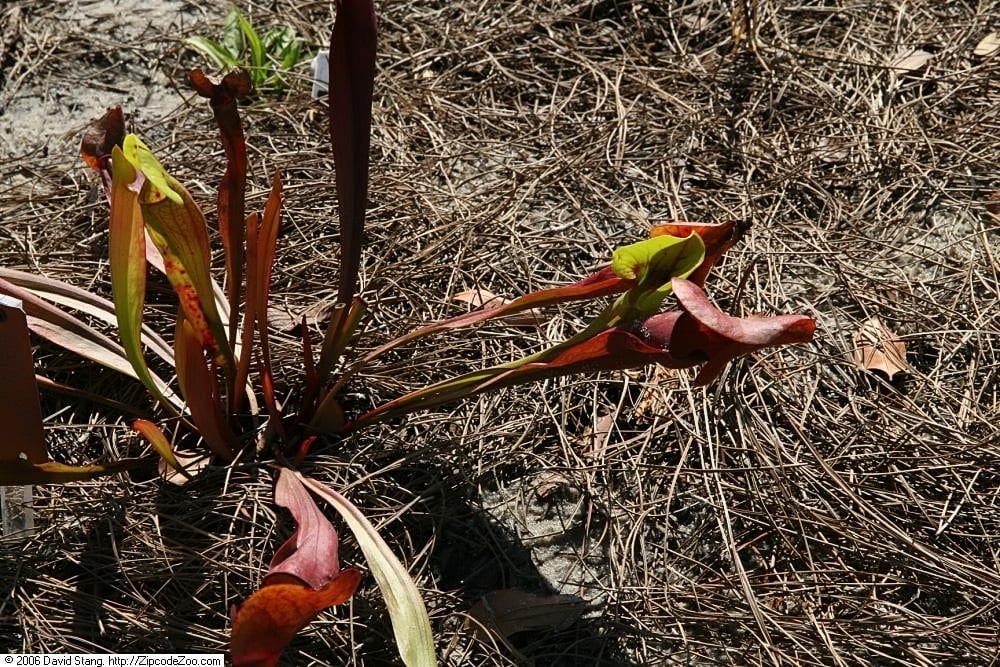
 © Photo by David J. Stang / CC BY-SA 4.0
Sarracenia × catesbaei
Sarracenia × catesbaei is a classic, long-cultivated natural hybrid between the tall, slender S. flava and the short, squat S. purpurea. It settles neatly between its parents in form, producing pitchers that are thicker than S. flava's but taller and more upright than S. purpurea's. As one of the oldest and best-known Sarracenia hybrids, it has a striking yet approachable presence, and its easy-going nature makes it a great pick for anyone new to carnivorous plants.
View Sarracenia × catesbaei encyclopedia →0% commission on your first sales!Register by September 30, 2026 and your first 2 plants are commission-free!
Grower Wanted!
List your plants on GrowerDirect and sell directly to customers nationwide!
6 Transparency Commitments from GrowerDirect
Every Grower listing discloses variety, origin, light requirements, and difficulty level for Carnivorous Plants. Complete transparency, guaranteed.
- Variety Disclosed
- Real Photos
- Color Information
- Origin Disclosed
- Light Requirements
- Difficulty Level
Browse all 145 varieties
Light Requirements
Difficulty Level
Verified growers wanted for Carnivorous Plants
Growers are signing up now ahead of launch. Subscribe to be notified when new listings go live.
Getting alerts is free with a member account. When new listings match your saved search, we'll notify you by email and in-app.
Browse other categories
Are you growing carnivorous plants?
Register as a grower and connect with buyers directly.
Apply as a growerSarracenia × catesbaei key facts
- Growing Difficulty
- Beginner-friendly
- Lifespan
- Perennial (can be kept for many years by division)
- Size
- Little published size data (intermediate between the parents)
- Watering
- No fertilizer (catches insects)
- Light & Placement
- Grow outdoors in full sun; with too little light the colour is poor and the pitchers are weak.
- Watering
- Keep the pot standing in about 4-6 cm of water at all times and never let it dry out. Use rain water or other water low in dissolved minerals.
- Soil & Repotting
- A 1:1 peat and sand mix is the standard. Divide and repot well-grown plants every 3 or 4 years.
- Temperature & Overwintering
- Let it go dormant in winter. Fully dormant plants survive a few weeks frozen solid in their pots, but early and late frosts are the danger. Keep the winter spot cool, not warm.
- Fertilizer
- Do not fertilize the soil of mature plants; it can cause rhizome rot. Plenty of sun and access to prey are enough.
- Pruning & Grooming
- The plant recovers nutrients from old leaves, so cut off only the brown, dead parts.
About Sarracenia × catesbaei
Sarracenia × catesbaei is a natural hybrid of S. flava and S. purpurea, blending both parents' forms into an easy-to-grow carnivorous plant well suited to beginners.
7 things to know before growing Sarracenia × catesbaei
1Give It Full Sun Outdoors
Sarracenia thrives in direct sun and good airflow, so grow it outdoors rather than on a shaded windowsill. Without enough light, the pitchers stay pale and the plant won't grow as vigorously. In the height of summer, light afternoon shade can help if the sun is especially intense.
2Keep It Standing in Water
Sarracenia is typically grown with the tray method, keeping the pot sitting in a shallow reservoir of water so the soil stays consistently moist. Tap water minerals can build up and stress the plant over time, so rainwater or purified water is preferable. Check the water level often in summer so the pot never dries out.
3Use Unfertilized Peat Mix
Sarracenia needs a nutrient-free medium based on sphagnum moss or peat, not ordinary potting soil, since fertilizer and added nutrients can damage the roots. Mixing in perlite helps balance drainage with moisture retention. This kind of poor, acidic soil mimics the boggy habitat the plant is adapted to.
4Repot in Early Spring
The best time to repot is in early spring, just before new growth begins after winter dormancy. When the roots become crowded, move the plant into a slightly larger pot using the same peat-based mix. Avoid repotting during the height of summer or winter, as it puts extra stress on the plant.
5Let It Go Dormant in Winter
Sarracenia is a perennial that dies back above ground each winter, and this cold dormant period is essential for healthy growth the following year. It's reasonably cold-hardy outdoors; in colder regions, mulching around the roots offers extra protection. Keeping it warm indoors through winter and skipping dormancy tends to weaken the plant over time.
6Check Roots and New Growth
Look for a plant with upright, well-formed pitchers and visible new growth or active roots at the base. Since S. × catesbaei is a perennial that can be maintained for years through division, starting with one healthy plant is the first step toward long-term growing. A few brown, spent pitchers are normal, so judge overall health by the presence of fresh growth instead.
7Divide the Clump Over Time
As a perennial, S. × catesbaei can be kept going for many years by dividing the rhizome as it spreads and the clump becomes crowded. Division is best done at repotting time, separating the rhizome into sections that each keep a few growth points. Keep the water tray topped up afterward while the divided pieces settle in.
Frequently asked questions about Sarracenia × catesbaei
- Q.Is this a good choice for carnivorous plant beginners?
- A.Sarracenia × catesbaei is known for being relatively easy to grow, making it a good starting point for first-time carnivorous plant keepers. As long as you provide plenty of sun and keep it in the tray-water method, it should grow without major trouble.
- Q.Should I bring it indoors for winter?
- A.No — Sarracenia is a perennial that needs a cold dormant period outdoors each winter. Keeping it warm indoors year-round can prevent proper dormancy and weaken the plant over time. In areas with hard freezes, mulching the roots is a better way to protect it than moving it inside.
- Q.Will it die if I don't feed it insects?
- A.No — like other plants, it photosynthesizes and doesn't depend on insects to survive. Left outdoors, it will catch its own prey naturally, so there's generally no need to feed it by hand.
- Q.How big does it grow?
- A.It takes an intermediate form between its two parents, though detailed size data specific to S. × catesbaei is limited. Growth also varies with growing conditions, so it's best to use the parent species as a rough guide and let the plant develop at its own pace.
- Q.When and how should I divide the plant?
- A.Division is best done at repotting time, in early spring as the plant comes out of dormancy. Separate the rhizome into pieces that each retain a few growth points, and plant each section in the same peat-based mix. Since it's a perennial, you can keep dividing it this way to enjoy the plant for many years.
Handy Growing Tools for Sarracenia × catesbaei
Learn more about Sarracenia × catesbaei in the encyclopedia
View Sarracenia × catesbaei encyclopedia entry →
Care difficulty, size, origin and light needs — all basics covered.
More in this category
Can't find the plant you're looking for?
Post your wishes for free and growers with matching plants will contact you with introductions.