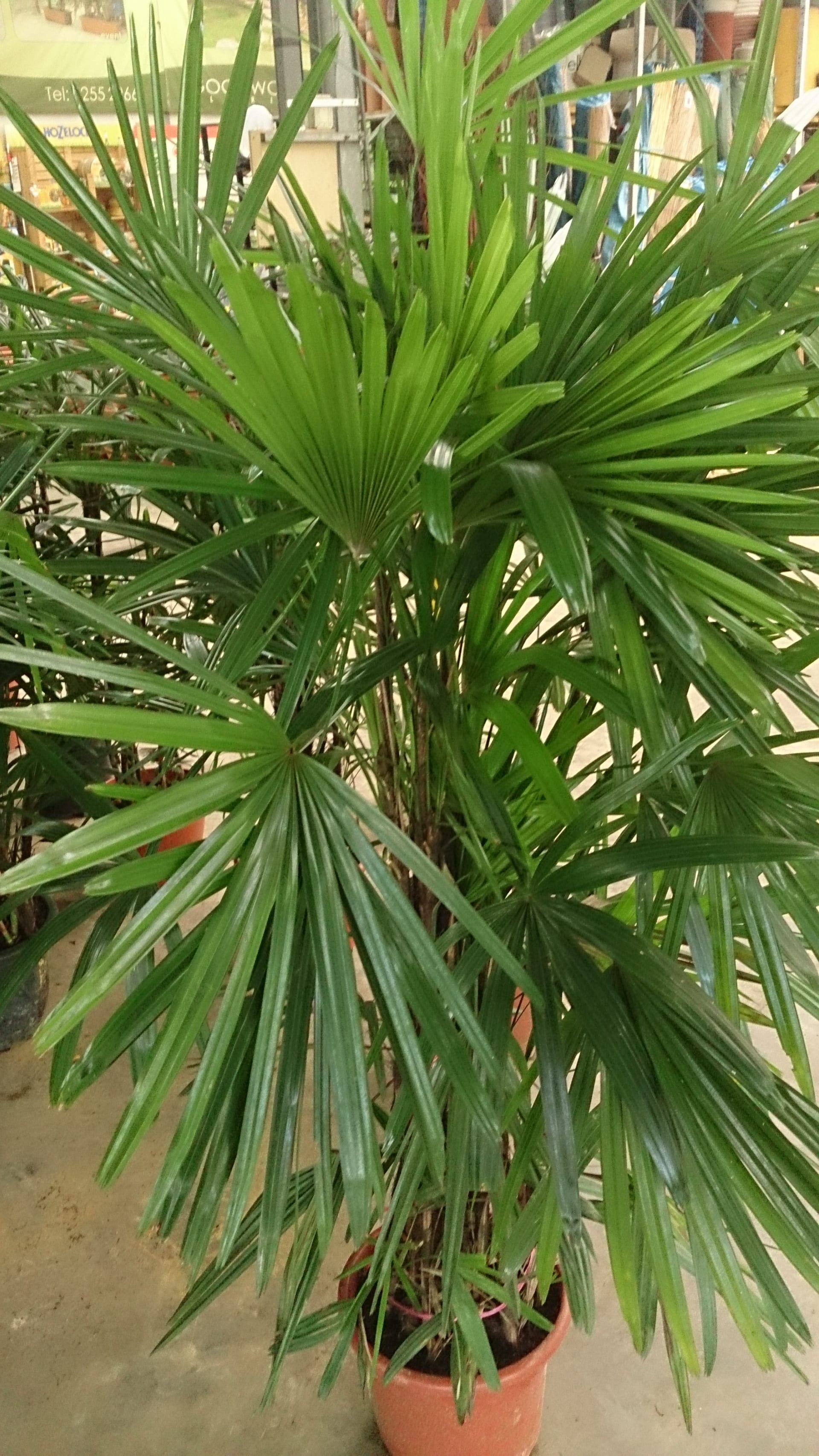
Source: Wikimedia Commons
Lady Palm
BeginnerRhapis excelsa
A clumping palm with slender, bamboo-like stems wrapped in dark brown fibre, bearing deeply divided, fan-shaped leaves. Shade tolerant, it is grown in many green and variegated forms.
About
The lady palm, known in Japan as kannonchiku (Rhapis excelsa), is an evergreen fan palm native to southern China and northern Vietnam, and may no longer exist in the wild. It spreads by rhizomes into clumps of slender stems covered in coarse, dark brown fibre that give a bamboo-like look. The leaves are palmately divided into about five to eight narrow segments whose tips look saw-toothed or cut off, a key identifying feature. It tolerates deep shade and dry air, and even occasional winter draughts near doorways, making it an easy indoor plant. One of its synonyms, Chamaerops kwanwortsik, was coined by Siebold from the Japanese name 'kannonchiku', reflecting its long history of cultivation in Japan. There are many green and variegated forms, and classic variegated cultivars are traded in Japan. Indoor pot plants usually stay around 1.8 m tall. In Japan it is regarded as an auspicious plant and is handled by everyone from general garden centres to specialist growers.
Size of the Lady Palm
The Lady Palm grows to About 1.8 m in pots; around 4 m tall and similarly wide outdoors.
Basic Info
Origin
Southern China to northern Vietnam
Lifespan
Perennial (evergreen, clumping)
Size
About 1.8 m in pots; around 4 m tall and similarly wide outdoors
Temperature
15〜30℃
Humidity
50〜70%
Watering & Fertilizer
Balanced slow-release fertiliser in the growing season
Growing Tips
Light & Placement
Bright light out of direct sun is ideal. It tolerates deep shade, but strong sun scorches the leaves.
Watering
Water regularly in the growing season, especially in summer, and reduce watering in winter. Established plants tolerate some drought.
Temperature & Overwintering
Thrives around 20°C in summer and prefers somewhat cooler conditions above about 13°C in winter. Bring it indoors before temperatures drop below 10°C.
Soil & Repotting
Use a well-drained mix. It spreads by rhizomes, so repot when the pot is full.
Fertiliser
Apply a balanced slow-release fertiliser in the growing season.
Propagation
Propagate by dividing the rhizome offshoots.
Pests & Cautions
Watch for spider mites, mealybugs, scale and leaf spot diseases.
Lady Palm FAQ
QWhat is the growing difficulty level for Lady Palm?
Beginner. A variety suitable for beginners. No special equipment or experience is required—you can grow it without problems by setting up a basic cultivation environment.
QHow large does Lady Palm get?
The mature size of Lady Palm is About 1.8 m in pots; around 4 m tall and similarly wide outdoors. This may vary slightly depending on cultivation environment and individual differences.
QHow should I water and fertilize Lady Palm?
Lady Palm: watering & fertilizer — Balanced slow-release fertiliser in the growing season. Aim for appropriate frequency and amount.
QWhat is the typical price for Lady Palm?
The price of Lady Palm varies significantly by variety, characteristics, size, and lineage. Please check GrowerDirect's price guide for the latest market information.
Last updated: September 23, 2026
References & Sources
Edited & verified by: GrowerDirect Editorial Team
The classifications, regulations, and growing data on this page are created and verified based on the primary information database below.
Taxonomy & Authority
Regulations & Conservation Status
Not listed in the CITES Appendices. Not a designated invasive alien species in Japan, nor a nationally rare species under the Act on Conservation of Endangered Species. As a species it is not subject to plant variety registration. The only Rhapis registration in Japan's plant variety database, 'Kinpounishiki', lapsed in 2003, and classic cultivars such as 'Ayanishiki' are not registered.
Sources: Species+ (CITES listing check) / Ministry of the Environment: List of Invasive Alien Species / MAFF Plant Variety Registration Database
Regulations may change. Always verify the latest information with the relevant authorities.
Related Species
Find listings for this species
Related Articles
Why New Leaves on Foliage Plants Are Smaller — Practical Solutions for Light, Humidity, and Nutrition
We analyze the causes behind stunted growth and smaller new leaves on foliage plants. From light environment and humidity management to fertilization strategy and root health, we explain each factor based on empirical data and introduce methods to restore new leaf size.
Spider Mite and Scale Insect Control: Practical Pest Prevention
Learn to identify spider mites and scale insects on houseplants and recognize damage signs, master practical spider mite control methods, discover effective scale insect elimination techniques, create pest-resistant environments with seasonal management, understand pesticide safety precautions, and discover early detection and prevention strategies.
Root Rot Prevention and Root Zone Regeneration Management in Foliage Plants | Soil Selection, Watering, and Early Diagnosis & Recovery Techniques
Root rot is the greatest threat to foliage plants. This article covers practical knowledge from the mechanisms of root rot development to prevention, early-stage diagnosis and treatment methods, and ensuring long-term plant health through soil and watering management.
Aerial Root Management and Utilization in Houseplants | Cultivation Techniques for Aerial Root-Bearing Plants like Philodendron and Monstera
This guide explains how to understand and manage the characteristics of aerial roots in houseplants. We introduce cultivation techniques that leverage aerial roots, from growth promotion to aesthetic expression.
🩺 Common diseases
Can't find the plant you're looking for?
Post your wishes for free and growers with matching plants will contact you with introductions.