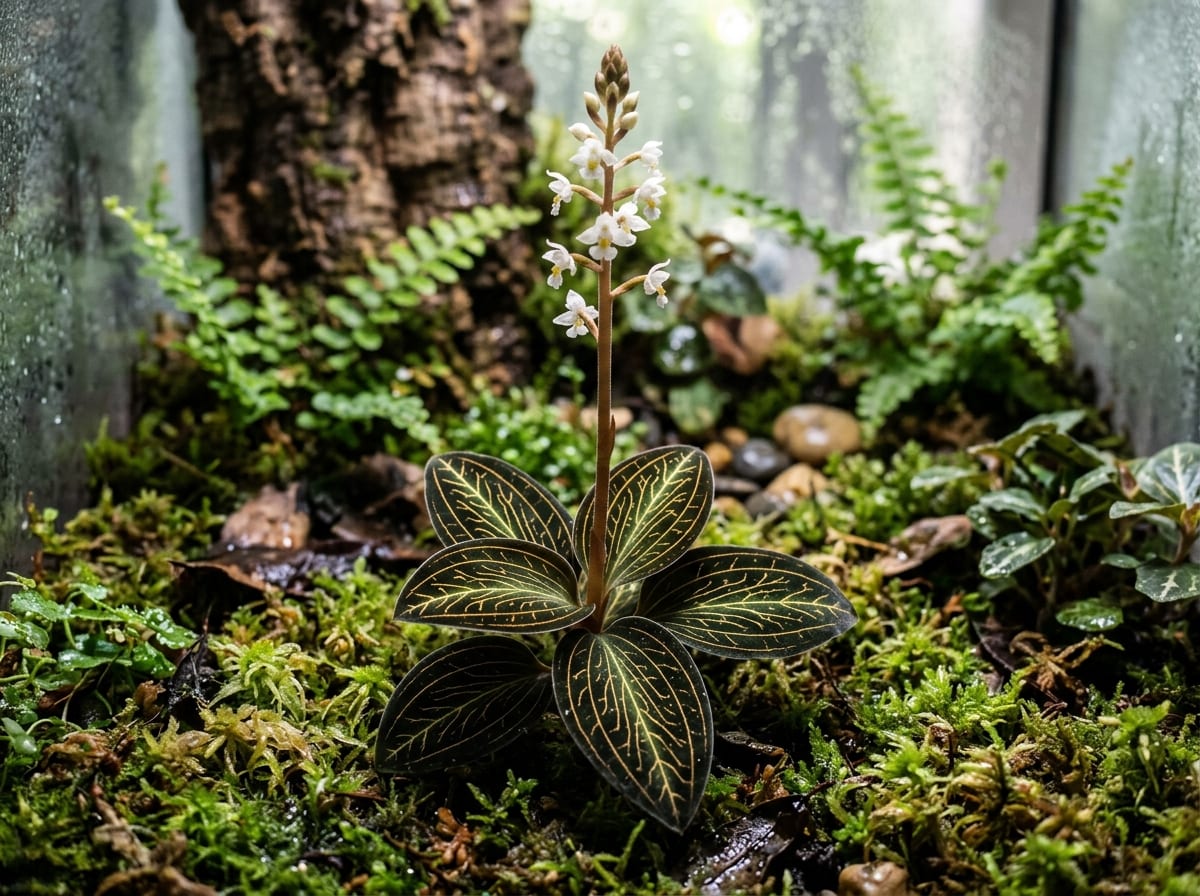
AI-generated image
Roxburgh's Jewel Orchid
AdvancedAnoectochilus roxburghii
A small terrestrial jewel orchid grown for its velvety dark green leaves netted with gold, purplish black beneath. Small white flowers appear in autumn. It needs high humidity and suits terrariums.
About
Anoectochilus roxburghii is a classic "jewel orchid", a terrestrial orchid grown for its foliage. It ranges from the western and eastern Himalayas, Assam, Nepal and Sri Lanka through Thailand, Laos, Vietnam and Yunnan to Java and Sumatra, growing in humus along steep, misty stream banks in humid evergreen forest at 300-1,800 m. It stays low, with velvety heart-shaped to ovate leaves that are dark green netted with gold and purplish black beneath. In autumn it sends up a flower stem about 20 cm tall with 2-10 small flowers under 2 cm across. Some plants are sold under names such as 'Golden Heart'. The key to growing it is combining high humidity and low light with fresh air so it does not stew; the leaves quickly suffer in dry rooms, so it is often grown in terrariums or paludariums. In Japan it is sold by houseplant shops and terrarium and aquarium suppliers as well. Some relatives in the same genus that are native to Japan are protected under the Species Conservation Act, but this species comes from abroad and is not designated.
Size of the Roxburgh's Jewel Orchid
The Roxburgh's Jewel Orchid grows to Low-growing; flower stem about 20 cm; flowers under 2 cm.
Basic Info
Origin
Himalayas, NE India, Sri Lanka, Indochina, Yunnan, Java and Sumatra (300-1,800 m)
Lifespan
Perennial (little data on lifespan)
Size
Low-growing; flower stem about 20 cm; flowers under 2 cm
Temperature
15〜30℃
Humidity
50〜70%
Watering & Fertilizer
Very dilute liquid fertilizer in small amounts while growing
Growing Tips
Light & Placement
Keep out of direct sun, in bright shade or under modest artificial light; strong light fades or scorches the leaves.
Watering
Keep the medium evenly moist, but use a free-draining mix so water does not pool and rot the roots.
Temperature & Overwintering
Wild plants grow from lowland to montane forest, so avoid extremes of heat or cold; keep it indoors somewhere warm in winter.
Soil & Repotting
Use sphagnum or a light, humus-rich mix, and allow ventilation in a terrarium. When stems become leggy, the plant can be renewed from cuttings.
Pests & Cautions
High humidity combined with stagnant air invites stem and leaf rot. Avoid stuffy conditions and remove damaged parts promptly.
Roxburgh's Jewel Orchid FAQ
QWhat is the growing difficulty level for Roxburgh's Jewel Orchid?
Advanced. A variety suitable for advanced growers. Requires advanced cultivation techniques and specialized equipment, with careful environmental adjustments needed.
QHow large does Roxburgh's Jewel Orchid get?
The mature size of Roxburgh's Jewel Orchid is Low-growing; flower stem about 20 cm; flowers under 2 cm. This may vary slightly depending on cultivation environment and individual differences.
QHow should I water and fertilize Roxburgh's Jewel Orchid?
Roxburgh's Jewel Orchid: watering & fertilizer — Very dilute liquid fertilizer in small amounts while growing. Aim for appropriate frequency and amount.
QWhat is the typical price for Roxburgh's Jewel Orchid?
The price of Roxburgh's Jewel Orchid varies significantly by variety, characteristics, size, and lineage. Please check GrowerDirect's price guide for the latest market information.
Last updated: September 23, 2026
References & Sources
Edited & verified by: GrowerDirect Editorial Team
The classifications, regulations, and growing data on this page are created and verified based on the primary information database below.
Taxonomy & Authority
Accepted name: Anoectochilus roxburghii (Wall.) Lindl.
Synonyms: Anoectochilus latomaculatus Blume, Anoectochilus lobbianus Planch., Anoectochilus regalis var. cordatus (B.S.Williams) B.S.Williams, Anoectochilus regalis var. grandiflorus (B.S.Williams) B.S.Williams, Anoectochilus roxburghii var. lobbianus (Planch.) Blume, Anoectochilus roxburghii var. roxburghii
Authority databases: GBIF · GBIF
Nomenclature follows global taxonomic authority databases.
Regulations & Conservation Status
The whole orchid family is listed in CITES Appendix II (checked on Species+). International trade requires permits such as export permits, but no registration is needed to buy, sell or transfer plants within Japan.
Sources: Species+ (CITES) / Ministry of the Environment, Japan: list of Nationally Rare Species
Regulations may change. Always verify the latest information with the relevant authorities.
Related Species
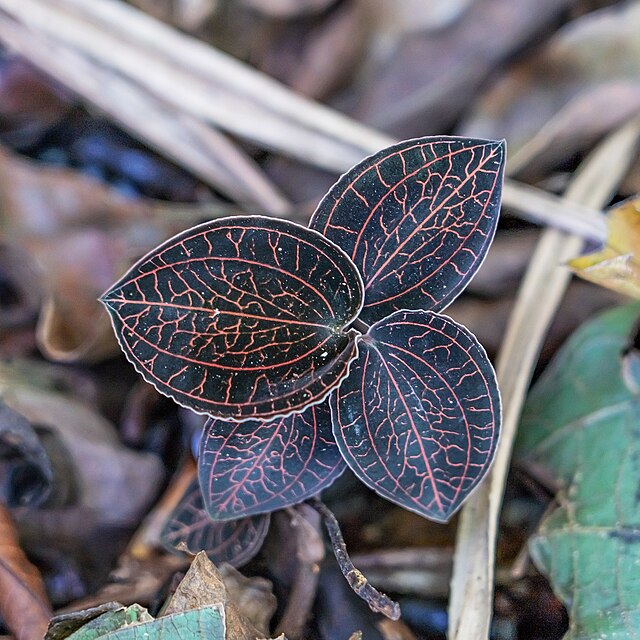
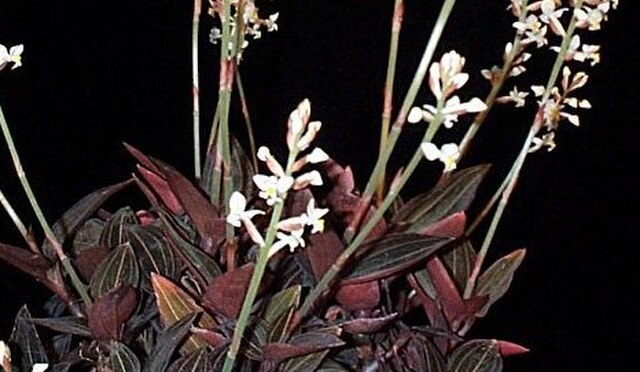
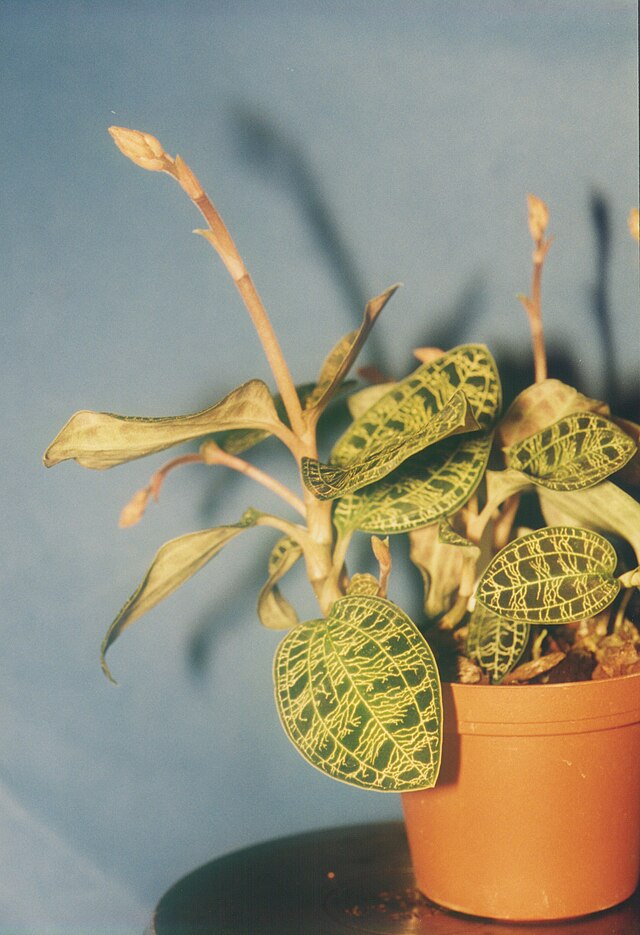
Find listings for this species
Related Articles
Coelogyne Genus Seasonal Care Guide | Withholding Water in the Dry Season and Tips for Regulating the Bloom Cycle
A seasonal guide to Coelogyne, a type of epiphytic orchid, from watering during the growing season to dry-season drought management and tips for regulating the bloom cycle.
Post-Bloom Care: The Annual Cycle from New Growth to Flower Formation
Learn the annual care cycle for orchids from the end of flowering to the next bloom. This guide covers post-flower care including flower stem cutting methods, signs to observe during new shoot development, summer growth period considerations, requirements for flower bud formation, and finishing care from bud emergence through blooming.
A Complete Guide to Enjoying Orchid Exhibitions and Sales Events | Variety Selection and Post-Purchase Care
A guide to enjoying orchid exhibitions and sales events. Covering practical tips on variety selection, how to identify rare species, and post-purchase environmental acclimatization.
Complete Window-Sill Cultivation Guide for Mini Orchids | Techniques for Blooming Fragrant Orchids in Small Spaces and Low-Light Environments
A practical guide to growing miniature orchids on windowsills. Optimize light levels, humidity, and fertilizer management to achieve repeated blooms of fragrant orchids in confined indoor spaces.
Can't find the plant you're looking for?
Post your wishes for free and growers with matching plants will contact you with introductions.