Source: Wikimedia Commons
Unscented Dendrobium
IntermediateDendrobium anosmum
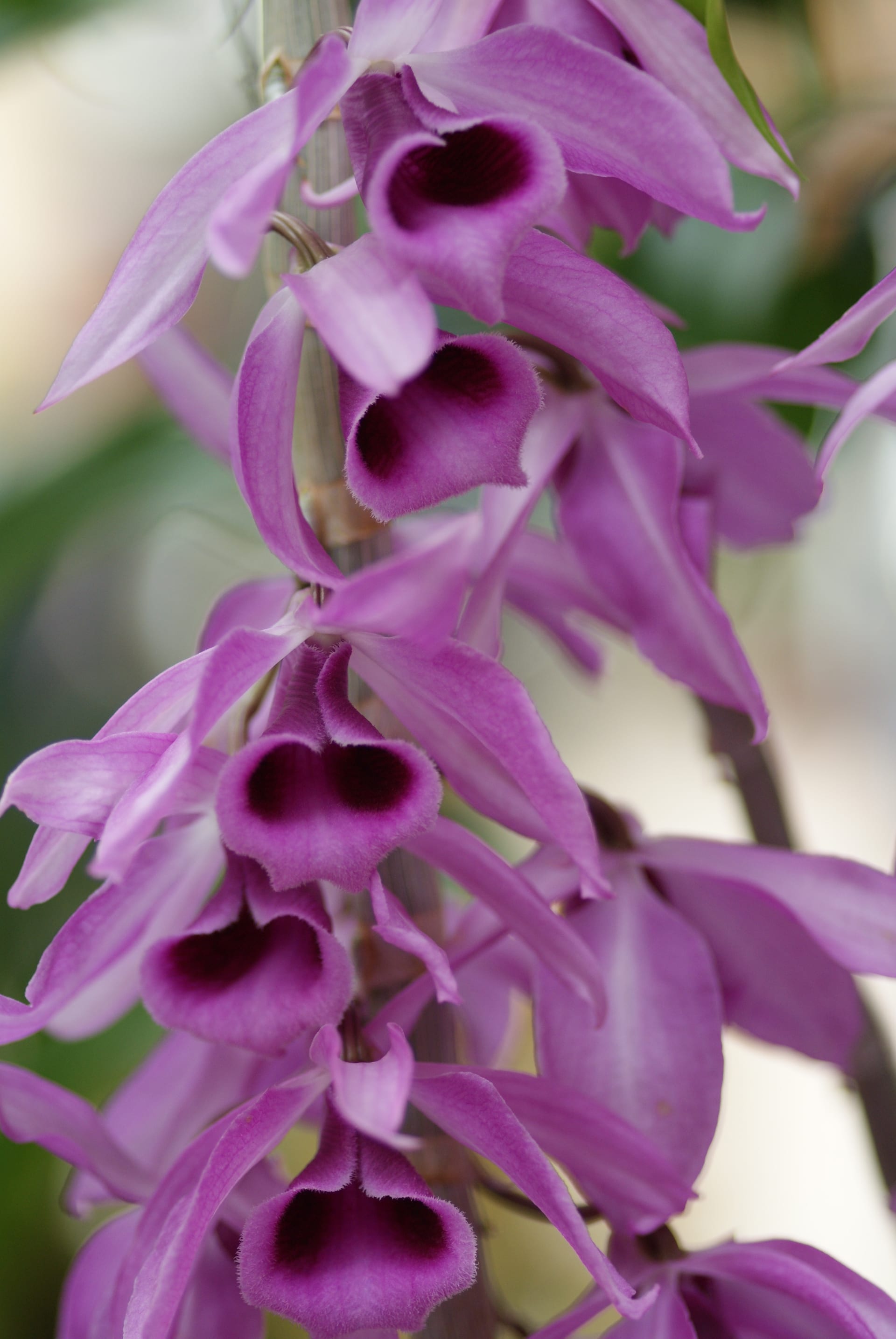
A Dendrobium whose canes hang to over a metre and, once leafless, bloom at every node with large purple flowers. Despite a name meaning unscented, it has a strong raspberry-like fragrance.
About
Dendrobium anosmum is a large species found widely across South-East Asia, from Sri Lanka through Indochina, Malaysia, the Philippines and Indonesia to New Guinea, growing on trees in lowland forest up to 1,300 m. The name means scentless, as it was named from an unscented plant, yet most plants have a strong raspberry-like fragrance, and scented plants once described as a separate species are now included in it. It is among the most widely grown orchids in the Philippines. Its many-noded canes arch or hang to 120 cm, with alternate leaves that drop during the rest period. In spring, purple flowers 5-10 cm across open close along the upper nodes of the leafless canes. White alba and paler selected forms are also sold. The keys to growing it are a distinctly dry rest from about October until new shoots appear in early spring, then heavy watering and feeding once new growth starts in late spring. Because the canes hang, mount it on tree-fern or cork or grow it in a hanging pot. In Japan, specialist orchid nurseries that handle Dendrobium sell selected plants.
Source: Wikipedia (CC BY-SA 4.0)
Size of the Unscented Dendrobium
The Unscented Dendrobium grows to Canes up to 120 cm; flowers 5-10 cm across.
Basic Info
Origin
Sri Lanka to Indochina, Malaysia, the Philippines, Indonesia and New Guinea (up to 1,300 m)
Lifespan
Perennial that can be kept for many years by division (little data on lifespan)
Size
Canes up to 120 cm; flowers 5-10 cm across
Temperature
15〜30℃
Humidity
50〜70%
Watering & Fertilizer
Feed generously from late spring, when new growth starts, to autumn
Growing Tips
Light & Placement
It likes bright light; shade from midsummer sun and give good light otherwise.
Watering
Water heavily from late spring, when new growth starts, until autumn; from about October let it dry and rest.
Temperature & Overwintering
A lowland plant that handles heat well but dislikes cold; keep it in a warm room in winter.
Soil & Repotting
The long canes hang, so mount it on tree-fern or cork, or use a hanging pot with sphagnum.
Dormancy Care
Leaf drop during the rest is normal. Withhold water until new shoots appear, and do not cut leafless canes, as they are the ones that flower.
Unscented Dendrobium FAQ
QWhat is the growing difficulty level for Unscented Dendrobium?
Intermediate. A variety suitable for intermediate growers. Requires some cultivation experience and knowledge of environment management. Pay careful attention to temperature and humidity control.
QHow large does Unscented Dendrobium get?
The mature size of Unscented Dendrobium is Canes up to 120 cm; flowers 5-10 cm across. This may vary slightly depending on cultivation environment and individual differences.
QHow should I water and fertilize Unscented Dendrobium?
Unscented Dendrobium: watering & fertilizer — Feed generously from late spring, when new growth starts, to autumn. Aim for appropriate frequency and amount.
QWhat is the typical price for Unscented Dendrobium?
The price of Unscented Dendrobium varies significantly by variety, characteristics, size, and lineage. Please check GrowerDirect's price guide for the latest market information.
Last updated: September 23, 2026
References & Sources
Edited & verified by: GrowerDirect Editorial Team
The classifications, regulations, and growing data on this page are created and verified based on the primary information database below.
Taxonomy & Authority
Accepted name: Dendrobium anosmum Lindl.
Synonyms: Callista anosma (Lindl.) Kuntze, Callista scortechinii (Hook.f.) Kuntze, Dendrobium anosmum var. dearei (Rolfe) Ames & Quisumb., Dendrobium dayanum B.S.Williams, Dendrobium dayanum Grindon, Dendrobium leucorhodum Schltr.
Authority databases: GBIF · GBIF
Nomenclature follows global taxonomic authority databases.
Regulations & Conservation Status
The whole orchid family is listed in CITES Appendix II (checked on Species+). International trade requires permits such as export permits, but no registration is needed to buy, sell or transfer plants within Japan.
Sources: Species+ (CITES) / Ministry of the Environment, Japan: list of Nationally Rare Species
Regulations may change. Always verify the latest information with the relevant authorities.
Related Species
Find listings for this species
Related Articles
Complete Guide to Growing Dendrobium | Autumn Management for Flowering and Year-Round Care
Explains autumn cold treatment, watering restrictions, fertilizer timing, and repotting cycles for year-round dendrobium blooms. Introduces management differences for both Nobile and Phalaenopsis types.
How to Grow Dendrobium nobile Orchids | Flower Bud Initiation Through Cold Treatment
Detailed guide to Dendrobium nobile characteristics, year-round care schedule, flower bud initiation through cold treatment, and management of unwanted shoots.
How to Grow Sekkoku (Chōsei Orchid) — Basics for Enjoying Japan's Traditional Oriental Orchids
A practical guide to the characteristics of Sekkoku (Dendrobium moniliforme, Chōsei Orchid), planting options using sphagnum moss, tree fern, and rock mounting, seasonal placement, watering and fertilizing, flowering tips, propagation methods including division and keiki (plantlets), and pest and disease management.
Denphale Care Guide: Tips for Enjoying Long-Lasting Cluster Flowers with Year-Round Warm Management
This guide explains the characteristics of Denphale, a warm-climate hybrid of Dendrobium, how it differs from Nobile types, temperature and watering management, and how to propagate using high growths.
Can't find the plant you're looking for?
Post your wishes for free and growers with matching plants will contact you with introductions.