How to Grow Sekkoku (Chōsei Orchid) — Basics for Enjoying Japan's Traditional Oriental Orchids
A practical guide to the characteristics of Sekkoku (Dendrobium moniliforme, Chōsei Orchid), planting options using sphagnum moss, tree fern, and rock mounting, seasonal placement, watering and fertilizing, flowering tips, propagation methods including division and keiki (plantlets), and pest and disease management.
Key Takeaways
A practical guide to the characteristics of Sekkoku (Dendrobium moniliforme, Chōsei Orchid), planting options using sphagnum moss, tree fern, and rock mounting, seasonal placement, watering and fertilizing, flowering tips, propagation methods including division and keiki (plantlets), and pest and disease management.
Related Species
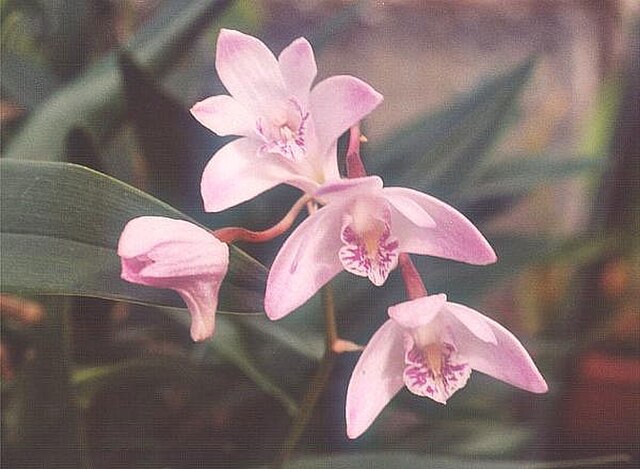
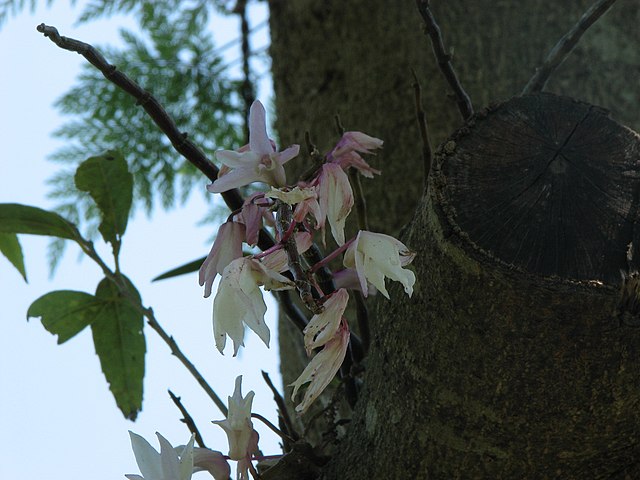
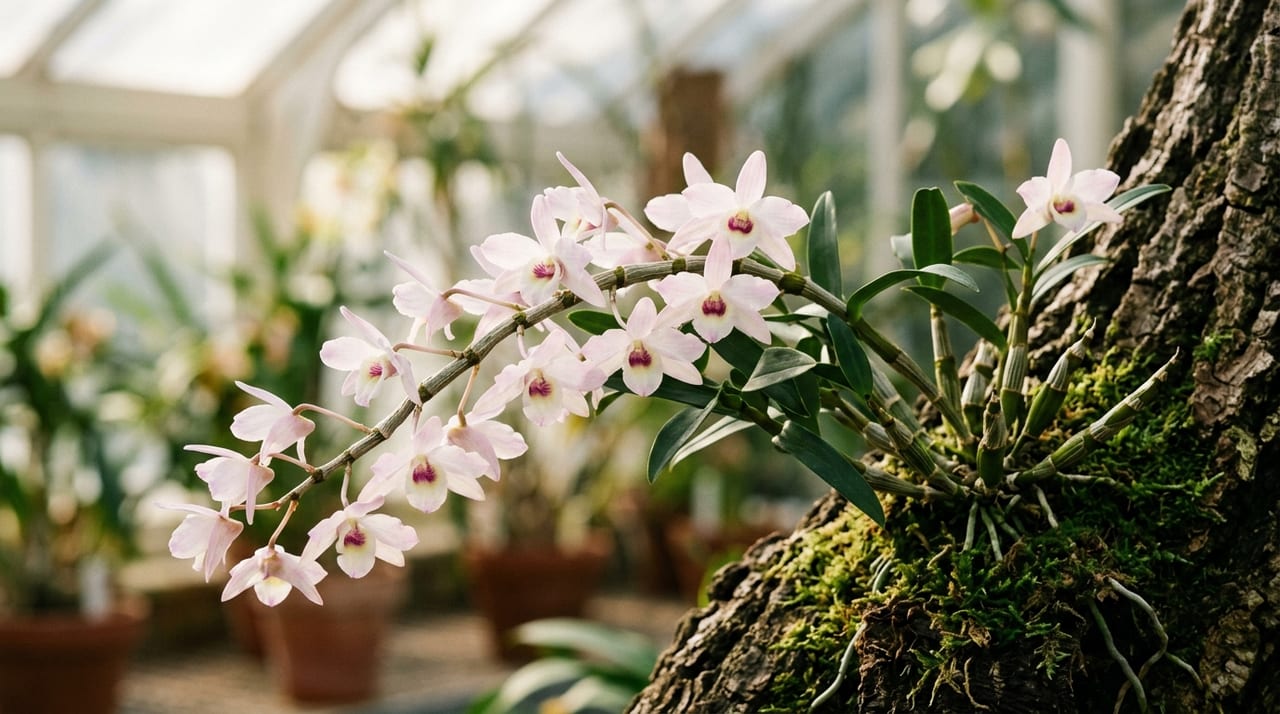
Sekkoku (石斛) has the scientific name Dendrobium moniliforme and is a member of the orchid family that grows epiphytically on tree bark and rock faces in mountainous areas and valleys throughout Japan. It has been appreciated as an ornamental plant since the Edo period and is one of the classical horticultural plants, with a unique appreciation culture of "leaf art" (enjoying variegation and form changes in the foliage) and "flower art" (enjoying color and form variations in the flowers). In the industry, it is also distributed under the name "Chōsei Orchid" (long-life orchid). Unlike showy tropical orchids, it maintains strong enduring popularity as a plant whose understated and dignified presence, and the very process of the plant becoming fuller as you cultivate it, are enjoyed.
Characteristics and Appeal of Sekkoku
Sekkoku is classified as an epiphytic orchid. In nature, it anchors its roots in small gaps in bark and rock crevices, and grows by relying on moisture and organic matter from the air. Understanding this nature is the first step to successful cultivation. It is not a plant to be grown embedded in soil like terrestrial plants, but rather one that requires a sense of balance—keeping the roots from becoming overly wet while also preventing them from completely drying out. It stores water and nutrients in the pseudobulbs (the swollen parts of the stem) and gradually expands its clump year by year by producing new shoots and keiki (plantlets) from these. The range of cultivars is broad, including variegated leaves, dwarf forms, and color variants in flowers, and this collectibility is also part of its appeal.
Planting Methods — Sphagnum Moss, Tree Fern, Pots, and Rock Mounting
There are primarily four planting methods.
- Sphagnum moss planting: This is the easiest method to manage. Create a drainage layer at the bottom of a terracotta or plastic pot using pumice stone, etc., and plant by gently wrapping the roots in sphagnum moss without damaging them. It is easy for beginners to manage and has the advantage of being less prone to drying out.
- Tree fern mounting: This method involves anchoring the roots to a tree fern block or pole and growing it epiphytically. You can enjoy the natural tree-like form characteristic of epiphytic orchids, but because it dries quickly, you must watch for drying out during summer.
- Rock mounting: This is a method that creates a natural landscape appearance. Many enthusiasts combine it with stone in a bonsai-like style to enhance its ornamental value.
- Potting: Use potting soil designed for epiphytic orchids, composed of bark and sphagnum moss, and it is important to ensure good drainage so the roots can breathe.
The best time for repotting is in early spring when new roots start growing, or right after the flowers fade.
Placement and Seasonal Management
Since Sekkoku is naturally adapted to Japan's climate, outdoor management is the basic approach.
| Season | Management Tips |
|---|---|
| Spring to autumn | The ideal location is bright partial shade avoiding direct sun, or where it receives morning sun and afternoon shade. Strong direct sunlight causes leaf scorch, and conversely, in an environment that is too dark, the plant becomes leggy and flowers poorly. |
| Summer | Avoid both drying and humidity buildup by placing under an eave with good air circulation, and avoid intense afternoon sun in midsummer. |
| Autumn | As temperatures drop, foliage growth slows and the plant begins to prepare for dormancy. |
| Winter | Many cultivars have the nature of deciduous trees, and some plants may drop their leaves and go dormant, which is normal. While it is hardy enough to withstand Japan's outdoor cold, avoid extreme freezing or prolonged freezing temperatures, and it can be grown more reliably with protection such as eaves or a simple cold frame. |
Watering and Fertilizing
The basic rule for watering is "thoroughly water when dry." Since epiphytic orchids dislike roots that are constantly wet, water thoroughly when the surface of the sphagnum or tree fern has dried, then wait until it dries again before watering. During the growing season from spring to summer, it dries quickly so watering frequency increases, but from autumn onward, gradually space out waterings, and keep watering minimal once dormancy begins in winter. Overwatering is the main cause of root rot, so it is important not to leave standing water in the pot saucer. Regarding fertilization, during the growing period from spring to summer when new growth appears, the basic approach is to apply diluted liquid fertilizer a few times per month. Adding a small amount of slow-release granular fertilizer is also effective, but whichever method you use, err on the side of slightly less rather than more to avoid damaging the roots and help the plant ultimately become stronger. Fertilizing during dormancy is basically avoided.
Tips for Getting Flowers
For Sekkoku to form flower buds, being exposed to low winter temperatures is an important requirement. If you keep it indoors where it is warm throughout winter, dormancy may be inadequate and flower buds may not form as readily. The management balance of exposing it to cold while preventing freezing will determine whether it flowers. Additionally, ensure good light during the growing season and it is essential to develop the plant and build up reserves in the pseudobulbs. Plants grown under insufficient light have only green foliage and tend to produce fewer flower buds. In early spring, as temperatures begin to warm, flower buds emerge from the nodes of the pseudobulbs and produce pure white to pale pink flowers. To ensure reliable flowering every year, while avoiding excessive fertilizing and overwatering, consistent year-round management with distinct seasonal temperature variation is most important.
Propagation — Division and Keiki (Plantlets)
There are two main ways to propagate Sekkoku.
- Division: When the clump has grown large over several years, divide the mass of pseudobulbs at the time of spring repotting. Make sure each divided section retains healthy roots and pseudobulbs, cutting with a clean blade and repotting in fresh sphagnum moss, etc.
- Keiki (plantlets): Small offspring that develop from the nodes of old pseudobulbs can be separated and grown independently once they have developed a reasonable root system. Since keiki inherit the same characteristics as the parent plant, there is also the pleasure of efficiently propagating plants with your preferred flower color or leaf form.
Newly separated keiki have few roots and are susceptible to drying, so keep them in bright partial shade with good air circulation for a while, watching the sphagnum carefully for drying, then transition to normal care once the roots are well-established.
Pests and Diseases
Sekkoku is relatively hardy, but the risk of pests and diseases increases in poorly ventilated conditions or with prolonged overwatering.
- Scale insects and spider mites: These easily attach to leaves and pseudobulbs from the rainy season through summer. Remove them promptly with a toothbrush or similar tool when spotted, or treat with an appropriate pesticide.
- Soft rot and black spot: These are bacterial and fungal diseases that can occur with prolonged overwatering. After watering, ensure no standing water in the pot, and maintaining good air circulation is the best prevention.
- Slugs: These can eat new shoots and flower buds, so regularly cleaning fallen leaves around and under the pot makes prevention easier.
Daily observation to notice early changes in leaf and pseudobulb condition is the best way to prevent major problems.
Sekkoku, as a classical horticultural plant that values understated elegance over showiness, is the quintessential Eastern orchid that has long been cherished in Japan. By understanding its nature as an epiphytic plant and carefully accumulating seasonal placement and watering management, it will flower reliably in a garden or on a balcony, and you can propagate it through division and keiki and continue to grow it for many years to come.