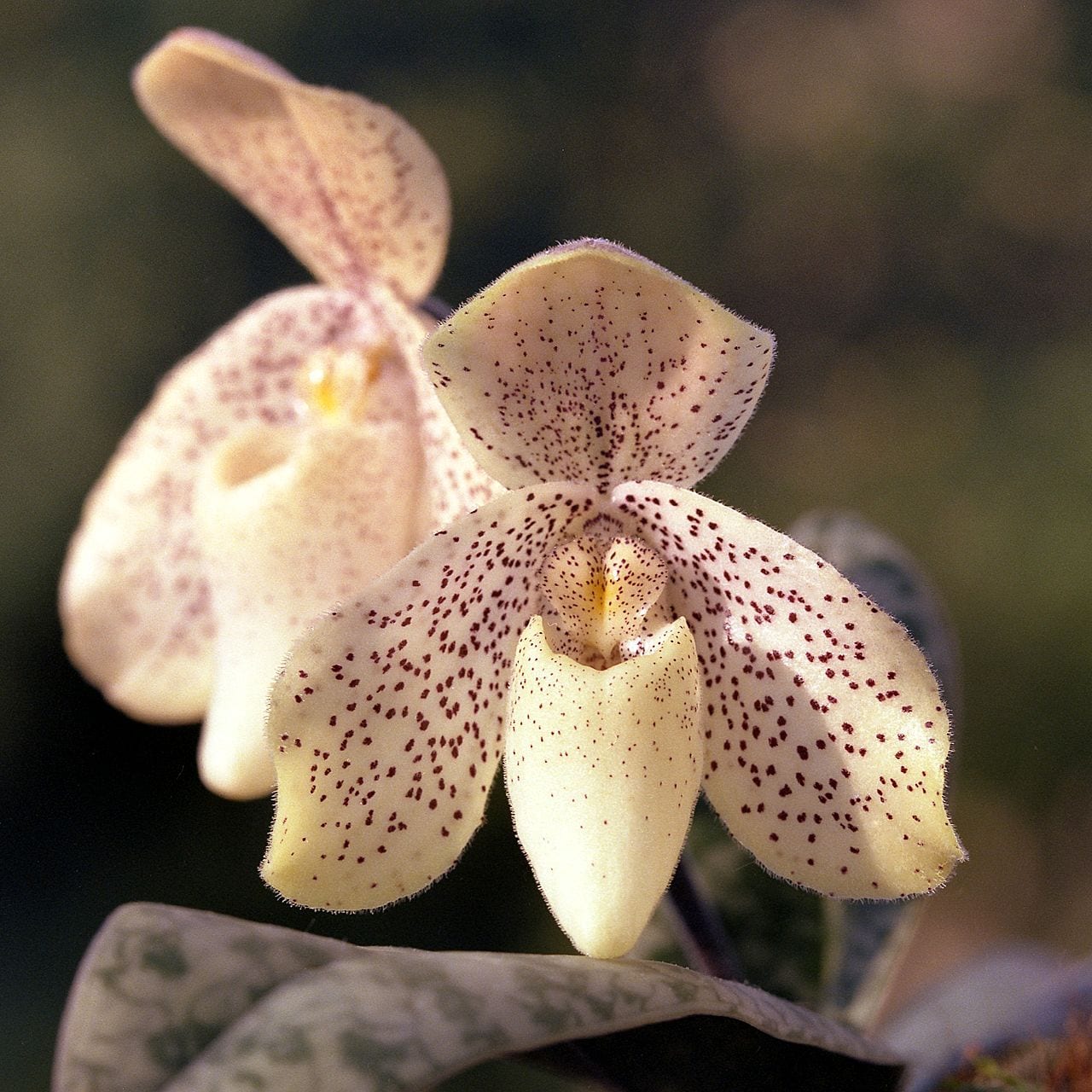
Source: Wikimedia Commons
Concolor Paphiopedilum
AdvancedPaphiopedilum concolor
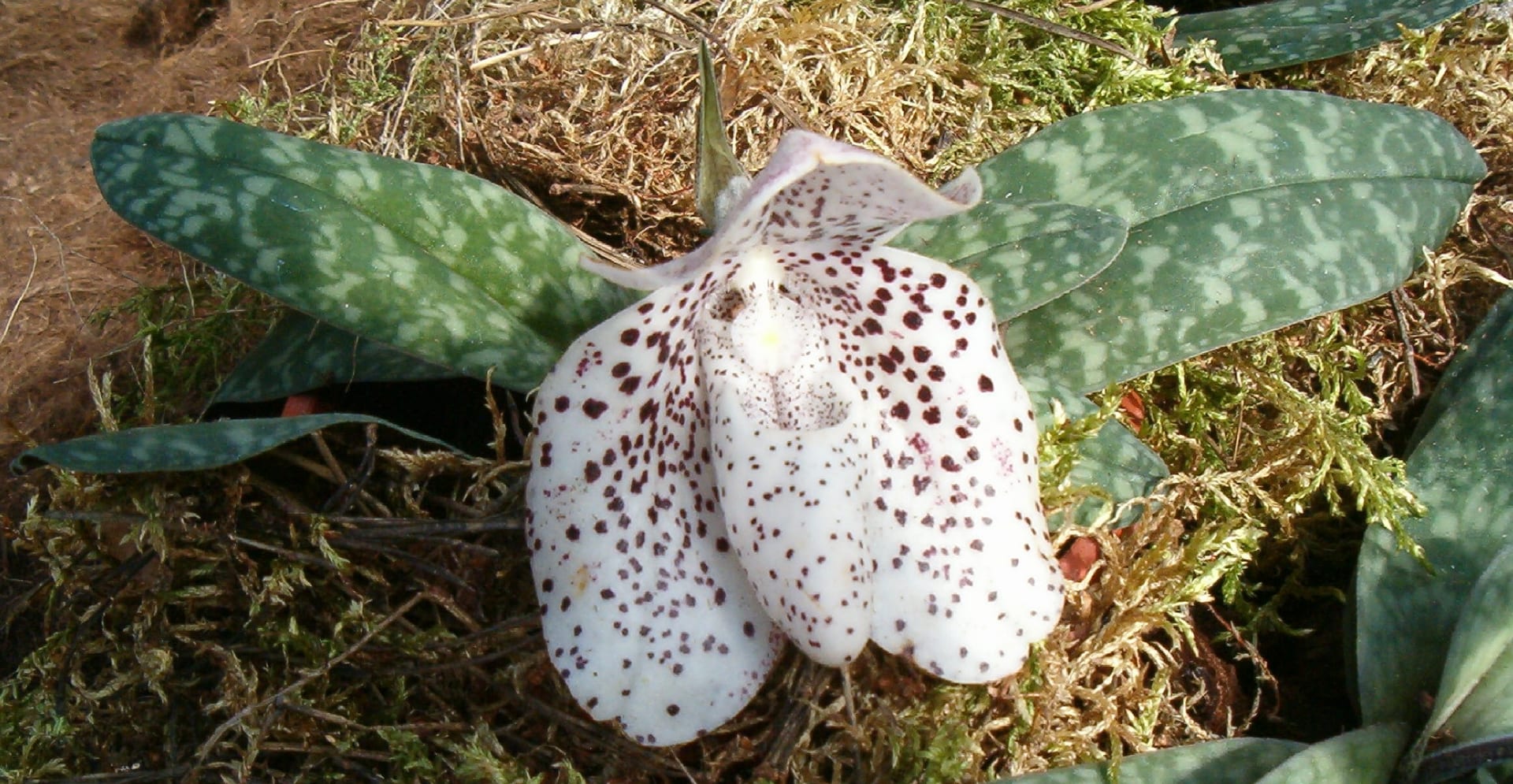
A small Brachypetalum slipper orchid of limestone rocks. On a short stem it carries one or two rounded cream to pale yellow flowers finely speckled with red-purple, and the flowers have an apple-like scent.
About
Paphiopedilum concolor is a terrestrial slipper orchid in subgenus Brachypetalum, described in 1865 as Cypripedium concolor; the epithet means 'of one colour'. It grows in Myanmar, Thailand, Laos, Cambodia, northern and central Vietnam and south-western China (Yunnan, Guizhou, Guangxi), on limestone rocks and in leaf litter near the coast and along streams, and on limestone cliffs. It is mostly found in lowlands below 300 m but has been recorded above 1,000 m. It has four to six leaves about 15 cm long and 4 cm wide, dark green with a grey-green tessellated pattern above and purple spots beneath. It flowers in spring and again from late summer into autumn, holding one (sometimes two or three) flowers about 7 cm across above the leaves on a reddish-hairy stem about 10 cm tall. The flowers are cream to pale yellow, finely spotted red-purple, and are described as apple-scented. It likes warmth and moist compost. In Japan it is sold by specialist orchid nurseries that carry Paphiopedilum species.
Source: Wikipedia (CC BY-SA 4.0)
Size of the Concolor Paphiopedilum
The Concolor Paphiopedilum grows to Small; leaves about 15 cm, flower stem about 10 cm, flowers about 7 cm across.
Basic Info
Origin
Myanmar, Thailand, Laos, Cambodia, Vietnam and SW China (mainly lowland limestone)
Lifespan
Perennial (little data on lifespan)
Size
Small; leaves about 15 cm, flower stem about 10 cm, flowers about 7 cm across
Temperature
15〜30℃
Humidity
50〜70%
Watering & Fertilizer
Dilute liquid fertilizer in the growing season
Growing Tips
Light & Placement
It grows on limestone in partial shade; give bright partial shade out of direct sun.
Watering
It likes moist compost, so water before it dries out, but do not let water collect between the leaves.
Temperature & Overwintering
A warm to intermediate grower that likes warmth; keep it indoors somewhere warm in winter.
Soil & Repotting
Its roots grow on limestone and in leaf litter. Pot it in a free-draining mix.
Fertilizer
Feed dilute liquid fertilizer regularly in the growing season.
Pests & Cautions
As an Appendix I species, always check the registration certificate under the Act on Conservation of Endangered Species when acquiring a plant.
Concolor Paphiopedilum FAQ
QWhat is the growing difficulty level for Concolor Paphiopedilum?
Advanced. A variety suitable for advanced growers. Requires advanced cultivation techniques and specialized equipment, with careful environmental adjustments needed.
QHow large does Concolor Paphiopedilum get?
The mature size of Concolor Paphiopedilum is Small; leaves about 15 cm, flower stem about 10 cm, flowers about 7 cm across. This may vary slightly depending on cultivation environment and individual differences.
QHow should I water and fertilize Concolor Paphiopedilum?
Concolor Paphiopedilum: watering & fertilizer — Dilute liquid fertilizer in the growing season. Aim for appropriate frequency and amount.
QWhat is the typical price for Concolor Paphiopedilum?
The price of Concolor Paphiopedilum varies significantly by variety, characteristics, size, and lineage. Please check GrowerDirect's price guide for the latest market information.
Last updated: September 23, 2026
References & Sources
Edited & verified by: GrowerDirect Editorial Team
The classifications, regulations, and growing data on this page are created and verified based on the primary information database below.
Taxonomy & Authority
Accepted name: Paphiopedilum concolor (Lindl. ex Bateman) Pfitzer
Synonyms: Cordula concolor (Lindl. ex Bateman) Rolfe, Cypripedium concolor Lindl., Cypripedium concolor Lindl. ex Bateman, Paphiopedilum concolor var. longipetalum (Rolfe) O.Gruss & Iamwir.
Authority databases: GBIF · GBIF
Nomenclature follows global taxonomic authority databases.
Regulations & Conservation Status
All Paphiopedilum species are listed in CITES Appendix I (checked on Species+). They are therefore designated International Rare Species under Japan's Act on Conservation of Endangered Species, and transferring a plant within Japan (selling or giving it away) requires a registration certificate under the Act; plants propagated in Japan also need to be registered. When buying, always check that the plant comes with its registration certificate.
Sources: Species+ (CITES) / e-Gov: Enforcement Order of the Act on Conservation of Endangered Species (Appended Table 2) / Ministry of the Environment, Japan: regulation of transfers
Regulations may change. Always verify the latest information with the relevant authorities.
Related Species
Find listings for this species
Related Articles
Paphiopedilum Seasonal Management and Flowering Tips | Annual Blooms with Winter Cool Treatment
The key to making Paphiopedilum bloom every year is exposing it to cool temperatures around 10°C at night from November to February. This guide covers seasonal temperature, watering, and fertilization, the number of days from flower bud to blooming, reasons for poor blooming, and post-flower care.
How to Grow Paphiopedilum | The Charm of Terrestrial Orchids and Cultivation Tips
Explains how to grow Paphiopedilum (Paphio). Introduces the differences from epiphytic orchids, suitable potting media combinations, tips for shade cultivation, temperature-based variety classification, and winter cold management for flowering.
Natural Distribution and Cultivation Environment of Paphiopedilum (Lady's Slipper)
A detailed explanation of Paphiopedilum's natural habitat and the optimal cultivation environment based on it.
Coelogyne Genus Seasonal Care Guide | Withholding Water in the Dry Season and Tips for Regulating the Bloom Cycle
A seasonal guide to Coelogyne, a type of epiphytic orchid, from watering during the growing season to dry-season drought management and tips for regulating the bloom cycle.
Can't find the plant you're looking for?
Post your wishes for free and growers with matching plants will contact you with introductions.