Paphiopedilum Seasonal Management and Flowering Tips | Annual Blooms with Winter Cool Treatment
The key to making Paphiopedilum bloom every year is exposing it to cool temperatures around 10°C at night from November to February. This guide covers seasonal temperature, watering, and fertilization, the number of days from flower bud to blooming, reasons for poor blooming, and post-flower care.
Key Takeaways
The key to making Paphiopedilum bloom every year is exposing it to cool temperatures around 10°C at night from November to February. This guide covers seasonal temperature, watering, and fertilization, the number of days from flower bud to blooming, reasons for poor blooming, and post-flower care.
Paphiopedilum Basics and Flowering Conditions
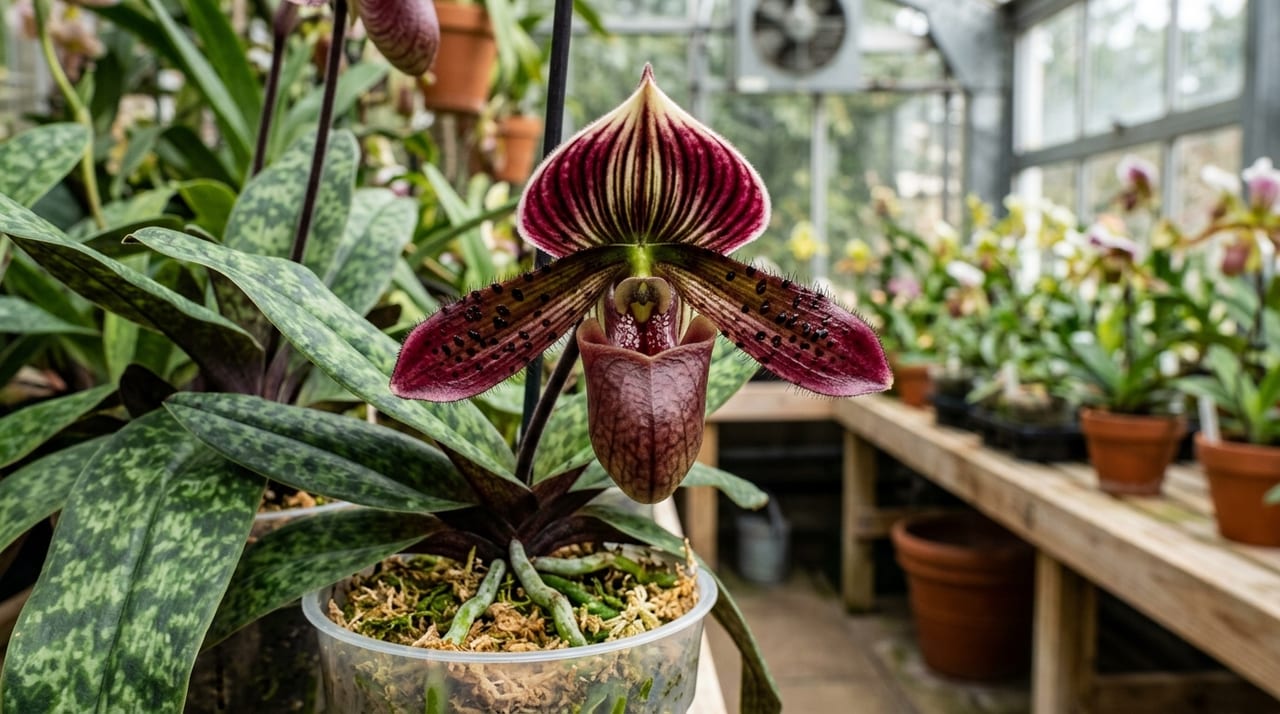
Paphiopedilum belongs to the Cypripedioideae subfamily and is a tropical orchid (Slipper Orchid) that requires more defined seasonal management than many other orchid types. It is a different genus from the native Japanese Cypripedium (Lady's Slipper) and requires different cultivation methods. Its distinctive lip and bilaterally symmetrical flower form are highly attractive and beloved by many enthusiasts. Cool-growing species like Paphiopedilum insigne and hybrid varieties carrying their lineage can be made to bloom every year with proper seasonal management. The fundamentals of care (growing medium, repotting, and placement) are summarized in Paphiopedilum Care Guide.
Blooming requires multiple conditions. Winter cool treatment (around 10°C), spring temperature increase, consistent appropriate watering, balanced fertilizer supply, and sufficient light intensity. Only by meeting all these conditions is flower bud differentiation promoted, leading to beautiful blooms.
Winter Cool Treatment: An Essential Condition for Flowering
The most important factor for Paphiopedilum flowering is the cool temperature stimulus during winter. From November through February, when nighttime temperatures are maintained around 10°C (minimum 8°C or higher), flower bud differentiation is promoted. If this cool period is too short or temperatures are too warm, flower bud formation becomes insufficient, resulting in poor blooming the following spring.
In greenhouse cultivation, reduce winter heating and set the minimum temperature to around 10°C as standard. In home window cultivation, the cold nighttime air usually poses no problem. However, when growing in warm environments like living rooms, it is important to intentionally move the plant to a cool location (maintaining around 10°C).
Spring Temperature Rise and Flower Bud Growth
Beginning in late February and through March, as temperatures rise, Paphiopedilum dormancy breaks. As temperature gradually increases during this period, flower buds grow rapidly, leading to blooming in April–May. Sudden temperature drops in spring (frost damage) inhibit flower bud development, requiring attention.
Fertilizer management in spring is equally important. From March through April, apply diluted liquid orchid fertilizer weekly to promote simultaneous flower bud growth and root development. However, excessive nitrogen can cause nutrients to favor new leaf growth, delaying blooming. Choosing fertilizer with high phosphorus and potassium is recommended.
Optimizing Light and Humidity
Paphiopedilum generally has lower light requirements than other orchids. An east-facing window where soft morning sunlight reaches the plant is ideal. Direct sunlight causes leaf burn, so shade cloth (50–60% reduction) is necessary in summer.
Target relative humidity of 50–70%, which is lower than that for Phalaenopsis orchids. However, stagnant air promotes disease, so moderate air circulation (avoiding cold drafts) is important. From spring through autumn, misting three to four times weekly maintains humidity on leaf and root surfaces.
Watering Schedule and Root Health
Paphiopedilum roots are fine and easily rot in overly wet conditions. Apply water when the growing medium surface is dry, watering thoroughly until it drains from the pot's base. During the cool winter period, root activity decreases, so reduce watering frequency to once or twice weekly.
From spring through autumn, watering two to three times weekly is standard. Especially during blooming season (April–May), adequate water uptake supports the flowers. If leaves soften or new growth slows, suspect overwatering; increase ventilation to promote drying of the growing medium.
Poor Blooming: Causes and Solutions
The primary cause of Paphiopedilum non-blooming is insufficient winter cool treatment. When temperatures are maintained above 15°C, flower bud differentiation does not occur and the plant does not bloom. Insufficient fertilizer also leads to poor blooming. Lack of phosphorus and potassium particularly inhibits flower bud formation.
Disease and pest damage also negatively affect blooming. Paphiopedilum is susceptible to mealybugs and aphids; sap-feeding by these pests impairs new growth development and delays blooming. Regular preventive spraying (oil-based emulsion) is effective.
Annual Care Calendar
Paphiopedilum's year-round management divides into a cool period and a growth period. November–February is the cool period: maintain temperature around 10°C and keep watering moderate. March–April is the flower bud growth period: gradually raise temperature and provide ample water and fertilizer. May–August is the growth period: new leaves and roots develop, and fertilizer is applied regularly. September–October is the dormancy preparation period: reduce fertilizer and gradually lower temperature.
Executing this annual cycle accurately enables Paphiopedilum to bloom stably every year. The contrast between winter cool treatment and spring temperature rise is particularly important.
From Visible Flower Bud to Bloom — Timeline and Why Development Stops
From when the flower stem first extends from the center of the leaves (between new leaves) to blooming takes approximately one to two months, depending on temperature. It progresses slowly in the cool period and speeds up as warmth increases. Flowers last one to two months on the plant, lasting longer in cool locations.
Causes of buds turning yellow or flower stem stopping during development are as follows:
| Symptom | Primary Cause | Solution |
|---|---|---|
| Bud yellows and drops | Water stress during bud stage, warm air from heating, sudden high temperature | Avoid letting growing medium dry completely. Keep away from direct air-conditioning drafts |
| Flower stem curves | Plant location moved, changing light direction | Do not move or reorient the pot once buds begin emerging |
| Bud rots | Water pooling on buds from misting | Mist only the leaves. Do not spray buds directly |
| Flower stem short and stops growing | Insufficient fertilizer, root damage | Continue diluted liquid fertilizer. If roots are damaged, repot after flowering |
Post-Flowering Care — How to Cut the Flower Stem and Preparing for Next Bloom
Once flowers fade, cut the flower stem near the base of the plant. Paphiopedilum does not rebloom from the same growth (lead) that flowered once; new shoots emerging from the sides produce future flowers. In other words, post-flowering care consists solely of "growing the new shoot to the same size as the mother plant."
- After cutting the flower stem, return to normal watering and diluted liquid fertilizer
- If the plant is root-bound or the growing medium is degraded, repot in spring after flowering (April–May)
- During spring through autumn, develop the new shoot's leaves to match the mother plant's leaf length. If the new shoot remains small going into winter, the plant will not bloom the following year
- Beginning in November, enter the cool treatment period and reduce water and fertilizer
Once the new shoot reaches the same size as the mother plant, cool treatment the following season will again promote flower bud emergence.