How to Grow Paphiopedilum | The Charm of Terrestrial Orchids and Cultivation Tips
Explains how to grow Paphiopedilum (Paphio). Introduces the differences from epiphytic orchids, suitable potting media combinations, tips for shade cultivation, temperature-based variety classification, and winter cold management for flowering.
Key Takeaways
Explains how to grow Paphiopedilum (Paphio). Introduces the differences from epiphytic orchids, suitable potting media combinations, tips for shade cultivation, temperature-based variety classification, and winter cold management for flowering.
Related Species
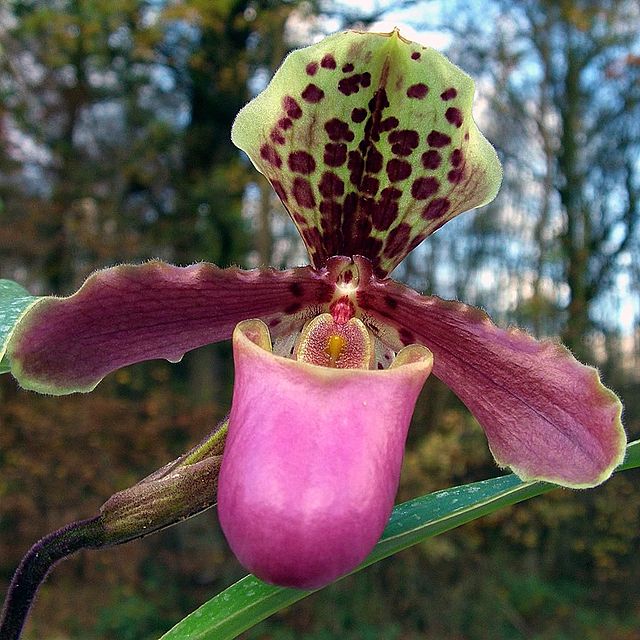
Paphiopedilum is particularly popular among orchids for its distinctive form. Called the 'Slipper Orchid' for its unique flower shape, with the lip (labellum) forming a pouch-like structure resembling a slipper, it is beloved by orchid enthusiasts worldwide.
Unlike other orchids, Paphiopedilum dislikes direct sunlight and can bloom even in partially shaded environments, making it a species well-suited to indoor cultivation and easy for beginners to attempt. This article provides a detailed explanation from the basics of growing Paphiopedilum to the key points for inducing flower buds.
What is Paphiopedilum
Paphiopedilum (Paphiopedilum) is a group of terrestrial and semi-epiphytic orchids belonging to the family Orchidaceae and the genus Paphiopedilum, native to tropical and subtropical regions of Asia.
Basic Characteristics
- Leaf form: Short, fleshy leaves arranged in a rosette. They can be solid-colored or variegated depending on the variety, with ornamental value in the foliage alone
- Flower structure: A distinctive flower form composed of a combination of 'dorsal sepal', 'petals', and 'lip (labellum)'
- Blooming period: Varies by variety, but generally blooms from autumn to spring (October to May). Each flower stem typically bears 1 to 5 flowers
- Fragrance: Most varieties are unscented or lightly scented. Some species have a pleasant fragrance
Major Groups and Varieties
Paphiopedilum has numerous varieties and hybrids, which can be broadly divided into the following groups.
| Group | Characteristics | Representative Varieties |
|---|---|---|
| Single-flowered (Concolor group) | One flower per stem with varied colors | P. concolor, P. bellatulum |
| Multi-flowered (Rothschildianum group) | Multiple flowers per stem | P. rothschildianum, P. stonei |
| Breeching group | Green and white flowers | P. insigne, P. spicerianum |
| Complex hybrids | Large, showy flowers | Numerous registered varieties |
Setting Up the Growing Environment
Light Management (Most Important Point)
Paphiopedilum dislikes direct sunlight and prefers bright, partial shade. This is a major difference from other orchids.
- Optimal light intensity: 1,000 to 2,000 lux (soft light through a window)
- Summer shading: 50-70% shading is necessary. Direct sunlight causes leaf burn
- Winter light: Since light decreases, move the plant to the brightest location possible
- Indoor lighting: Using LED lights allows cultivation indoors without windows (illuminate for 12 to 14 hours daily)
Temperature Management
Paphiopedilum has different temperature preferences depending on the group.
Intermediate-temperature varieties (most common)
- Summer: 25-30℃ or lower
- Winter: Minimum 10-12℃ or higher
- Representative: Most complex hybrids
Warm-temperature varieties
- Prefer 18-30℃ year-round
- Representative: P. lowii, P. haynaldianum
Cool-temperature varieties
- Some require cool winter temperatures (8-12℃)
- Representative: P. fairrieanum, some Himalayan species
When purchasing, confirm the group and set up a growing environment that meets each plant's temperature requirements.
Humidity and Air Circulation
- Proper humidity: 60-80% is ideal. Low humidity causes leaf tip damage
- Air circulation: Paphiopedilum dislikes stagnant air, so maintain gentle air movement at all times using a small fan or similar
- Misting foliage: Misting the leaves is effective during hot periods, but water on flowers causes damage
Watering and Fertilizing
Watering
Paphiopedilum requires a somewhat delicate balance: it dislikes excessive moisture but also cannot tolerate complete dryness.
- Frequency guide: Once every 3-5 days from spring to autumn; once every 7-10 days in winter
- Method: Water thoroughly until it flows from the pot's base, then maintain the potting medium in an almost-dry state until the next watering
- Water quality: Prefers soft water. In hard water areas, using bottled soft water or rainwater is also effective (avoid mineral water like Evian)
- Remove water from foliage: Water accumulating in the center of new growth can cause rot, so gently remove it after watering
Fertilizing
Apply dilute liquid fertilizer regularly during the growing season (spring to autumn).
- Fertilizer concentration: Dilute to 1/4 to 1/2 of the recommended strength (concentrated fertilizer causes root burn)
- Fertilizing frequency: Approximately once every 2-3 weeks
- Winter fertilizing: During winter when growth slows, reduce or cease fertilizing, or apply more dilute fertilizer about once monthly
- Fertilizer type: Orchid-specific fertilizer with balanced nitrogen (N), phosphorus (P), and potassium (K) is easiest to use
Potting and Repotting
Choosing Potting Media
Paphiopedilum requires potting media with a good balance of drainage and water retention.
| Potting medium | Characteristics | Best for |
|---|---|---|
| Bark (medium to fine grade) | High drainage | Environments with frequent watering |
| Sphagnum moss | High water retention | Dry environments and small plants |
| Pumice + bark mix | Well-balanced | General cultivation of intermediate-temperature varieties |
| Specialty compost | Suited to terrestrial orchids | Species cultivation, loam-based mixes |
Timing and Steps for Repotting
Repot approximately once every 2 to 3 years. It is time to repot when roots overflow from the pot or potting media has degraded and drainage becomes poor.
- Remove the plant from the pot and gently remove old potting media without damaging the roots
- Cut away rotted or dead roots with scissors (applying fungicide to the cut surface is recommended)
- Plant in a pot one size larger (or the same size) while spreading the roots among fresh potting media
- For one week after potting, avoid direct sunlight and water sparingly
Tips for Inducing Flower Buds
To induce flower buds on Paphiopedilum, it is important to expose a mature plant (one with developed new growth that has grown sufficiently) to a drop in temperature from autumn through winter.
- Day-night temperature difference: A difference between daytime 25℃ and nighttime 15℃ or lower promotes flower bud formation
- Moderate water stress: Reducing watering slightly in autumn and allowing moderate drying is effective for inducing flower buds
- Maintaining light: Since light decreases in autumn and winter, move the plant to the brightest location possible
- Avoid excessive fertilizing: Overfeeding with nitrogen-rich fertilizer during flower bud formation causes leaf growth to take priority over flowering
Common Problems and Solutions
Yellowing Leaves
- Possible causes: Root rot from overwatering, leaf burn from direct sunlight, excessive fertilizer
- Solution: Review watering frequency and manage in a shaded environment. If root rot is suspected, repot immediately
No Flower Buds Appearing
- Possible causes: Insufficient temperature difference, plant is not mature enough, insufficient light
- Solution: Move to a cool environment (minimum 15℃ or lower) from autumn through winter. If the plant is young, wait patiently for it to mature
Roots Rotting Brown
- Possible causes: Overwatering, poor air circulation, degraded potting media
- Solution: Remove rotted roots with clean scissors and repot in fresh media. Reduce watering and improve air circulation
Summary: Paphiopedilum, the Special Orchid That Blooms in Partial Shade
Paphiopedilum is an unusual orchid that does not require direct sunlight. It is best suited to bright indoor spaces, windowsills, and LED-lit environments, and can be readily grown even in urban homes. If you master the balance of temperature management and watering, you can enjoy beautiful slipper-shaped flowers every year.
When purchasing orchids including Paphiopedilum, from rare species to beautiful hybrids, directly from growers, please use GrowerDirect. GrowerDirect has many orchid growers listing plants who are particular about variety characteristics and growing environments, and you can also receive cultivation advice before purchase. Discover your ideal plant on GrowerDirect.