Source: Wikimedia Commons
Paphiopedilum
IntermediateA terrestrial orchid with distinctive pouch-shaped lip, valued for muted colors and long-lasting blooms.
Overview
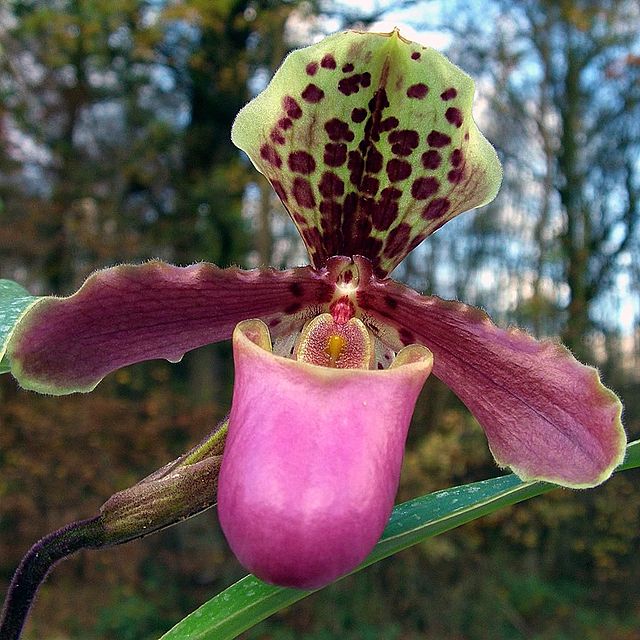
Paphiopedilum, often called the Venus slipper, is a genus of the lady slipper orchid subfamily Cypripedioideae of the flowering plant family Orchidaceae. The genus comprises some 80 accepted taxa including several natural hybrids. The genus is native to Southeast Asia, the Indian subcontinent, southern China, New Guinea and the Solomon and Bismarck Islands. The type species of this genus is Paphiopedilum insigne.
Source: Wikipedia (CC BY-SA 4.0)
Lifespan of the Paphiopedilum
The Paphiopedilum lives 10+ years.
Size of the Paphiopedilum
The Paphiopedilum grows to 15-40cm.
Temperature & humidity for the Paphiopedilum
The ideal temperature for the Paphiopedilum is 15〜28℃.
Basic Info
Origin
Southeast Asia, the Indian subcontinent, southern China
Lifespan
10+ years
Size
15-40cm
Temperature
15〜28℃
Humidity
50〜70%
Growing Tips
Light & Placement
It prefers partial to bright shade; strong direct sun is strictly off-limits. Indoors, grow it in light filtered through a sheer curtain.
Watering
Water so the medium stays lightly moist at all times. Never let it dry out completely, but do not keep it soggy either.
Temperature & Overwintering
A general guide is 15-28°C, but temperate types (10-25°C) and tropical types (18-30°C) differ, so match the species.
Soil & Repotting
Pot in sphagnum moss or fine bark. Replace the medium once it breaks down and drainage worsens.
Pests & Cautions
Strong direct sun scorches the leaves. Water pooling in the leaf axils causes rot, so make sure none remains after watering.
Paphiopedilum FAQ
QWhat is the growing difficulty level for Paphiopedilum?
Intermediate. A variety suitable for intermediate growers. Requires some cultivation experience and knowledge of environment management. Pay careful attention to temperature and humidity control.
QWhat is the ideal temperature for Paphiopedilum?
The ideal temperature for Paphiopedilum is 15〜28℃. Avoid sudden temperature changes and maintain a stable environment.
QWhat is the lifespan of Paphiopedilum?
The average lifespan of Paphiopedilum is 10+ years. With proper cultivation environment and nutrient management, you can keep it healthy for a long time.
QHow large does Paphiopedilum get?
The mature size of Paphiopedilum is 15-40cm. This may vary slightly depending on cultivation environment and individual differences.
QWhat is the typical price for Paphiopedilum?
The price of Paphiopedilum varies significantly by variety, characteristics, size, and lineage. Please check GrowerDirect's price guide for the latest market information.
Last updated: September 18, 2026
Growing Specifications
- USDA Zone
- 9–12
Sources: Missouri Botanical Garden Plant Finder: Paphiopedilum (group) (Zone 9 to 12)
References & Sources
Edited & verified by: GrowerDirect Editorial Team
The classifications, regulations, and growing data on this page are created and verified based on the primary information database below.
Primary sources
- Wikipedia
- CITES Appendix I Orchid Checklist (Kew/UNEP-WCMC 2019): Paphiopedilum and Phragmipedium spp.
- CITES Appendices (Orchidaceae spp. = Appendix II, some genera/species are Appendix I)
- Missouri Botanical Garden Plant Finder: Paphiopedilum (group) (Zone 9 to 12)
- GBIF
- POWO
- RHS orchid hybrid registration (International Orchid Register)
- AOS (American Orchid Society)
Taxonomy & Authority
Accepted name: Pfitzer
Synonyms: Stimegas, Cordula, Menephora
Authority databases: GBIF · POWO · RHS orchid hybrid registration (International Orchid Register) · AOS (American Orchid Society)
Nomenclature follows global taxonomic authority databases.
Regulations & Conservation Status
All species of the genus Paphiopedilum and genus Phragmipedium are listed in CITES Appendix I. Hybrids (grex) are also subject to Appendix I regulation of parent species. Artificially propagated specimens may benefit from simplified trading procedures under the Appendices.
Sources: CITES Appendix I Orchid Checklist (Kew/UNEP-WCMC 2019): Paphiopedilum and Phragmipedium spp. / CITES Appendices (Orchidaceae spp. = Appendix II, some genera/species are Appendix I)
Regulations may change. Always verify the latest information with the relevant authorities.
Related Species
Find listings for this species
Related Articles
Paphiopedilum Seasonal Management and Flowering Tips | Annual Blooms with Winter Cool Treatment
The key to making Paphiopedilum bloom every year is exposing it to cool temperatures around 10°C at night from November to February. This guide covers seasonal temperature, watering, and fertilization, the number of days from flower bud to blooming, reasons for poor blooming, and post-flower care.
How to Grow Paphiopedilum | The Charm of Terrestrial Orchids and Cultivation Tips
Explains how to grow Paphiopedilum (Paphio). Introduces the differences from epiphytic orchids, suitable potting media combinations, tips for shade cultivation, temperature-based variety classification, and winter cold management for flowering.
Natural Distribution and Cultivation Environment of Paphiopedilum (Lady's Slipper)
A detailed explanation of Paphiopedilum's natural habitat and the optimal cultivation environment based on it.
Airflow Management Guide for Bulbless Orchids | Understanding the Physiology of Non-Water-Storing Epiphytic Orchids and Their Differences from Dendrobium kingianum
This guide explains the physiology of bulbless epiphytic orchids and key points for airflow management, while comparing water management differences with pseudobulbed Dendrobium kingianum.
Can't find the plant you're looking for?
Post your wishes for free and growers with matching plants will contact you with introductions.