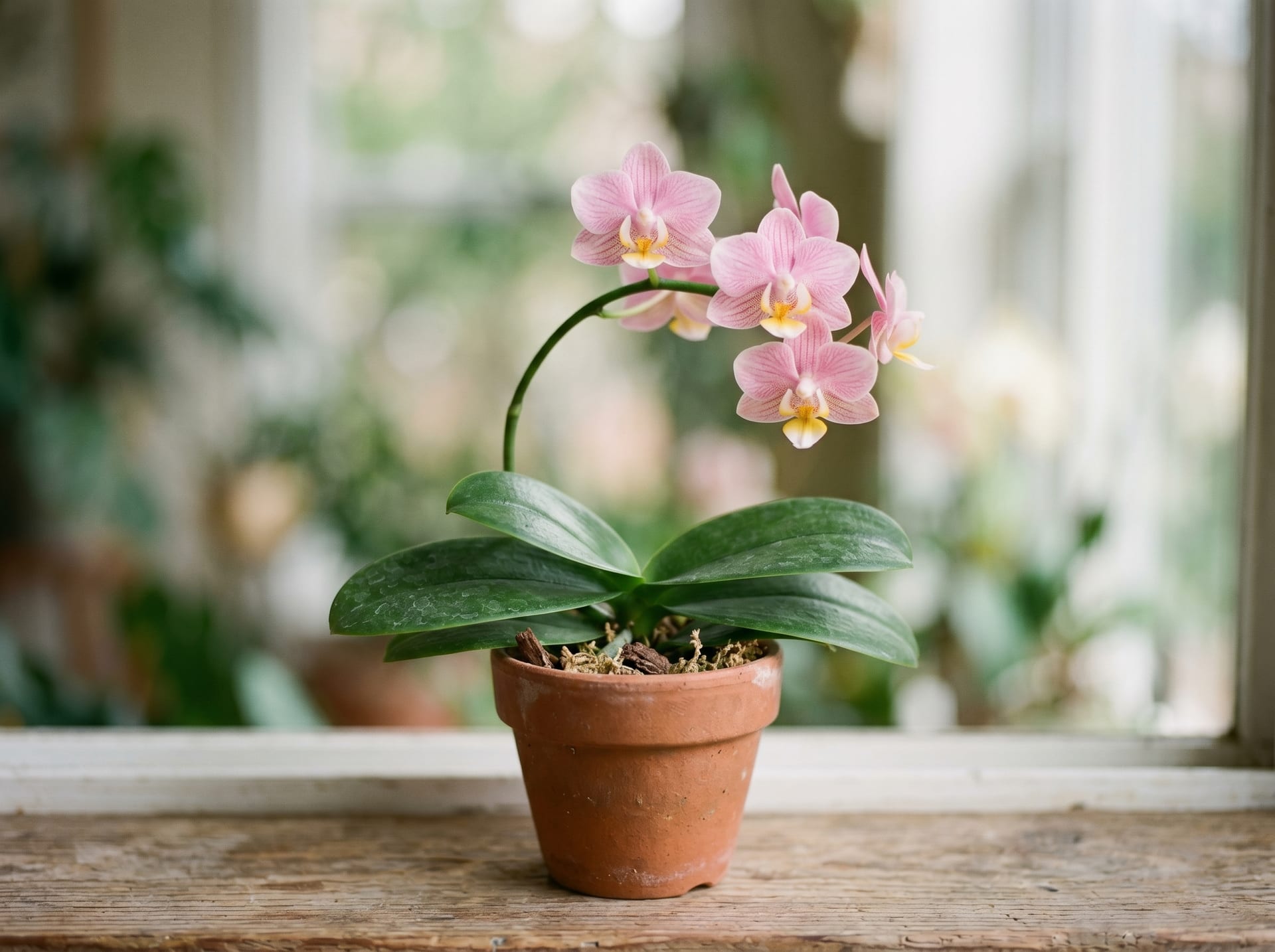
AI-generated image
Mini Phalaenopsis
BeginnerA compact Phalaenopsis perfect for tabletop display, popular as gifts.
About
Miniature Phalaenopsis hybrids are compact cultivar groups growing 10–20 cm tall, bred to fit tabletop and small-space display. The smaller flowers, 3–6 cm across, are produced on branching inflorescences bearing ten to thirty blooms in a wide range of colors. Their compact size, long bloom duration, and availability in many colors make them perennially popular as gifts.
Lifespan of the Mini Phalaenopsis
The Mini Phalaenopsis lives 10+ years.
Flower longevity is exceptional, lasting two to four months.
Size of the Mini Phalaenopsis
The Mini Phalaenopsis grows to 10-20cm.
Temperature & humidity for the Mini Phalaenopsis
The ideal temperature for the Mini Phalaenopsis is 18〜28℃.
Care mirrors that of standard Phalaenopsis: bright indirect light, temperatures of 18–28°C (minimum 15°C), and a bark or sphagnum medium watered when roots turn silvery-white.
Basic Info
Origin
miniature hybrid cultivar group of Phalaenopsis
Lifespan
10+ years
Size
10-20cm
Temperature
18〜28℃
Humidity
50〜70%
Growing Tips
Light & Placement
Keep it in a bright indoor spot behind a sheer curtain, out of direct sun. At 10-20cm tall, it can even live on a tabletop.
Watering
Water when the moss has dried and the roots turn silver-white. Small pots dry out quickly, so check the moisture often.
Temperature & Overwintering
The ideal range is 18-28°C, with a minimum of 15°C. Care is the same as for standard Phalaenopsis.
Soil & Repotting
Pot in sphagnum moss or bark. Replace the medium once it breaks down and drainage worsens.
Pests & Cautions
Overwatering causes root rot. Water only after the moss has dried so it never stays constantly wet.
Mini Phalaenopsis FAQ
QWhat is the growing difficulty level for Mini Phalaenopsis?
Beginner. A variety suitable for beginners. No special equipment or experience is required—you can grow it without problems by setting up a basic cultivation environment.
QWhat is the ideal temperature for Mini Phalaenopsis?
The ideal temperature for Mini Phalaenopsis is 18〜28℃. Avoid sudden temperature changes and maintain a stable environment.
QWhat is the lifespan of Mini Phalaenopsis?
The average lifespan of Mini Phalaenopsis is 10+ years. With proper cultivation environment and nutrient management, you can keep it healthy for a long time.
QHow large does Mini Phalaenopsis get?
The mature size of Mini Phalaenopsis is 10-20cm. This may vary slightly depending on cultivation environment and individual differences.
QWhat is the typical price for Mini Phalaenopsis?
The price of Mini Phalaenopsis varies significantly by variety, characteristics, size, and lineage. Please check GrowerDirect's price guide for the latest market information.
Last updated: August 31, 2026
Growing Specifications
- USDA Zone
- 10–12
- Hardiness (RHS)
- H1a
Sources: Missouri Botanical Garden Plant Finder: Phalaenopsis (group) (Zone 10 to 12) / RHS Find a Plant: Phalaenopsis (H1a)
References & Sources
Edited & verified by: GrowerDirect Editorial Team
The classifications, regulations, and growing data on this page are created and verified based on the primary information database below.
Primary sources
- CITES Appendices (Orchidaceae spp. = Appendix II)
- CITES Appendix I Orchid Checklist (Kew/UNEP-WCMC 2019)
- Missouri Botanical Garden Plant Finder: Phalaenopsis (group) (Zone 10 to 12)
- RHS Find a Plant: Phalaenopsis (H1a)
- RHS orchid hybrid registration (International Orchid Register)
- AOS (American Orchid Society)
Taxonomy & Authority
Authority databases: RHS orchid hybrid registration (International Orchid Register) · AOS (American Orchid Society)
Nomenclature follows global taxonomic authority databases.
Regulations & Conservation Status
The family Orchidaceae is listed entirely in CITES Appendix II (except for the genera Paphiopedilum and Phragmipedium and certain species, which are in Appendix I). Cultivars and hybrids are subject to family-level regulation; however, artificially propagated specimens may benefit from simplified trading procedures under the Appendices.
Sources: CITES Appendices (Orchidaceae spp. = Appendix II) / CITES Appendix I Orchid Checklist (Kew/UNEP-WCMC 2019)
Regulations may change. Always verify the latest information with the relevant authorities.
Related Species
Find listings for this species
Related Articles
Complete Window-Sill Cultivation Guide for Mini Orchids | Techniques for Blooming Fragrant Orchids in Small Spaces and Low-Light Environments
A practical guide to growing miniature orchids on windowsills. Optimize light levels, humidity, and fertilizer management to achieve repeated blooms of fragrant orchids in confined indoor spaces.
Complete Guide to Growing Phalaenopsis Orchids | Tips for Beginners to Keep Them Blooming Long-Term
A beginner-friendly guide to enjoying popular gift Phalaenopsis orchids long-term, covering watering, placement, fertilizing, and post-bloom care. We also introduce temperature management and techniques to encourage new flower buds.
Mini Orchid Terrarium Cultivation | Enjoying the Small World of Orchids in Glass Containers
Explains how to grow mini orchids in a terrarium. Introduces how to choose suitable varieties, set up glass containers, manage humidity and ventilation, layout tips, and daily care.
Moth Orchid Reblooming Technique | How to Make Flowers Bloom Again After They Fade
Explains how to rebloom moth orchids after flowers fade. Introduces how to cut flower stems, temperature management, watering and fertilizer adjustment, and creating an environment for successful reblooming.
Can't find the plant you're looking for?
Post your wishes for free and growers with matching plants will contact you with introductions.