Moth Orchid Reblooming Technique | How to Make Flowers Bloom Again After They Fade
Explains how to rebloom moth orchids after flowers fade. Introduces how to cut flower stems, temperature management, watering and fertilizer adjustment, and creating an environment for successful reblooming.
Key Takeaways
Explains how to rebloom moth orchids after flowers fade. Introduces how to cut flower stems, temperature management, watering and fertilizer adjustment, and creating an environment for successful reblooming.
Related Species
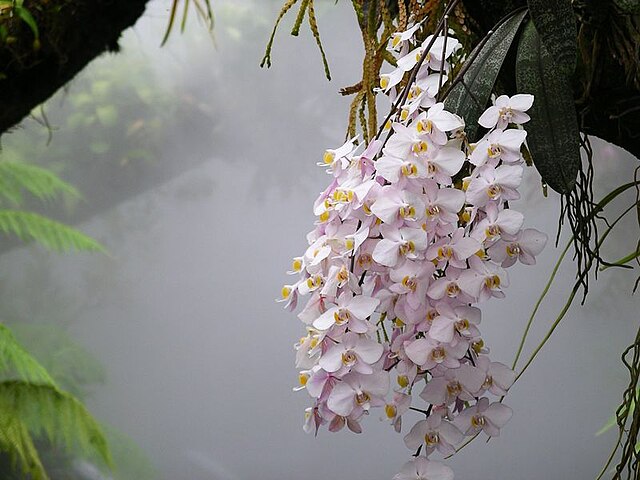
Moth orchids (Phalaenopsis) can bloom again from the same flower stem if properly managed after the flowers fade. This technique is called "reblooming," and many people practice it as a way to enjoy moth orchids received as gifts once more.
How Reblooming Works
Moth orchid flower stems have 'nodes,' and even after flowers bloom, dormant buds remain at these nodes. When the right conditions align, new flower buds grow from these dormant buds and the plant blooms again.
Conditions Necessary for Reblooming
- The plant is healthy with reserve energy
- The flower stem is still green and living
- Proper temperature control can be maintained
- Sufficient light is available
How to Cut the Flower Stem Is Key to Success
After all flowers have fallen, how you cut the flower stem determines whether reblooming succeeds.
How to Cut for Reblooming
- Cut about 1 cm above the 2nd or 3rd node counting from the bottom of the flower stem
- It is important to leave the dormant bud at the node
- Use clean scissors or a cutting tool and make an angled cut
- Thinly applying fungicide (such as Topsin M paste) to the cut helps prevent infection
When Prioritizing Plant Recovery
- If the plant is weak, cut the flower stem at the base and allow the plant to direct energy toward recovery
- Plants with 3 or fewer leaves or weak roots should skip reblooming
Temperature Management for Reblooming
Temperature management is the most important factor for successful reblooming.
Temperature Conditions Needed for Flower Bud Formation
- Maintain a temperature difference with daytime temperatures of 25–28°C and nighttime temperatures of 15–18°C
- Lowering nighttime temperature especially acts as a trigger for flower bud induction
- Ideally, a day-night temperature difference of at least 5°C should persist for 2–3 weeks
Seasonal Approaches
- Spring (March–May): Natural temperature fluctuations make day-night temperature differences easier to achieve. Flower buds emerge readily with management near a window
- Autumn (September–November): The season most likely to achieve successful reblooming. Temperature differences occur naturally
- Summer: Room temperature tends to remain constant with air conditioning, making it difficult to create temperature differences
- Winter: If nighttime temperatures are too high due to heating, move the plant to an unheated room to create a temperature difference
Watering and Fertilizer Adjustment
Watering
- After flowers fade, reduce watering slightly
- Return to normal watering once flower buds begin to appear
- With sphagnum moss: water thoroughly 1–2 days after the surface dries
- While roots are green, moisture is sufficient. When they turn white, it's time to water
Fertilizer
- Do not fertilize for 1–2 weeks after flowering (plant rest period)
- Then apply diluted liquid fertilizer (about half strength) once every two weeks
- Stop fertilizing once flower buds begin to appear (allow the plant to focus on bud development)
- Fertilizer with higher phosphorus (P) content promotes flower bud formation
Light Management
- Bright light filtered through sheer curtains is optimal
- Avoid direct sunlight, as it causes leaf burn
- However, if too dark, flower buds are less likely to emerge
- If leaves are dark green, it indicates insufficient light. Move to a brighter location
- If leaves are yellow-green to light green, light levels are appropriate
Management After Flower Buds Appear
Distinguishing Flower Buds
- New buds emerging from nodes on the flower stem are flower buds
- The tip is slightly rounded and grows upward
- They can be confused with roots (aerial roots), but roots have green to silver tips and tend to grow horizontally or downward
Management After Flower Buds Appear
- Do not change the pot's orientation (flower buds grow toward the light and will curve if moved)
- Install a support stake to hold up the flower stem
- Keep temperature stable at 20–25°C
- Water as usual. Avoid letting it dry out too much
Cautions Regarding Reblooming
- Repeated reblooming strains the plant: Reblooming depletes the plant's energy. If repeated yearly, the plant weakens; sometimes it's important to cut the flower stem at the base and let the plant rest
- Rebloom flowers often become smaller: Compared to the first bloom, there are fewer flowers and they tend to be smaller in size. This is normal
- If the flower stem turns brown and dries, give up: If no new buds emerge from the nodes, cut the flower stem at the base and look forward to the first bloom next season
Plant Care After Reblooming
After rebloom flowers fade, prioritize plant recovery.
- Cut the flower stem at the base
- Apply diluted liquid fertilizer twice monthly to promote leaf and root growth
- Manage in a bright location away from direct sunlight
- Allow 3–4 months for recovery before preparing for the next season
Understanding the Difference Between Rebloom and First Bloom
Reblooming is a convenient way to enjoy flowers, but it differs in nature from a first bloom (flowers from a new stem).
Characteristics of Rebloom Flowers
- There are usually fewer flowers than in the first bloom (approximately 3–5 flowers)
- Flower size tends to be slightly smaller
- The flower stem is often shorter as well
- Flower longevity is roughly equivalent to a first bloom
To Enhance the First Bloom If you skip reblooming and cut the flower stem at the base to allow plant recovery, the first bloom the following year will be more robust. Especially in these cases, look forward to the first bloom:
- When the plant is small with 4 or fewer leaves
- When the plant was rebloomed in the previous season
- When you sense the plant lacks vigor
It is important to assess the plant's condition and decide whether to prioritize reblooming or plant recovery.
Characteristics of Varieties That Readily Produce Secondary Blooms
Not all moth orchids will produce secondary blooms equally. In general, mini to midi-sized varieties readily produce branching from flower stem nodes and tend to have higher secondary bloom success rates. Large-flowered varieties may have fewer flowers overall but each individual bloom is large and impressive.
It is also important to choose plants with a history of blooming. Plants carefully managed by professional growers, rather than inexpensive plants from home centers, have thicker, more robust flower stems and are more likely to produce secondary blooms.
Environment Checklist for Successful Secondary Blooms
Here is a summary of points to verify for successful secondary blooms:
- Have you cut the flower stem above the correct node?
- Does the plant have 4 or more leaves?
- Are the roots healthy (white to green and firm)?
- Is there a day-night temperature difference of at least 5°C?
- Have you ensured light levels similar to filtered sheer-curtain light?
- Are you watering at appropriate intervals?
- Have you avoided fertilizing while flowers are blooming?
Only when all these factors are in place does the likelihood of secondary blooms increase. Especially temperature difference and light intensity are elements that can be controlled deliberately, so manage them consciously.
Finding Moth Orchids on GrowerDirect
On GrowerDirect, you can purchase healthy moth orchids that readily rebloom directly from professional growers. A major advantage is being able to ask growers directly about each variety's ease of reblooming and specific management tips. Find moth orchids that let you enjoy flowers longer on GrowerDirect.