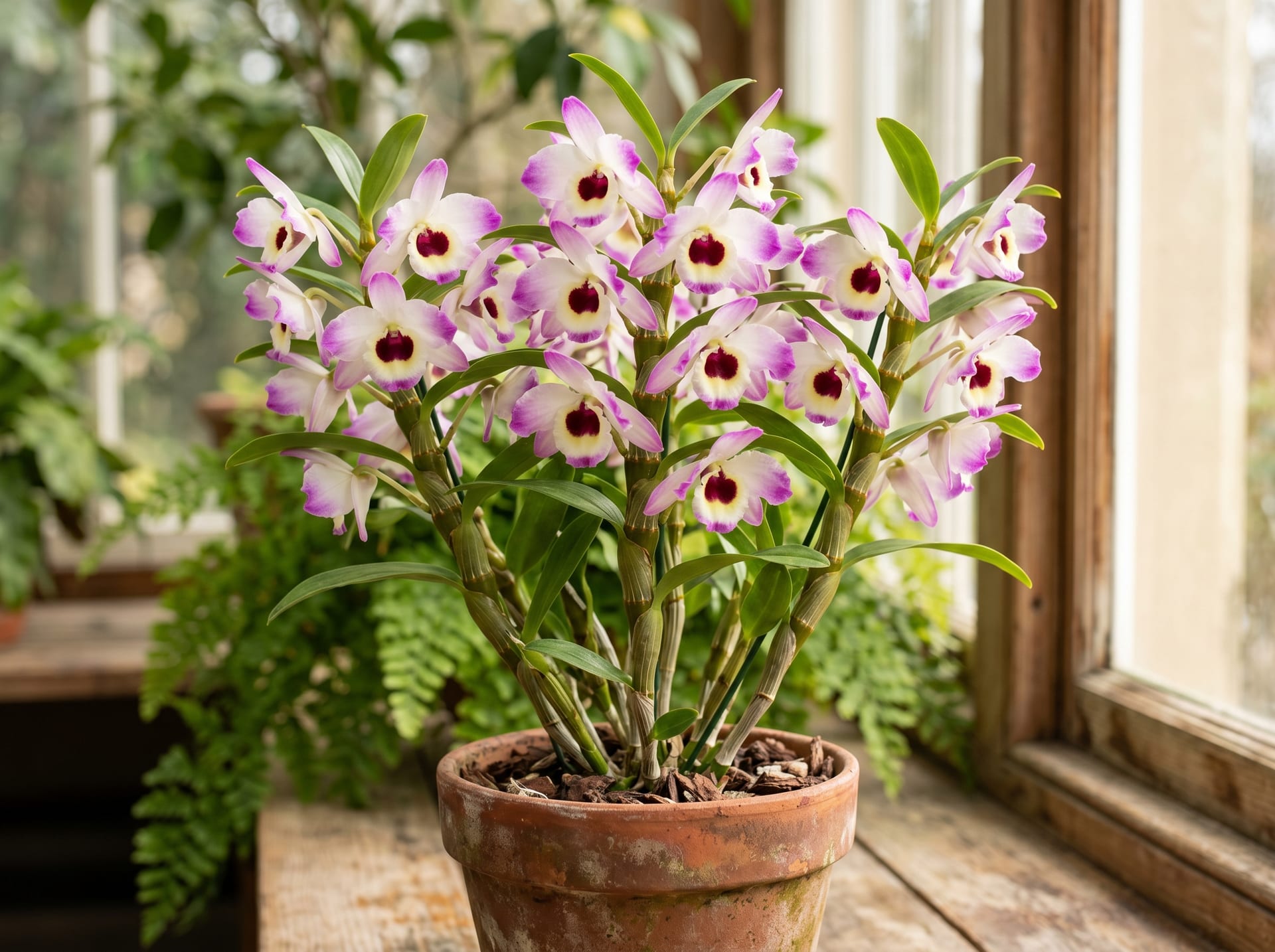
AI-generated image
Dendrobium Nobile Hybrid
BeginnerThe most common Dendrobium hybrid in Japan, blooming profusely along nodes, popular as gifts.
About
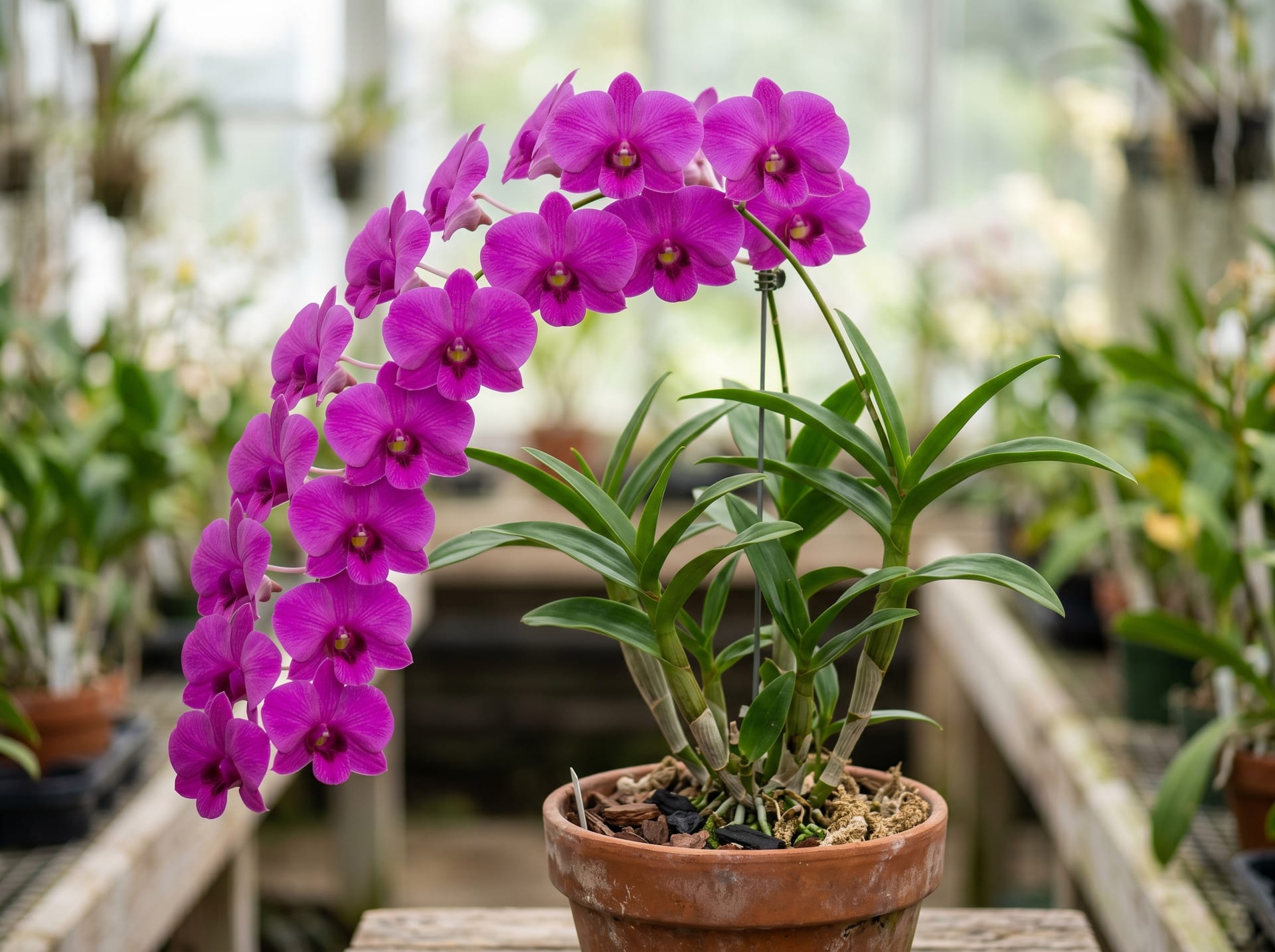
Dendrobium nobile hybrids are a large group of cultivated orchids derived from the species Dendrobium nobile, native to northeastern India, Myanmar, and southern China. In Japan they are the most widely grown and gifted orchids outside of Phalaenopsis. Plants grow 20–50 cm with slender pseudobulbs that produce two to five flowers per node, 4–8 cm across, in an extensive range of colors—white, pink, purple, red, yellow, and bicolors—many with a contrasting dark throat. Spring flowering is followed by active growth through summer, requiring ample water, strong light, and regular fertilization in a bark or sphagnum medium.
Lifespan of the Dendrobium Nobile Hybrid
The Dendrobium Nobile Hybrid lives 10+ years.
Size of the Dendrobium Nobile Hybrid
The Dendrobium Nobile Hybrid grows to 20-50cm.
Temperature & humidity for the Dendrobium Nobile Hybrid
The ideal temperature for the Dendrobium Nobile Hybrid is 5〜28℃.
A cool, dry period from autumn to winter (5–15°C) is essential for flower bud initiation; outdoor or cool indoor placement is recommended during this time.
Basic Info
Origin
hybrid cultivar group based on Dendrobium nobile from northeastern India, Myanmar, and southern China
Lifespan
10+ years
Size
20-50cm
Temperature
5〜28℃
Humidity
50〜70%
Growing Tips
Light & Placement
Grow it in a bright, sunny spot. From autumn to winter, keep it outdoors or in a cool room to give it the cold it needs.
Watering
Water generously in the growing season (spring to autumn). Keep it drier from autumn to winter to encourage flower buds.
Temperature & Overwintering
It grows at 5-28°C. Cool 5-15°C temperatures and dryness from autumn to winter (October to February) are essential for flower buds.
Soil & Repotting
After spring flowering, pot in bark or sphagnum moss. Keep drainage good and repot when root-bound.
Fertilizer
Feed during the growing season (spring to autumn) to fatten the canes. Stop feeding during the cool period from autumn to winter.
Dendrobium Nobile Hybrid FAQ
QWhat is the growing difficulty level for Dendrobium Nobile Hybrid?
Beginner. A variety suitable for beginners. No special equipment or experience is required—you can grow it without problems by setting up a basic cultivation environment.
QWhat is the ideal temperature for Dendrobium Nobile Hybrid?
The ideal temperature for Dendrobium Nobile Hybrid is 5〜28℃. Avoid sudden temperature changes and maintain a stable environment.
QWhat is the lifespan of Dendrobium Nobile Hybrid?
The average lifespan of Dendrobium Nobile Hybrid is 10+ years. With proper cultivation environment and nutrient management, you can keep it healthy for a long time.
QHow large does Dendrobium Nobile Hybrid get?
The mature size of Dendrobium Nobile Hybrid is 20-50cm. This may vary slightly depending on cultivation environment and individual differences.
QWhat is the typical price for Dendrobium Nobile Hybrid?
The price of Dendrobium Nobile Hybrid varies significantly by variety, characteristics, size, and lineage. Please check GrowerDirect's price guide for the latest market information.
Last updated: August 31, 2026
Growing Specifications
- USDA Zone
- 9–12
Sources: Missouri Botanical Garden Plant Finder: Dendrobium (group) (Zone 9 to 12)
References & Sources
Edited & verified by: GrowerDirect Editorial Team
The classifications, regulations, and growing data on this page are created and verified based on the primary information database below.
Taxonomy & Authority
Authority databases: RHS orchid hybrid registration (International Orchid Register) · AOS (American Orchid Society)
Nomenclature follows global taxonomic authority databases.
Regulations & Conservation Status
The family Orchidaceae is listed entirely in CITES Appendix II (except for the genera Paphiopedilum and Phragmipedium and certain species, which are in Appendix I). Cultivars and hybrids are subject to family-level regulation; however, artificially propagated specimens may benefit from simplified trading procedures under the Appendices.
Sources: CITES Appendices (Orchidaceae spp. = Appendix II) / CITES Appendix I Orchid Checklist (Kew/UNEP-WCMC 2019)
Regulations may change. Always verify the latest information with the relevant authorities.
Related Species
Find listings for this species
Related Articles
How Are Hybrid Orchid Names Decided? The Mechanism of the RHS International Registration System
The names of hybrid orchid grex are centrally managed by the Royal Horticultural Society (RHS) as an international registration authority. This article explains the difference between grex names and cultivar names, the history of Sander's List, and the registration process.
Species Orchids (Botanical Orchids) vs. Hybrids: The Joy of Collecting Nature's Individuality
What is the difference between species orchids and hybrid orchids? This article explains the appeal of each, cultivation considerations, the unique collecting experience with species orchids, and key points about CITES regulations to know when purchasing.
Complete Guide to Growing Dendrobium | Autumn Management for Flowering and Year-Round Care
Explains autumn cold treatment, watering restrictions, fertilizer timing, and repotting cycles for year-round dendrobium blooms. Introduces management differences for both Nobile and Phalaenopsis types.
How to Grow Dendrobium nobile Orchids | Flower Bud Initiation Through Cold Treatment
Detailed guide to Dendrobium nobile characteristics, year-round care schedule, flower bud initiation through cold treatment, and management of unwanted shoots.
Can't find the plant you're looking for?
Post your wishes for free and growers with matching plants will contact you with introductions.