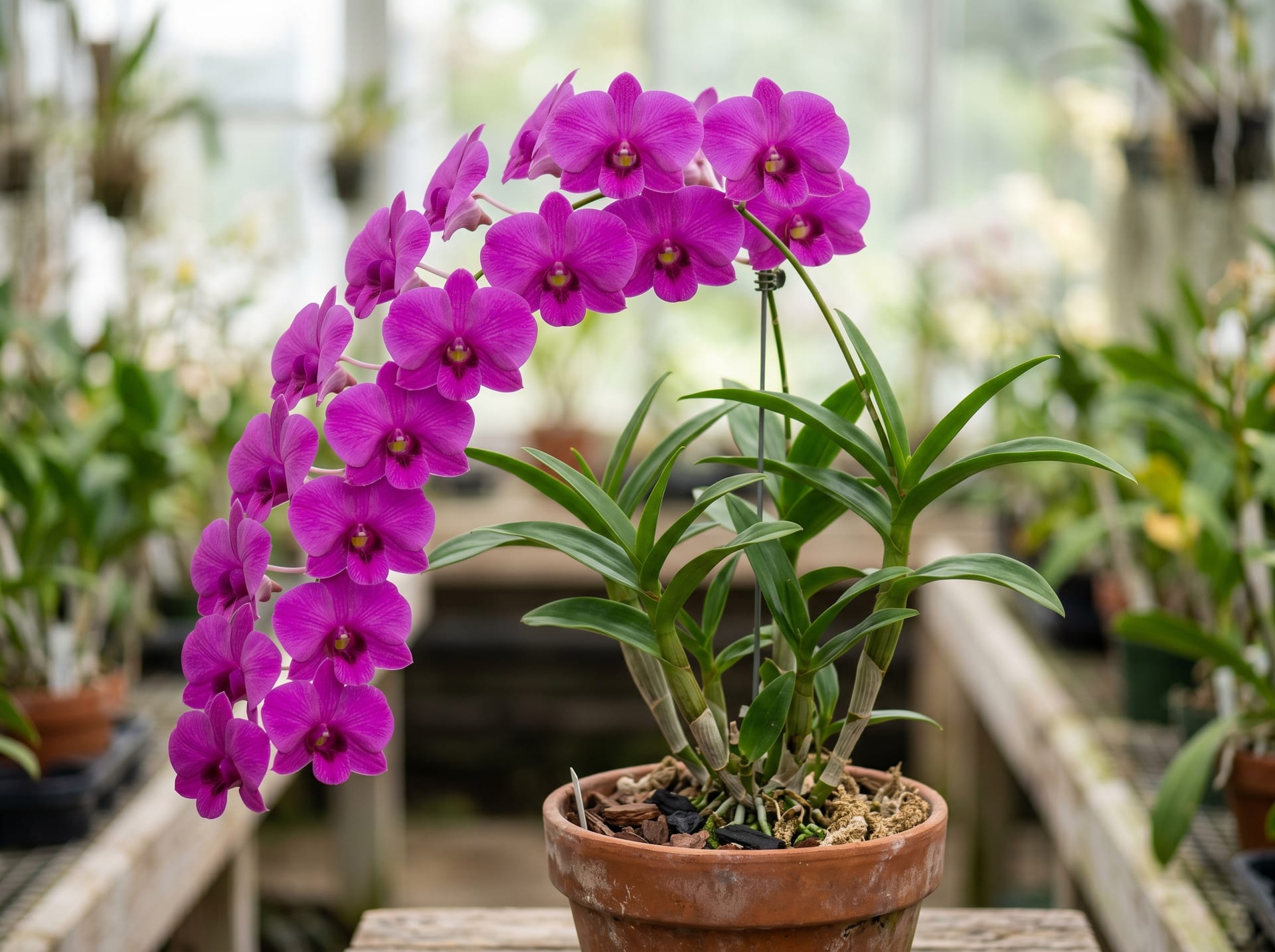
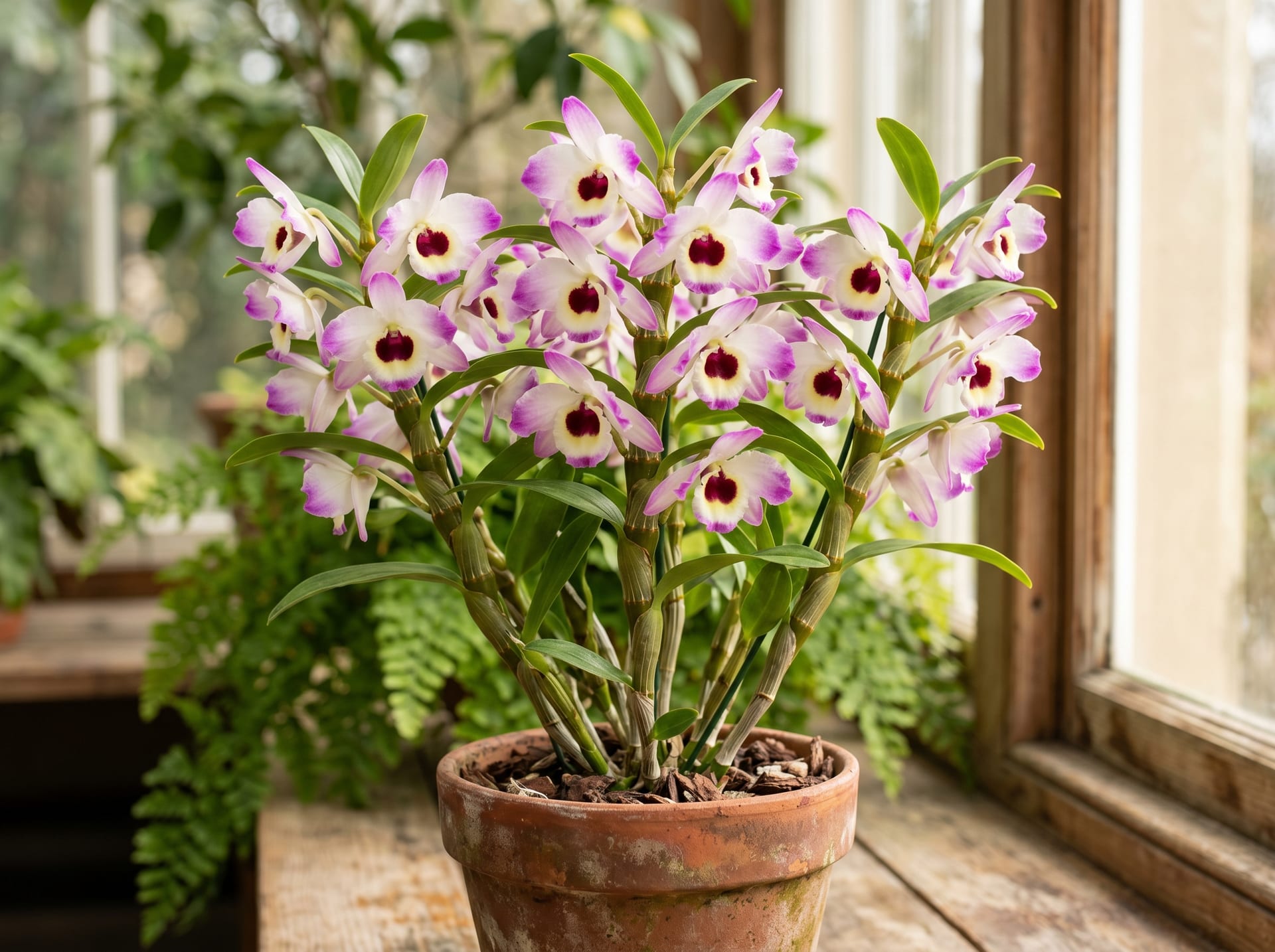
AI-generated image
Dendrobium Phalaenopsis Type
IntermediateA Dendrobium with Phalaenopsis-like flowers, popular as cut flowers, preferring warm conditions.
About
Dendrobium phalaenopsis-type hybrids are a large group of cultivated orchids derived primarily from Dendrobium bigibbum of New Guinea and northern Australia. They produce long, arching inflorescences bearing ten to twenty or more large, round-petalled flowers resembling Phalaenopsis, in purple, pink, white, and bicolor forms. Plants grow 30–60 cm with stout cane-like stems. Widely mass-produced for the cut flower industry, they are among the most commercially important orchids in Japan and worldwide. A temperature differential in autumn–winter encourages flower spike initiation.
Lifespan of the Dendrobium Phalaenopsis Type
The Dendrobium Phalaenopsis Type lives 10+ years.
Size of the Dendrobium Phalaenopsis Type
The Dendrobium Phalaenopsis Type grows to 30-60cm.
Temperature & humidity for the Dendrobium Phalaenopsis Type
The ideal temperature for the Dendrobium Phalaenopsis Type is 18〜30℃.
Cultivation requires warm temperatures (18–30°C), bright indirect light, and a bark or sphagnum medium with regular watering and fertilizing during the growing season.
Basic Info
Origin
based on Dendrobium bigibbum from New Guinea and northern Australia, hybrid cultivar group
Lifespan
10+ years
Size
30-60cm
Temperature
18〜30℃
Humidity
50〜70%
Growing Tips
Light & Placement
It prefers bright indirect light. Increasing light and adding a temperature difference in autumn and winter encourages flower buds.
Watering
Water generously in the growing season. Water thoroughly once the medium dries, and avoid keeping it constantly wet.
Temperature & Overwintering
It prefers a warm 18-30°C. Avoid winter lows below 15°C and keep it in a warm room.
Soil & Repotting
Pot in bark or sphagnum moss. Choose a stable pot that supports the thick canes, and repot when root-bound.
Fertilizer
Feed during the growing season. Unlike nobile types it needs no winter chill, so keep it warm while building the plant.
Dendrobium Phalaenopsis Type FAQ
QWhat is the growing difficulty level for Dendrobium Phalaenopsis Type?
Intermediate. A variety suitable for intermediate growers. Requires some cultivation experience and knowledge of environment management. Pay careful attention to temperature and humidity control.
QWhat is the ideal temperature for Dendrobium Phalaenopsis Type?
The ideal temperature for Dendrobium Phalaenopsis Type is 18〜30℃. Avoid sudden temperature changes and maintain a stable environment.
QWhat is the lifespan of Dendrobium Phalaenopsis Type?
The average lifespan of Dendrobium Phalaenopsis Type is 10+ years. With proper cultivation environment and nutrient management, you can keep it healthy for a long time.
QHow large does Dendrobium Phalaenopsis Type get?
The mature size of Dendrobium Phalaenopsis Type is 30-60cm. This may vary slightly depending on cultivation environment and individual differences.
QWhat is the typical price for Dendrobium Phalaenopsis Type?
The price of Dendrobium Phalaenopsis Type varies significantly by variety, characteristics, size, and lineage. Please check GrowerDirect's price guide for the latest market information.
Last updated: August 31, 2026
Growing Specifications
- USDA Zone
- 9–12
Sources: Missouri Botanical Garden Plant Finder: Dendrobium (group) (Zone 9 to 12)
References & Sources
Edited & verified by: GrowerDirect Editorial Team
The classifications, regulations, and growing data on this page are created and verified based on the primary information database below.
Taxonomy & Authority
Authority databases: RHS orchid hybrid registration (International Orchid Register) · AOS (American Orchid Society)
Nomenclature follows global taxonomic authority databases.
Regulations & Conservation Status
The family Orchidaceae is listed entirely in CITES Appendix II (except for the genera Paphiopedilum and Phragmipedium and certain species, which are in Appendix I). Cultivars and hybrids are subject to family-level regulation; however, artificially propagated specimens may benefit from simplified trading procedures under the Appendices.
Sources: CITES Appendices (Orchidaceae spp. = Appendix II) / CITES Appendix I Orchid Checklist (Kew/UNEP-WCMC 2019)
Regulations may change. Always verify the latest information with the relevant authorities.
Related Species
Find listings for this species
Related Articles
Complete Guide to Growing Dendrobium | Autumn Management for Flowering and Year-Round Care
Explains autumn cold treatment, watering restrictions, fertilizer timing, and repotting cycles for year-round dendrobium blooms. Introduces management differences for both Nobile and Phalaenopsis types.
Complete Guide to Growing Phalaenopsis Orchids | Tips for Beginners to Keep Them Blooming Long-Term
A beginner-friendly guide to enjoying popular gift Phalaenopsis orchids long-term, covering watering, placement, fertilizing, and post-bloom care. We also introduce temperature management and techniques to encourage new flower buds.
Moth Orchid Reblooming Technique | How to Make Flowers Bloom Again After They Fade
Explains how to rebloom moth orchids after flowers fade. Introduces how to cut flower stems, temperature management, watering and fertilizer adjustment, and creating an environment for successful reblooming.
How to Grow Dendrobium nobile Orchids | Flower Bud Initiation Through Cold Treatment
Detailed guide to Dendrobium nobile characteristics, year-round care schedule, flower bud initiation through cold treatment, and management of unwanted shoots.
Can't find the plant you're looking for?
Post your wishes for free and growers with matching plants will contact you with introductions.