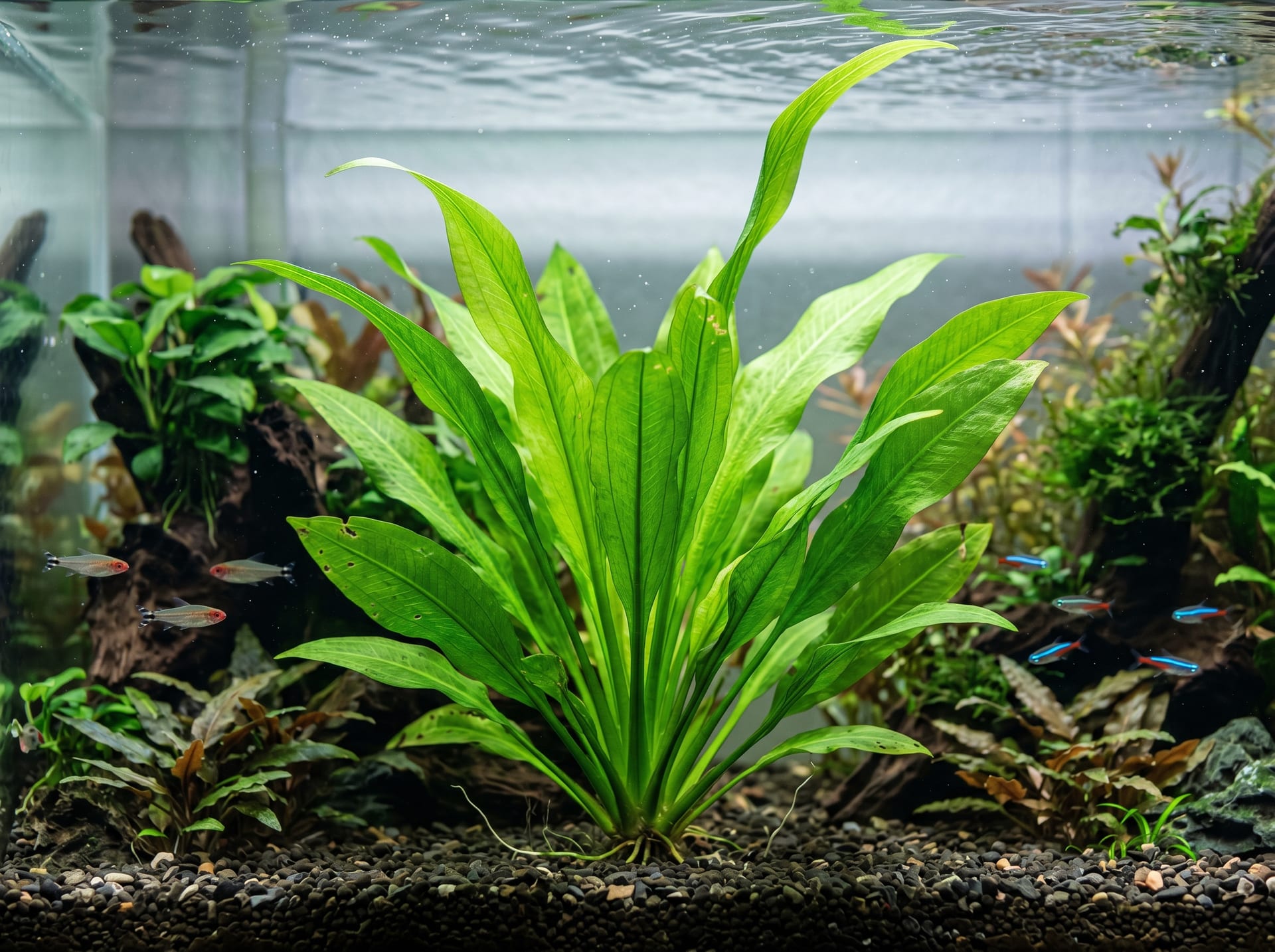
皇冠草
Representative large aquatic plant also called Amazon Sword. Ideal for mid to background. Propagates by runners, easy for beginners.
View 皇冠草 encyclopedia →前3笔销售免佣金!在2026年8月31日前注册生产者账户 → 前3笔成交的手续费免费!
栽培者 招募中!
在BoTachoku上销售,直接面向全国客户销售吗?
ボタちょく的 6 项透明性承诺
在水草出品中,栽培者将明确展示以下信息。保证品种、产地、光照需求和栽培难度的透明性。
- 品种明确
- 实拍照片
- 色泽
- 产地明确
- 光照需求
- 难度明确
水草分类正在招募认证栽培者
栽培者正在陆续注册,即将上架。设置上架通知,不错过新商品。
「接收上架通知」需免费注册会员即可设置。当有符合您保存条件的新商品上架时,我们会通过邮件和站内通知提醒您。
皇冠草的基本数据
- 养护难度
- 适合新手
- 体型
- 20-50cm
- 适宜温度
- 22〜28℃
- Lighting
- Medium+ light recommended
- CO2
- Grows without but gets larger with CO2
- Substrate
- Nutrient-rich soil best. Strong root system
- Propagation
- Produces plantlets on runners
- Notes
- Emersed and submersed forms look different
关于皇冠草
Echinodorus is an aquatic plant in the family Alismataceae, native to the Amazon River basin of South America and beloved worldwide under the common name "Amazon Sword." The genus name derives from the Greek for "spiny bag," referring to the shape of its seed clusters. Large varieties can produce leaves exceeding 60cm in length, and their broad, glossy green foliage creates a rich sense of depth in any aquarium. The plant is a vigorous root feeder, thriving in nutrient-rich substrates or with root fertilizer tabs. It can be grown without CO2 injection and propagates readily through runners, earning it a reputation as an ideal beginner plant. Combining visual impact with ease of care, Echinodorus is a true centerpiece species for freshwater aquascapes.
开始养护皇冠草前需要了解的7件事
1Tank Size: 60cm+
Many Echinodorus varieties grow leaves 30–50 cm long, which can quickly overwhelm a small tank. A 60 cm or larger aquarium allows roots to spread and leaves to develop properly. Some species do best when planned for a 90 cm setup from the start.
2Use Nutrient-Rich Substrate
Echinodorus is a heavy root feeder that thrives when planted in nutrient-rich soil substrate or gravel supplemented with root tabs. Aim for a substrate depth of around 5–7 cm to give roots enough room to anchor and spread.
3Light Over CO2
Echinodorus can grow without CO₂ injection, but insufficient light causes etiolated, spindly leaves. Aim for moderate to high light (around 30–50 μmol/m²/s) for 8–10 hours per day. Some cultivars develop attractive reddish tones under stronger lighting.
4Propagates via Runners
Echinodorus sends out runners—horizontal stems—along the surface or mid-water, with daughter plants forming at the tips. Once a daughter plant develops a few roots, detach and replant it as an independent specimen. Regular trimming prevents runners from taking over the tank.
5Ideal Temp: 22–28°C
Originating from warm South American waters, Echinodorus prefers temperatures of 22–28°C. Growth slows noticeably and leaves may yellow below 20°C. Using a reliable aquarium heater to maintain stable water temperature is essential for healthy growth.
6Yellowing Old Leaves Is Normal
It is normal for Echinodorus to yellow and shed outer older leaves as new growth emerges from the center. Simply trim yellowing leaves at the base to keep the tank clean. If yellowing spreads across the whole plant or leaves shrink, check for nutrient deficiency or inadequate lighting.
7Tolerates a Range of Water Params
Echinodorus adapts to a fairly wide range of water parameters—pH 6.0–7.5 and general hardness of approximately GH 4–15. Extreme soft or very hard water may cause leaf damage, but standard tap water in most regions is generally suitable. Consistent partial water changes are the key to stable water quality.
皇冠草的常见问题
- Q.Can Echinodorus grow without CO2 injection?
- A.Yes, Echinodorus grows well without CO2 injection. However, supplementing CO2 noticeably improves leaf color and accelerates growth. Beginners are encouraged to start without it and add CO2 later if desired.
- Q.How large does Echinodorus get?
- A.Size varies by species, but common large varieties produce leaves 30–60cm long. A 60cm or larger aquarium is recommended for most types. Dwarf cultivars are available for smaller tanks.
- Q.My plant's leaves are turning yellow — is that normal?
- A.Yellowing of older outer leaves is a natural aging process and not a cause for concern — simply trim them at the base. As long as new leaves continue to emerge, the plant is healthy. If yellowing affects the whole plant, consider checking nutrient levels and lighting.
- Q.Can it be kept alongside tropical fish?
- A.Yes, Echinodorus pairs well with most tropical fish since their preferred water temperatures overlap. The broad leaves provide excellent hiding spots and spawning sites. However, be cautious with large plecos or goldfish, which may nibble or uproot the plant.
- Q.How do I propagate Echinodorus?
- A.The parent plant sends out runners with daughter plants forming at the tips. Once a daughter plant has developed several roots, cut the runner and replant it in the substrate. No special tools or treatments are needed — propagation happens naturally with minimal intervention.
皇冠草种植的实用工具
Learn more about 皇冠草 in the encyclopedia
View 皇冠草 encyclopedia entry →
Care difficulty, size, origin and light needs — all basics covered.