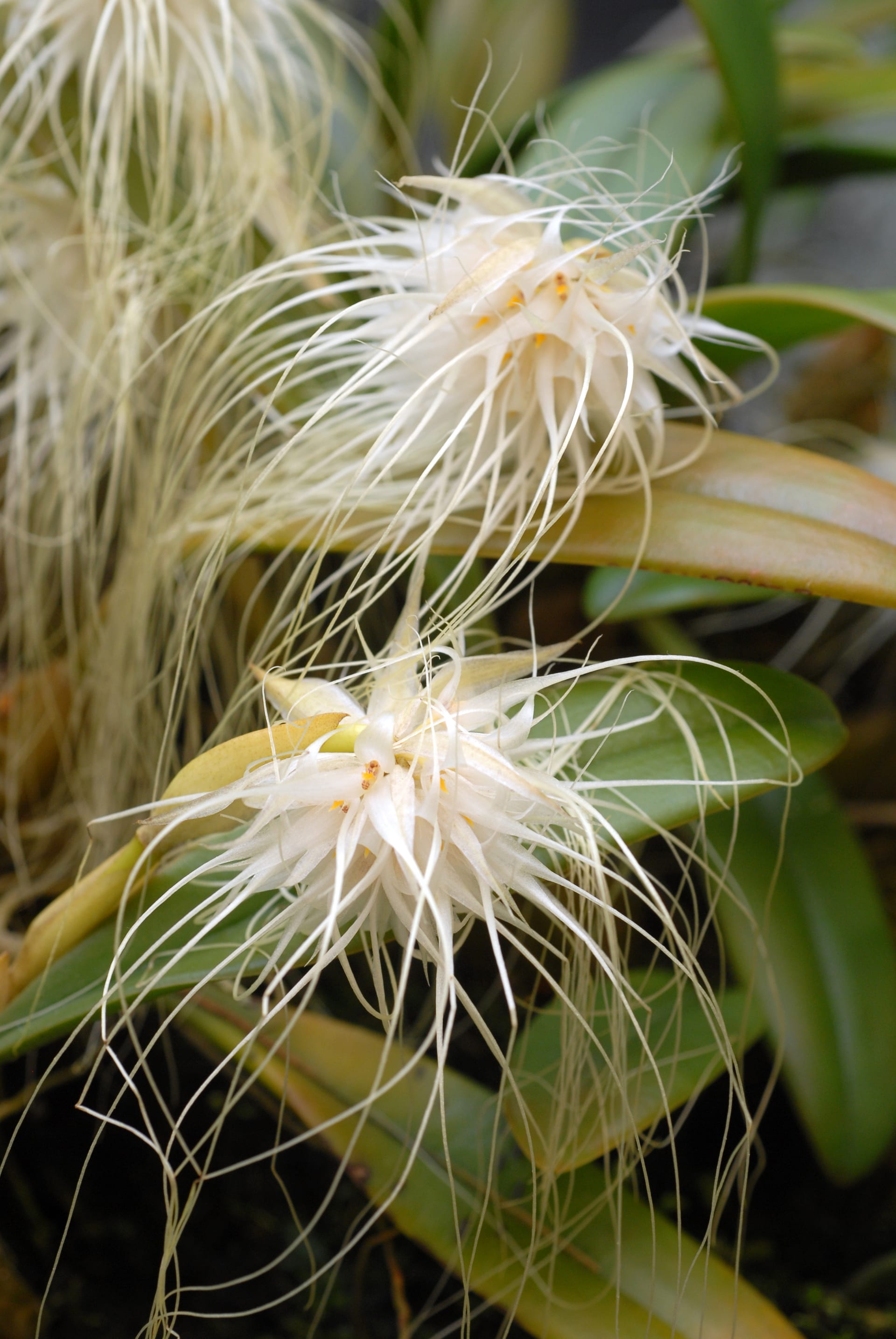
 © Eric Hunt / CC BY-SA 2.5
美杜莎豆兰
Bulbophyllum medusae is an epiphytic orchid whose small, white-to-pale-yellow flowers cluster into a round head with long, thread-like sepals that trail outward like wild, windswept hair, a resemblance that inspired its name after the Gorgon of Greek mythology. Its pseudobulbs are compact, only about 2cm tall, while the leaves reach 15 to 20cm and the flower cluster grows to roughly 15cm across. Native to the warm, humid forests of Southeast Asia, it thrives in similarly warm, humid conditions and is generally considered suitable for growers with some prior orchid experience. As a perennial that spreads gradually along a creeping rhizome, it rewards patient care with a strikingly unusual bloom found in few other orchids.
View 美杜莎豆兰 encyclopedia →成交手续费0%!2026年9月30日前注册,前 2 株免佣金!
生产者 招募中!
在GrowerDirect上销售,直接面向全国客户销售吗?
GrowerDirect的 6 项透明性承诺
兰花出品中,生产者明示以下信息。确保品种、原产地、光照需求、栽培难度信息透明。
- 品种明示
- 实物照片
- 色泽
- 产地明示
- 光照需求
- 难易度明示
查看全部142个品种
兰花分类正在招募认证生产者
生产者正在陆续注册,即将上架。设置上架通知,不错过新商品。
「接收上架通知」需免费注册会员即可设置。当有符合您保存条件的新商品上架时,我们会通过邮件和站内通知提醒您。
美杜莎豆兰的基本数据
- 养护难度
- 适合中级者
- 寿命
- 多年生,随根茎延伸可长期栽培(缺乏寿命相关资料)
- 体型
- 假鳞茎约2厘米,叶片长15-20厘米,花序长约15厘米
- 浇水
- 生长期定期施用稀释液肥
- 光照和摆放位置
- 喜好适度遮荫。避免直射阳光,在蕾丝窗帘过滤的柔和光线下栽培。
- 浇水
- 对干旱敏感,生长期应定期浇水,保持植料不完全干燥。
- 温度和越冬
- 高温性物种,不耐寒冷。冬季应在温暖的室内管理。
- 植料和换盆
- 根茎横向生长,可用花篮或浅盆以水苔或树皮植入,或采用板植方式。
- 病害虫和注意事项
- 蒸闷环境下根茎易腐烂,需保证良好通风。如花香令人不适,可调整开花期间的摆放位置。
关于美杜莎豆兰
Bulbophyllum medusae is an epiphytic orchid from Southeast Asia known for its round clusters of thread-like flowers resembling wild hair. It thrives in warm, humid conditions and suits growers with some orchid experience.
开始养护美杜莎豆兰前需要了解的7件事
1Bright, Indirect Light
Direct sun can scorch the leaves, so a bright spot with filtered light, like behind a sheer curtain, works well. Since this orchid comes from warm, humid parts of Southeast Asia, good air circulation is also important.
2Avoid Over- or Under-Watering
As an epiphyte, constantly soggy media can cause root rot, but this species also dislikes prolonged dryness given its preference for high humidity. Water thoroughly once the surface dries during active growth, and mist regularly to keep humidity up.
3Use a Well-Draining Epiphyte Mix
Bark or sphagnum moss with good airflow and drainage suits this epiphytic orchid best. It can also be mounted on a board or tree-fern fiber instead of potted.
4Repot as the Rhizome Spreads
Although the pseudobulbs stay small at about 2cm, the plant spreads outward as its rhizome grows. Once the rhizome reaches the edge of the pot, move it to a larger pot or fresh mounting material.
5Protect from Cold and Dryness in Winter
Coming from warm, humid Southeast Asia, this orchid should be kept somewhere warm indoors as temperatures drop, while avoiding excessive dryness. Watering can be reduced slightly during its slower growth period.
6Check the Rhizome and Leaves
When choosing a plant, look for firm leaves and healthy, undamaged pseudobulbs and rhizomes. Since it's a perennial that keeps growing along its rhizome for years, root and rhizome health are especially worth checking.
7Enjoy the Unusual Flower Cluster
The flower cluster grows to about 15cm, formed by small flowers with long, thread-like sepals gathered into a round shape. Look closely and you'll see the wild, hair-like form that inspired the plant's mythological name.
美杜莎豆兰的常见问题
- Q.Is this orchid suitable for beginners?
- A.Bulbophyllum medusae is generally considered a plant for intermediate growers, requiring some familiarity with placement, humidity, and watering. Those with prior experience growing epiphytic orchids will find it more approachable.
- Q.How big does this plant get?
- A.The pseudobulbs are compact, at about 2cm, with leaves reaching 15 to 20cm. When in bloom, the flower cluster extends to roughly 15cm.
- Q.Where does the name Medusa's Head Orchid come from?
- A.The name comes from the flower's appearance: small blooms with long, thread-like sepals cluster together in a round shape that resembles the wild, snake-like hair of Medusa from Greek mythology.
- Q.How long can this plant be grown for?
- A.It's a perennial that continues growing along a spreading rhizome over a long period. However, detailed records on its overall lifespan are limited, so an exact figure isn't known.
- Q.How often does it need repotting?
- A.A good guide is to repot once the rhizome reaches the edge of the pot. Growth speed varies by plant, so it helps to check the roots periodically.
美杜莎豆兰种植的实用工具
在图鉴中详细了解美杜莎豆兰
查看美杜莎豆兰的图鉴条目 →
收录栽培难度、尺寸、原产地、日照等基础数据。