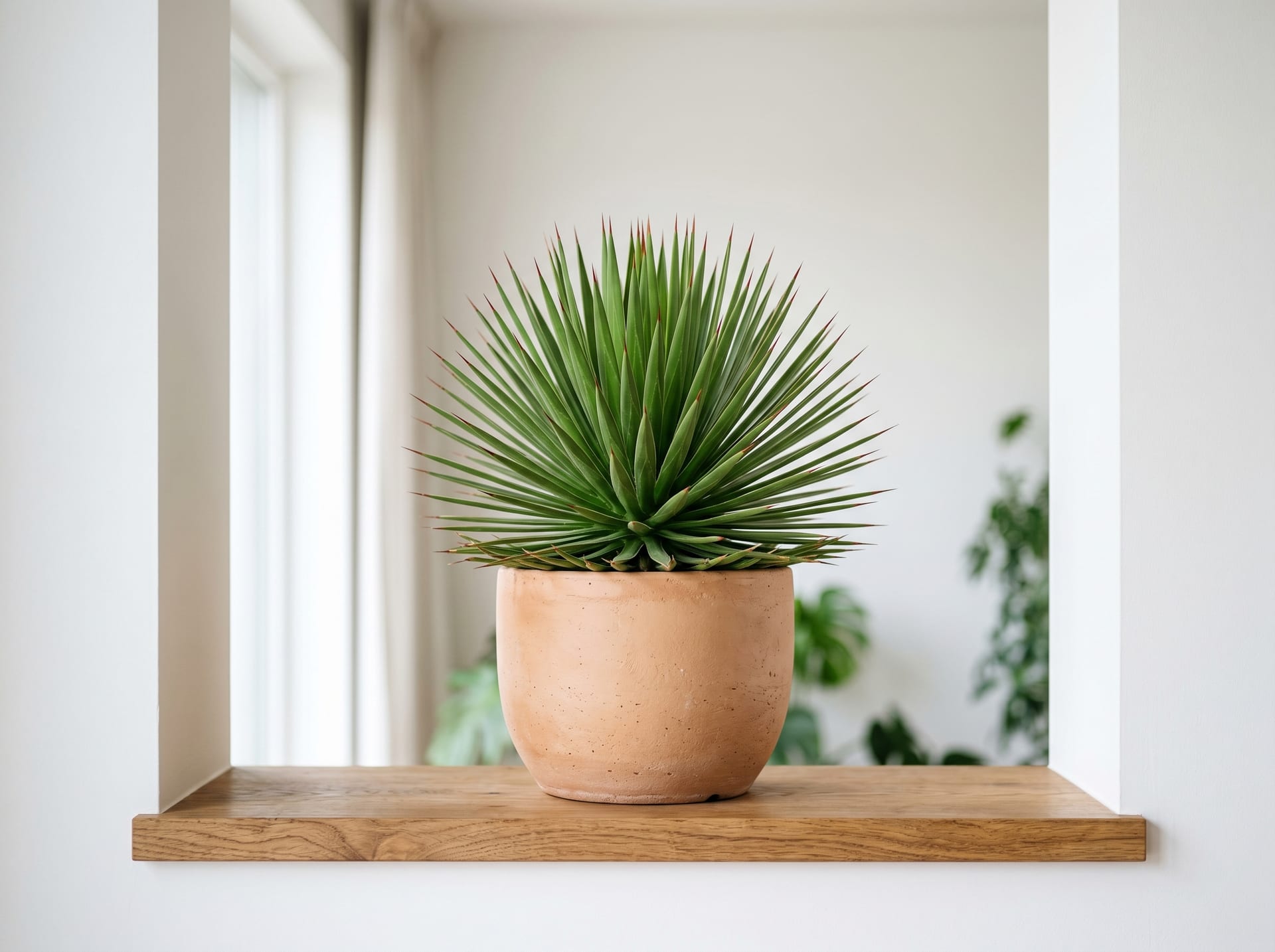
Stricta
Agave stricta, known in Japan as Kissho-ten, is a compact and striking species native to Mexico, featuring slender blue-green leaves arranged in a tidy rosette. Its sharp terminal spines give it a bold, architectural look while staying relatively small, making it ideal for patios and indoor spaces. Hardy and easy to care for, it is a popular choice for first-time agave growers.
View Stricta encyclopedia →Grower Wanted!
List your plants on GrowerDirect and sell directly to customers nationwide!
6 Transparency Commitments from GrowerDirect
Every Agave from our Grower includes full transparency: variety, origin, light requirements, and care difficulty.
- Variety Disclosed
- Real Plant Photos
- Color Details
- Origin Disclosed
- Light Requirements
- Care Difficulty
Browse all 141 varieties
Light Requirements
Difficulty Level
No listings match your filters
Adjust your filters, or get notified when new listings arrive.
Getting alerts is free with a member account. When new listings match your saved search, we'll notify you by email and in-app.
Browse other categories
Verified growers (preview)
Stricta key facts
- Growing Difficulty
- Beginner-friendly
- Lifespan
- 10-20 years
- Size
- 30-50cm
- Temperature
- -5〜40℃
- Light & Placement
- It prefers direct sun. Plenty of light is needed to keep the neat spherical silhouette, so a bright outdoor spot is ideal.
- Watering
- Very drought tolerant, so water sparingly, and in winter cut back to about once or twice a month.
- Temperature & Overwintering
- It has some cold hardiness, but in winter keep it out of frost and never let it freeze. In cold regions move pots under eaves or indoors.
- Soil & Repotting
- Use a mix that puts drainage first. Growth is slow and the plant stays around 40-60 cm across, so repot only once the roots fill the pot.
- Propagation
- It multiplies by producing offsets, so it can be propagated by division. Detach and pot up pups once they are well developed.
- Pests & Cautions
- Guard against excess moisture and stagnant humidity by ensuring good airflow. The needle-like leaf tips are sharp, so keep it away from foot traffic.
About Stricta
Agave stricta, affectionately called Kissho-ten in Japan, is a small to medium-sized species native to the Mexican state of Puebla and surrounding regions. Its Japanese name, meaning "Goddess of Good Fortune," reflects the admiration its perfectly symmetrical rosette has inspired among collectors for generations. The plant forms a dense sphere of narrow, blue-green leaves radiating outward in geometric precision, with finely serrated margins and a sharp terminal spine on each leaf tip. This architectural beauty is remarkably tough — drought-tolerant and low-maintenance, it suits busy modern lifestyles and thrives as both an outdoor specimen and an indoor accent plant. Like all agaves, it is monocarpic, sending up a dramatic flower spike only once in its lifetime before the parent plant dies, leaving behind offsets to carry on its legacy. That singular bloom event, combined with its elegant form, makes Agave stricta a compelling long-term companion for plant enthusiasts.
7 things to know before growing Stricta
1Full Sun Is Essential
Agave stricta thrives in full sun and benefits from at least 4–6 hours of direct sunlight per day. Insufficient light causes the leaves to etiolate and lose their compact, symmetrical form. Outdoors in a south- or east-facing spot is ideal.
2Water Sparingly
Agave stricta is highly drought-tolerant. During the growing season (spring to autumn), water only after the soil has completely dried out. In winter, reduce watering to about once a month to prevent root rot. When in doubt, water less rather than more.
3Well-Draining Soil Is Key
Well-draining soil is essential for Agave stricta. A commercial cactus or succulent mix blended with 20–30% pumice or coarse sand works well. Standard potting soil retains too much moisture and can cause root rot. Always use a pot with drainage holes and add a layer of gravel at the bottom.
4Watch Out for Leaf Spines
The leaf tips of Agave stricta are extremely sharp and can cause puncture wounds if handled carelessly. Place the plant out of reach of children and pets, and always wear thick gloves when repotting or moving it. Take extra care during any hands-on maintenance.
5Cold Tolerance and Winter Care
Agave stricta is fairly cold-hardy and can tolerate brief temperatures around 0°C. However, it is not frost-proof, so move it under eaves or indoors during periods of frost or prolonged cold. Growth slows or stops entirely during the winter dormancy period.
6When to Repot
Repot when roots begin to emerge from the drainage holes or growth slows noticeably. Spring (March–May) is the best time. Move up one pot size and use fresh, well-draining soil. If any roots are damaged during repotting, let them air-dry for a day or two before replanting.
7Once-in-a-Lifetime Bloom
Like all agaves, Agave stricta is monocarpic — it blooms only once in its lifetime, then dies after flowering. Blooming can take anywhere from several years to over a decade. Offsets (pups) produced around the base before and after flowering can be separated and grown on to continue the plant.
Frequently asked questions about Stricta
- Q.Can Agave stricta be grown indoors?
- A.Agave stricta can be grown indoors near a bright, south-facing window, but it truly thrives with as much direct sunlight as possible. Insufficient light will cause etiolation — the leaves stretch out and the plant loses its compact, symmetrical rosette shape.
- Q.How often should I water Agave stricta?
- A.During the growing season (spring to autumn), water every two to three weeks, only after the soil has completely dried out. In winter, reduce watering to about once a month. Overwatering and root rot are the most common problems, so it is always safer to water less than more.
- Q.How do I propagate offsets from Agave stricta?
- A.Allow the offsets (pups) that appear at the base to grow to a reasonable size, then cut them away cleanly with a sharp, sterile knife or cutter. Let the cut surface dry out for a few days before planting in dry, well-draining succulent soil. Water sparingly until roots establish, which typically takes a few weeks.
- Q.Will the plant die after it flowers?
- A.Yes, agaves are monocarpic, meaning the parent plant gradually dies after it blooms. However, it typically produces offsets before or around the time of flowering, so you can separate and grow those to continue the plant. The dying process after flowering usually takes several months.
- Q.What type of pot is best for Agave stricta?
- A.Unglazed terracotta pots are the best choice because they allow moisture to evaporate through the walls, improving drainage and aeration. Plastic pots retain moisture longer and increase the risk of overwatering. Regardless of material, always use a pot with drainage holes and empty the saucer after watering.
Handy Growing Tools for Stricta
Learn more about Stricta in the encyclopedia
View Stricta encyclopedia entry →
Care difficulty, size, origin and light needs — all basics covered.
More in this category
Can't find the plant you're looking for?
Post your wishes for free and growers with matching plants will contact you with introductions.