Agave Import Regulations & CITES Complete Guide | Precautions for Overseas Purchase
Explains CITES Appendix II, plant quarantine, soil removal, personal import procedures, and risks of violations.
Key Takeaways
Explains CITES Appendix II, plant quarantine, soil removal, personal import procedures, and risks of violations.
As agave becomes increasingly popular worldwide, more enthusiasts are looking to personally import rare varieties from overseas. However, agave imports are subject to strict regulations based on CITES (the Washington Convention) and the Plant Protection Law, and purchasing without proper knowledge can result in legal violations. This article provides a comprehensive explanation, from the overall regulatory framework to specific procedures and important points to note.
CITES (Washington Convention) and Agave
CITES is an international treaty that regulates international trade in wild fauna and flora at risk of extinction.
- Agave and CITES: Only some species of Agave are listed under CITES, with Agave victoriae-reginae listed in Appendix II and Agave parviflora and others in Appendix I. Species listed in Appendix I are principally prohibited from international commercial trade, while species in Appendix II can be traded if an export permit issued by the exporting country's competent authority is obtained.
- Meaning of Appendix II: Species listed are those that are not currently at risk of extinction, but could face such risk in the future if trade is not regulated.
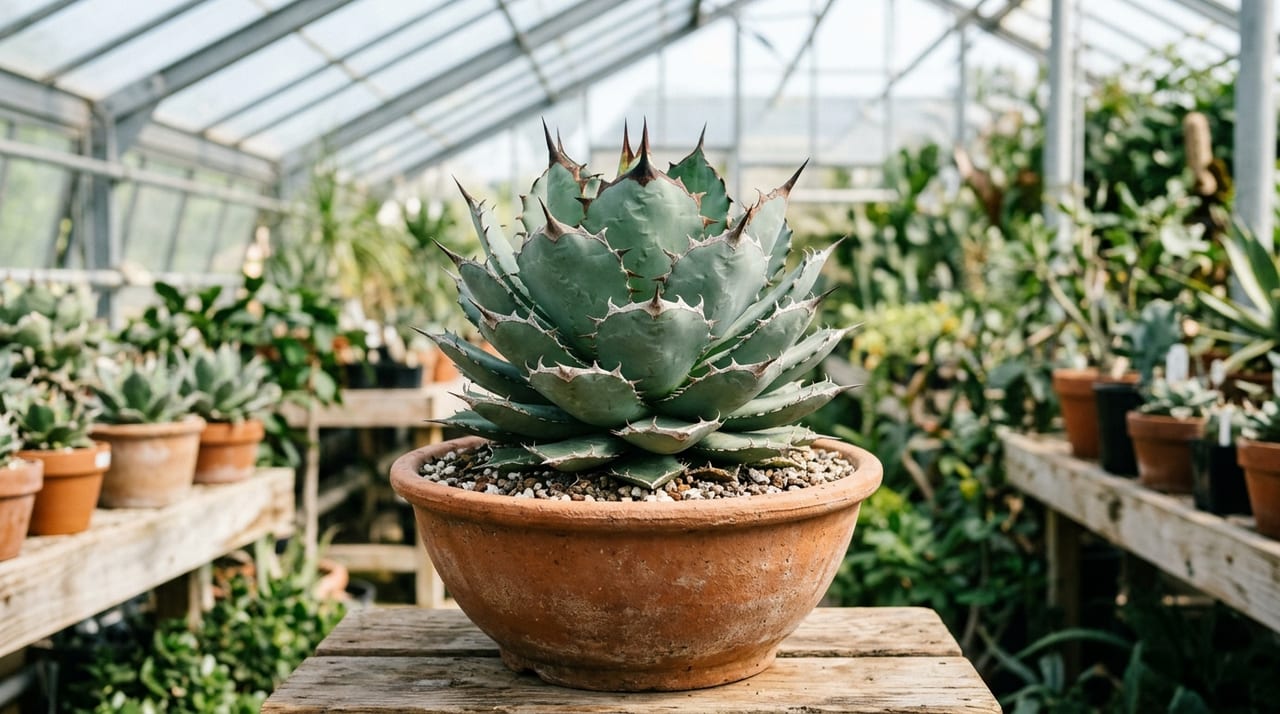
- Main species covered: Agave victoriae-reginae is the representative species. Titanota (Oteroi) is not a CITES-listed species and is not subject to regulation.
- Treatment of artificially propagated specimens: Artificially propagated specimens may be subject to relaxed regulations, but documentation from the exporting country is required.
- Appendix I species: Some agave such as parviflora are listed in Appendix I, and international commercial trade is principally prohibited.
Quarantine Procedures under the Plant Protection Law
Separately from CITES, importing plants into Japan requires quarantine inspection under the Plant Protection Law.
- Soil import is prohibited: Under Japan's Plant Protection Law, importing soil is principally prohibited. When importing agave, soil must be completely removed from the roots.
- Phytosanitary Certificate is essential: Without a "Phytosanitary Certificate" issued by the exporting country's government, the plant may be confiscated or destroyed.
- Quarantine process: Following arrival, the plant must be reported to the plant quarantine office, undergoes document inspection and physical inspection, and if passed, import permission is granted. If failed, the plant must be disinfected or destroyed.
- Postal shipments are also subject: Plants delivered via international mail are also subject to quarantine inspection. Quarantine inspection is conducted at the postal exchange center.
Specific Procedures for Personal Import
- Selecting a reliable supplier: It is essential to select a supplier that issues CITES documents and a phytosanitary certificate. Person-to-person transactions via social media often do not issue such documents and carry high risk.
- Pre-purchase verification: Before purchasing, confirm whether a CITES export permit can be issued, whether a phytosanitary certificate can be obtained, whether bare-root shipping is available, and whether proper packing methods are used.
- Applying for import quarantine inspection: Submit an advance application to the plant quarantine office. Contact your nearest quarantine office for guidance on the procedures.
- Cost estimate: Shipping (¥3,000–¥10,000), CITES document fees (several thousand yen and up), customs clearance fees, etc. Even for a single small seedling, total costs typically exceed ¥10,000.
Handling Bare-Root Plants
Agave imported from overseas typically arrives in "bare-root" condition with soil removed.
- Post-arrival care: Inspect the roots and cut away any mold or rot with a clean blade. Apply fungicide (such as Daconil and Benlate) and allow to dry for 1–3 days.
- Rooting management: Plant in potting soil or use hydroponic culture to promote root development. Keep in bright, indirect light away from direct sun. If progressing well, new roots should begin to appear within 2–4 weeks.
- Transport risk: Transport in summer or winter carries significant temperature stress, so spring or autumn import is recommended. The plant may be weakened from extended bare-root conditions during shipping, so careful nursing care is necessary after arrival.
- Packing for transport: The plant is typically wrapped in newspaper or paper towels and secured in a cardboard box. Quality suppliers will provide specialized packing for shipping.
Risks of Violation
Violating CITES regulations or the Plant Protection Law can have serious consequences.
- CITES violation penalties: Under the Foreign Exchange and Foreign Trade Law or the Tariff Act, penalties include imprisonment of up to 5 years or a fine of up to ¥10 million (or an amount equal to 5 times the cargo value if that exceeds ¥10 million), or both.
- Plant Protection Law violations: Subject to imprisonment of up to 3 years or a fine of up to ¥3 million.
- Confiscation and destruction: In cases of documentation deficiencies or quarantine failure, plants are confiscated and destroyed. Purchase price and shipping costs are not refunded.
- Applies to travel purchases too: If you purchase plants while traveling overseas and attempt to bring them back as carry-on baggage, the same procedures apply.
- Lack of knowledge is not an excuse: Ignorance of the law is not a defense. Even if you see casual transactions occurring on social media, you should absolutely avoid purchasing plants that have not undergone proper procedures.
Source: Foreign Exchange and Foreign Trade Act, Article 69-8 / Customs Act, Article 111 / Plant Protection Act, Article 39 (e-Gov Laws and Regulations)
Safe Domestic Sourcing Options
Given the risks and effort involved in importing from overseas, purchasing legally circulated agave within Japan is the safest and most reliable method.
- Purchasing from domestic growers: Agave propagated within Japan has no CITES or quarantine issues. Each year, high-quality domestically grown seedlings (plants grown from seed) are increasingly available, and are comparable in appeal to imported plants.
- Purchasing from authorized importers: Stock imported through proper procedures may have CITES documentation numbers on record. Selecting a trustworthy supplier is essential.
- Events and plant sales: Agave plant sales and botanical events feature domestic growers and authorized importers. You can inspect the plants before purchase and easily verify their provenance.
- Seed purchases: Small quantities of seed may have relaxed regulations, but always verify the reliability of the supplier.
Personal Import Risks and Precautions
Although agave personal import is attractive, it is important to understand several risks. First, there is the risk of damage in transit. Overseas shipments typically take 1–3 weeks, during which the agave is placed in darkness and exposed to temperature fluctuations. It is not uncommon to see leaf burn or dehydration upon arrival.
Additionally, language barriers can lead to communication gaps resulting in incorrect variety shipments, and post-arrival customer service disputes can become difficult to resolve. Customs duties, consumption tax, and plant quarantine fees are charged separately, so basing decisions solely on the listed price can result in costs much higher than expected.
If you have concerns about personal import, purchasing from a trusted domestic grower is safer and more reliable.
Purchase Agave Safely and Securely on GrowerDirect
Although importing agave from overseas is attractive, you must clear both CITES and the Plant Protection Law, which is a high hurdle for beginners. On GrowerDirect, you can purchase high-quality agave directly from trusted domestic agave specialist growers that are legally distributed. A selection of agave is available for confident adoption, including excellent domestically grown seedlings and rooted plants from authorized importers. Obtain your favorite plant safely without going through complex import procedures.