Guide to Choosing the Right Pot for Agave | From the Perspective of Material, Size, and Design
A detailed guide to choosing the right pot for agave cultivation from the perspective of material, size, and design. This article introduces the characteristics of plastic pots, ceramic pots, and cement pots, along with tips for selecting a pot that matches your plant's size.
Key Takeaways
A detailed guide to choosing the right pot for agave cultivation from the perspective of material, size, and design. This article introduces the characteristics of plastic pots, ceramic pots, and cement pots, along with tips for selecting a pot that matches your plant's size.
Why Pot Selection Determines Success or Failure in Agave Cultivation
When growing agave, pot selection is a crucial factor that directly affects not only aesthetic preference but also the plant's health and growth rate. Selecting the right pot allows roots to develop healthily and create a tight, beautiful plant form. Conversely, using an unsuitable pot can lead to root rot or root binding, weakening the plant, no matter how carefully you manage soil and watering.
Agave is a succulent plant native to arid regions and extremely dislikes roots becoming overly moist. Therefore, "good drainage" and "air permeability" are the most critical factors in pot selection. Understand each characteristic across three dimensions—material, size, and design—and choose a pot that suits your growing environment and the variety you're cultivating.
Comprehensive Comparison of Pot Material Characteristics
Common pot materials used for agave cultivation each have distinct advantages and disadvantages. It's important to use them appropriately according to your needs.
Plastic Pots (Slit Pots)
Their greatest merit is being lightweight, affordable, and easy to manage. In particular, pots with slits (cuts) on the sides offer excellent drainage and air permeability, and provide an "air pruning" effect where roots naturally dry and branch when they touch the slits. They prevent root circling (roots spiraling in circles within the pot) and promote better root spread, making them the most balanced practical choice. They're also effective for preventing moisture buildup during the rainy season.
Unglazed Terracotta Pots
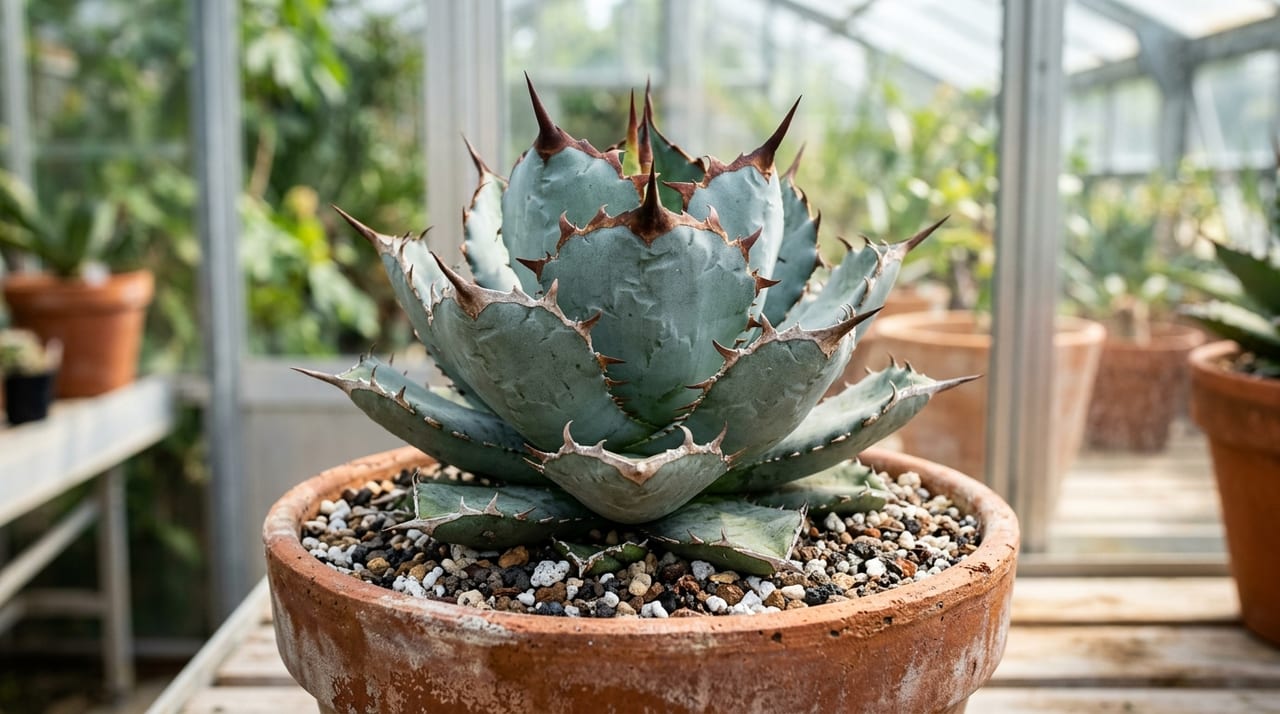
The porous material enhances air permeability and drainage, allowing excess moisture to evaporate through the pot's sides. This material is highly compatible with agave because oxygen reaches the roots easily and root rot risk is reduced. However, they dry quickly, requiring more frequent watering during summer. Additionally, they are relatively fragile and prone to breaking if dropped.
Ceramic Pots (Glazed)
They have an elegant appearance and many beautiful options for interior decoration. However, glazed pots have virtually zero air permeability from the sides and drain poorly compared to unglazed pots. It's essential to choose pots with sturdy drainage holes and establish a proper drainage layer.
Cement/Concrete Pots
Their rugged, wild texture pairs perfectly with agave's strong, bold foliage. They have the practical advantage of being heavy, making large agave plants less prone to tipping over. While their air permeability is not as high as unglazed pots, their thick material has the benefit of buffering temperature fluctuations.
How to Choose Pot Size and Timing for Repotting
Basic Principle: "One Size Larger" is Correct
Pot size should be based on a diameter one size larger (approximately 2–4 cm) than the plant's width. Pots that are too large slow soil drying and dramatically increase root rot risk. It's said that agave tends to develop a tighter, more compact form when grown in a pot that's slightly snug.
Choosing Depth
Agave roots tend to grow strongly downward. Standard-depth or slightly deeper pots are better suited to root development than shallow pots (such as azalea pots). Varieties with thick roots, such as Agave titanota, develop better in deeper pots. Conversely, varieties like Agave victoriae-reginae can thrive in relatively shallow pots.
Repotting Frequency
Upsizing is typically done once every 1–2 years during the growing season (spring to early summer). If roots are emerging in large numbers from the pot's drainage holes or soil dries much faster than before after watering, it's a sign of root binding. When repotting, remove old soil, trim damaged roots, and plant in fresh soil.
The Importance of Drainage Holes and Drainage Structure
When growing agave, drainage holes in the pot bottom are a non-negotiable requirement. Planting in a pot without holes can lead to water accumulation inside the pot and root rot, no matter how carefully you water. Even if you like the design, avoid potless pots or drill additional holes before using.
To further improve drainage, it's effective to line the pot bottom with a net, then layer pumice stone or large-grain akadama soil 2–3 cm thick to create a drainage layer. Slit pots allow water and air to flow through the sides, making them a reliable choice during humid environments, especially from June through summer.
Developing the habit of lifting the pot after watering to check its weight helps you sense the soil's moisture level. When it feels light, that's your cue to water.
Design and Aesthetics: Coordination Tips
Agave is a highly ornamental plant, and coordinating it with the right pot is one of its charms.
- Matte black pots: The contrast with Agave titanota's white teeth stands out, creating a refined impression
- White or gray pots: Highlight agave's green color and create a clean, stylish aesthetic
- Japanese-style, subdued ceramic pots: Suit delicate varieties such as Agave parviflora and Agave victoriae-reginae
- Artisan-made pots: Displays combining one-of-a-kind pots with rare varieties attract significant attention on social media and remain popular among collectors
As a hint for choosing pot colors, selecting complementary colors to your agave's foliage creates visual contrast and dramatic effect. When placing multiple pots outdoors, unifying pot material and color creates overall cohesion.
GrowerDirect's Trust and Safety Framework
GrowerDirect is a platform where you can purchase rare plants, including agave, directly from growers. A major strength is that you can directly hear practical advice from growers based on actual cultivation experience—such as the types of pots they actually use and size recommendations for different varieties.
Because you can contact growers before and after purchase, they can patiently address common beginner questions like "What pot should I use for the plant I received?" and "How do I care for it right after repotting?"
Additionally, GrowerDirect's seller rating system and transaction transparency ensure you can confidently purchase plants from trustworthy growers. Since you can discuss pot selection and plant selection simultaneously, you can start post-planting care smoothly. Receive guidance directly from growers tailored to your growing space and conditions, and enjoy a deeper agave-growing experience.