Agave Watering Guide: Seasonal Frequency and Root Rot Prevention Tips
A seasonal guide to agave watering frequency and methods. Covers differences in watering amounts during growth and dormancy periods, how to check soil dryness, managing during rainy seasons, and root rot prevention tips.
Key Takeaways
A seasonal guide to agave watering frequency and methods. Covers differences in watering amounts during growth and dormancy periods, how to check soil dryness, managing during rainy seasons, and root rot prevention tips.
What Is Agave Watering? The "Correct Way to Hydrate" Drought-Tolerant Plants
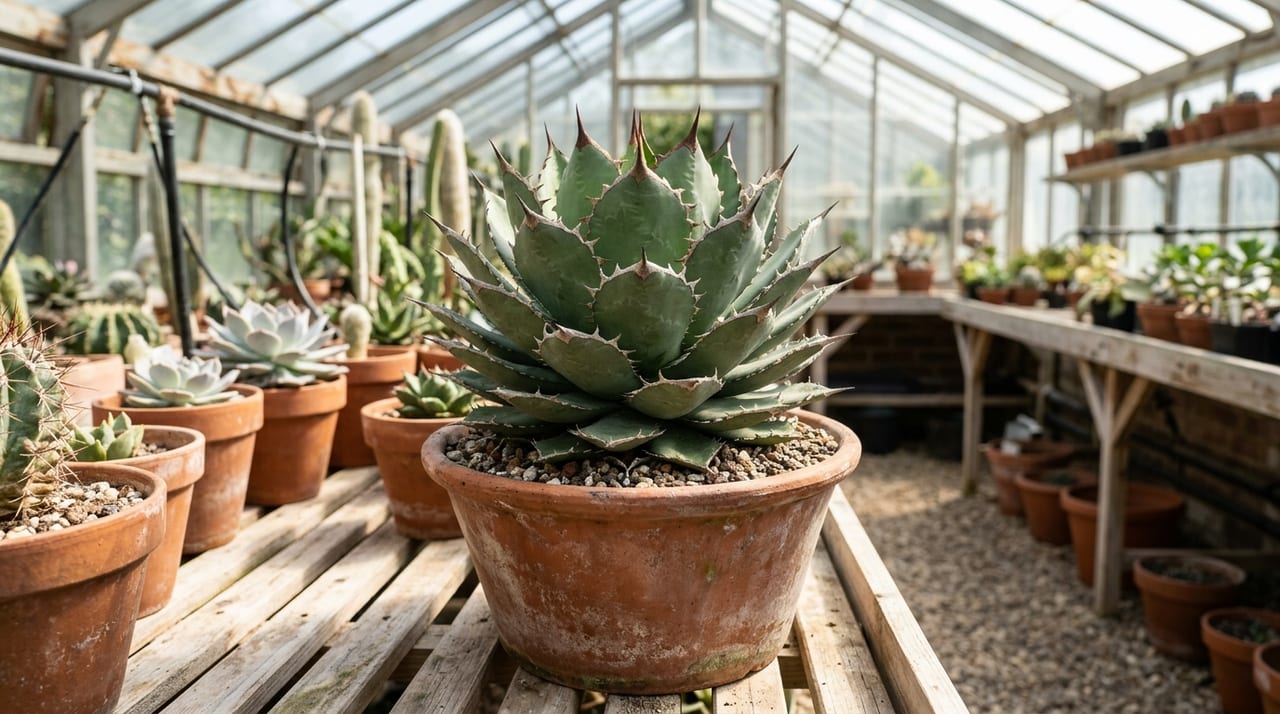
Agaves are a group of succulents encompassing hundreds of species—such as Agave americana, Agave titanota, and Agave parviflora—native to deserts and arid regions. With their striking forms and ease of care, they have become an established favorite among succulent and caudex plant enthusiasts. While many assume that because they tolerate drought, "watering is hardly necessary," this is a major misconception.
For agaves, watering is one of the most critical management factors affecting growth. Too much water causes root rot and the plant can suddenly collapse. Too little stops growth and leaves become shriveled. The key is determining the right timing and amount.
This article covers the basic principles of agave watering, seasonal watering frequency, root rot prevention techniques, and how to read distress signals—all presented in a practical way for those new to growing agaves. For more details on variety-specific differences, see Agave Growing Conditions and Watering.
Basic Watering Principles | "Dry Out Completely, Then Water Thoroughly"
The most important rule for watering agaves is just one: "Let the soil dry completely, then water thoroughly until water flows from the pot's drainage holes." This "cycle of dryness and moisture" is the heart of agave cultivation.
Why "Dry Out Completely"?
Agave roots are structured to absorb nutrients even in low-moisture environments. When soil stays constantly moist, roots easily become oxygen-deprived and pathogens multiply more readily. Conversely, allowing the soil to dry completely lets roots absorb oxygen properly, preparing them to take up water smoothly at the next watering.
Correct Watering Steps
- Confirm the soil is dry all the way to the pot's bottom Surface dryness alone is not enough. The soil is ready when the pot feels light when lifted, or when a wooden chopstick inserted and withdrawn from the soil shows no moisture.
- Water the base of the plant thoroughly Do not pour water directly on the leaves, as water pooling in the leaf rosette can cause rot. Bring the watering can's nozzle close to the soil and concentrate water around the base.
- Water until it drains from the pot's bottom Sparse watering causes salt and excess minerals to accumulate in the soil. Watering until water flows from the bottom ensures fresh water circulates through the soil.
- Empty the saucer immediately If water collects in the saucer and is left there, roots remain constantly wet. Make it a habit to empty the saucer after every watering.
Seasonal Watering Frequency | Your Year-Round Management Calendar
Agaves' growth rate changes significantly with the seasons. Adjusting watering frequency accordingly is the secret to healthy growth.
Spring (March–May): Aim for Once per Week
Spring is when agaves awaken as temperatures rise. New leaves unfold in succession and growth begins in earnest. Once the soil is dry, start watering roughly once per week. March can still have cool mornings and evenings, so water in the morning on warm days. Once you see new leaves unfurling, it's a clear sign the plant has entered active growth.
Summer (June–August): Once to Twice per Week, in the Evening or Later
Summer is when agaves grow most vigorously. Water evaporates quickly, so watering once or twice per week may be necessary. However, avoid watering in midday direct sun during peak summer—roots can be damaged if you apply cold water to a pot heated to high temperatures. Wait until evening or night when temperatures have dropped.
During the rainy season, avoid leaving plants exposed to rain. Prolonged rain can overwhelm drainage and raise the risk of root rot. Move plants to shelter under an eave or roof, or arrange them so rain does not reach them.
Autumn (September–November): Gradually Reduce to Once Every 10–14 Days
As temperatures drop in autumn, growth slows. Reduce watering frequency to roughly once every 10–14 days. By November, aim to water only about twice per month. To adapt to autumn's rapid temperature swings, deliberately shift toward "drier management" during this period.
Winter (December–February): About Once per Month, with Near-Dormant Watering
In winter, when most varieties enter dormancy or stop growing, water sparingly—roughly once per month. Some varieties can be kept almost completely dry when temperatures drop below 5°C. However, if plants are indoors, heating can dry the soil faster than expected. Rather than withholding water entirely, aim to give a small amount roughly once every 2–3 weeks.
Always water in the morning on warm days during winter. Watering in the evening or later can leave the pot filled with cold water overnight, damaging roots.
Root Rot Causes and Prevention Strategies
Root rot is the leading cause of agave death. Once it progresses, recovery is difficult; in the worst case, you lose the entire plant. Prevention is the best strategy.
Main Causes of Root Rot
- Poor-draining soil Standard potting mixes retain too much moisture for agaves. Use well-draining soil with plenty of red lava rock, pumice, or perlite. Specialty agave mixes are commercially available and recommended for beginners.
- Leaving water standing in saucers As mentioned above, emptying the saucer is essential.
- Exposing plants to rain during rainy or wet seasons Without protection outdoors during rainy seasons, excessive moisture persists.
- Overwatering during winter Watering too much while the plant is dormant causes roots to rot even as they cannot absorb the moisture.
What to Do If You Discover Root Rot
If the base of the plant is mushy or smells foul, it's a sign of root rot. Remove the plant from its pot immediately and cleanly cut away rotted roots and affected stem tissue with sterile scissors or a blade. Let the cut surfaces dry for several days, then repot in fresh, clean soil. Early detection and prompt action are key.
For more detailed guidance on identifying symptoms, see Agave Disease, Pest, and Root Rot Complete Care Guide.
Watering SOS Signs | Listen to Your Plant
Agaves cannot speak, but their leaves signal hints about watering needs. Regular observation helps you catch problems early.
| Symptom | Cause | Solution |
|---|---|---|
| Leaves curl inward | Insufficient moisture | Water promptly if soil is dry |
| Wrinkles across all leaves | Severe water shortage | Water thoroughly and wait for recovery |
| Lower leaves yellow and soften | Overwatering | Stop watering and let soil dry |
| Plant base darkens | Early root rot | Remove from pot immediately and inspect/remove affected areas |
| Leaves firm and turgid | Healthy state | Continue current management |
Healthy agave standard: Leaves with good turgor and a plant standing firmly stable are signs of health. There's no need to panic over mild dryness. For agaves, "slightly dry conditions" actually mimic their natural environment.
How GrowerDirect Ensures Trust and Safety
Agave care details vary by variety. Those new to growing agaves often wonder, "How do I care for this specific variety?"
With GrowerDirect, you purchase agaves directly from growers, so sellers often include details about their growing environment and watering frequency, helping you manage your plant after purchase. You can also message sellers directly with questions. Confirming specific cultivation tips before buying—such as "How much should I water in summer?" or "Can it thrive indoors?"—is a major advantage of buying directly from growers.
Additionally, GrowerDirect handles all payments within the platform, creating a secure environment for both buyers and sellers to conduct business confidently. Those new to agaves are welcome to find trustworthy sellers through GrowerDirect and discover a plant to cherish for years to come.