Types of Aquasoil and Selection Comparison | Explaining the Differences Between Nutrient-Rich and Adsorption-Type
Comparing types and selection methods for aquasoil substrate used in aquatic plant tanks. Explaining the differences between nutrient-rich and adsorption-type, particle sizes, and initial setup management.
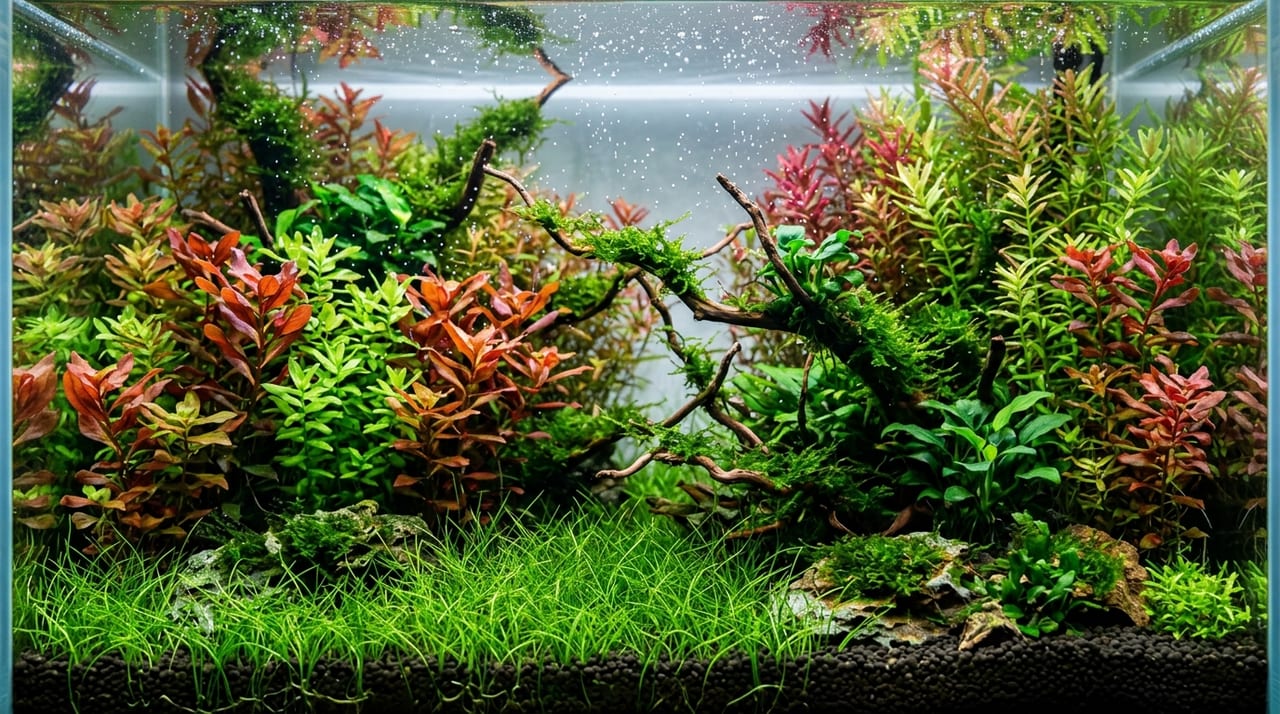
Key Takeaways
Comparing types and selection methods for aquasoil substrate used in aquatic plant tanks. Explaining the differences between nutrient-rich and adsorption-type, particle sizes, and initial setup management.
Aquasoil is the most widely used substrate material for aquatic plant tanks. It is soil particles that have been fired and hardened, making it easy for aquatic plant roots to develop, and it has the effect of adjusting water quality to slightly acidic soft water. However, nutrient-rich and adsorption-type soils have vastly different properties, and choosing the wrong type can lead to difficulties during the initial setup. Here we explain the types of soil and their characteristics, as well as key points for selection.
Characteristics of Nutrient-Rich Aquasoil and Suitable Tank Types
Nutrient-rich aquasoil is a type that contains abundant nutrients within the soil itself.
Advantages
- Nitrogen, phosphorus, potassium, and trace elements necessary for aquatic plant growth gradually leach from the soil, allowing aquatic plants to grow well from the beginning of the initial setup.
- For serious aquatic plant layout tanks with large quantities of stem plants, nutrient-rich aquasoil demonstrates overwhelming performance.
Disadvantages
- Ammonia and nitrite are released in large quantities during the initial setup period, so livestock cannot be introduced immediately.
- Typically 2–4 weeks of cycling without livestock is necessary.
- There is also a risk of algae blooming explosively during the initial period of water quality instability.
Representative Products
ADA Aquasoil Amazonia is synonymous with nutrient-rich aquasoil. It boasts very high nutrient content, but the difficulty of initial setup is relatively high.
Characteristics of Adsorption-Type Aquasoil and Suitable Tank Types
Adsorption-type aquasoil is a type that excels at adsorbing harmful substances in water.
Advantages
- Water quality tends to stabilize shortly after setup, and in some cases livestock can be introduced immediately.
- Initial algae problems are also less likely to occur.
- It has good compatibility with shrimp keeping and is frequently used in shrimp tanks.
- The greatest advantage is that it is easy for beginners to use.
Disadvantages
- Because nutrient content is lower, aquatic plant growth is inferior to nutrient-rich aquasoil.
- When cultivating stem plants seriously, additional fertilization with liquid fertilizer or substrate fertilizer is essential.
- Additionally, adsorption capacity has limits, and after several months of saturation, the soil may begin to release the substances it has been adsorbing.
Representative Products
JUN's Platinum Soil and GEX's Pure Soil are typical examples. Prices are often reasonable and they are suitable for beginners.
Choosing Particle Size
Aquasoil comes in normal and powder particles, and choosing the right type for the application is important.
| Item | Normal Particles (approx. 3–5mm) | Powder Particles (approx. 1–2mm) |
|---|---|---|
| Characteristics | Good water permeability, allowing water flow within the substrate. Used as a base for thick layering. | Foreground plant roots develop strongly, and planting is also easy. |
| Points to Note | Because particles are large, planting small foreground plants can be difficult. | When laid thickly, there is a risk of the substrate becoming anaerobic. |
Recommended Method
A two-layer structure with 3–4cm of normal particles on the bottom and 1–2cm of powder particles on top is ideal. This achieves both good water permeability and easy planting, and many experienced aquascapers use this method.
Initial Setup Management for Aquasoil
Management immediately after laying the soil determines the long-term stability of the tank.
Water Addition Tips
Place kitchen paper or a vinyl sheet over the soil and pour water slowly over it. Pouring water directly causes the soil to become suspended, leading to cloudiness.
Cycling Period
For nutrient-rich aquasoil, continue running the filter for 2–4 weeks without introducing livestock. During this time, perform water changes of approximately 50% every 2–3 days to remove the ammonia being released.
Plant Aquatic Plants Early
Plant aquatic plants early even during the cycling period. By having aquatic plants absorb nutrients, you can suppress algae growth. It is especially effective to plant large quantities of fast-growing stem plants.
Soil Replacement Timing and Lifespan
Soil is a consumable. It cannot be used indefinitely.
Expected Lifespan
Generally, the lifespan of soil is 1–2 years. When the particles break down and become muddy, losing water permeability, it is time for replacement.
Signs of Replacement
- Aquatic plant growth has slowed
- pH has increased from previous levels
- Bubbles rise from the substrate
These symptoms indicate soil deterioration.
Replacement Method
Complete replacement is the basic approach, but if livestock are in the tank, you can also replace the soil half at a time. If you space out the replacement of the remainder by 2–4 weeks, you can minimize damage to bacteria.
Soil selection is an important decision that greatly influences the success of an aquatic plant tank. On GrowerDirect, aquatic plant growers share information about the soil they use in their own tanks. You can also consult about selecting soil suited to the aquatic plants you are purchasing, so please make use of this resource.
Soil Selection Checklist
Here we summarize the criteria for choosing soil.
- Confirm what livestock you will put in the tank. When keeping shrimp, adsorption-type soil is safe and requires a shorter cycling period. For a serious aquatic plant layout with large quantities of stem plants, nutrient-rich soil delivers excellent performance.
- Consider your management level and available time. Nutrient-rich soil requires daily water changes initially, which can be a burden for busy people.
- In terms of budget, expensive products are not necessarily superior. By combining inexpensive adsorption-type soil with solid fertilizer, you can create a growing environment that matches nutrient-rich soil.
- For particle size selection, if you are unsure, the two-layer method with normal particles as the base and powder particles as topping is versatile.
Soil selection is the initial choice that greatly influences the success of an aquatic plant tank. Choose soil that matches your tank style and management style, and build the foundation for a beautiful aquatic plant tank. For beginners, starting with adsorption-type soil and stepping up to nutrient-rich soil after becoming accustomed to management is the path with the fewest failures.
Two-Layer Application Technique in Practice
The two-layer structure of normal and powder particles is the optimal substrate design practiced by many experienced aquascapers.
- Lay 3–4cm of normal particles on the tank bottom. This layer ensures water permeability and prevents anaerobic conditions at the bottom.
- Lay 1–2cm of powder particles on top. Powder particles allow foreground plant roots to develop easily and planting is also simple.
- By laying thinly in the front (approximately 3cm total) and thickly at the back (approximately 6–8cm total), you can achieve a layout with a sense of depth.
- If the soil mound tends to collapse, use stones or plastic dividers to retain the soil.
This two-layer structure makes it possible to achieve both good root development in foreground plants and healthy water circulation throughout the substrate.
Soil Reset Method and Procedure
Resetting soil is an unavoidable task when maintaining an aquatic plant tank long-term. The reset procedure is as follows.
- Transfer aquatic plants and livestock to a separate container. Attachment-type plants can be removed relatively easily along with driftwood or stones.
- Cut and preserve the healthy upper portions of stem plants.
- Drain the old soil, rinse the tank, and then lay new soil.
- After re-setup, perform the same management as during the initial setup period, and return livestock only after setting aside a 2–4 week stabilization period.
Soil selection is the initial choice that greatly influences the success of an aquatic plant tank. Choose soil that matches your tank style and management style, and build the foundation for a beautiful aquatic plant tank. For beginners, starting with adsorption-type soil and stepping up to nutrient-rich soil after becoming accustomed to management is the path with the fewest failures.