Bonsai Purchasing Guide | Choosing the Right Trees for Beginners and How to Identify Quality Bonsai
Tips for purchasing bonsai. This guide explains the characteristics of beginner-friendly tree species, how to evaluate the trunk, root base, and branching structure, the relationship between age and price, and important considerations when buying online.
Key Takeaways
Tips for purchasing bonsai. This guide explains the characteristics of beginner-friendly tree species, how to evaluate the trunk, root base, and branching structure, the relationship between age and price, and important considerations when buying online.
Related Species
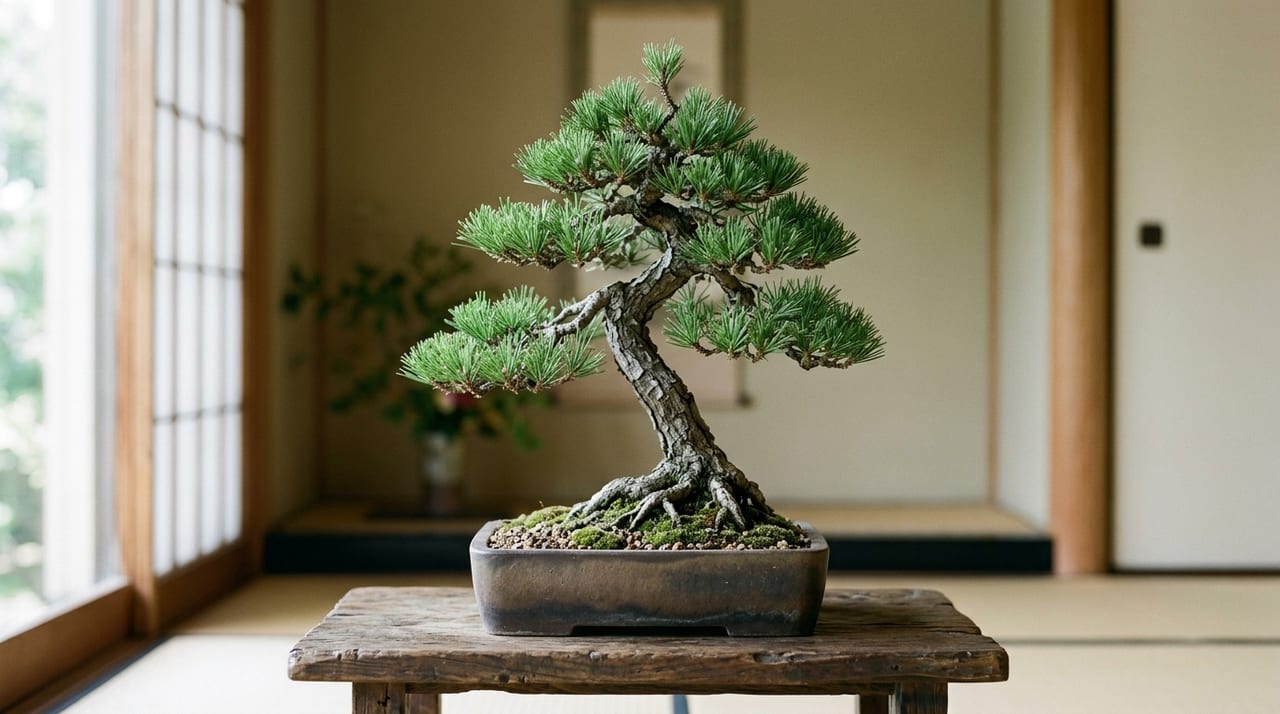
Bonsai is a traditional Japanese horticultural art form, and its popularity has been growing overseas in recent years. However, many people are uncertain about which tree species to choose when purchasing bonsai for the first time, or how to identify a quality bonsai. This article explains the key points for choosing bonsai successfully, even for beginners.
Beginner-Friendly Tree Species
When starting with bonsai, choose sturdy and easy-to-maintain tree species.
Conifers (Evergreen Needle-Leaved Trees)
- Black Pine: The classic bonsai choice. It grows strong and healthy with proper sunlight and watering.
- Five-Needle Pine: Grows slowly and maintains its shape well, making it ideal for beginners.
- Hinoki Cypress: Known for the beauty of jin and shari (exposed wood). Relatively tolerant of dryness.
Deciduous Trees
- Japanese Maple: Enjoy the changes through the seasons. The autumn foliage is exceptionally beautiful.
- Japanese Zelkova: Has a beautiful broom-like upright form and is easy to shape, even for beginners.
- Japanese Apricot: A beginner-friendly flowering bonsai. Winter pruning is key.
Fruit-Bearing and Flowering Species
- Firethorn (Pyracantha): Has beautiful red berries and is hardy and easy to grow.
- Dwarf Pomegranate: Blooms year-round and offers long-lasting flowers.
For beginners, Five-Needle Pine or Japanese Maple are recommended.
How to Evaluate the Trunk, Root Base, and Branching Structure
To identify quality bonsai, check the following three key points.
Evaluating the Trunk
- Does the trunk naturally taper (narrow) from the base toward the tip?
- Does the trunk have bark texture that conveys age and maturity?
- Are wounds and cut marks inconspicuous?
- Is the bend or curve natural and aesthetically pleasing?
Evaluating the Root Base
- Do the roots spread evenly in all directions from the base?
- Are the roots one-sided (not growing in only one direction)?
- Is the root base thick and stable?
Evaluating the Branching Structure
- Are branches alternately arranged left and right in a balanced manner?
- Do the branches gradually shorten from the lower to upper parts?
- Are there no whorled branches (multiple branches emanating from the same point)?
- Have undesirable branches (reverse branches, crossed branches, etc.) been removed?
The Relationship Between Age and Price
Bonsai prices are determined primarily by the following factors.
| Factor | Price Impact |
|---|---|
| Tree Age | Older trees are more expensive. Trees under 10 years old are relatively affordable |
| Trunk Thickness | Thicker trunks indicate more years of cultivation and command higher prices |
| Shape Quality | Well-maintained form commands higher prices |
| Pot | Artisan-made pots can be expensive in themselves |
| Species Rarity | Rare varieties or origin-limited species are more expensive |
Budget Guide for Beginners
- Entry-level bonsai (mini/small): ¥3,000–¥10,000
- Medium bonsai (intermediate): ¥10,000–¥50,000
- Large bonsai (advanced): ¥50,000+
It is recommended to start with a small bonsai in the ¥10,000 price range.
Important Considerations When Buying Online
When purchasing bonsai online, check the following points.
Photo Verification Points
- Are photos taken from multiple angles (front, back, and sides)?
- Is the root base area clearly visible?
- The photo must be of the actual specimen (watch for "※Image" notation).
Information to Verify in Listings
- Accurate tree species name
- Tree age (estimated is acceptable)
- Tree height and pot size
- When the tree was last repotted
- Whether the shape is intact (not fallen or broken)
Shipping Precautions
- Bonsai are heavy, so confirm shipping costs in advance.
- Confirm the packing method with the seller to ensure the pot does not break.
- Spring (March–April) and autumn (September–October) are ideal purchasing times, as they are also suitable for repotting.
- Deciduous trees in midwinter have no leaves, making it difficult to judge from photos alone.
After-Arrival Care
- Check that soil has not spilled during transport.
- Check that branches are not broken.
- Keep in partial shade for 1–2 weeks after arrival for recovery.
- Water thoroughly once the soil surface dries.
To Deepen Your Appreciation of Bonsai
Bonsai is not merely plant cultivation but an art form that condenses natural landscapes into a pot. Its depth is so profound that it can never be fully mastered in a lifetime, with many enthusiasts spending decades cultivating a single tree.
The most important thing when starting with bonsai is patience. Bonsai gain value through time and dedication. Begin with inexpensive materials or cuttings to master basic care techniques: watering, fertilizing, and light management. Once these fundamentals are mastered, move on to pruning, wiring, and repotting techniques—this is the shortcut to improvement.
Attending gatherings and exhibitions of bonsai enthusiasts also aids improvement. Viewing others' work develops your aesthetic sense and reveals areas for your own bonsai to improve. Direct advice from experienced practitioners is invaluable.
How to enjoy bonsai is personal. Whether you aim for competitions, enjoy seasonal changes in your home garden, or incorporate bonsai as indoor décor, find a way to engage with bonsai that fits your lifestyle.
Basic Bonsai Care Techniques
Here are the fundamental techniques for maintaining healthy bonsai.
The Art of Watering The basic rule for watering bonsai is to water generously once the soil surface turns white and dry. Water until it flows from the pot's drainage holes, then discard any water in the saucer. In summer, water twice daily (morning and evening); in winter, water once every 1–2 days. However, this varies significantly depending on tree species and pot size.
Fertilizing Guidelines During the growing season (April–October), apply solid organic fertilizer once a month. Reduce fertilizing during the rainy season and peak summer. The key is to apply less for conifers and slightly more for broad-leaved species.
Light Management Most bonsai thrive in bright outdoor locations. However, intense direct sunlight in midsummer can cause leaf scorch, so use shade cloth or move to partial shade. Generally avoid indoor placement. If temporarily moved indoors for display, return to outdoors within 2–3 days.
Pest Control Common pests include aphids, scale insects, and spider mites. Monthly preventive spraying and regular observation enable early detection and prompt treatment.
Tools and Workspace for Bonsai
Basic bonsai care requires several essential tools: pruning shears and branch cutters, wire (various aluminum wires), tweezers, a jin file, and a turntable. These cover most tasks. Clean and dry tools after use and periodically sharpen blades to maintain work efficiency.
Position your work table at waist height to maintain proper posture. Since bonsai work involves fine details, adequate lighting and a magnifying glass are helpful.
Find Bonsai on GrowerDirect
GrowerDirect features bonsai from nurseries and enthusiasts who have carefully cultivated their trees. With photos of actual specimens, you can examine tree conditions in detail. If you find a tree of interest, you can message the grower directly for care advice, making GrowerDirect an excellent resource for your first bonsai purchase.