Bonsai Display Guide|Fundamentals and Etiquette of Tokonoma and Shelf Display
Explains the basic etiquette for displaying bonsai beautifully. Introduces how to arrange bonsai in tokonoma, the composition of shelf displays, selecting accent plants and display boards, methods for expressing seasonality, and ways to display bonsai to suit modern interiors.
Key Takeaways
Explains the basic etiquette for displaying bonsai beautifully. Introduces how to arrange bonsai in tokonoma, the composition of shelf displays, selecting accent plants and display boards, methods for expressing seasonality, and ways to display bonsai to suit modern interiors.
Related Species
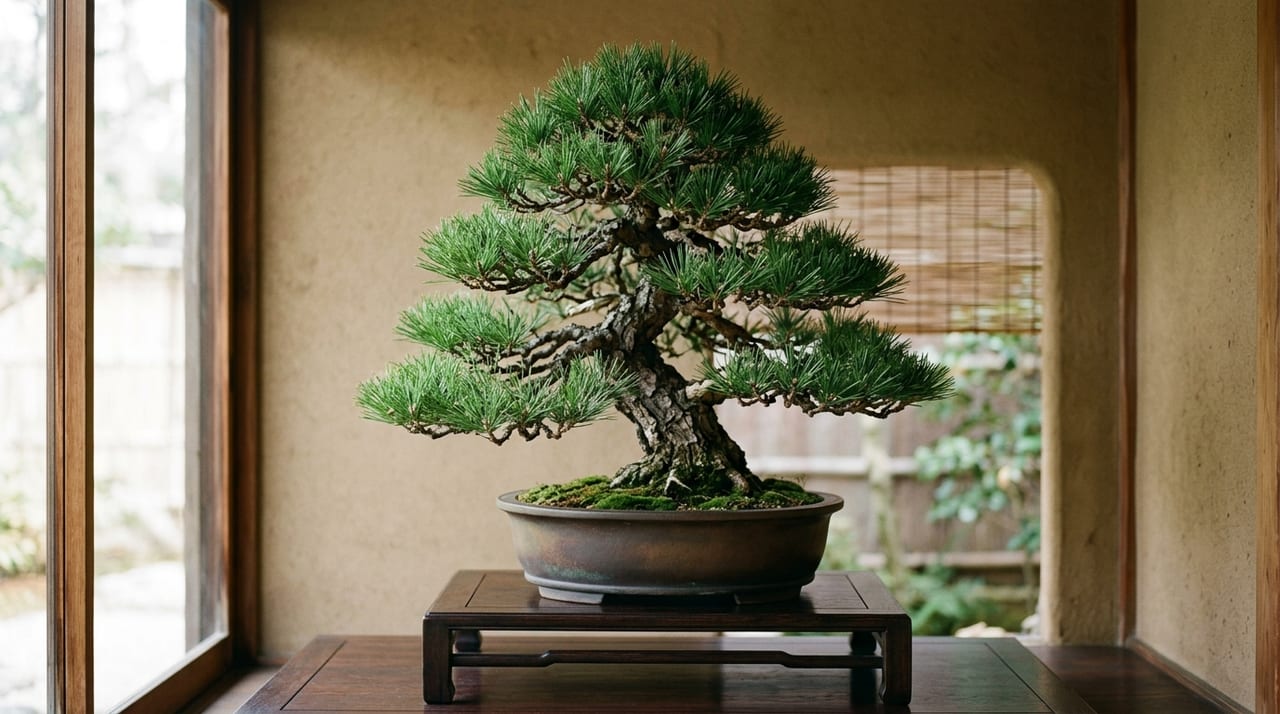
Bonsai has significant meaning not only in cultivation but also in display and appreciation. In particular, arranging bonsai in a tokonoma is the essence of bonsai culture, where the harmony of tree, vessel, and accompanying plants expresses a worldview as an art piece. This article explains the basic etiquette for displaying bonsai and ways to display bonsai to suit modern living spaces.
Tokonoma Display Basics
A tokonoma is the most formal place in Japanese architecture and the most traditional space for displaying bonsai.
- Basic Composition
The tokonoma bonsai display is composed of three elements: the main tree (primary bonsai), accent plants (grass-form plants or viewing stones), and a hanging scroll. This tripartite arrangement expresses a worldview of concentrated natural scenery.
- Placement of the Main Tree
The main tree is placed slightly to the left or right of center in the tokonoma. The basic rule is to arrange it so the tree's flow (direction of branch extension) faces toward the center of the tokonoma. A tree with rightward flow is placed on the left side, and a tree with leftward flow is placed on the right side. Placing it on a display board (jikiita) is the formal way.
- Role of Accent Plants
Accent plants play the role of adding seasonality and narrative to the main tree. Grass-form bonsai (small wild plants planted in pots) are the most common, arranged on the opposite side of the main tree. Viewing stones (suiseki) may also be used to express mountains or valleys. It is essential that accent plants be smaller and more modest than the main tree, playing a supporting role that enhances the main tree.
- Harmony with Hanging Scrolls
The hanging scroll serves as the background of the display and expresses the season or aesthetic intent. Coordinate the theme—for example, a landscape painting scroll for pine bonsai, or an autumn poem scroll for maple bonsai. Although the scroll can be omitted if unavailable, having a background elevates the elegance of the display.
Enjoying Shelf Display
Shelf display is a method of arranging multiple bonsai on shelves with stepped heights, a style commonly seen at exhibitions and other venues.
- Three-Point Arrangement
This is the most basic shelf display composition. Arrange the main tree on the top level, mid-sized bonsai on the middle level, and grass-form or small bonsai on the lower level. Create variation in size and visual weight at each level so the viewer's gaze flows from top to bottom.
- Five-Point Arrangement
This is an expanded version of the three-point arrangement, using more bonsai to express a richer landscape. Achieving a harmonious composition requires experience, but expertly executed five-point arrangements at exhibitions move visitors.
- Choosing a Display Shelf
Bonsai display shelves are primarily wooden, ranging from high-end pieces made from fine woods like rosewood and black persimmon wood to simple bamboo shelves. Choose a shelf whose material and color suit the mood of your bonsai. Displaying bonsai on modern-designed shelves, not just traditional Japanese ones, offers a fresh appeal.
Using Display Boards and Stands
The board placed under a pot when displaying bonsai is called a "display board (jikiita)," and a slightly elevated stand is called a "table (shoku)."
| Type | Characteristics |
|---|---|
| Display board | A thin board that stabilizes the bonsai pot and enhances the appearance of the entire display. Available in beautiful wood grain or lacquered finishes, chosen to match the pot's mood. Sizing one notch larger than the pot is standard. |
| Table | An elevated stand that lifts the bonsai for better visibility. Placing the main tree on a table increases its presence and enhances the formality of the display. Various shapes are available—round, square, and irregular—to suit the tree form. For cascading tree forms like kengai, a tall stand is essential. |
Expressing Seasonality
The true pleasure of bonsai display is the ability to express the changing of the seasons.
| Season | Display Characteristics |
|---|---|
| Spring | Feature flowering bonsai like plum and cherry as the main attraction, with spring flowers as accents. Deciduous bonsai with fresh green budbreak also offer a refreshing spring quality. |
| Summer | Use pine or maple with rich green foliage as the main tree, adding cool-toned viewing stones or moss to evoke a cool feeling. The dense leafy appearance conveys summer's vitality. |
| Autumn | Maples and zelkovas with autumn color take the starring role. Red berries of fruiting bonsai (pyracantha, Japanese quince, Chinese parasol tree, etc.) add autumn atmosphere. Adding miscanthus or lisianthus grass-forms deepens the autumn mood. |
| Winter | A season to enjoy the skeletal beauty of bare deciduous tree branches. The vigorous evergreen quality of conifers also stands out in winter. Adding winter chrysanthemums or winter camellias expresses the austere beauty unique to winter. |
Displaying Bonsai in Modern Interiors
Bonsai can be fully enjoyed in modern living spaces without traditional Japanese rooms.
- Displaying in the Living Room
Simply placing a single bonsai on a windowsill counter or side table adds calm and natural beauty to a space. Modern interiors pair well with conifer bonsai and contemporary pots.
- Displaying in the Entryway
The entryway, where guests are welcomed, is an ideal display location for bonsai. Placing seasonal flowering bonsai there also serves to greet visitors with the season's spirit.
- Displaying on Shelves or Open Shelving
Arranging small bonsai on modern shelves or open shelving is also a stylish way to display them. Green bonsai stands out on white shelving and becomes an accent in minimalist interiors.
Caution As bonsai are living plants, avoid leaving them on display indefinitely. Keep bonsai indoors only for a few days of viewing; normally manage them outdoors in a bright, well-lit location. Prolonged indoor placement causes insufficient light and poor air circulation, weakening the tree.
Common Beginner Mistakes and Solutions
- Mistake 1: Aligning the Height of Main Tree and Accents
Arranging items at the same height stops the viewer's gaze and makes the entire display flat. The principle is to stagger the height and visual weight of the main tree, accents, and hanging scroll.
- Mistake 2: Placing Without Deciding the Front View
Bonsai has a best side to display. Before arranging, rotate it a few directions and fix the angle where the trunk's line faces forward as the front. Deciding this before placement is faster than making micro-adjustments after placing on the shelf.
- Mistake 3: Leaving on Display Indefinitely
A tokonoma lacks airflow and adequate light. The basic rule is to limit display to a few days and return the bonsai to its normal location. Weakening the tree for display purposes defeats the purpose.
Finding Display-Ready Bonsai on GrowerDirect
On GrowerDirect, you can purchase display-quality bonsai from specialist growers. You can select bonsai that will be the star of your display—seasonal flowering bonsai and well-formed conifers—by consulting with growers. You can also ask growers for advice on displaying bonsai, so explore the world of bonsai display on GrowerDirect.