A Guide to Bonsai Tree Species | Characteristics and Care of Popular Varieties
Carefully selected popular bonsai varieties including five-needle pine, true cypress, Japanese maple, red maple, black pine, and chojubai. Detailed explanations of each variety's characteristics, how to enjoy its form, care difficulty level, and seasonal changes.
Key Takeaways
Carefully selected popular bonsai varieties including five-needle pine, true cypress, Japanese maple, red maple, black pine, and chojubai. Detailed explanations of each variety's characteristics, how to enjoy its form, care difficulty level, and seasonal changes.
Related Species
The appeal of bonsai begins from the moment you choose your species. There are the stately evergreen conifers and cypress, deciduous broadleaf trees that capture the passage of all four seasons in a single pot, and flowering and fruiting varieties that display blossoms and fruit with the changing seasons. Each possesses a completely distinct character and world of its own, and the joys of cultivating them are equally diverse. This article carefully selects representative species beloved by both bonsai beginners and advanced enthusiasts, and explains in detail their characteristics, forms, and care essentials.
Conifers and Cypress (Shohakurui) | Enjoying the Elegance of Evergreens
Conifers and cypress retain their leaves year-round and are considered the most prestigious classification in the bonsai world. Their unchanging green has long been treasured as a symbol of "permanence and longevity."
Five-Needle Pine
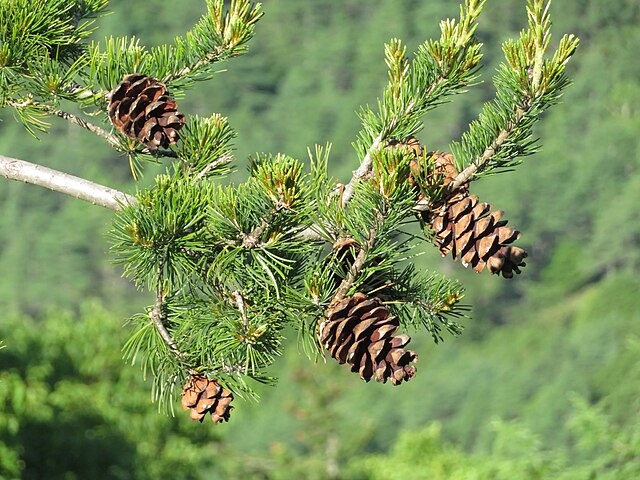
Short needles grouped in clusters of five create a densely foliated form that epitomizes traditional bonsai. Flowing patterned forms, dramatic cascading styles, and solitary literati trees—it adapts to diverse shapes. The vigorous flush of new growth (called "midori") in spring makes the spring pruning of these shoots a crucial task that determines the tree's form for the year ahead. With slow growth and manageable care requirements, the care difficulty level is moderate. The deeper you engage with this species, the more profound its appeal becomes.
Black Pine
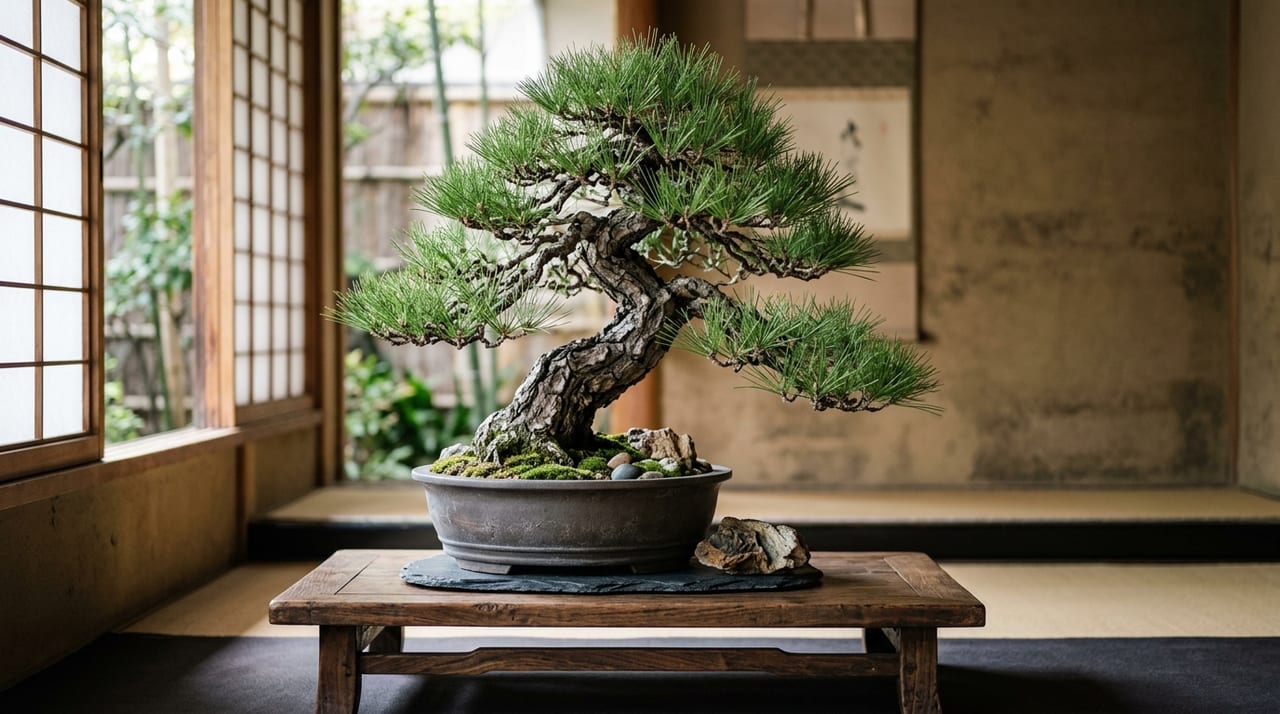
The masculine vigor of its rigid trunk and thick needles is distinctly characteristic of the black pine. It stands as the hallmark of impressive large-specimen bonsai in upright, patterned, and twin-trunk forms. The "short-leaf technique" requires careful work to shorten the foliage, making the care difficulty level moderate to high. Mastering the distinctive summer "bud pruning" technique will significantly elevate the refinement of your composition.
True Cypress (Shinpaku)
The striking contrast between white deadwood (shari) carved into the trunk and vibrant green foliage creates an artistic effect. The natural bleaching of desiccated wood and the dynamic expression of aged deadwood and jin sections represent the true essence of shinpaku. While maintaining a stable appearance throughout the year, its presence becomes more powerful as it matures. The care difficulty level is moderate, and because it is relatively hardy, it is also recommended for intermediate beginners.
Deciduous Broadleaf Trees (Zatsu-kirui) | Four Seasons in a Single Pot
Deciduous broadleaf trees offer the greatest appeal through their constantly changing seasonal expressions: budbreak, fresh green foliage, autumn colors, and winter silhouettes. Many enthusiasts appreciate them for the way they let you experience the passage of seasons in miniature.
Japanese Maple and Red Maple
Among the most seasonally dynamic species. From vivid spring budbreak through deep summer green, to blazing autumn foliage, and finally to the delicate winter silhouette of bare branches—few trees offer such diverse beauty in a single pot. When trained as a broom-form or patterned style, the fine branching at the tips becomes especially pronounced. The care difficulty level is low to moderate, making it an excellent introductory species for beginners.
Japanese Zelkova
The beautiful fan-shaped broom form evokes the serene landscape of Japan's rural countryside. In bonsai, the vigor of the root flare and fine branch ramification are highly valued, and some consider the bare branch structure revealed after winter defoliation to be the true beauty of zelkova. Its autumn yellowing and fall foliage are magnificent, with rich seasonal character throughout the year. The care difficulty level is moderate, and it can be enjoyed in a wide range of sizes from small to medium specimens.
Flowering and Fruiting Species | Vibrant Seasonal Accents
The appeal of flowering and fruiting bonsai lies in their dramatic "moment" each season. When in bloom, a flowering specimen becomes the centerpiece of any room.
Chojubai
This popular flowering bonsai displays tiny red blossoms across its entire canopy each spring and is treasured as an auspicious symbol of "longevity" befitting its name. Most specimens are compact in size, yet possess striking presence. It readily adapts to various forms including patterned and cascading styles, with a care difficulty level of low to moderate. The appeal is further enhanced by its seasonal progression of spring flowers, summer green foliage, autumn colors, and winter bare branches—similar to deciduous trees.
Japanese Apricot
A time-honored flowering species in the bonsai world. Its flowers open in early spring while cold weather lingers, releasing a refreshing fragrance. The contrast between the weathered bark and the dignified blossoms is beautiful, and when trained as a literati or patterned form, the essence of wabi-sabi becomes pronounced. Because post-flowering pruning timing determines next year's flowering, the care difficulty level is moderate. The brief blooming period only heightens its beauty.
Rock-Planted Bonsai | A Distinct World of Expression
"Rock-planted" bonsai is a distinctive stylistic technique. Roots are trained to cling to stone, condensing into a single pot the image of a tree clinging to a rocky mountain face or coastal cliff. The balance between stone and tree and the way the roots grip the stone are central to its appeal. Water management differs significantly from standard bonsai, making it prone to drying, so the care difficulty level is relatively high. While seasonal changes vary depending on the species used, this unique aesthetic appeals to advanced enthusiasts.
Choosing Your Species | Finding Your Perfect Bonsai
For those beginning their bonsai journey, we recommend selecting species based on these considerations:
- For ease of care: Japanese maple and chojubai are recommended. They are relatively hardy and their care is easy to learn
- To enjoy seasonal change: Deciduous species such as Japanese maple and zelkova are best
- For long-term cultivation: Conifers and cypress like five-needle pine and true cypress offer relationships spanning decades
- For flowers and fragrance: Flowering species such as Japanese apricot and chojubai bring seasonal delight
- To challenge artistic expression: Attempt species requiring technique, such as rock-planted bonsai or black pine using the short-leaf method
Selecting a species suited to your location's conditions (sunlight and air circulation) and available time will help ensure lasting enjoyment. While bonsai may seem difficult, choosing the right species and mastering the fundamentals makes it entirely achievable even for beginners.
GrowerDirect's Commitment to Safety and Trust
GrowerDirect offers a platform where you can purchase bonsai directly from producers and enthusiasts.
- Acquire pre-trained specimens: Inherit beautifully finished bonsai that experts have cultivated for years
- The joy of training from young stock: Select material before styling and experience the fulfillment of creating your own unique form
- Consult directly with sellers on care: Receive specific advice on watering, fertilizing, and pruning timing directly from the producer
- Fair pricing through direct distribution: Purchase with confidence in value, as producer-direct sales eliminate intermediary markups
- Trusted domestic sellers only: A safe, reliable trading environment
Whether you're selecting your first species or mastering daily care, GrowerDirect supports every step of your bonsai journey. Find your favorite specimen at GrowerDirect today.