Indoor Cultivation of Agave and Light Deficiency Correction Management
Diagnose light insufficiency issues for agave grown on windowsills and in indirect light, and address them through LED supplementary lighting, fertilizer, and water management. A practical guide for optimizing indoor environments for agave from small to large species.
Key Takeaways
Diagnose light insufficiency issues for agave grown on windowsills and in indirect light, and address them through LED supplementary lighting, fertilizer, and water management. A practical guide for optimizing indoor environments for agave from small to large species.
Related Species
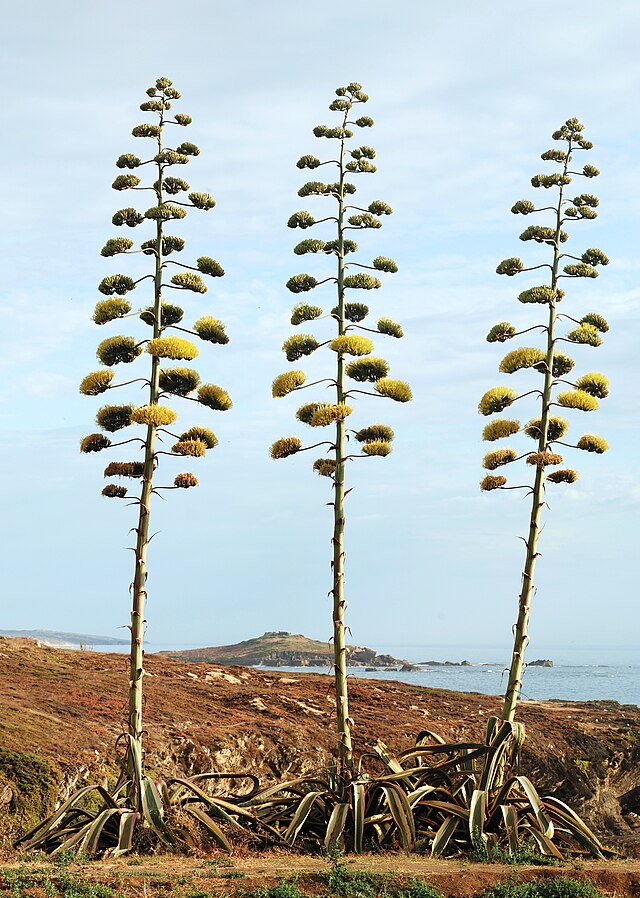
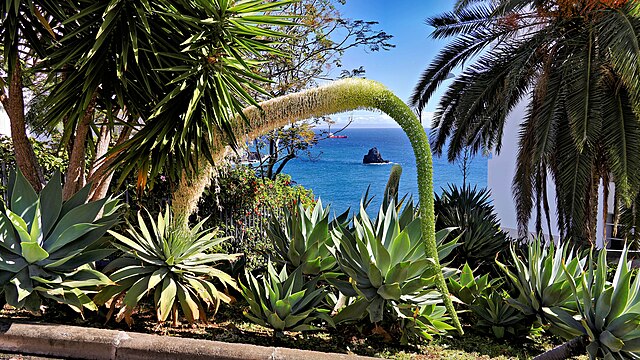
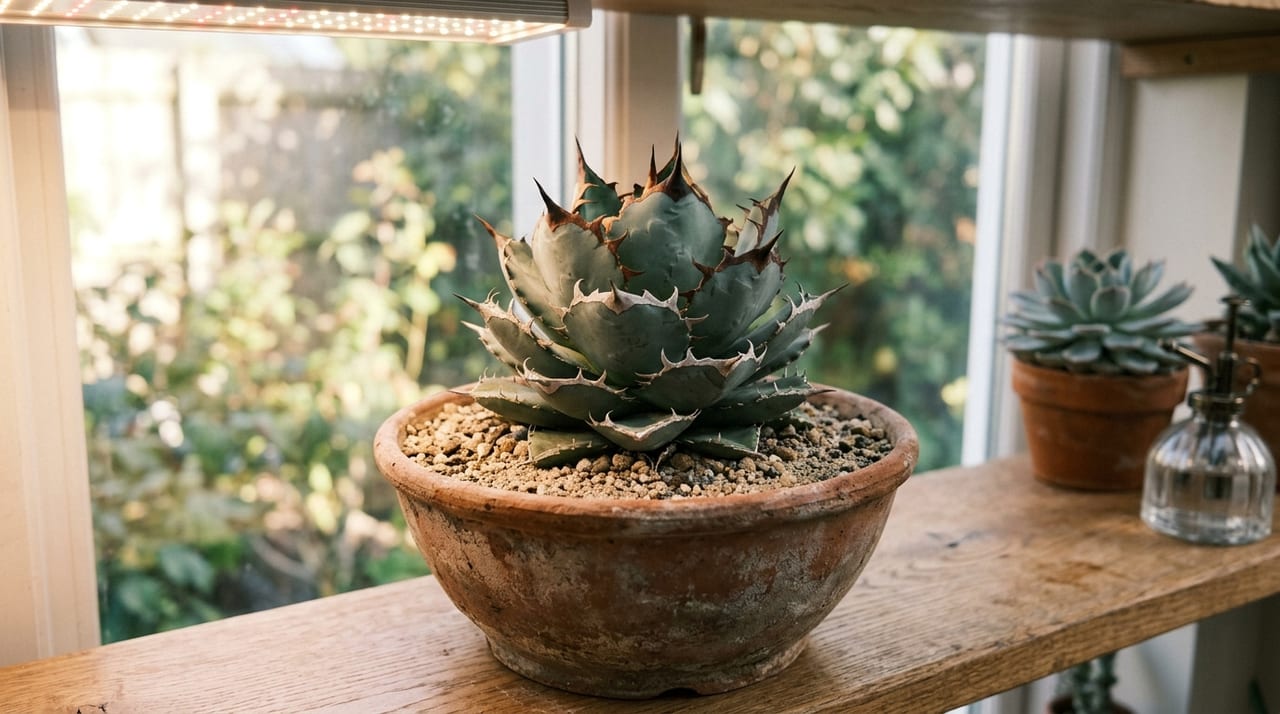
Agave is particularly popular among succulents, with enthusiasts increasing worldwide due to its unique form and ease of cultivation. However, the challenge faced by many agave enthusiasts is light insufficiency in indoor environments. Originally, agave inhabits arid regions centered on the southern United States, Mexico, and Central America, and prefers strong sunlight. However, when cultivating indoors in limited spaces or climates typical of urban areas, light inevitably becomes insufficient. This guide introduces practical approaches to light management and correction strategies for successfully growing agave indoors.
Symptoms of Light Insufficiency in Indoor Environments
When agave falls into light deficiency, multiple symptoms appear.
- Leaf Color Fading: Agave leaves that should normally be deep green or blue-green gradually become pale green. This is a sign that photosynthesis is not occurring sufficiently and chlorophyll production is decreasing.
- Etiolation: A phenomenon where stems and leaves abnormally elongate, an adaptive response as agave attempts to capture limited light efficiently. The beautiful rosette form deteriorates, with leaves raising upward and spacing between leaves widening. Even species like Agave attenuata, which naturally have curved stems, may develop abnormal curvature under indoor light insufficiency.
- Further Deterioration: Leaves become thinner, and the entire rosette takes on a wilted appearance. The stem weakens and growth rate drops markedly. Energy for reproduction and flowering is not accumulated, and in long-term indoor cultivation, generational succession can become difficult in some cases.
Causes of Light Insufficiency and Assessment of Window Environment
Light insufficiency for agave indoors is caused by multiple factors. The greatest factor is building structure. In reinforced concrete buildings or locations surrounded by tall buildings, the amount of natural light reaching the interior becomes extremely limited.
Distance from the window is also important. Generally, light intensity decreases as you move away from the window as follows:
| Distance from Window | Approximate Light Level (as % of Window) |
|---|---|
| 1 meter | Approximately 30–50% |
| 2 meters | Approximately 10–20% |
Even on a windowsill that appears bright, illuminance is much lower than in direct outdoor sunlight, and this tends to be insufficient for agave, which prefers strong light.
Seasonal variation cannot be ignored. In winter, the sun's altitude at solar noon decreases and daylight hours shorten. In inland regions of the Northern Hemisphere, it is not uncommon to have only 4–5 hours of direct sunlight per day around the winter solstice. Furthermore, in regions with many cloudy or rainy days, light insufficiency becomes a chronic challenge throughout the year.
To accurately assess your windowsill environment, ideally measure with an illuminance meter. Smartphone apps can provide rough estimates, but they lack accuracy, so using an inexpensive lux meter (purchasable for a few hundred yen) is recommended.
Selection and Operation of LED Supplementary Lighting
In agave indoor cultivation, LED supplementary lighting is the most practical solution. Unlike traditional fluorescent or incandescent bulbs, LED plant growth lights are efficient, consume less power, and produce less heat, making them suitable for indoor installation.
The first condition for LED selection is wavelength. Plants including agave particularly utilize red light (600–700 nanometers) and blue light (400–500 nanometers). Green light and far-red light also play supporting roles. Quality plant growth LEDs are designed to contain a balanced mix of red and blue, and supply wavelengths necessary for plant growth even if color rendering is poor.
When purchasing, check the product specifications for "PAR flux density" (PPFD parameter). The unit is micromol per square meter per second (µmol/m²/s). The higher this value, the more photosynthetically active light is supplied. For light-loving succulents like agave, select lights aiming for approximately 200–400 µmol/m²/s PPFD at an installation height of 30 centimeters.
Installation method is also important. Supplementary lighting should follow the principle of supplementing the insufficient portions of natural light. Supplementary lighting effects can be expected even on windowsills, but the most effective approach is to combine the timing of natural light received by the window with the timing of supplementary lighting. For example, at a south-facing window, the winter time distribution would be as follows:
- 10:00 AM to 3:00 PM (5 hours): Period when natural light enters to some degree
- 6:00 AM to 10:00 AM and 3:00 PM to nighttime: Period to add LED supplementary lighting
This allows approximately 12–14 hours of effective light per day.
Using LED floodlights with timer functions allows automatic supplementary lighting at the same time each day. However, avoid 24-hour illumination. Most plants including agave require a dark period. A rhythm of 12–14 hours during the day and 10–12 hours of darkness (complete darkness is not necessary; dim ambient room light is sufficient) supports growth and physiological stability.
Adjustment of Fertilizer and Water Management
In environments with insufficient light, agave's metabolism declines. If fertilizer is applied excessively in this state, it can cause fertilizer burn or root rot. Conversely, when supplementary lighting is introduced and light quantity increases, the plant's growth potential rises and corresponding fertilizer becomes necessary. Fertilization and watering guidelines for each environment are as follows:
| Environment | Fertilization Guidelines | Watering Guidelines |
|---|---|---|
| Light-deficient environment | Thin fertilizer approximately once monthly (at 1/2–1/3 normal concentration) | Root activity and water uptake capacity decline, so frequency should be reduced |
| After introducing supplementary lighting | Twice monthly, with slightly higher concentration | Growth rate increases and soil dries faster, so watering frequency may need to increase |
For nitrogen, phosphorus, and potassium balance, approximately N:P:K = 1:1:1 or 1:2:2 is the guideline. Since agave is a succulent, excessive nitrogen should be avoided as it promotes etiolation. Potting soil selection is also important. In indoor environments with high humidity (particularly during the rainy season or in heated indoor spaces), prioritize drainage. An equal-part mixture of medium-grade akadama, pumice, and coarse sand is standard. Kanuma soil also has good drainage and slightly acidic properties suited to agave. Repotting should be done from spring to early summer, ideally every 1–2 years, but in light-deficient environments where growth is slow, once every 2–3 years is acceptable.
Recommended Species for Indoor Cultivation
Not all agave are equally suited to indoor cultivation. Success depends on selecting species that combine light tolerance and size appropriate for indoor spaces. The characteristics of each species are as follows:
| Species | Characteristics |
|---|---|
| Agave attenuata | A standard choice for indoor cultivation. Its naturally curved stem characteristic means it has relatively slightly lower light requirements. Leaves are soft and readily maintain a beautiful green color, growing surprisingly well in indirect room light. As it grows, it can exceed 1 meter in height, so pruning may be necessary depending on available space |
| Agave verschaffeltii | Offers compact, small-scale growth form ideal for indoor cultivation. Leaves are broad and thick, with rosette diameter kept to approximately 20–30 centimeters. As it prefers sunny conditions, securing sufficient light is necessary on a windowsill. However, growth is slow, requiring patience for long-term appreciation |
| Agave americana | A large species that actually adapts well to indoor cultivation. Its blue-white leaf color is beautiful and offers high ornamental value. However, this species is originally intended for outdoor planting and grows large, so indoor cultivation involves restricting pot size for dwarfing management. A good choice when space allows |
Troubleshooting
Even after introducing supplementary lighting, improvement may be slow in some cases. This is usually because prolonged light insufficiency over multiple years has weakened the roots. In this case, it is recommended to perform repotting with gentle root organization concurrently with starting supplementary lighting.
If LED placement is uneven, the plant may develop growth biased toward one direction. Rotating the pot 90 degrees approximately once weekly maintains an even form.
Supplementary lighting in summer should be avoided, as daytime natural light is usually sufficient, and excessive supplementary lighting should be prevented. Generally, optimal seasonal operation is to discontinue supplementary lighting from May to September and implement it only from October to April.
Summary
Success in indoor agave cultivation hinges on light management. By accurately diagnosing symptoms and implementing supplementary lighting, adjusting fertilizer and water management in stages, beautiful agave can be grown in small indoor spaces. Choosing species with high indoor suitability, such as Agave attenuata or Agave verschaffeltii, is also important. Even in light-limited environments, with proper management, the distinctive beauty of agave can be fully brought out.