Orchid Humidity Management Guide | Balancing Humidification and Ventilation in Indoor Cultivation
This guide explains the ideal humidity levels for orchid cultivation, indoor humidification methods, balancing ventilation, and humidity requirements that vary by species.
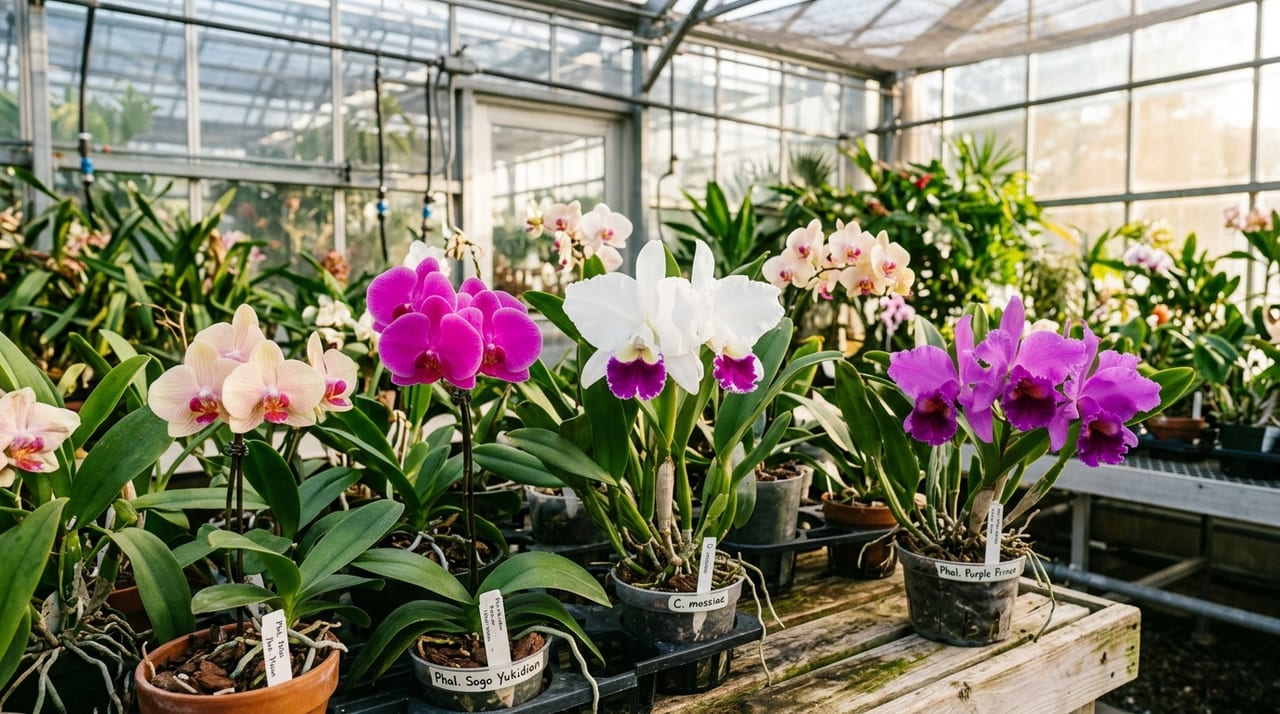
Key Takeaways
This guide explains the ideal humidity levels for orchid cultivation, indoor humidification methods, balancing ventilation, and humidity requirements that vary by species.
Related Species
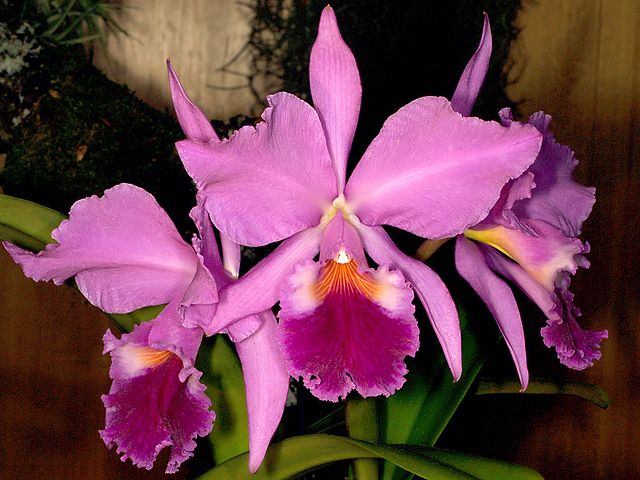
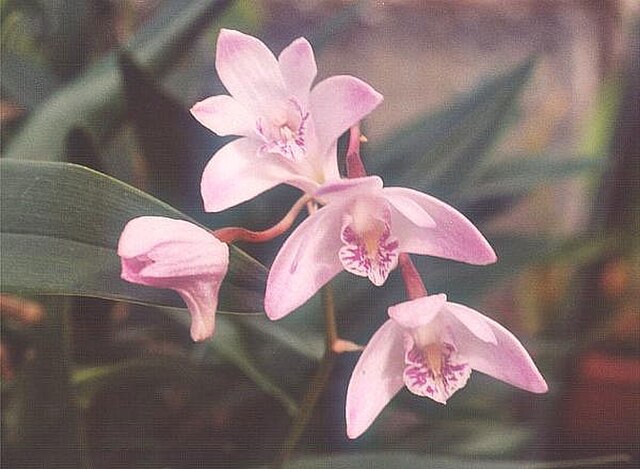
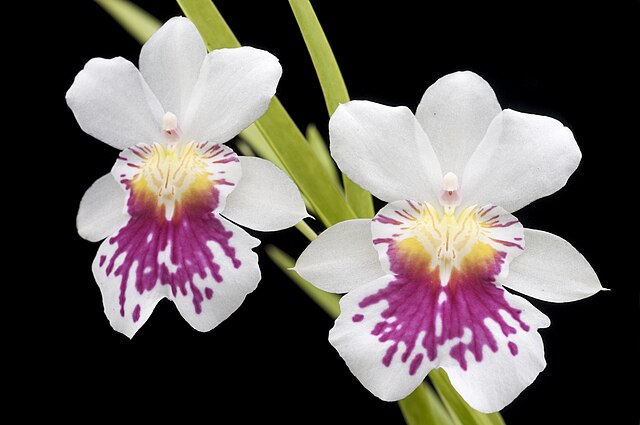
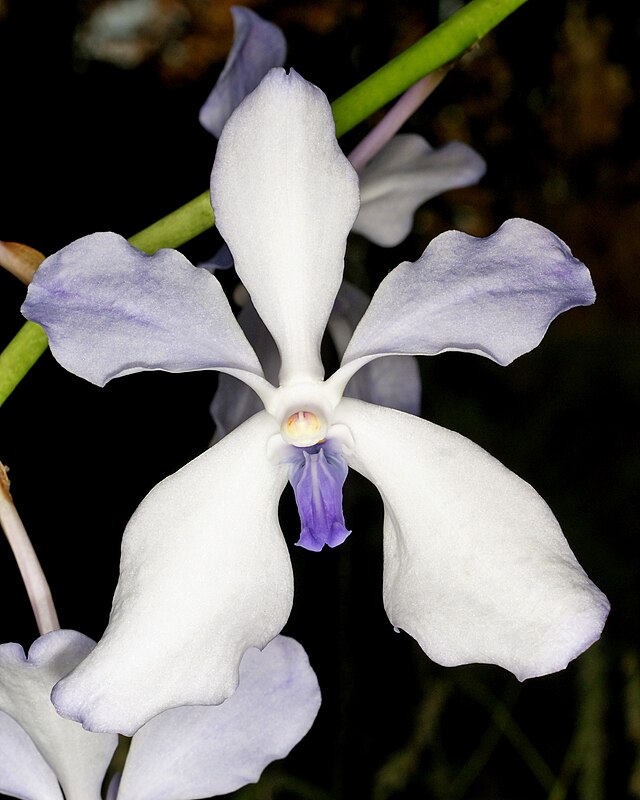
Many orchids grow wild in warm, humid tropical environments, making humidity management a significant challenge in Japanese homes. Humidity drops dramatically during summer when air conditioning runs and in winter with heating, creating harsh conditions for orchids. Maintaining appropriate humidity while preventing excessive moisture that encourages mold and disease is essential.
Ideal Humidity Levels for Orchids
Most orchids prefer a relative humidity of 50–80%. However, humidity requirements vary by species.
| Species | Humidity Range | Characteristics |
|---|---|---|
| Phalaenopsis | 60–80% | Native to humid tropical Asian forests, these orchids are sensitive to dryness. When humidity drops below 40%, leaves lose their luster and new root growth slows. |
| Cattleya | 50–70% | Relatively drought-tolerant, with pseudobulbs that store water, allowing them to endure temporary dry periods. However, constantly dry conditions cause bulbs to wrinkle. |
| Vanda | 70–80% or higher | One of the most humidity-demanding orchids; since they are typically grown bare-root without media, aerial humidity is critical to their survival. This is one reason Vanda cultivation is considered difficult in Japanese indoor environments during winter. |
| Dendrobium | 50–70% | Humidity needs vary by type, but most are manageable within this range. Nobile types require drying out in autumn and winter to induce flowering, so lower humidity is acceptable during this period. |
Indoor Humidification Methods
Maintaining orchid-appropriate humidity indoors is most effective when combining several approaches.
- Humidifiers are the most reliable method. Steam or hybrid types are more hygienic than ultrasonic models, avoiding white mineral deposits on orchid foliage. Using a timer-equipped model ensures consistent humidity even at night.
- Humidity trays are convenient and effective. Fill a shallow tray with pebbles or hydroton, add water, and place pots on top. As water evaporates, it raises humidity around the pot. Critically, ensure pots rest on the stones above water level to prevent waterlogging.
- Grouping multiple orchids also works well. Plants release moisture through transpiration, so placing them close together naturally increases surrounding humidity. Wardian cases or greenhouses further improve humidity retention efficiency.
- Leaf misting with a spray bottle provides temporary humidity benefits with limited duration. Morning misting boosts plant activity, but evening misting risks leaving water on leaves overnight, which causes disease. Avoid evening misting.
Ventilation Importance and Balancing with Humidity
Focusing solely on raising humidity often neglects ventilation—equally critical for orchid success. Stagnant air promotes mold, bacterial disease, and pests.
In nature, orchids grow on tree branches in wind-swept environments. Meeting the seemingly contradictory demands of "high humidity + adequate air movement" simultaneously requires a circulator fan.
Position the circulator to circulate whole-room air rather than directing wind at orchids. Weak airflow is sufficient; ideally, leaves should sway slightly. Running 24 hours is standard, though timers limiting operation to daytime are acceptable if electricity costs concern you.
When using a humidifier and circulator together, position them so the mist disperses throughout the room via the circulator for efficiency.
Seasonal Humidity Management
- Spring sees naturally rising humidity as temperatures climb. Opening windows for fresh air often provides adequate humidity naturally—a comfortable season for orchids. Watch for overwatering during rainy spells and strengthen ventilation.
- Summer brings rapid humidity drops from air conditioning. Position orchids away from direct AC airflow and provide humidification. Outdoor specimens benefit from natural humidity, but high summer heat and moisture cause rot; prioritize shading and ventilation.
- Autumn brings gradually decreasing humidity. Species requiring flower induction (Nobile-type Dendrobium) benefit from drier conditions, while Phalaenopsis and Vanda still need humidification.
- Winter presents the greatest humidity challenge. Heating often drops indoor humidity below 30%. Run humidifiers at full capacity, combining humidity trays and leaf misting. However, excessive nighttime moisture risks condensation and cold-related disease, requiring care.
Hygrometer Use and Creating Ideal Growing Environments
Installing a hygrometer is strongly recommended for orchid cultivation. Human perception cannot accurately gauge humidity; numerical verification is essential. Position it near your orchids in a model that records high and low readings for convenience.
Ideal orchid environments balance four elements: adequate light, proper temperature, appropriate humidity, and airflow. Wardian cases and small greenhouses simplify controlling these factors.
Ultimately, observing your orchids and fine-tuning conditions is key. Glossy leaves and vigorous root growth indicate a comfortable environment.
Wardian Cases and DIY Greenhouses
For serious humidity management, a Wardian case (glass plant enclosure) is recommended. Maintaining internal humidity at 70–90% dramatically simplifies growing high-humidity-demanding species like Vanda and Miltoniopsis.
Commercial units are expensive, but a DIY greenhouse using an aquarium tank fitted with LED lighting and a fan works well. Installing a timer-equipped USB fan enables automated daily air exchanges for easier management.
Common Humidity Management Failures and Solutions
- Failure 1: Mold from over-humidification Prioritizing humidity while neglecting ventilation spreads mold. Always pair with a circulator fan.
- Failure 2: Drying out from direct AC airflow Direct AC wind rapidly desiccates orchids, damaging leaves and killing roots. Adjust airflow direction or move orchids away from direct exposure.
- Failure 3: Cold damage from winter window condensation Condensation commonly forms on winter windowsills; water on leaves combined with cold causes disease. Move orchids behind curtains at night.
Consult GrowerDirect Growers About Environment Setup
GrowerDirect hosts many growers with deep orchid cultivation expertise. Choosing species suited to your home environment and receiving direct advice on specific humidity management is a unique advantage of a direct-sales platform.