Introduction to Vanda Suspended Cultivation | The Charm of Epiphytic Orchids Grown with Exposed Roots
A guide to Vanda suspended cultivation (basket cultivation). We explain why roots are exposed without a pot, methods for hanging and securing, managing watering and fertilizer, flowering conditions, and tips for overwintering.
Key Takeaways
A guide to Vanda suspended cultivation (basket cultivation). We explain why roots are exposed without a pot, methods for hanging and securing, managing watering and fertilizer, flowering conditions, and tips for overwintering.
Related Species
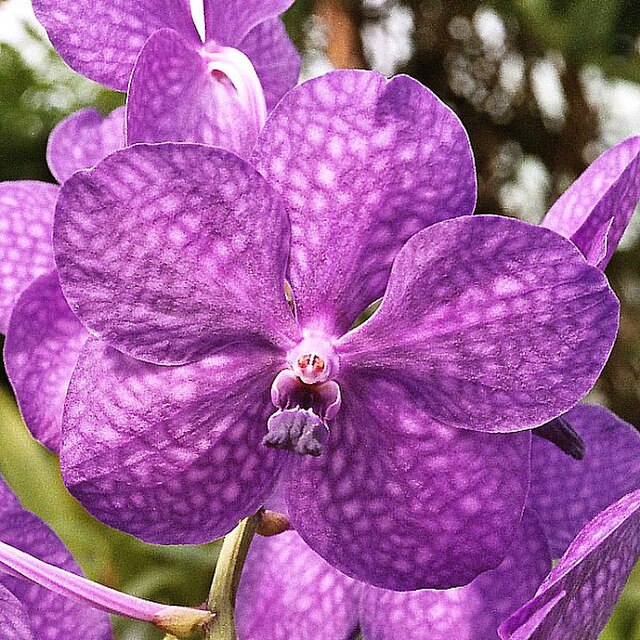
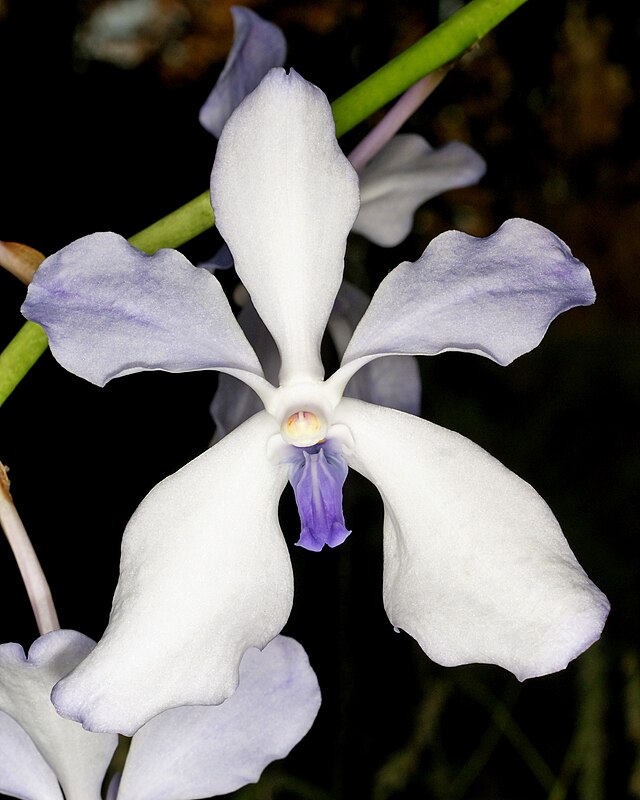
Vanda is an epiphytic orchid with a unique cultivation style that appeals to growers: its roots are exposed to the air. "Suspended cultivation," where the plants are placed in wooden baskets and hung, is the management method best suited to Vanda's natural ecology and is the foundation for producing vibrant, large-flowered blooms.
Characteristics and Appeal of Vanda
- Origin: Tropical regions of Southeast Asia (Thailand, Myanmar, India, etc.)
- Ecology: An epiphytic orchid that grows by attaching its roots to tree trunks and branches
- Flower characteristics: Striking large blooms in blue-purple, pink, white, yellow, and other vibrant colors. Varieties with net patterns are also popular
- Root characteristics: Produces numerous thick, long aerial roots. The roots are also involved in photosynthesis
- Flowering period: Depending on the variety, some bloom 1–3 times per year
Why Suspended Cultivation is Ideal
Vanda's roots prefer air more than most other orchids.
- Appearance in the wild: It grows as an epiphyte on trees, with roots hanging freely in the air
- Root respiration: Vanda's thick aerial roots require constant exposure to air
- Risk of potting: In conventional pots, roots tend to rot due to excess moisture
- Limitations of substrate drainage: No matter how well-draining the growing medium, Vanda roots often lack sufficient air circulation
For this reason, suspended cultivation—without growing medium and with roots fully exposed—is the most natural and healthy management method.
Setting Up Suspended Cultivation
Choosing a basket
- Wooden slatted baskets are the most popular choice
- Wood with good water resistance, such as teak or cypress, lasts longer
- Plastic slatted pots can also be used as a substitute
- Choose a size that allows the roots to spread with adequate room
Setup steps
- Attach a wire or rope hook to the basket for hanging
- Spread a small amount of sphagnum moss or bark chips on the bottom of the basket (not essential, but helps stabilize the plant)
- Place the Vanda into the basket, allowing the roots to spread out in all directions
- If the plant is unstable, lightly secure it with wire or clips
- Hang it in a location with good air circulation and bright light
Examples of hanging locations
- Under the eaves of a balcony (with a shade cloth)
- Hung by a hook installed near an indoor window
- Hung with S-hooks in a frame inside a greenhouse
Watering Methods
Suspended Vanda requires completely different watering from potted orchids.
Basic watering methods
- Shower method: Pour water generously over the entire root system using a watering can or shower head
- Immersion method: Fill a bucket with water and submerge the roots for 10–15 minutes. After the roots have absorbed water thoroughly, lift the plant out and allow it to dry
Watering frequency
- Summer (high temperature season): Daily to twice daily (morning and evening)
- Spring and autumn: Once daily to once every two days
- Winter: Once every 3–5 days (when grown indoors)
Tips
- When roots turn white or silver, it's a sign they need water
- When water is applied, roots turn green (evidence they are absorbing water)
- Early morning watering is ideal. Water applied in late evening or after should allow the roots to dry by nightfall
- In winter, water during warm hours and avoid leaving roots wet overnight
Light and Temperature Management
Light intensity
- Among orchids, Vanda is a variety that prefers strong light
- Direct sunlight can scorch leaves, so 30–50% shade cloth is necessary
- Insufficient light prevents flowering
- If leaf color is a bright yellow-green, light levels are appropriate
Temperature
- Optimal growing temperature: 25–35°C during the day, 18–25°C at night
- Minimum temperature: 15°C or above (the plant is damaged if exposed to temperatures below 10°C)
- Being tropical, it is sensitive to cold. In Japan, always move it indoors during winter
Fertilizing
- During the growing season (April–October), apply dilute liquid fertilizer once weekly by spraying on the roots or mixing into the immersion water
- Use orchid liquid fertilizer at approximately half the recommended concentration
- Foliar feeding is also effective. Spray dilute fertilizer on the leaves
- In winter, reduce applications to once or twice per month, or stop entirely
Overwintering Care
Japanese winters are the most challenging season for Vanda.
Moving indoors
- Move the plant indoors when the minimum temperature drops below 15°C
- A bright window facing south is ideal
- Maintain humidity at 50–60% using a humidifier
Winter watering
- Reduce frequency significantly (approximately once every 3–5 days)
- Water on warm days in the morning, allowing roots to dry by evening
- Avoid cold water; use lukewarm water at room temperature instead
Cautions
- Avoid placing in direct drafts from heaters (excessive drying)
- Window sills get cold at night, so either move the plant to the center of the room in the evening or provide insulation with cardboard
Tips for Flowering
- Adequate light: Ensure a bright environment year-round
- Healthy roots: Plants with numerous thick, long roots flower more readily
- Mature plants: Plants with six or more leaves are more likely to bloom
- Temperature difference: Flower buds are induced when there is a temperature difference between day and night in autumn
Common Vanda Cultivation Troubles and Solutions
Roots become shriveled This is a sign of underwatering. Increase the frequency of immersion soaking and mist daily with a spray bottle. Roots will return to green when rehydrated. Roots that have become completely brown and brittle unfortunately cannot recover.
Leaves turn yellow Yellowing of lower leaves is natural aging; however, if upper leaves yellow, suspect insufficient light or lack of fertilizer. Review your cultivation conditions.
Flowers do not bloom Insufficient light is the most common cause. Among orchids, Vanda requires particularly high light levels. Make every effort to grow it near a south-facing window or outdoors.
Recommended Vanda Varieties for Beginners
- Ascocenda: A hybrid of Vanda and Ascocentrum. Compact with abundant flowers
- Vanda sanderiana types: Beautiful large blooms with net patterns and extensive cultivation history in Japan
- Mini Vanda: Compact hybrids that are easy to manage. Ideal for a first Vanda
Selecting Vanda Varieties and Tips for Obtaining Them
We recommend beginners start with hybrids. Representative beginner-friendly varieties are as follows:
- Ascocenda types: Hybrids of Vanda and Ascocentrum. Compact with abundant flowers and a wide range of colors
- Vanda sanderiana types: Beautiful large blooms with net patterns. Somewhat more tolerant of temperature fluctuations and with abundant cultivation records in Japan
- Mini Vanda: Compact hybrids that are easy to manage. Ideal for those with limited hanging space
The species Vanda coerulea features deep blue-purple flowers and is attractive, but cultivation is somewhat more challenging. It is wise to gain experience with hybrids before attempting the species.
Root Management
A Vanda's roots are a barometer of plant health.
- Healthy roots: Thick and firm with green tips
- Dried roots: White to silver in color. Normal, but a sign to water
- Damaged roots: Brown to black and soft. Cut away and remove these
Some growers feel hesitant about the sight of roots spreading profusely, but cutting roots weakens the plant. Generally, allow them to grow as they naturally will.
Propagating Vanda
Vanda occasionally produces offsets (keiki). Small plantlets may emerge between the leaves in the upper portion of the stem. Once roots have grown to 3 or more and reach 5 cm or longer, they can be separated with a clean knife and grown independently. Place the offset in a basket and manage it in the same conditions as the parent plant. It takes 2–3 years to reach flowering size, but you can enjoy flowers identical to the parent.
Finding Vanda on GrowerDirect
On GrowerDirect, you can purchase healthy Vanda suited to suspended cultivation directly from specialist growers. You can confirm the condition of the roots and the quality of the plant with the grower, and it's reassuring to receive cultivation tips directly from them. Experience the charm of Vanda spreading its roots into the air on GrowerDirect.