Vanda Care Guide | Key Points for Hanging Cultivation and Root Management
Explains the special cultivation methods for Vanda orchids. Introduces hanging basket cultivation, watering methods for exposed roots, creating high temperature and humidity environments, adapting to their preference for strong light, and blooming conditions.
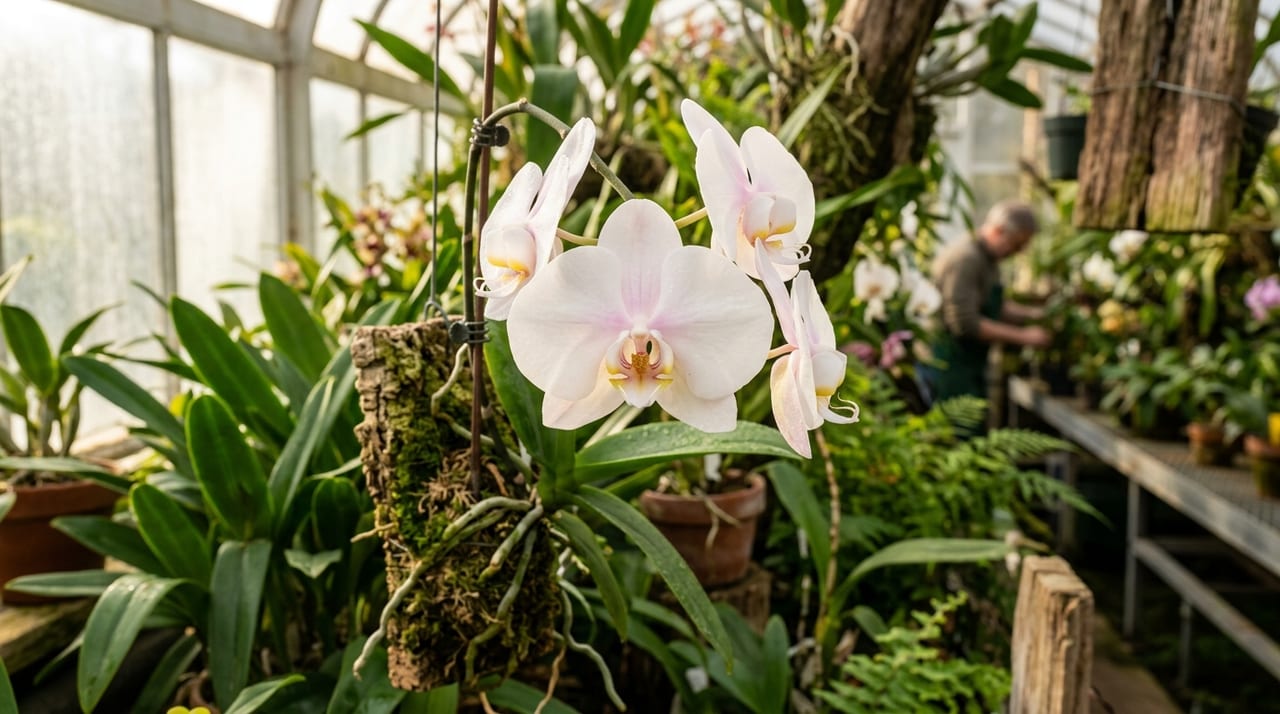
Key Takeaways
Explains the special cultivation methods for Vanda orchids. Introduces hanging basket cultivation, watering methods for exposed roots, creating high temperature and humidity environments, adapting to their preference for strong light, and blooming conditions.
Related Species
What Kind of Orchid is Vanda?
Vanda is a type of epiphytic orchid native to Southeast Asia, and enjoys enduring popularity among orchid enthusiasts for its vigorous root development and vibrant flower colors. It grows naturally in tropical rainforests in Thailand, Indonesia, the Philippines, and other regions, developing roots directly on rock faces and tree trunks. For this reason, "hanging cultivation (basket cultivation)," which differs from conventional potting, is considered the most suitable growing method.
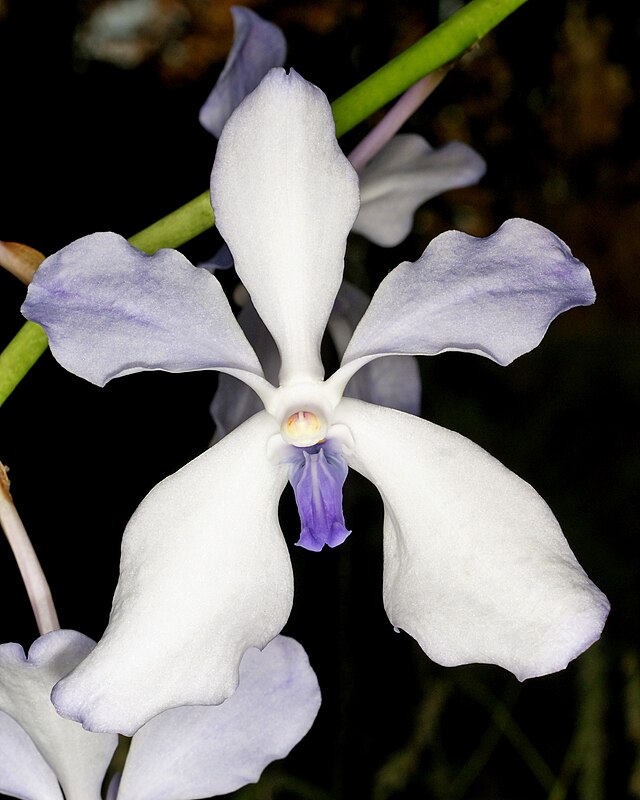
The flowers are large blooms, reaching 5–15 cm in diameter, with abundant color variations including blue, purple, orange, white, and multicolor. Once flowering begins, blooms can be enjoyed for several weeks, making this a plant with exceptional ornamental value. However, because of its unique natural habitat, there are several key points to master when growing it in a typical Japanese household. For those growing orchids for the first time, it is also recommended to first master the basic care cycle by reading the Complete Guide to Phalaenopsis Care, then challenge Vanda cultivation.
Basics of Hanging Cultivation (Basket Cultivation)
Vanda's greatest characteristic is the development of numerous thick, long aerial roots. These roots are equipped with "stomata" that directly absorb moisture from the air, and they would suffocate in an enclosed pot. Therefore, suspending the plant in a wooden or metal slat basket (a latticed basket) is the worldwide standard growing method.
Planting in a basket is extremely simple. Place a small amount of cork pieces or tree fern fiber in the basket, or in some cases suspend the plant entirely bare. Potting soil is barely necessary—the ideal state is for roots to extend freely outward through the basket's lattice. Even when using a terracotta pot, choose one with large drainage holes and excellent air circulation, and arrange bark or pumice stone coarsely to maximize drainage.
Determine the hanging height by considering light and air circulation. Ideally, suspend it near a window or close to the ceiling of a greenhouse, maintaining a state where the root tips remain free to move in the air. Since roots naturally want to attach when they touch something, a popular method is intentionally mounting the plant on cork board in "board mounting." When in doubt about repotting or substrate selection, Timing for Orchid Repotting and Substrate Selection is also helpful.
Watering and Humidity Management
The basic watering cycle for Vanda is "water thoroughly, then let dry well." The outer layer of the roots (velamen layer) turns whitish when dry and green when moist. This color change serves as a natural signal indicating when to water.
The following is a seasonal guide for watering frequency.
| Season | Temperature Range | Watering Frequency |
|---|---|---|
| Spring–Fall (active growth period) | 20℃ or above | Water immediately when roots turn white. Depending on temperature and humidity, frequency may reach once every 1–2 days |
| Winter | 15℃ or below | Reduce to approximately once or twice per week. Complete withholding of water risks root death, so if roots appear shriveled, give small amounts of water to maintain them |
Water not with a mister, but generously with a shower head or watering can over the entire root system. Because excess water drains away immediately, the risk of root rot from excess moisture is kept low.
Aim for 60–80% humidity year-round. During Japan's rainy season, humidity naturally rises, so no problem occurs, but in winter's dry interiors, using a humidifier or misting the leaves is effective. Especially during winter heating use, conditions are dry and root tips may shrivel, so care is needed.
Light and Temperature Management
Vanda is a plant that prefers strong light. Many species favor direct sunlight, and in outdoor settings can sometimes be grown without shade cloth. However, Japan's intense midsummer direct sun, especially western exposure, can cause leaf burn, so 30–50% shade is safer. Indoors, bright windows facing south or east are ideal, and supplementing with LED or fluorescent plant lights is also effective. Insufficient light results in extremely poor flowering, so remember that the light level is just right when you think it's "perhaps a bit too bright."
Temperature management is the greatest challenge in Vanda cultivation. Because it originates in the tropics, maintaining a minimum temperature of 15℃ or above is a basic condition. The following are the guidelines.
| Item | Guidelines |
|---|---|
| Minimum temperature (basic condition) | 15℃ or above |
| Ideal daytime growth temperature | 25–35℃ |
| Ideal nighttime growth temperature | 18–22℃ |
In Japan, outdoor or semi-outdoor management is possible from May through October, but from November onward, the plant must be brought indoors. If a greenhouse is available, stable cultivation year-round is possible.
Cold tolerance varies somewhat by variety; some, such as Vanda tricolor, are relatively cold-hardy, but below 10℃ most varieties stop growing and roots are damaged. Make it a habit to move the plant indoors early in preparation for winter.
Fertilizing and Tips for Getting Blooms
Vanda responds well to fertilizer and grows remarkably vigorously with proper feeding. During the growth period (spring–fall), apply liquid fertilizer once weekly at half the recommended strength, combined with watering. Orchid liquid fertilizers such as "Hyponex" are convenient and easy to use. Use a balanced nitrogen-phosphorus-potassium formula as the standard, and switching to a "bloom-promoting type" with extra phosphorus and potassium during the time you want to encourage flower bud formation (early fall) is also effective. More detailed variety-specific fertilizing schedules are compiled in the Complete Guide to Orchid Fertilizer.
For blooming, the day-night temperature difference is an important signal. Particularly in fall, experiencing a 5–10℃ temperature difference between day and night promotes flower bud formation. Intentionally lowering the nighttime temperature slightly (but not below 15℃) supports blooming. Also, sufficient light and proper watering are prerequisites. Excess fertilizer causes leaves to grow at the expense of flower buds, so reducing fertilizing in fall is one effective approach.
Root Problems and Solutions
Vanda's roots are very thick and prominent, so changes in condition are immediately visible. Regular checking of root health is crucial to the success or failure of Vanda cultivation. Basic root identification is also covered in Orchid Root Care, so consult it when in doubt.
The following are solutions based on root condition.
- When roots turn brown and rot, the cause is excess moisture or insufficient air circulation. Remove the rotted roots with clean scissors. Then reduce watering frequency and allow longer drying time for roots.
- When root tips shrivel and dry up, insufficient moisture or low humidity is the cause. Increase watering frequency and improve conditions through humidifying or misting the leaves. If roots are shriveled in deep winter, move the plant to a warmer location while giving small amounts of water and monitoring progress.
- When roots extend in large quantities from the outside of the basket or shelving, it is a sign that the Vanda is healthy; the standard approach is to leave them uncut.
When repotting is necessary, take care to minimize root damage, and ideally do it early in the growth period. Vanda dislikes root damage and may decline temporarily after repotting.
With patient environmental management and continued observation, Vanda repays the effort of cultivation with its bold appearance and beautiful flowers—a truly captivating orchid.