Mokara & Vanda Orchid Care Guide | Root Management, Watering & Blooming Tips
A guide to cultivating Mokara and Vanda orchids with their distinctive epiphytic growing style. Detailed practical care methods covering "naked roots" management with exposed aerial roots, watering and drying cycles, creating high-light environments, and temperature management for promoting blooms.
Key Takeaways
A guide to cultivating Mokara and Vanda orchids with their distinctive epiphytic growing style. Detailed practical care methods covering "naked roots" management with exposed aerial roots, watering and drying cycles, creating high-light environments, and temperature management for promoting blooms.
Related Species
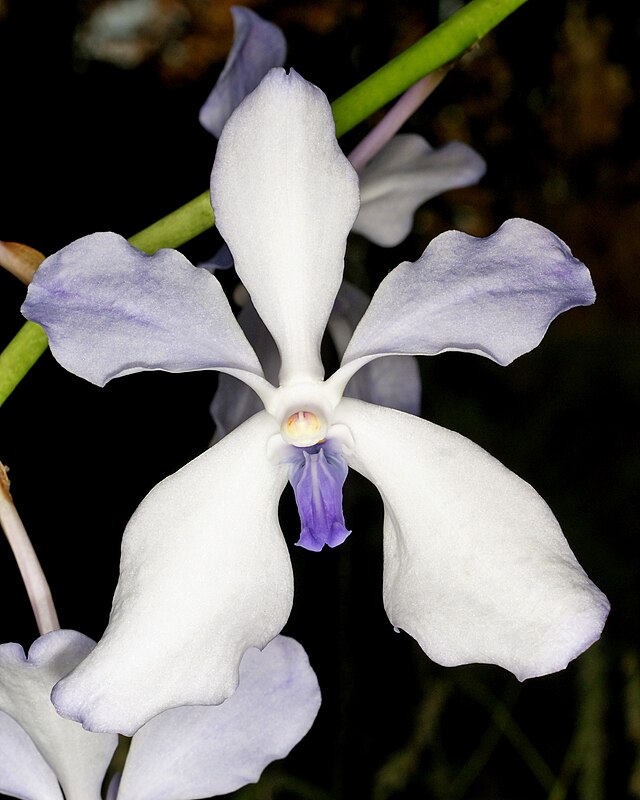
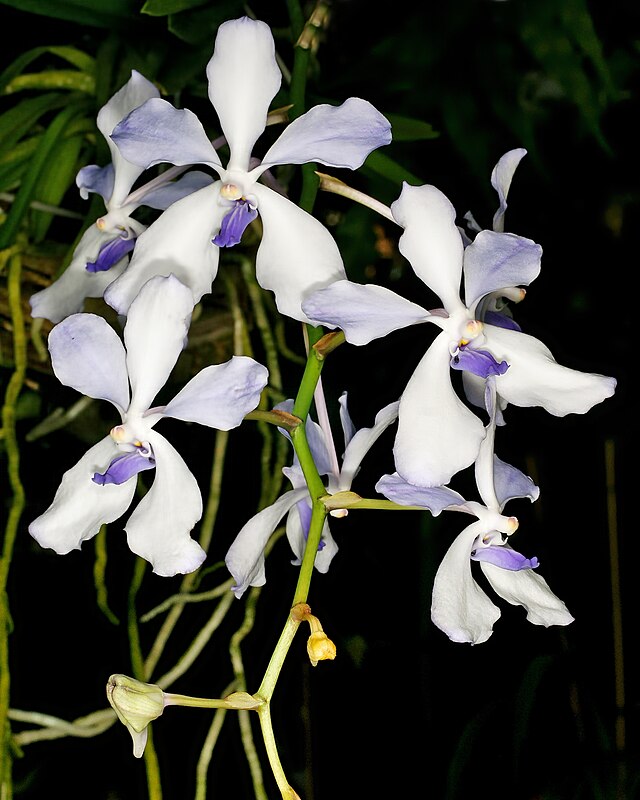
What Are Vanda & Mokara Orchids?
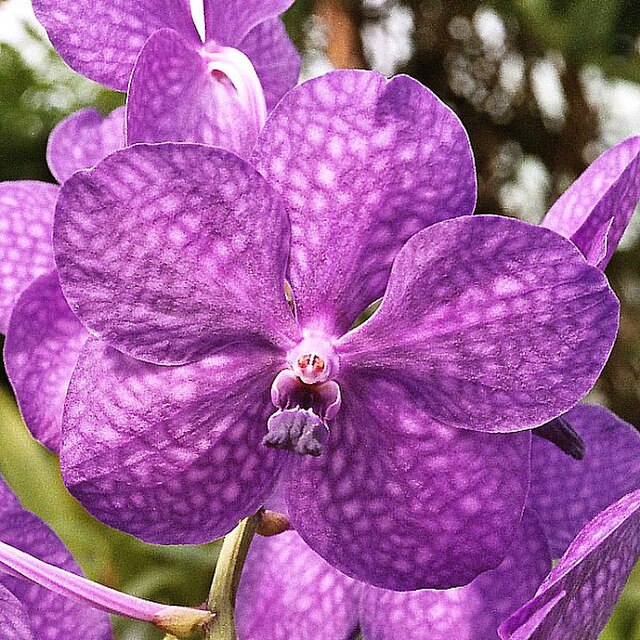
Vanda (Vanda) is an epiphytic orchid native to Southeast Asia and India, distinguished by its distinctive "naked roots" style—cultivated with exposed aerial roots in a bare state. Mounted on baskets or boards with roots exposed to air, this approach requires an entirely different cultivation sensibility than conventional potted orchids. You may feel uneasy at first about growing without soil, but this soil-free approach is the very essence of nurturing healthy Vanda plants.
Mokara (Mokara) is an intergeneric hybrid created by crossing three orchid genera: Ascocenda, Aracnis, and Vanda. Compared to Vanda, Mokara is somewhat easier to manage, and with flower colors ranging from red, orange, and yellow to purple and white, its availability has grown significantly in recent years. The flowers last well and are popular as cut flowers; in Thailand and Singapore, they are a mainstay of the cut-flower market. The Vanda coerulea, prized for its bluish-tinged petals, is known as a parent line and is a source of Mokara's wide color range.
Both thrive in hot, humid, tropical environments. In Japan, summer is the ideal growing season, but maintaining adequate winter temperatures poses the greatest challenge. With proper environmental conditions, multiple blooms per year are entirely achievable.
Root Management: Fundamentals of Naked Roots
The first principle to understand in Vanda and Mokara cultivation is "never bury roots in soil." In their natural habitat, these orchids attach themselves to tree trunks and rock faces, drawing air into their roots through cycles of rain and drying. Soil blocks airflow, causing root rot and rapid plant decline.
Basket Cultivation (the most popular method)
Fix the plant to a latticed basket made of wood or bamboo. Roots extend freely outward through the lattice gaps, absorbing air and moisture directly. Commercial "orchid baskets" are convenient; as the plant grows larger, transition to progressively larger baskets. Secure the plant using wire or vinyl ties, taking care not to damage the roots.
Board Mounting
Wrap and secure roots to cork or tree fern (hegoboard), creating a wall-hanging display with decorative appeal. Select mounting materials with good water absorption and air permeability; tree fern board excels at both. Since boards dry quickly, watering frequency will be slightly higher than with basket cultivation.
Root Health Assessment
Healthy roots appear bright green immediately after watering, gradually turning silvery-white over time (the white outer layer, the velamen, retains moisture). This color transition is normal. The following signs indicate root rot and require immediate attention:
- Darkened or blackened appearance
- Soft, mushy texture
- Foul odor
Remove affected roots promptly with clean scissors and apply fungicide (cinnamon-based or sulfur powder) to the cut surface.
Watering and Misting Cycles
The fundamental cycle for Vanda and Mokara is "water thoroughly and allow complete drying." Skipping the drying phase leads directly to root rot, making adequate drying time as critical as watering itself.
Summer Watering (Growing season: April–September)
The most effective method is "basket soaking"—submerge the entire basket in a bucket of water for 30 seconds to 1 minute, once or twice daily. This ensures uniform wetting across all roots and allows them to absorb water and nutrients efficiently. After soaking, drain well and return to an airy location. Alternatively, use a showerhead to spray from above; the key is wetting all roots uniformly.
Winter Watering (Dormant period: October–March)
Reduce frequency to 2–3 times per week, ensuring roots have ample drying time. Low winter temperatures slow root drying, making overwatering a common pitfall. Wait until roots are completely silvery-white, then hold off another 1–2 days before watering again.
Misting (Spray Misting)
Mist leaves and roots in the morning to supplement humidity and promote transpiration. Evening misting leaves foliage wet overnight, creating conditions for fungal diseases like gray mold. Always mist in the morning.
A summary of watering cycles:
| Season / Situation | Frequency | Key Points |
|---|---|---|
| Summer (Growing season: April–September) | 1–2 times daily | Basket soaking in a bucket of water for 30 seconds to 1 minute, or spray with a showerhead |
| Winter (Dormant period: October–March) | 2–3 times per week | Water only after roots turn completely silvery-white and an additional 1–2 days have passed |
| Misting (Spray) | Morning only | Mist leaves and roots to supplement humidity; avoid evening misting to prevent gray mold |
Light and Temperature Management
Vanda and Mokara require particularly high light levels among orchids. While Phalaenopsis (moth orchid) can be managed at 10,000–20,000 lux, Vanda and Mokara prefer 30,000–50,000 lux or higher.
Light Conditions
During the May–September period when outdoor cultivation is feasible, a south-facing location with direct sunlight is ideal. However, intense midday sun (July–August peak hours) risks leaf burn, so use 30–50% shade cloth. For indoor management, place near a bright south-facing window and supplement with plant growth LED lights. Prolonged light shortage causes leaves to stretch and inhibits flowering.
Temperature Management
Maintain a minimum of 15°C year-round, with an ideal range of 20–35°C. Temperatures below 10°C in winter cause leaf yellowing and drop; below 5°C causes fatal damage. Without a greenhouse or polytunnel, place the plant indoors by a warm window where heating is effective.
Leveraging Temperature Differential to Promote Blooms
A pronounced day-night temperature differential (approximately 30°C daytime, below 20°C night) through summer into fall triggers flower bud formation. Outdoor summer cultivation naturally provides this differential, with flower spikes typically emerging by September–November. For indoor cultivation, deliberately move plants to a cool window at night to create the needed temperature swing.
Fertilization and Pest/Disease Control
Fertilization Schedule
During the growing season (April–September), apply liquid fertilizer every two weeks, alternating with regular waterings. Use orchid-specific liquid fertilizer or a balanced formula with high phosphorus (such as N-P-K = 6-30-30), which promotes blooming. Reduce to once monthly in winter to allow the plant to rest and rebuild reserves. Begin with half the recommended concentration and adjust based on plant response.
Common Pests and Diseases
| Pest / Disease | Cause and Conditions | Treatment |
|---|---|---|
| Scale insects / Spider mites | Occur in dry environments | Check leaf undersides regularly and remove early infestations with sticky tape; for pesticides, check the label for products registered for the target pest (scale insects or spider mites) (among orchids, Ortran wettable powder is registered for scale insects only on Oncidium) |
| Soft rot | Bacterial disease triggered by overwatering or poor ventilation; progresses rapidly and spreads throughout the plant | Remove affected areas with clean scissors, apply fungicide to cut surfaces, and improve air circulation |
Source: MAFF Pesticide Registration Database (GF Ortran Wettable Powder)
Tips for Achieving Blooms & Summary
Vanda and Mokara plants often arrive in bloom, but the real goal is maintaining and reflowering them afterward. When light, temperature, and watering align correctly, healthy plants produce 1–2 blooming cycles annually.
Common reasons plants fail after purchase fall into three categories:
- "Attempting to pot roots in soil"
- "Watering too little (or too much)"
- "Insufficient light"
Do not bury roots in soil; keep them exposed to air via basket or board mounting. Water generously and allow complete drying. Provide the highest light levels among orchids. Following these three principles makes Vanda and Mokara cultivation surprisingly straightforward.
Watching a mature plant send up flower spikes with vibrant blooms brings a satisfaction unlike any other orchid. Along with the distinctive style of exposed roots, enjoy these plants for the long term.
Cattleya orchids, known as the queen of orchids, share similar cultivation needs—both being high-light, high-humidity epiphytic orchids. For deeper understanding of epiphytic orchid cultivation, refer to Complete Cattleya Orchid Care Guide | All Management to Bring Out the Queen of Orchids. Be sure to check out grower offerings for basket and board mounting materials as well.