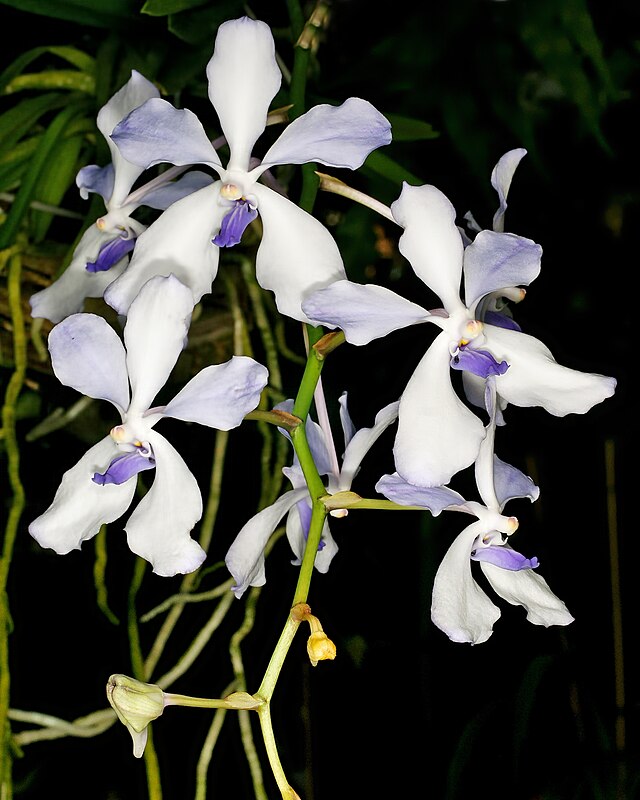
Source: Wikimedia Commons
Vanda Coerulea
AdvancedVanda coerulea
The quintessential Blue Orchid, with the clearest blue considered the most beautiful in orchids.
About
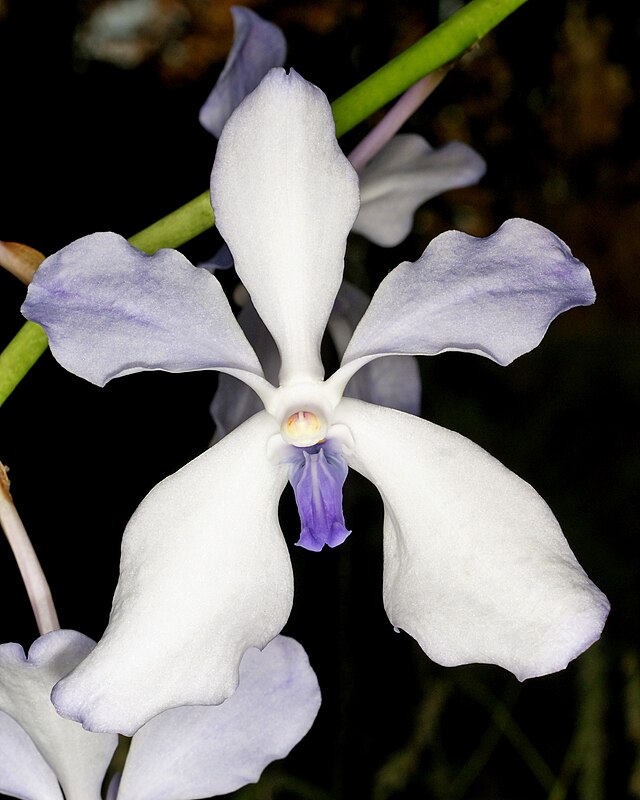
Vanda coerulea, the Blue Orchid, is a high-altitude epiphytic species native to deciduous hill forests at 800–1,600 m in northeastern India (Assam, Meghalaya), Myanmar, and northern Thailand. It produces the clearest blue flowers of any orchid, 6–10 cm across with characteristic tessellated blue-violet patterning, on inflorescences bearing ten to twenty or more blooms from October to January. Cultivation requires strong bright light, high humidity, excellent air circulation, and open basket culture. Wild populations have been severely depleted by over-collection; the species is on CITES Appendix II.
Lifespan of the Vanda Coerulea
The Vanda Coerulea lives 10+ years.
Size of the Vanda Coerulea
The Vanda Coerulea grows to 30-50cm.
Temperature & humidity for the Vanda Coerulea
The ideal temperature for the Vanda Coerulea is 10〜28℃.
As a highland species, it tolerates cooler conditions (10–28°C by day, cool nights).
Basic Info
Origin
northeastern India (Assam, Meghalaya), Myanmar, and northern Thailand, at 800–1600 m elevation
Lifespan
10+ years
Size
30-50cm
Temperature
10〜28℃
Humidity
50〜70%
Growing Tips
Light & Placement
It likes strong, bright indirect light. It needs good air movement, so hang it where the air circulates.
Watering
Water the exposed aerial roots frequently to maintain high humidity. Do not let the roots dry out completely.
Temperature & Overwintering
As a highland species it prefers relatively cool 10-28°C days with cooler nights. Note it is less heat-tolerant than other Vandas.
Soil & Repotting
Standard culture is hanging in a basket with the aerial roots exposed. Use little or no medium and let air reach the roots.
Pests & Cautions
Balance high humidity with good airflow. Lower the temperature at night while keeping the air moving to avoid stuffiness.
Vanda Coerulea FAQ
QWhat is the growing difficulty level for Vanda Coerulea?
Advanced. A variety suitable for advanced growers. Requires advanced cultivation techniques and specialized equipment, with careful environmental adjustments needed.
QWhat is the ideal temperature for Vanda Coerulea?
The ideal temperature for Vanda Coerulea is 10〜28℃. Avoid sudden temperature changes and maintain a stable environment.
QWhat is the lifespan of Vanda Coerulea?
The average lifespan of Vanda Coerulea is 10+ years. With proper cultivation environment and nutrient management, you can keep it healthy for a long time.
QHow large does Vanda Coerulea get?
The mature size of Vanda Coerulea is 30-50cm. This may vary slightly depending on cultivation environment and individual differences.
QWhat is the typical price for Vanda Coerulea?
The price of Vanda Coerulea varies significantly by variety, characteristics, size, and lineage. Please check GrowerDirect's price guide for the latest market information.
Last updated: August 31, 2026
Growing Specifications
- Hardiness (RHS)
- H1a
References & Sources
Edited & verified by: GrowerDirect Editorial Team
The classifications, regulations, and growing data on this page are created and verified based on the primary information database below.
Taxonomy & Authority
Accepted name: Vanda coerulea Griff. ex Lindl.
Synonyms: Vanda coerulea var. grandiflora, Vanda coerulea var. hennisiana, Vanda coerulea f. delicata, Vanda coerulea f. rogersii, Vanda coerulea delicata, Vanda coerulea f. luwangalba, Vanda coerulea var. rogersii
Authority databases: GBIF · POWO · RHS orchid hybrid registration (International Orchid Register) · AOS (American Orchid Society)
Nomenclature follows global taxonomic authority databases.
Regulations & Conservation Status
The family Orchidaceae is listed entirely in CITES Appendix II (except for the genera Paphiopedilum and Phragmipedium and certain species, which are in Appendix I). Cultivars and hybrids are subject to family-level regulation; however, artificially propagated specimens may benefit from simplified trading procedures under the Appendices.
Sources: CITES Appendices (Orchidaceae spp. = Appendix II) / CITES Appendix I Orchid Checklist (Kew/UNEP-WCMC 2019)
Regulations may change. Always verify the latest information with the relevant authorities.
Related Species
Find listings for this species
Related Articles
Mokara & Vanda Orchid Care Guide | Root Management, Watering & Blooming Tips
A guide to cultivating Mokara and Vanda orchids with their distinctive epiphytic growing style. Detailed practical care methods covering "naked roots" management with exposed aerial roots, watering and drying cycles, creating high-light environments, and temperature management for promoting blooms.
Introduction to Vanda Suspended Cultivation | The Charm of Epiphytic Orchids Grown with Exposed Roots
A guide to Vanda suspended cultivation (basket cultivation). We explain why roots are exposed without a pot, methods for hanging and securing, managing watering and fertilizer, flowering conditions, and tips for overwintering.
Vanda Care Guide | Key Points for Hanging Cultivation and Root Management
Explains the special cultivation methods for Vanda orchids. Introduces hanging basket cultivation, watering methods for exposed roots, creating high temperature and humidity environments, adapting to their preference for strong light, and blooming conditions.
Complete Guide to Growing Aldrovanda | Rare Aquatic Carnivorous Plant That Captures Insects Underwater
Explains the cultivation method for Aldrovanda vesiculosa, a carnivorous plant that floats underwater and captures insects. Tips on water quality management, winter dormancy, and propagation techniques are introduced.
Can't find the plant you're looking for?
Post your wishes for free and growers with matching plants will contact you with introductions.