Laws for selling plants | Key points of the Seed and Seedling Act, Plant Quarantine Act, Washington Convention, and Invasive Species Act
No business license is required to sell plants, but propagating registered varieties requires authorization from the breeder's rights holder and must be labeled as a "registered variety" (Seed and Seedling Act); imported plants require a phytosanitary certificate and import inspection, and soil-containing plants are prohibited (Plant Quarantine Act); many cacti, orchids, and succulents are listed in the Washington Convention; and specific invasive alien species are banned from sale. Compiled from primary information from the Ministry of Agriculture, Forestry and Fisheries, Plant Protection Office, Ministry of Economy, Trade and Industry, and Ministry of the Environment (verified as of September 10, 2026).
Key Takeaways
No business license is required to sell plants, but propagating registered varieties requires authorization from the breeder's rights holder and must be labeled as a "registered variety" (Seed and Seedling Act); imported plants require a phytosanitary certificate and import inspection, and soil-containing plants are prohibited (Plant Quarantine Act); many cacti, orchids, and succulents are listed in the Washington Convention; and specific invasive alien species are banned from sale. Compiled from primary information from the Ministry of Agriculture, Forestry and Fisheries, Plant Protection Office, Ministry of Economy, Trade and Industry, and Ministry of the Environment (verified as of September 10, 2026).
Related Species
There are four main areas of law that concern individual growers and small producers when selling plants: "variety rights (Seed and Seedling Act)," "quarantine and pest prevention (Plant Quarantine Act)," "international trade in endangered species (Washington Convention)," and "prevention of invasive species (Invasive Species Act)." Unlike animals, there is no registration system such as "animal handler licensing" for plant sales. Instead, sellers have obligations regarding variety and import procedures. This article is compiled from primary information published by the Ministry of Agriculture, Forestry and Fisheries, the Plant Protection Office, the Ministry of Economy, Trade and Industry, and the Ministry of the Environment (verification date for all information: September 10, 2026).
Summary
- No business license or registration is required for plant sales themselves. However, to propagate and sell "registered varieties," you must obtain authorization from the breeder's rights holder, and registered variety seedlings must be labeled as such (Seed and Seedling Act).
- When importing plants from overseas, regardless of quantity or purpose, you must provide a phytosanitary certificate issued by the exporting country's government agency and undergo import inspection; plants with soil or soil attached are entirely prohibited from import (Plant Quarantine Act).
- Many cacti (Cactaceae family), orchids (Orchidaceae family), succulents (Euphorbia genus, Aloe genus, etc.), cycads, and some carnivorous plants are listed in the Washington Convention appendices. Import requires authorization documents from the exporting country. If buying and selling only domestically, no procedural requirements apply under the convention.
- Plants designated as specific invasive alien species (such as Coreopsis tinctoria, Alternanthera philoxeroides, Pontederia crassipes, Myriophyllum aquaticum, and Ludwigia peploides) are principally prohibited from cultivation, storage, transport, sale, and transfer (Invasive Species Act).
- GrowerDirect's producer authentication verifies the grower's cultivation and propagation track record and growing environment. Authorization for registered varieties and quarantine procedures at import are the grower's own responsibility.
1. Seed and Seedling Act: Propagation, sale, and labeling of registered varieties
What are registered varieties?
The Seed and Seedling Act is a law protecting newly developed varieties through "variety registration." Registered varieties generate breeder's rights, and without authorization from the rights holder, the seedlings of that variety (seeds, seedlings, cuttings, divisions, etc.) cannot be propagated, sold, or transferred. Unregistered general varieties and traditional varieties are not subject to these restrictions.
You can check whether the variety you handle is a registered variety by searching the Ministry of Agriculture, Forestry and Fisheries variety registration database by variety name. If the ornamental variety name includes a "®" or "PVP" mark, it is likely a registered variety—be sure to verify.
Acts requiring authorization
- Propagating a registered variety (by cuttings, division, seed growth, tissue culture, etc.) and selling or transferring it
- Exporting harvested products or seedlings of a registered variety to countries other than those designated by the rights holder, or cultivating it in regions other than those designated (added by 2020 amendment)
Transfer of a legitimately purchased registered variety plant without propagation is generally not subject to the effect of breeder's rights (exhaustion of rights). However, the 2026 amendment clarified that breeder's rights extend to "storage for export purposes" and "re-importation of seedlings transferred overseas."
Labeling obligation
When selling or transferring seedlings of a registered variety, you must display the text "registered variety," or the text "variety registration" along with the registration number, or the PVP mark. Varieties subject to export restrictions or cultivation-region limitations must also be labeled accordingly. Failure to label may result in a fine (currently up to ¥100,000; the 2026 amendment raises this to up to ¥200,000, effective December 1, 2026).
On your listing page, write the variety name accurately, and if it is a registered variety, clearly state "registered variety (variety registration No. ○○)."
Penalties
Infringement of breeder's rights can result in up to 10 years imprisonment or a fine of up to ¥10 million. Knowingly transferring seedlings to be taken overseas is also subject to penalties. There have been news reports of unauthorized sales on secondhand marketplaces being prosecuted, and "because it's personal" or "because the quantity is small" are not defenses.
Key points of the 2020 and 2026 amendments
| Amendment | Effective Date | Details |
|---|---|---|
| 2020 Amendment | April 1, 2021 | Special provisions for export restrictions and cultivation-region designations; mandatory labeling of registered varieties |
| 2020 Amendment | April 1, 2022 | Farmers' own-use propagation brought under breeder's rights authorization requirement |
| 2026 Amendment | December 1, 2026 (some retroactive to enactment) | Breeder's rights term extended by 10 years (25 → 35 years; perennial plants 30 → 40 years); export suspension of pending applications; expansion of rights to storage for export, re-importation, and leasing; increase in fine for failure to use designation |
Source: Ministry of Agriculture, Forestry and Fisheries "Amendments to the Seed and Seedling Act" (https://www.maff.go.jp/j/shokusan/syubyouhou/), "Overview of the Partial Amendment to the Seed and Seedling Act" (2020 and 2026). Verification date: September 10, 2026.
2. Plant Quarantine Act: Quarantine of imported plants
Import inspection certificate and quarantine examination required
When bringing plants into Japan from overseas—whether by cargo, carry-on, or international mail—you must attach a phytosanitary certificate issued by the exporting country's government agency and undergo plant quarantine inspection by the Plant Protection Office, regardless of quantity or purpose. Plants without a phytosanitary certificate will be destroyed, and importing without inspection may result in imprisonment of up to 3 years or a fine of up to ¥3 million.
Items entirely prohibited from import
- Soil and soil-containing plants
- Quarantine pests and diseases harmful to plants
- Combinations of plants and pests/diseases from specific countries or regions individually designated as prohibited imports (check the Plant Protection Office "Import Conditions Database" for each item)
When obtaining plants from overseas growers, have them send plants with soil completely removed, and include the phytosanitary certificate in the package or attached to the exterior. Mark the exterior with "Plants enclosed" or "Plant" or similar. Plants may only be imported by small packet mail or small parcel, and if the received mail does not have a "Plant Inspection Clearance Stamp" on the exterior, do not open it and contact the Plant Protection Office.
What sellers should verify
Growers selling imported plants should be able to explain that the plants underwent import inspection. The Plant Protection Office calls on people to check before purchasing whether plants sold on secondhand marketplaces or online shopping sites are subject to Plant Quarantine Act restrictions.
Source: Plant Protection Office "Regulations for bringing plants into Japan from overseas" (https://www.maff.go.jp/pps/j/introduction/japanese.html), "Postal Items" (https://www.maff.go.jp/pps/j/trip/yubin/yubin.html). Verification date: September 10, 2026.
3. Washington Convention (CITES): Appendix-listed species
Appendices and procedures
The Washington Convention regulates international trade in endangered wild animals and plants. Regulated species are divided into Appendix I (international trade for commercial purposes principally prohibited), Appendix II (trade permitted with exporting country authorization), and Appendix III, listed by scientific name.
To import into Japan, you must obtain an export permit from the CITES management authority of the exporting country, and depending on the species, you may need an import approval certificate from the Minister of Economy, Trade and Industry (Appendix I) or a pre-confirmation notice. Even plants in Appendix I, if artificially bred or hybrids, are treated as Appendix II, and artificial propagation stocks bear a source code such as "A."
Plants relevant to horticulture
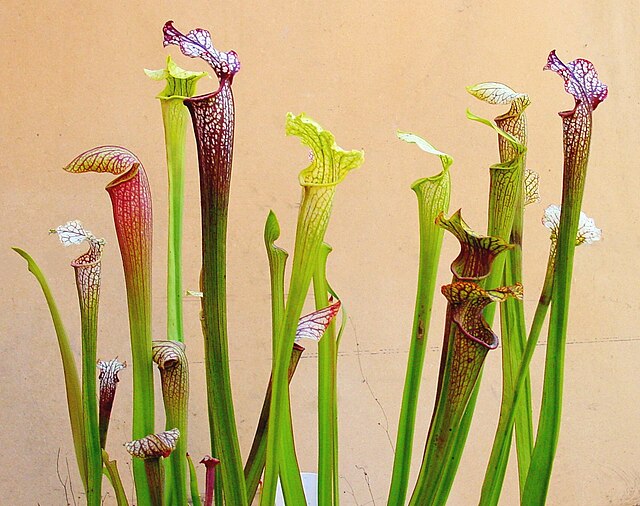
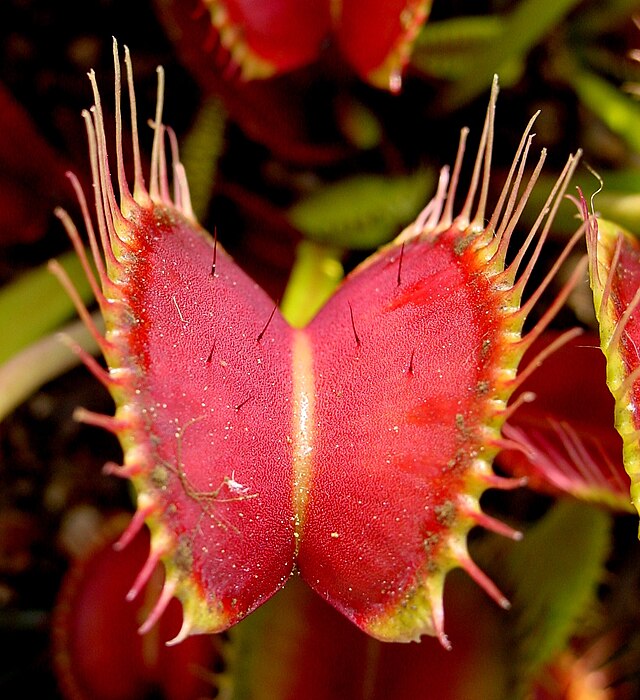
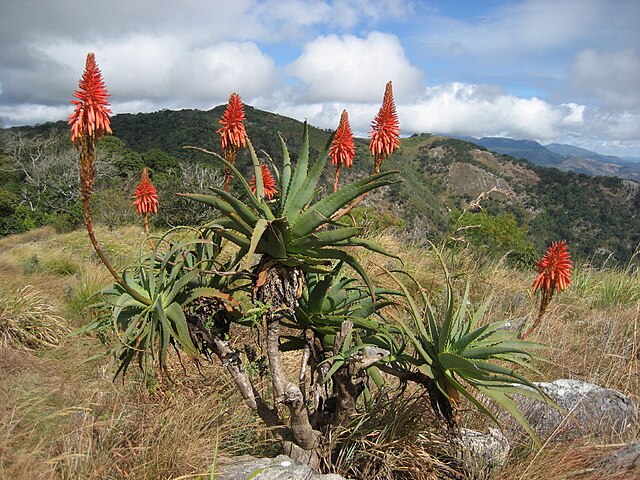
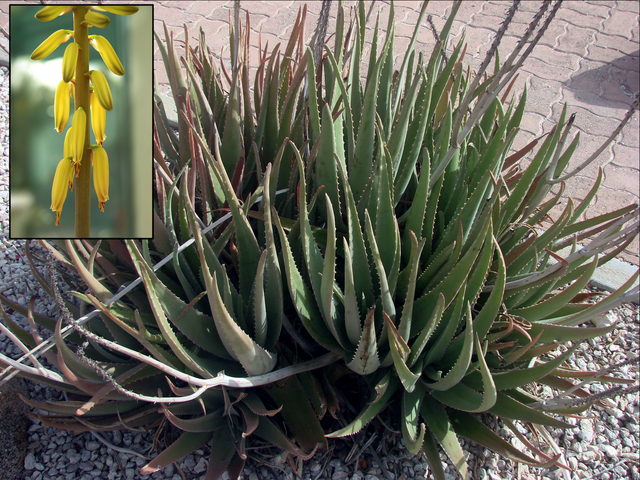
All Cactaceae family, all Orchidaceae family, cycads (Cycadaceae and Zamiaceae families), succulent Euphorbia species, Aloe genus (except Aloe vera), Pachypodium genus, Cyclamen genus, Nepenthes (pitcher plants), Dionaea muscipula (Venus flytrap), and some Sarracenia genus species are listed in the appendices. Within Agave genus, only Agave parviflora (Appendix I) and "Variegated Century Plant" (Agave victoriae-reginae, Appendix II) are listed. To verify whether your species is included, search the Ministry of Economy, Trade and Industry's published plant list of appendices or the CITES Secretariat's database "Species+" by scientific name. If not listed in the appendices, no procedural requirements apply under the convention, but customs asks that you include the scientific name and notation that the plants are artificially propagated on invoices for easy verification.
No procedures required for domestic trade
The Washington Convention regulates international trade, so no procedural requirements apply under the convention if you simply buy and sell artificially propagated stocks domestically. However, if you procure and sell imported stocks, confirming with suppliers that the stocks were legally processed at import is important for accountability to buyers.
Source: Ministry of Economy, Trade and Industry "Import approval procedures for goods regulated under the Washington Convention" (https://www.meti.go.jp/policy/external_economy/trade_control/02_exandim/06_washington/cites_im.html), "How to identify Washington Convention regulated species" (https://www.meti.go.jp/policy/external_economy/trade_control/02_exandim/06_washington/cites_search.html). Verification date: September 10, 2026.
4. Invasive Species Act: Specific invasive alien plant species
Species designated as specific invasive alien species are principally prohibited from rearing, cultivation, storage, transport, sale, and transfer. Among plants, aquatic species in commercial circulation such as Pontederia crassipes, Alternanthera philoxeroides, Bacopa monnieri, Myriophyllum aquaticum, Ludwigia peploides, Azolla cristata, Utricularia gibba, and Ludwigia grandiflora, and terrestrial species such as Coreopsis tinctoria, Rudbeckia laciniata, Senecio jacobaea, and Sicyos angulatus are designated. Most are regulated as entire individuals including stems and roots.
Growers handling aquatic and wetland plants should verify that procured stocks do not contain designated invasive species (particularly floating plants and emergent aquatic plants). The latest list of designated species can be found on the Ministry of the Environment website.
Source: Ministry of the Environment "List of Specific Invasive Alien Species" (https://www.env.go.jp/nature/intro/2outline/list.html). Verification date: September 10, 2026.
5. Other laws relevant to sellers
- Act on the Conservation of Endangered Species of Wild Fauna and Flora: Plants designated as domestic rare wild species (some wild orchids) have restricted transfer and sale. Collecting and selling domestic wild plants without permission may violate the Act on the Conservation of Endangered Species of Wild Fauna and Flora, Natural Parks Act, or Forest Act (forest theft). If handling imported wild-collected plants from overseas, you should be able to explain that the stocks underwent quarantine at import and were processed according to Washington Convention procedures.
- Specified Commercial Transaction Act: If you repeatedly and continuously conduct mail-order sales, you have an obligation as a business operator to display your name (business name), address, telephone number, and other information. On GrowerDirect, grower profiles can display business information.
- Act against Unjustifiable Premiums and Misleading Representations: Unsubstantiated absolute statements such as "guaranteed to root" or "never gets sick" may constitute misleading advertising.
- Agricultural Chemicals Control Act and Fertilizer Act: If selling divided portions of pesticides or fertilizers together with plants, there are registration and labeling requirements.
Checklist for selling on GrowerDirect
- Is the variety name accurate? If a registered variety, have you included "registered variety" notation and registration number in the listing description?
- If propagating and selling a registered variety, have you obtained authorization from the breeder's rights holder?
- Are imported plants those that underwent import inspection? Are they not soil-containing plants brought in with soil?
- For species listed in the Washington Convention appendices, have you procured them from suppliers that can verify import authorization documents?
- Do they not correspond to specific invasive alien species or domestic rare wild species?
- Have you avoided absolute statements like "guaranteed" or "absolutely" in the listing description without factual basis?
Laws are amended. The contents of this article are current as of the verification date, and if you are uncertain about interpretation, confirm with the Ministry of Agriculture, Forestry and Fisheries, the Plant Protection Office, the Ministry of Economy, Trade and Industry, the Ministry of the Environment, or a specialist.
Related pages: How to identify trustworthy growers / How to choose a plant sales platform (comparison) / Grower verification process / About fees / Guide to preventing transaction troubles