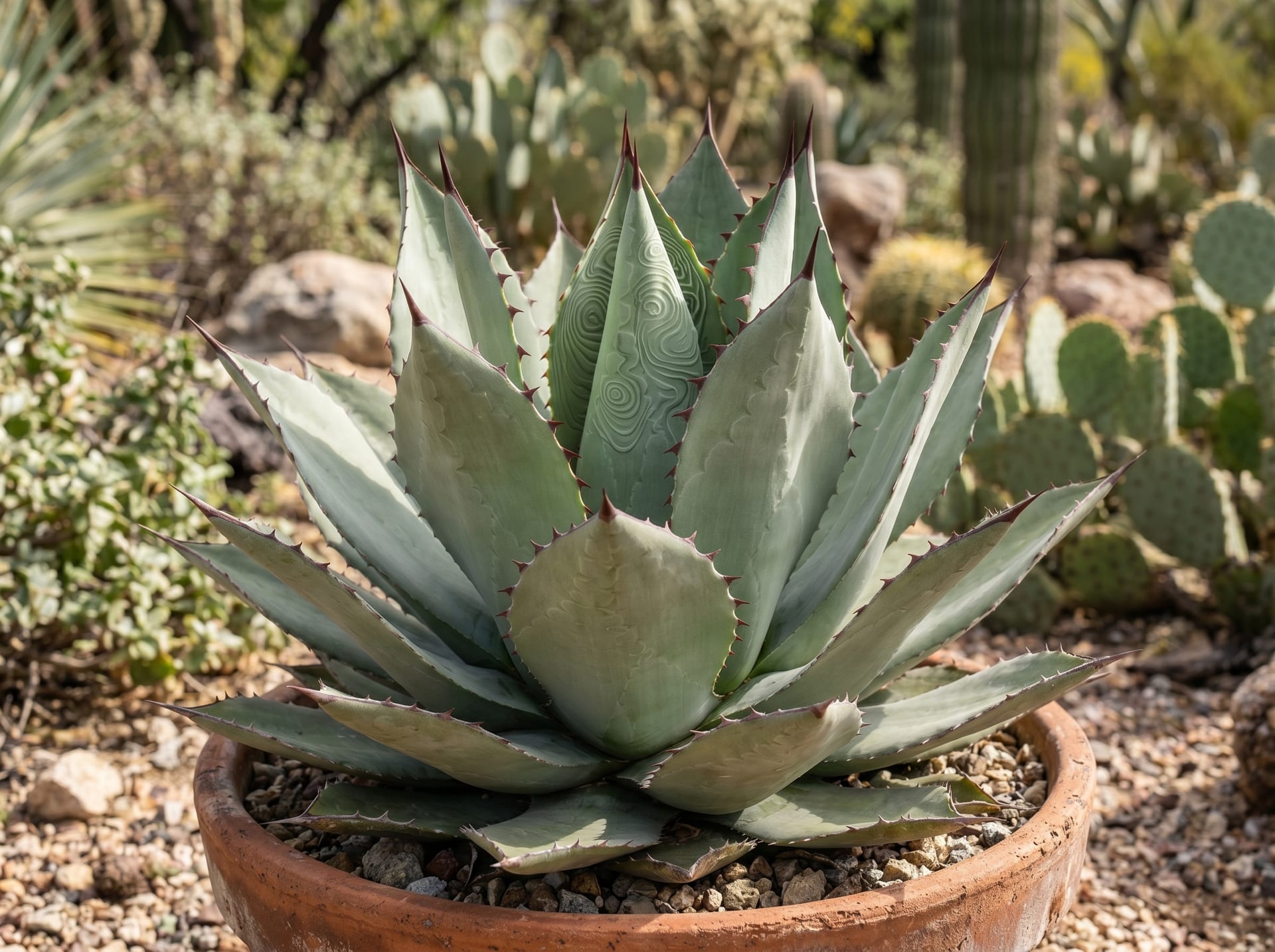
AI-generated image
Agave Murpheyi
BeginnerAgave murpheyi
Native to Arizona. Historically cultivated by indigenous peoples for food. Produces bulbils on flower stalks for vegetative reproduction. Characterized by hard gray-green leaves.
About
Agave murpheyi is a medium-sized agave distributed mainly across Arizona, USA, and is well known for its long history of cultivation by Indigenous peoples as a food plant. Stiff, broad grey-green leaves form a somewhat open rosette, with a calm colour and ruggedness that are part of its charm. A notable trait is its tendency to produce bulbils (plantlets) on the flowering stalk, so it can be propagated easily from these without waiting for seed. Cultivation is comparatively easy: use a fast-draining mix and a sunny position. It has some cold tolerance and is drought-resistant, though care is needed against root rot from excess moisture. Water once the soil dries and reduce watering in winter. Its history and ease of propagation make it a consistently rewarding species to grow.
Size of the Agave Murpheyi
The Agave Murpheyi grows to 50-80cm rosette.
Temperature & humidity for the Agave Murpheyi
The Agave Murpheyi tolerates temperatures of -8〜40℃. Ideal humidity is 10〜40%.
Basic Info
Origin
Arizona, USA
Size
50-80cm rosette
Temperature
-8〜40℃
Humidity
10〜40%
Growing Tips
Propagation
Easily propagated via bulbils
Light & Placement
It prefers direct sun and should be kept in a bright spot. It also has some shade tolerance and grows in bright partial shade.
Watering
Drought-tolerant and forgiving of neglect. Water after the soil dries, and cut back in winter.
Temperature & Overwintering
Cold tolerance is about -8°C, so it handles a fair amount of cold. In cold regions, frost protection in winter is reassuring.
Soil & Repotting
Use a fast-draining mix. Root rot from excess moisture is a risk, so make sure the pot drains well too.
Agave Murpheyi FAQ
QWhat is the growing difficulty level for Agave Murpheyi?
Beginner. A variety suitable for beginners. No special equipment or experience is required—you can grow it without problems by setting up a basic cultivation environment.
QWhat temperatures can Agave Murpheyi tolerate?
Agave Murpheyi tolerates temperatures of -8〜40℃. Recommended humidity is 10〜40%. This is the tolerated range, not the ideal growing temperature. Keep conditions well inside it and avoid sudden temperature changes.
QHow large does Agave Murpheyi get?
The mature size of Agave Murpheyi is 50-80cm rosette. This may vary slightly depending on cultivation environment and individual differences.
QWhat is the typical price for Agave Murpheyi?
The price of Agave Murpheyi varies significantly by variety, characteristics, size, and lineage. Please check GrowerDirect's price guide for the latest market information.
Last updated: June 24, 2026
References & Sources
Edited & verified by: GrowerDirect Editorial Team
The classifications, regulations, and growing data on this page are created and verified based on the primary information database below.
Taxonomy & Authority
Regulations & Conservation Status
Sources: CITES Appendices (List of species protected by CITES Appendix II) / Ministry of the Environment Designated Invasive Species List (confirmed Agave non-applicable)
Regulations may change. Always verify the latest information with the relevant authorities.
Related Species
Find listings for this species
Related Articles
Preventing Leaf Burn in Agave and Light Management | Transition Strategy from Indoor to Outdoor Cultivation
Light management strategy to prevent agave leaf burn completely while successfully transitioning from indoor to outdoor environments. This article explains practical methods including gradual light intensity adjustment, seasonal placement changes, and UV protection measures.
Tips for Cultivating White Variegated Agave Varieties
Tips for Cultivating White Variegated Agave Varieties
Complete Care Guide for Agave oteroi | Tips for Training Beautiful Large Rosettes
We explain the characteristics and cultivation of Agave oteroi, a large agave native to Oaxaca, Mexico. From placement location and soil to watering and overwintering—a practical guide for those beginning to cultivate this species.
The Deep Connection Between Agave and Tequila | The Secret of a Distilled Spirit Born from Century Plant
Tequila is made from only Agave tequilana among the Agave genus. This essay explains the ecology of century plants, the Jalisco region as a production area, and the differences from ornamental agaves.
🩺 Common diseases
Can't find the plant you're looking for?
Post your wishes for free and growers with matching plants will contact you with introductions.