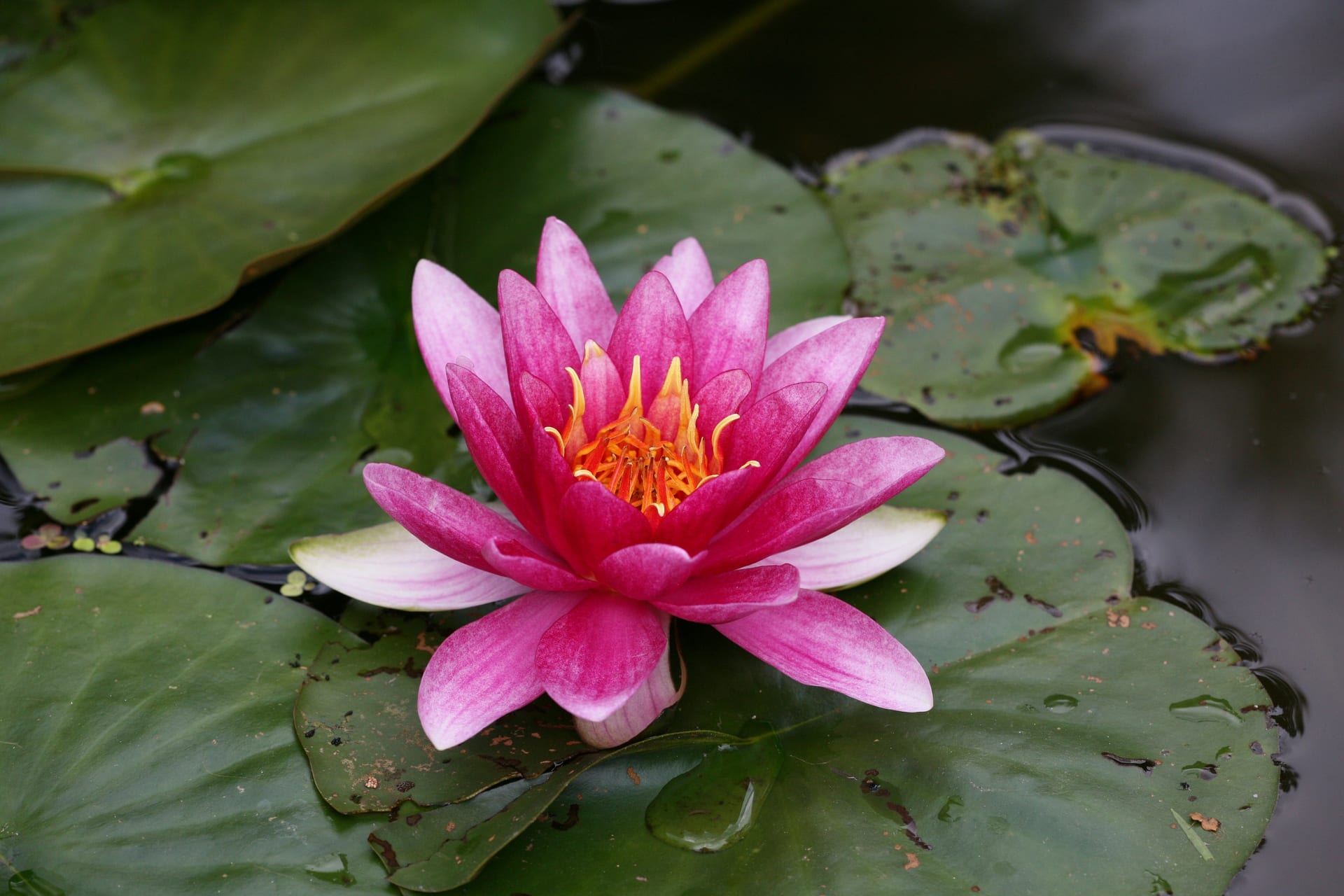
Source: Wikimedia Commons
Water lily
IntermediateNymphaea spp.
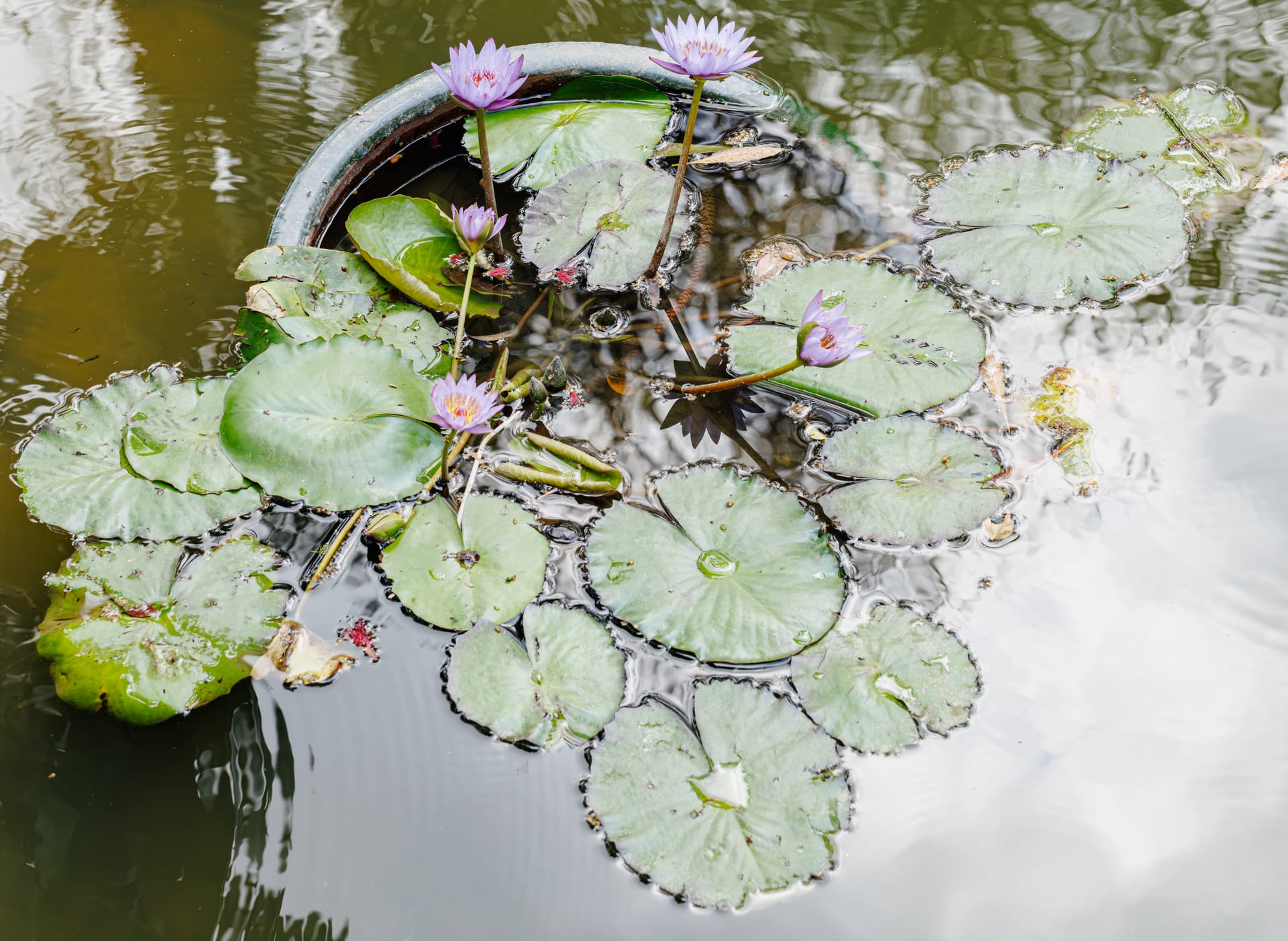
The water lilies of the genus Nymphaea, with notched round leaves floating on the water and large flowers. They divide into cold-hardy temperate lilies and tropical lilies that hold blue or purple flowers above the water, with numerous hybrid cultivars.
About
Water lilies (Nymphaea, Nymphaeaceae) are perennial floating-leaved plants, about 50 species across the tropics and temperate zones. Only one, Nymphaea tetragona, is native to Japan. Long stalks rise from a submerged rhizome to round, deeply notched leaves floating on the surface, and single flowers on long stalks have four sepals and many petals and stamens. They are often confused with lotus, which holds unnotched leaves above the water. Garden water lilies fall into two groups. Temperate (hardy) lilies flower near the surface from mid-May to October and overwinter outdoors in standing water. Many cultivars involve N. tetragona in their parentage. Hybrid garden water lilies are listed as a Priority Control Alien Species in Japan's alien species list and must not be introduced to natural waters, and some varieties are registered under plant variety protection, so check named cultivars when trading. In Japan potted plants are sold by garden centres and online.
Source: Wikipedia (CC BY-SA 4.0)
Temperature & humidity for the Water lily
Tropical lilies have blue and purple shades absent from hardy lilies and hold flowers high above the water from July to mid-October, but need water of 25°C or more and decline below 15°C, so in winter they must be heated or brought indoors dormant.
Basic Info
Origin
Tropical to temperate regions worldwide (only N. tetragona is native to Japan)
Lifespan
Perennial; maintained for years by repotting
Size
Floating-leaved plants varying greatly by cultivar
Temperature
20〜28℃
Watering & Fertilizer
Push slow-release fertiliser tablets into the soil during the growing season
Growing Tips
Lighting
Give at least half a day, ideally a full day, of direct sun reaching the crown.
CO2 & Fertilizer
Bury slow-release or organic fertiliser tablets ahead of the roots. Feed hardy lilies until September except in midsummer, and tropical lilies every 4–6 weeks from June to September.
Water Temperature & Quality
Hardy lilies overwinter in standing water as long as the rhizome does not freeze. Tropical lilies need water above 25°C and decline below 15°C, so heat them or store them dormant indoors in winter.
Substrate & Attachment
Plant in paddy soil, or kneaded arakida or fine akadama, with about 10 cm of water above the crown.
Trimming & Propagation
Divide hardy lilies from late March to late April by cutting 10 cm lengths of rhizome; tropical lilies are divided by their tubers.
Cautions
Garden water lilies are a Priority Control Alien Species; never plant or dump them in ponds or rivers. Some Nymphaea varieties are registered and may not be propagated for sale or transfer without permission, so check MAFF's database when trading named cultivars.
Water lily FAQ
QWhat is the growing difficulty level for Water lily?
Intermediate. A variety suitable for intermediate growers. Requires some cultivation experience and knowledge of environment management. Pay careful attention to temperature and humidity control.
QHow should I water and fertilize Water lily?
Water lily: watering & fertilizer — Push slow-release fertiliser tablets into the soil during the growing season. Aim for appropriate frequency and amount.
QWhat is the typical price for Water lily?
The price of Water lily varies significantly by variety, characteristics, size, and lineage. Please check GrowerDirect's price guide for the latest market information.
Last updated: September 23, 2026
References & Sources
Edited & verified by: GrowerDirect Editorial Team
The classifications, regulations, and growing data on this page are created and verified based on the primary information database below.
Primary sources
- Wikipedia
- Species+ (CITES listing check)
- Ministry of the Environment: List of Alien Species that may Damage Ecosystems
- Ministry of the Environment: alien species list, plants (2nd ed.)
- MAFF plant variety registration database
- Minna no Shumi no Engei (NHK Publishing): growing hardy water lilies
- Minna no Shumi no Engei (NHK Publishing): growing tropical water lilies
- GBIF
Taxonomy & Authority
Regulations & Conservation Status
Not listed in CITES (no match in Species+). Hybrid garden water lilies (Nymphaea cv.) are designated a Priority Control Alien Species in the Ministry of the Environment's alien species list (2nd ed., September 2026). They are not Specified Invasive Alien Species and can be sold and grown, but must not be introduced to natural waters because of their impact on aquatic life, including endangered species. MAFF's plant variety database lists two registered Nymphaea varieties ('Snow Princess' and 'Shiki', searched September 2026); registered varieties may not be propagated for sale or transfer without permission, so check named cultivars before trading. Do not plant or dump it in ponds, rivers or ditches; dry unwanted plants before disposing of them as household waste.
Sources: Species+ (CITES listing check) / Ministry of the Environment: List of Alien Species that may Damage Ecosystems / Ministry of the Environment: alien species list, plants (2nd ed.) / MAFF plant variety registration database
Regulations may change. Always verify the latest information with the relevant authorities.
Related Species
Find listings for this species
Related Articles
Aquatic Plant Tank Used Soil and Substrate Disposal and Recycling Methods | Correct Disposal Methods and Reuse Tips
Explains the correct disposal methods for used substrate in aquatic plant tanks. Introduces the proper disposal procedures according to local municipal rules and the concept of reuse for short-term usage.
Beginner-Friendly Aquatic Plants Without CO2 Supplementation | Cultivation Conditions and Tank Layout Strategies
You can create a beautiful aquarium without expensive CO2 equipment. This guide explains practical methods for selecting CO2-free aquatic plants that beginners can successfully grow, from cultivation conditions to tank layout strategies.
How to Cultivate Rotala and Bring Out Beautiful Red Color | Lighting, CO2, and Trimming Techniques to Achieve Vibrant Red
This guide explains the Rotala genus, popular in aquatic plant layouts, covering light intensity, CO2, and fertilizer management to bring out red coloration, as well as trimming techniques for maintaining beautiful, dense growth.
Rare Attachment-Type Aquatic Plants Beyond Anubias, Bucephalandra, and Willow Moss | The Charm of Distinctive Varieties like Bolbitis
Beyond the standard attachment-type aquatic plants—Anubias, Bucephalandra, and Willow Moss—there are distinctive attachment-type aquatic plants like Bolbitis. This article introduces their charm, cultivation tips, and how to incorporate them into aquascaping layouts.
🩺 Common diseases
Can't find the plant you're looking for?
Post your wishes for free and growers with matching plants will contact you with introductions.