Aquatic Plant Encyclopedia
Encyclopedia of popular aquatic plants with care guides, traits, and aquascaping tips.
Showing 10 of 127 species
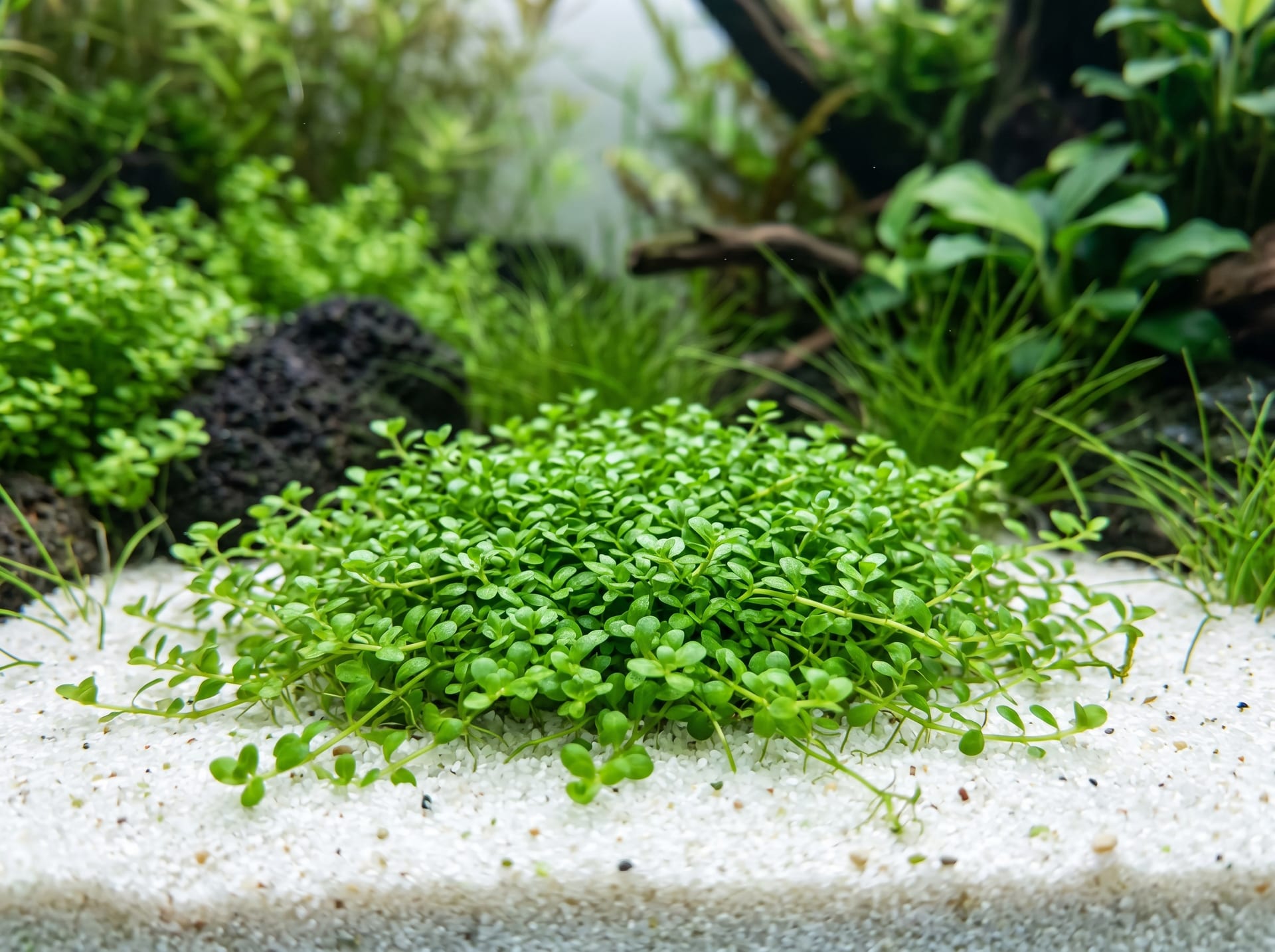
Elatine hydropiper
Elatine hydropiper
Adorable tiny round-leaved foreground plant. Even smaller than Glossostigma, creating a delicate green carpet. Needs high light and CO2 but looks great in compact tanks.
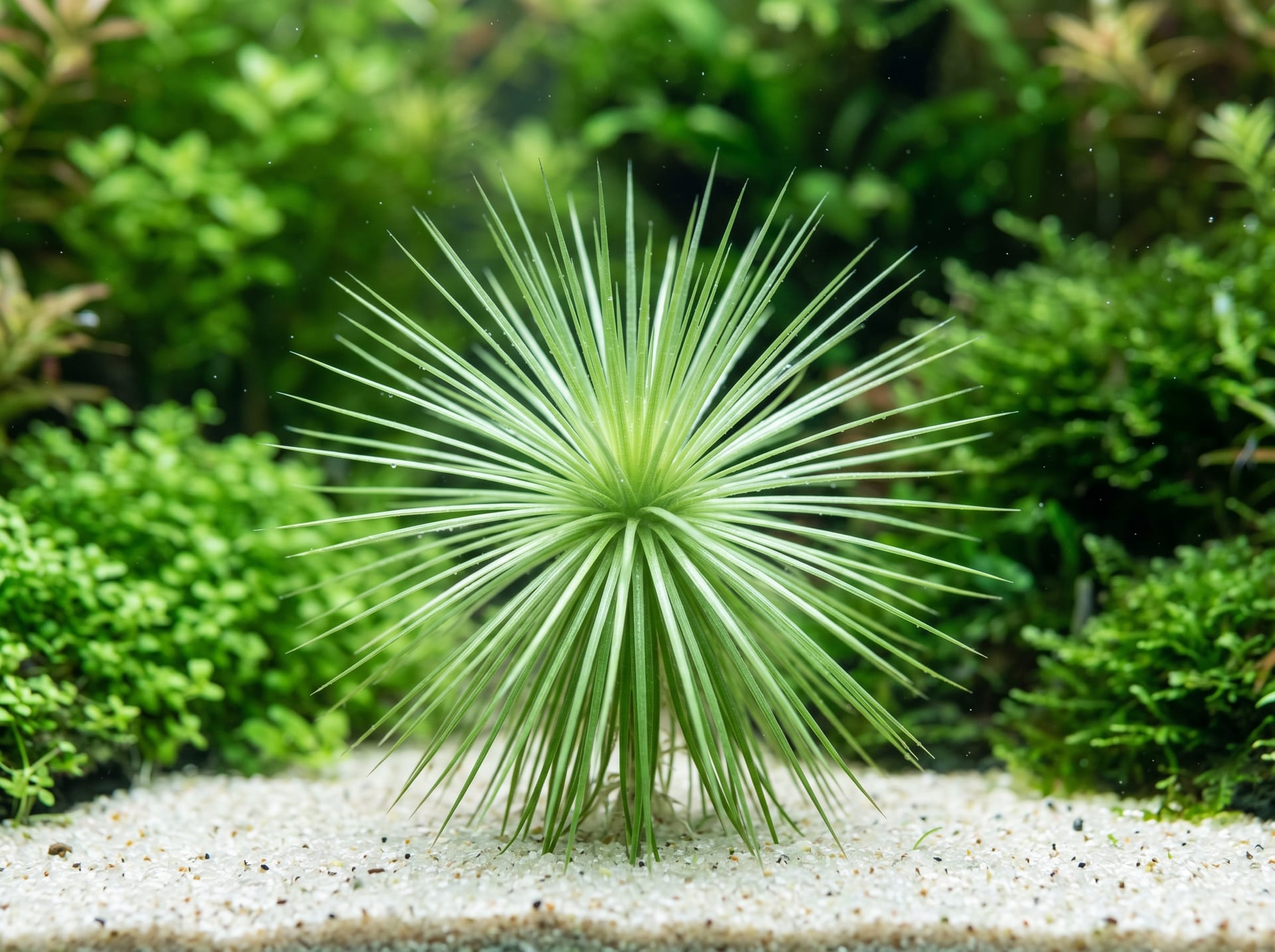
Eriocaulon aquaticum
Eriocaulon aquaticum
Sea urchin-like radial leaves make this a striking high-difficulty plant. Demands soft water, low pH, high light, and CO2. Small rosette ideal for foreground. Popular among enthusiasts.
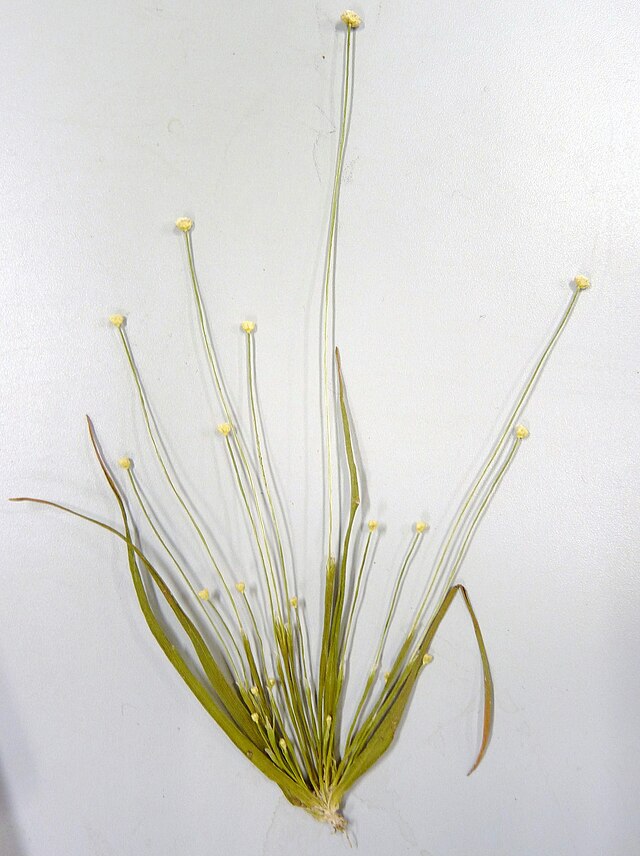 © Show_ryu / CC BY-SA 3.0
Eriocaulon Cinereum
Eriocaulon cinereum
A beautiful pipewort with radiating thin leaves. Small, perfect as foreground accent.
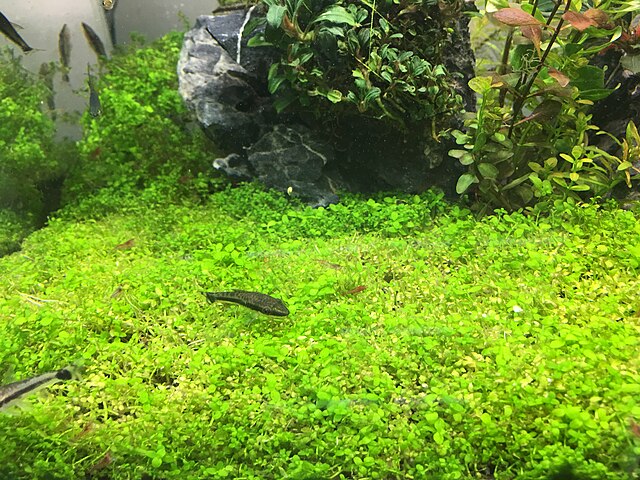 © Ranjith-chemmad / CC BY-SA 4.0
Hemianthus callitrichoides
Hemianthus callitrichoides
One of the worlds smallest aquatic plants. Tiny leaves create a dense beautiful green carpet. Advanced foreground plant.
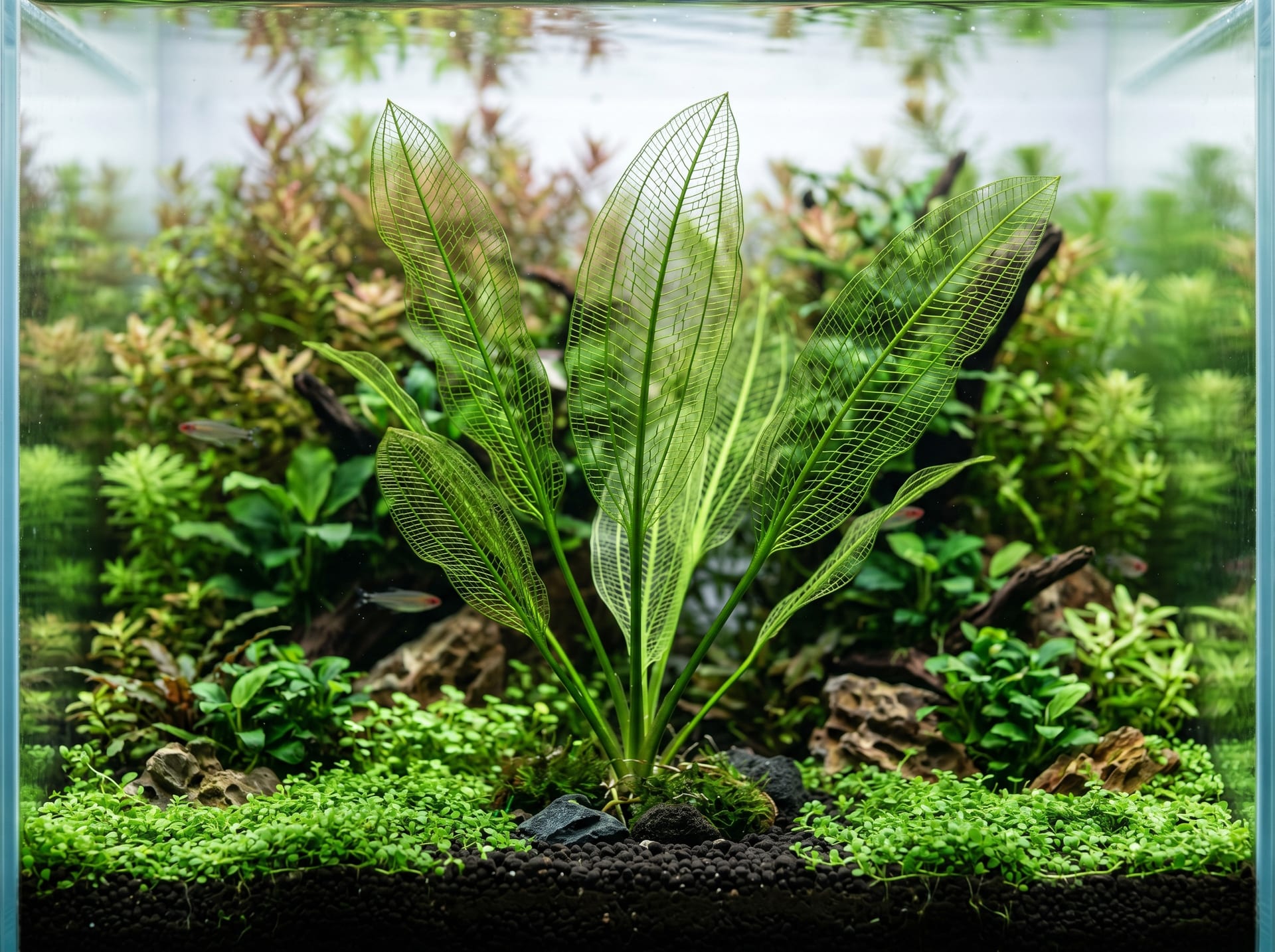
Madagascar Lace Plant
Aponogeton madagascariensis
A mystical plant where only leaf veins remain, creating lace-like appearance. Advanced species from Madagascar.
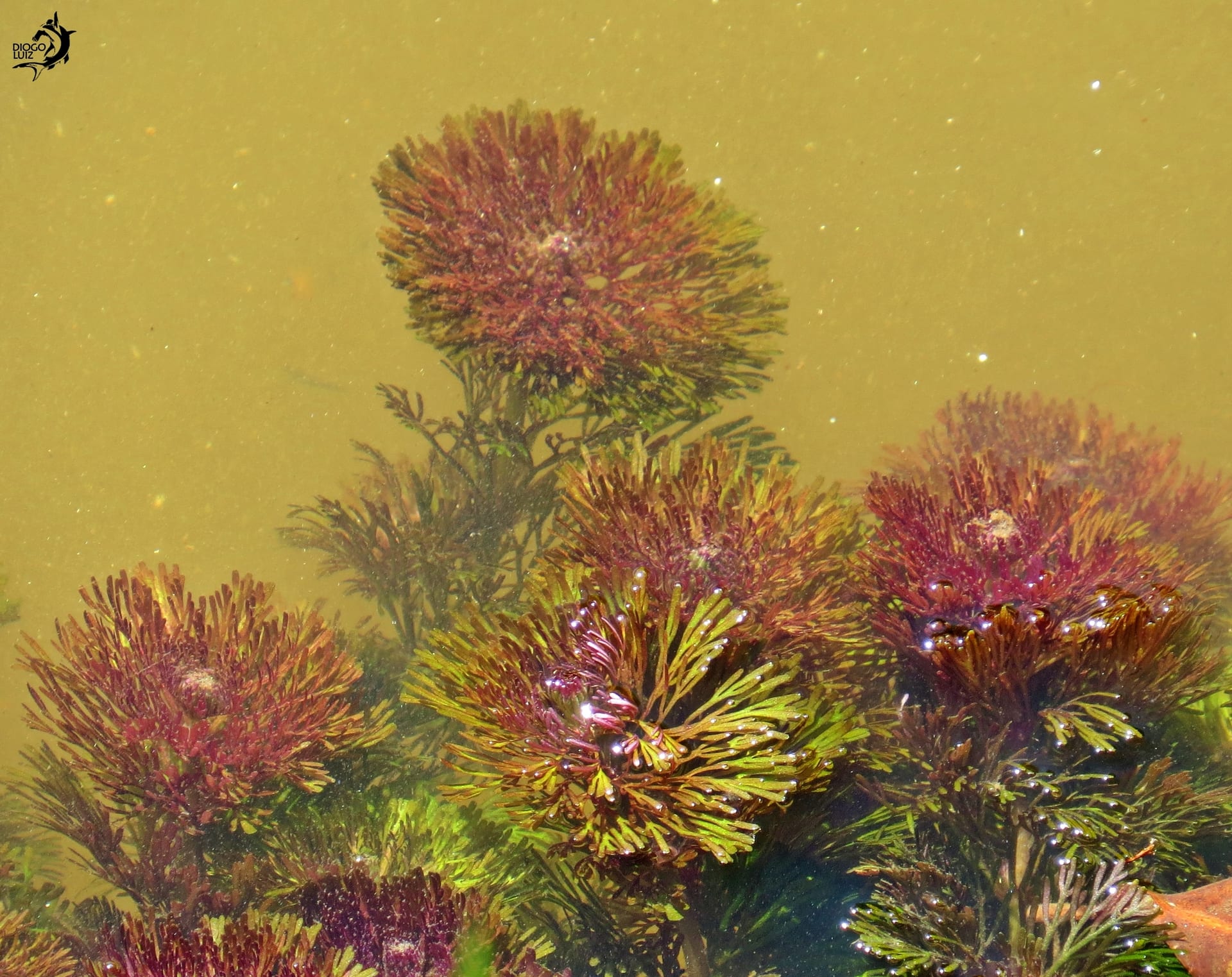 © Diogo Luiz / CC BY-SA 4.0
Red cabomba
Cabomba furcata
A cabomba with finely divided, fan-shaped leaves in threes, coloured red-brown to wine red. It is a different species from green Cabomba caroliniana and is told apart by its whorled leaves. Strong light and soft water are essential, so it suits experienced keepers.
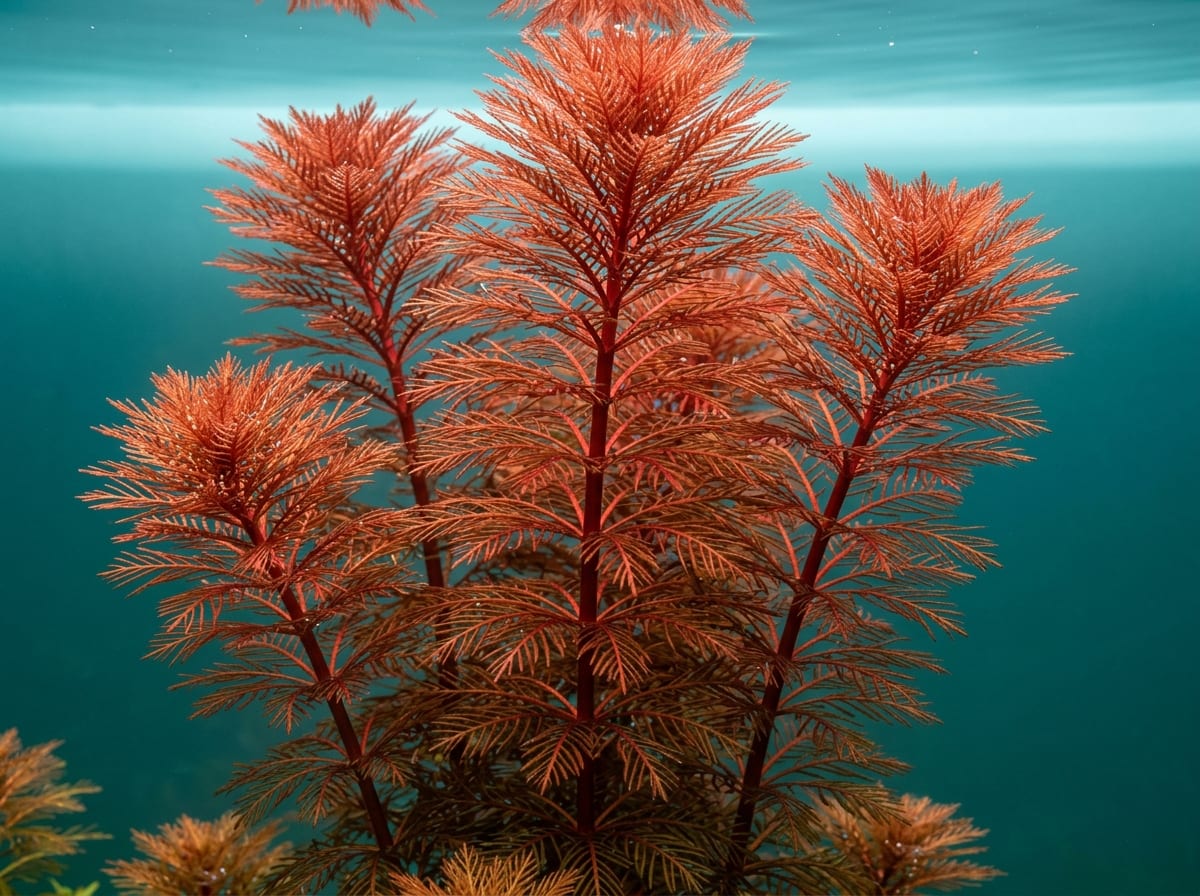
Red myriophyllum
Myriophyllum tuberculatum
An Asian water-milfoil whose finely feathered leaves grow in whorls and turn rusty red in good conditions. For years it was sold under the wrong name Myriophyllum mattogrossense. Strong light, CO2 and trace elements are essential.
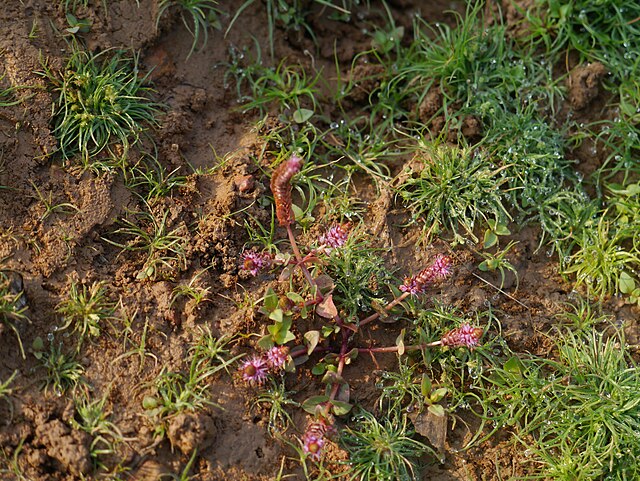 © Dinesh Valke from Thane, India / CC BY-SA 2.0
Rotala Macrandra
Rotala macrandra
A very beautiful high-difficulty plant with deep crimson leaves. Queen of aquatic plants turning red with CO2 and strong light.
 © Krzysztof Ziarnek, Kenraiz / CC BY-SA 4.0
Star rotala
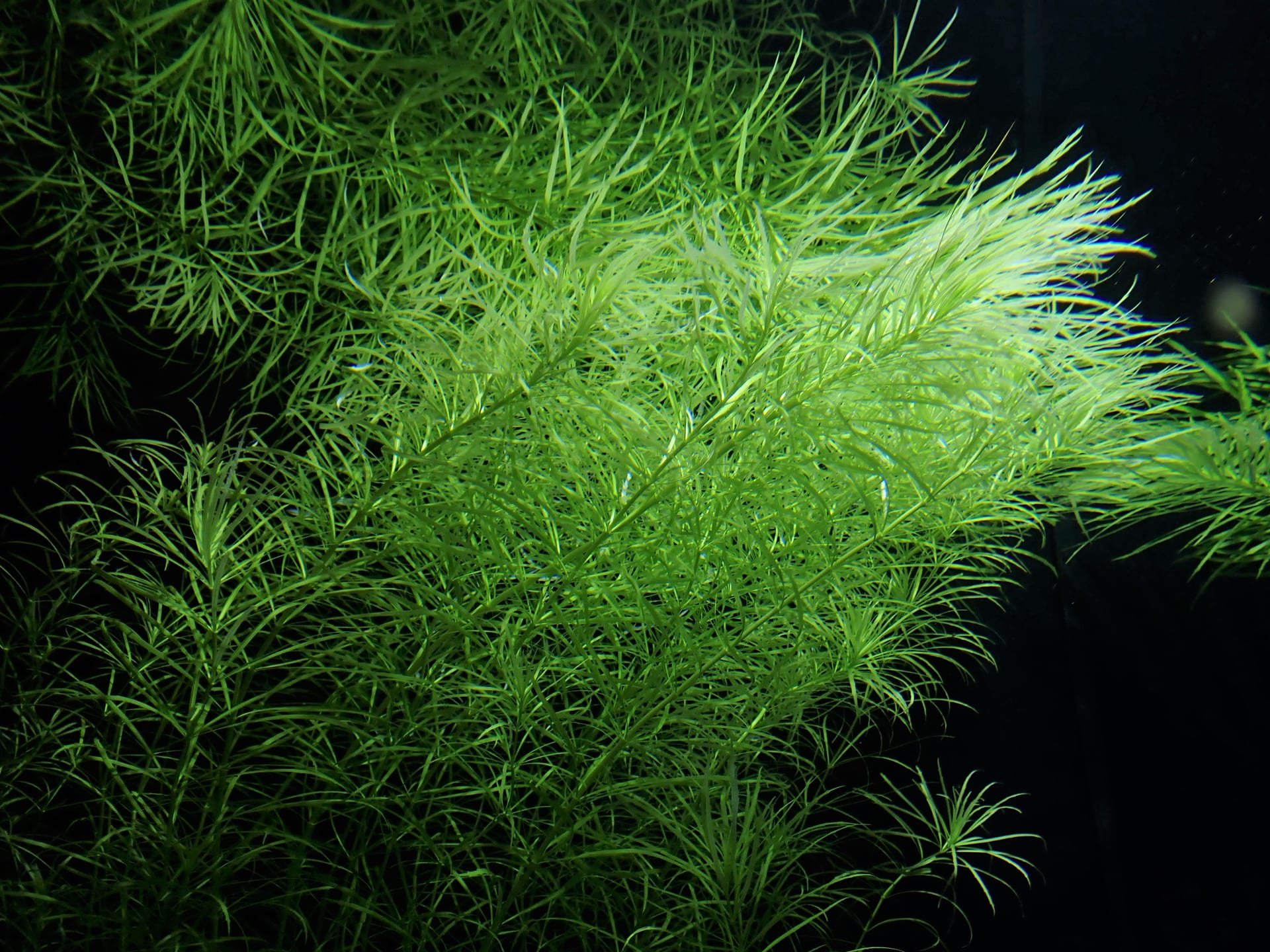
Pogostemon stellatus
A stem plant of the mint family with long narrow leaves in dense whorls, stacked like stars. Leaner nutrients bring out purple to orange colours. It needs strong light and CO2 and can stall suddenly even in good conditions, so it suits experienced keepers.
Tonina fluviatilis
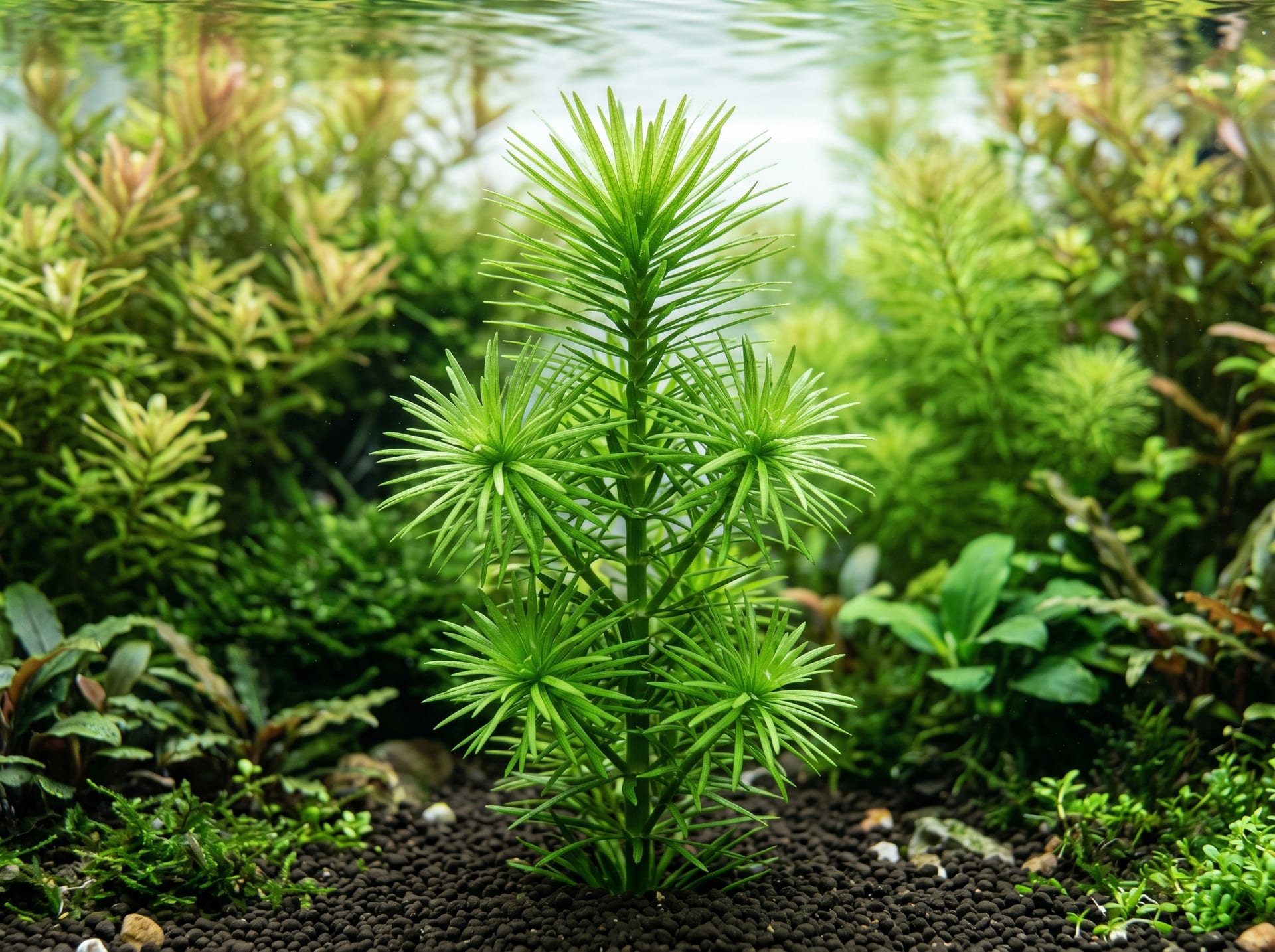
Tonina fluviatilis
Beautiful star-shaped whorled leaves from Brazil. Requires soft, acidic water — challenging conditions. Stunning star rosettes when conditions are met. A challenge for experts.
Related Content
Aquatic Plant FAQ
- How much do aquatic plants cost?
- Common Rotala and Anubias cost 300-1,000 yen, Bucephalandra 1,000-5,000 yen, and rare wild-collected specimens 5,000-20,000+ yen depending on species.
- Can beginners grow aquatic plants?
- Anubias Nana and Java Moss require no CO2 injection and grow in low light, making them ideal for beginners. Start with hardy shade-loving plants.
- What equipment is needed for aquatic plants?
- A tank, LED light, filter, and aqua soil are the basics. For advanced layouts, CO2 injection and high-performance lighting significantly improve growth and coloration.
- What should I check when buying aquatic plants?
- Ensure leaves are green and healthy, not melting or dying, and free of snails or pests. Tissue-cultured cups are pest-free and reliable.
- Why do aquatic plants die?
- Insufficient light, CO2, or nutrients are the main causes. Each species has different requirements, so matching the environment to your specific plants is essential.