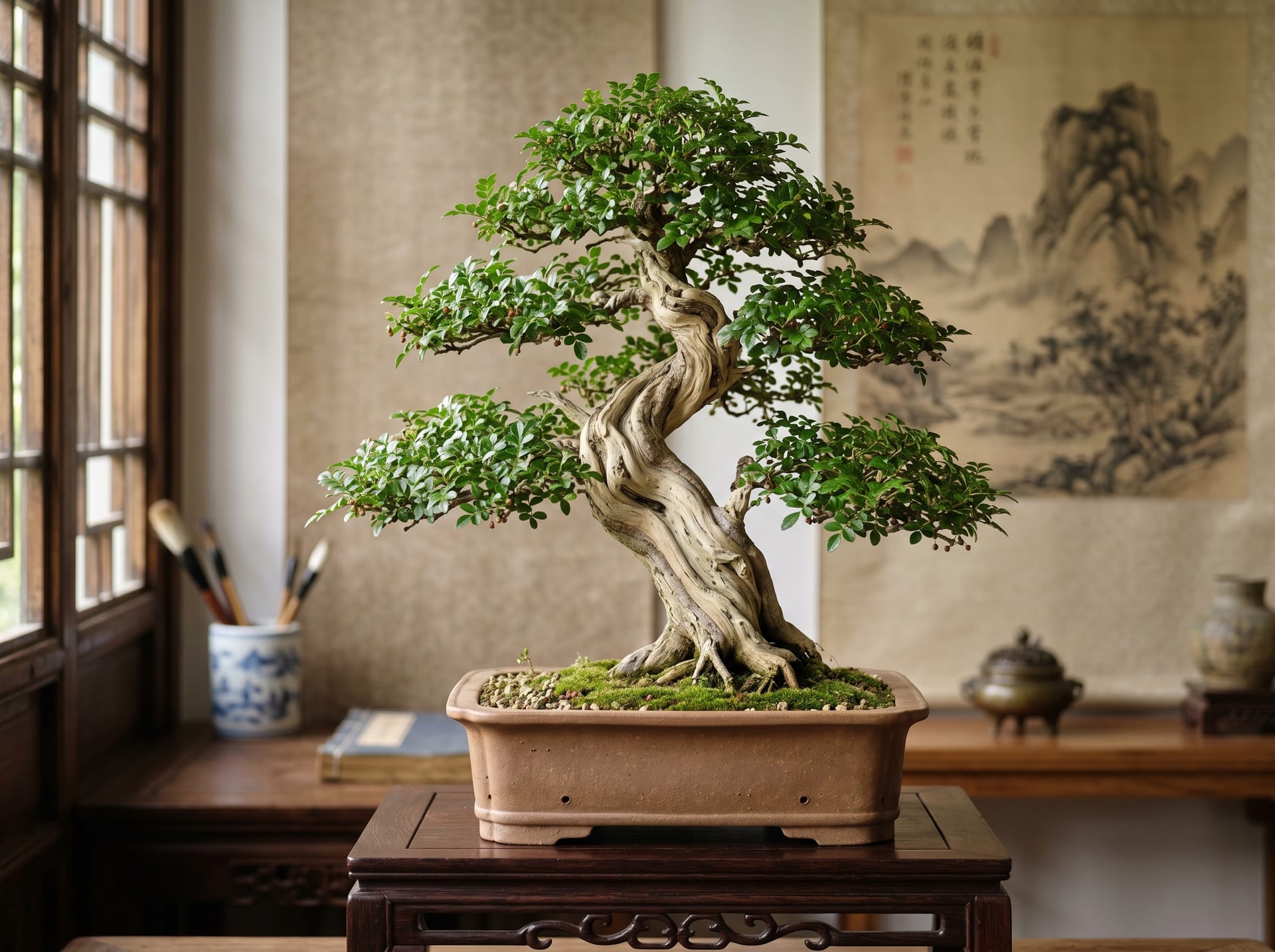
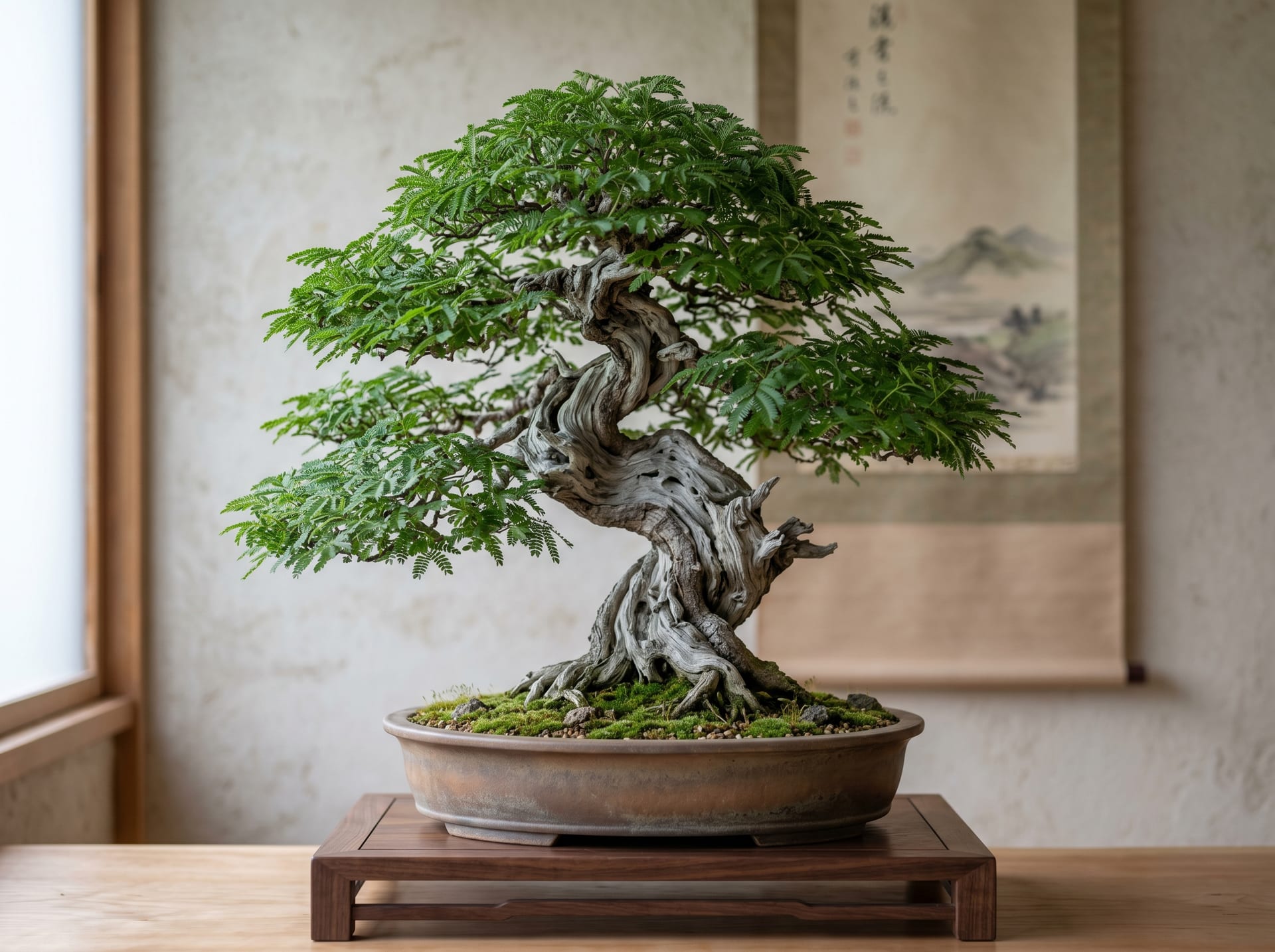
AI-generated image
Chinese Pepper Tree
IntermediateDeciduous tree with vivid yellow inner bark. In bonsai, contrast between yellow bark and autumn color is beautiful. Known in traditional medicine with distinctive bitter taste.
About
Zanthoxylum simulans or related species, known as Chinese pepper tree or Sichuan pepper tree (similar to Japanese sansho), is a deciduous aromatic shrub in the family Rutaceae, native to China, Japan, and the Korean Peninsula. When bark or wood is cut or damaged, a vivid yellow inner bark is revealed — a distinctive characteristic prized in bonsai for the visual contrast it provides between the yellow heartwood and autumn-colored foliage. The pinnate leaves are aromatic, and small red berries appear in autumn. The species responds well to pruning and develops characterful bark with age. Protective gloves should be worn during handling due to thorns on the branches.
Basic Info
Origin
China, Japan, and the Korean Peninsula
Lifespan
100+ years
Size
20-60cm (bonsai size)
Temperature
-5〜35℃
Watering & Fertilizer
Fertilizer (regular)
Growing Tips
Placement
Full sun outdoors. Cold hardy
Watering
Loves water. Water more during growing season
Styling
Shape to display yellow bark. Informal upright suits well
Notes
Yellow sap appears when trunk is wounded. Gloves recommended
Chinese Pepper Tree FAQ
QWhat is the growing difficulty level for Chinese Pepper Tree?
Intermediate. A variety suitable for intermediate growers. Requires some cultivation experience and knowledge of environment management. Pay careful attention to temperature and humidity control.
QWhat is the ideal temperature for Chinese Pepper Tree?
The ideal temperature for Chinese Pepper Tree is -5〜35℃. Avoid sudden temperature changes and maintain a stable environment.
QWhat is the lifespan of Chinese Pepper Tree?
The average lifespan of Chinese Pepper Tree is 100+ years. With proper cultivation environment and nutrient management, you can keep it healthy for a long time.
QHow large does Chinese Pepper Tree get?
The mature size of Chinese Pepper Tree is 20-60cm (bonsai size). This may vary slightly depending on cultivation environment and individual differences.
QHow should I water and fertilize Chinese Pepper Tree?
Chinese Pepper Tree: watering & fertilizer — Fertilizer (regular). Aim for appropriate frequency and amount.
QWhat is the typical price for Chinese Pepper Tree?
The price of Chinese Pepper Tree varies significantly by variety, characteristics, size, and lineage. Please check ボタちょく's price guide for the latest market information.
Last updated: June 23, 2026
References & Sources
Edited & verified by: BoTachoku Editorial Team
The classifications, regulations, and growing data on this page are created and verified based on the primary information database below.
Primary sources
Regulations & Conservation Status
Sources: CITES Checklist of CITES Species
Regulations may change. Always verify the latest information with the relevant authorities.
Related Species
Find listings for this species
Related Articles
Top 10 Recommended Bonsai Species for Beginners | A Beginner's Guide to Choosing by Ease of Care and Appeal
A guide for beginners looking to start bonsai, featuring 10 carefully selected easy-to-grow and beautiful species. This article explains the characteristics, care difficulty, seasonal highlights, and price range of each species to help you choose your first bonsai.
Fruit-Bearing Bonsai Care Guide | Enjoying the Fruits of Dwarf Crabapples, Date Plums, and Pyracantha
A comprehensive guide to caring for fruit-bearing bonsai. We introduce how to select representative species such as dwarf crabapples, date plums, and pyracantha, pruning and fertilization techniques to encourage fruiting, pollination tips, and appreciation techniques.
Fruiting Bonsai Guide — Enjoying Flowers & Fruits in Miniature
Growing fruiting bonsai: species selection, pollination techniques, fruit thinning, pruning for flower buds, and seasonal care.
Complete Guide to Growing Pachira | Characteristics of Braided Specimens and Watering, Repotting, and Propagation
From the characteristics of Pachira's native habitat, also called the money tree, we provide detailed explanations of placement, watering, winter care, repotting, propagation by cuttings, and common troubleshooting.