Source: Wikimedia Commons
Winter Jasmine
BeginnerJasminum nudiflorum
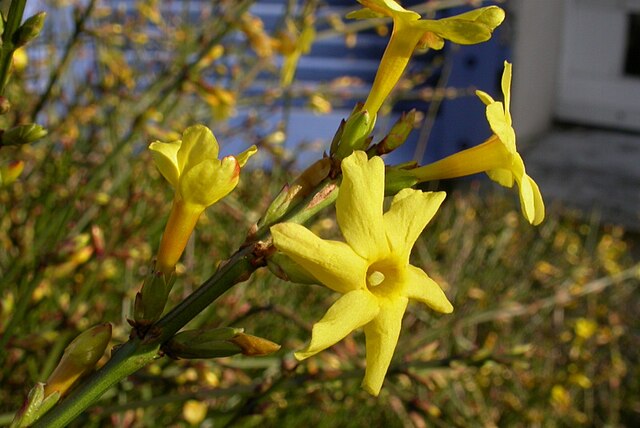
Flowering bonsai covered in yellow blooms in early spring. Weeping habit suits cascade style. Bright yellow heralds spring when few flowers bloom. Hardy and easy.
About
Jasminum nudiflorum, the winter jasmine, is a slender, deciduous shrub native to China. The flower's blossoming peaks right after winter, which is why it is also named Yingchun (迎春) in Chinese, which means "the flower that welcomes Spring". It is widely cultivated as an ornamental and is reportedly naturalized in France and in scattered locations in the United States.
Source: Wikipedia (CC BY-SA 4.0)
Basic Info
Origin
China
Lifespan
100+ years
Size
10-40cm (bonsai size)
Temperature
-5〜35℃
Watering & Fertilizer
−
Growing Tips
Placement
Outdoor sun. Cold hardy
Watering
Loves water. Keep moist in growing season
Styling
Cascade style popular. Leverage weeping habit
Notes
Prune right after bloom or next years buds may be lost
Winter Jasmine FAQ
QWhat is the growing difficulty level for Winter Jasmine?
Beginner. A variety suitable for beginners. No special equipment or experience is required—you can grow it without problems by setting up a basic cultivation environment.
QWhat is the ideal temperature for Winter Jasmine?
The ideal temperature for Winter Jasmine is -5〜35℃. Avoid sudden temperature changes and maintain a stable environment.
QWhat is the lifespan of Winter Jasmine?
The average lifespan of Winter Jasmine is 100+ years. With proper cultivation environment and nutrient management, you can keep it healthy for a long time.
QHow large does Winter Jasmine get?
The mature size of Winter Jasmine is 10-40cm (bonsai size). This may vary slightly depending on cultivation environment and individual differences.
QHow should I water and fertilize Winter Jasmine?
Winter Jasmine: watering & fertilizer — −. Aim for appropriate frequency and amount.
QWhat is the typical price for Winter Jasmine?
The price of Winter Jasmine varies significantly by variety, characteristics, size, and lineage. Please check ボタちょく's price guide for the latest market information.
Last updated: June 24, 2026
Growing Specifications
- USDA Zone
- 6–10
References & Sources
Edited & verified by: BoTachoku Editorial Team
The classifications, regulations, and growing data on this page are created and verified based on the primary information database below.
Taxonomy & Authority
Regulations & Conservation Status
Sources: CITES Checklist of CITES Species
Regulations may change. Always verify the latest information with the relevant authorities.
Related Species
Find listings for this species
Related Articles
How to Choose a Bonsai Pot | The Basics of Matching Pots to Tree Species and Shape
This article explains the fundamentals of bonsai pot selection, including the differences between unglazed and glazed pots, selecting pot depth based on tree shape, and balancing tree size with pot dimensions.
Leaf Pruning of Deciduous Bonsai (Hagari) — A Summer Technique to Promote Smaller Leaves and Finer Branching
Explains the timing of leaf pruning for deciduous bonsai, the differences between full defoliation and partial defoliation, and how to determine whether to apply it, introducing the fundamentals to achieve smaller leaves and finer branching.
Beginner Bonsai: Year-One Growing Schedule by Species
Beginner Bonsai: Year-One Growing Schedule by Species
Bonsai Root Growth and Healthy Root System Development: Root Establishment Management and Repotting Timing
The importance of root system development in bonsai and practical management methods. Without a healthy root system, tree form and nutrient absorption will decline. This article explains in detail the mechanisms and conditions of root growth, as well as proper repotting timing.