Bonsai Leaf Pruning (Hagari): Differences from Leaf Cutting and Leaf Thinning, and Optimal Timing by Tree Species
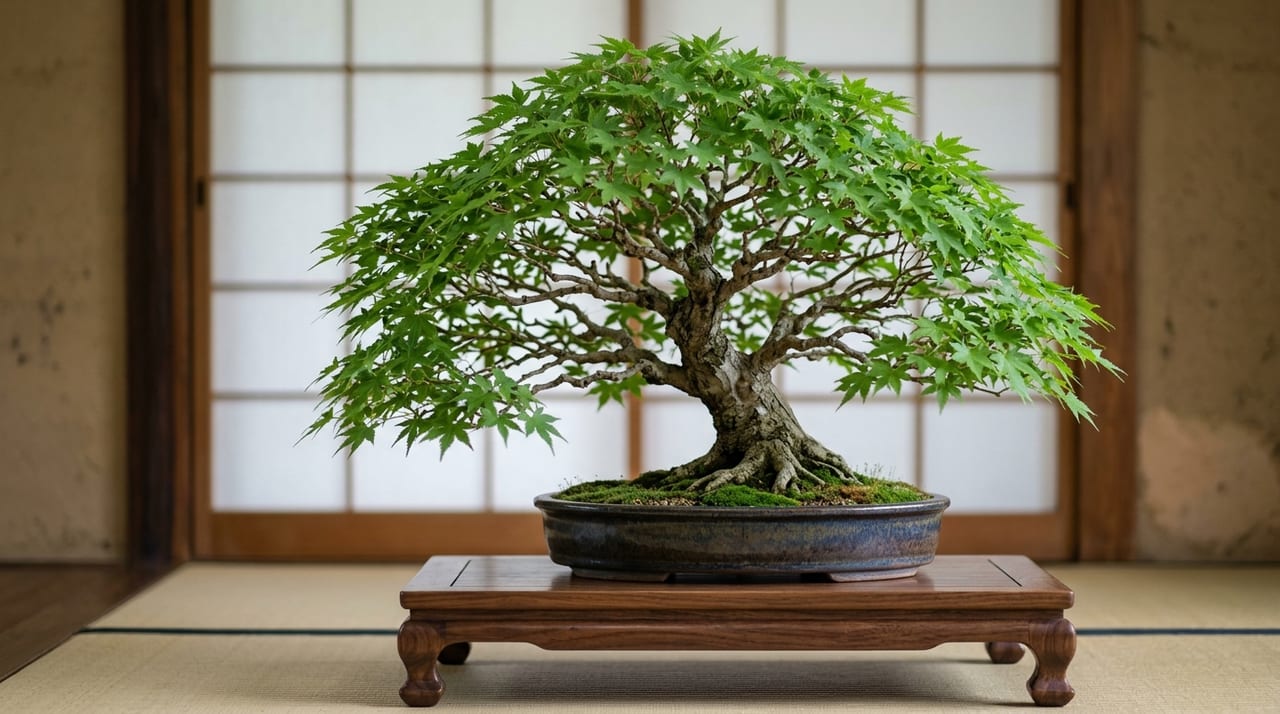
Bonsai leaf pruning (hagari) is a technique for cutting the leaves of deciduous trees to promote secondary buds, encouraging smaller leaves and finer branch ramification. This article explains how to distinguish between leaf cutting, leaf thinning, and bud pinching, with tables showing optimal timing and implementation intervals by tree species such as Japanese maple and zelkova.
Key Takeaways
Bonsai leaf pruning (hagari) is a technique for cutting the leaves of deciduous trees to promote secondary buds, encouraging smaller leaves and finer branch ramification. This article explains how to distinguish between leaf cutting, leaf thinning, and bud pinching, with tables showing optimal timing and implementation intervals by tree species such as Japanese maple and zelkova.
Related Species
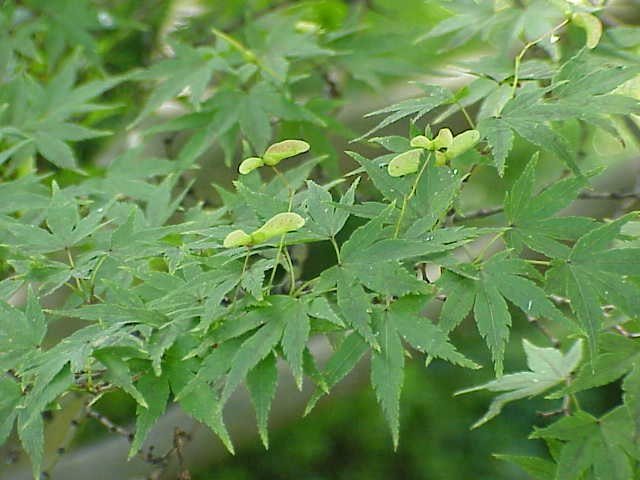
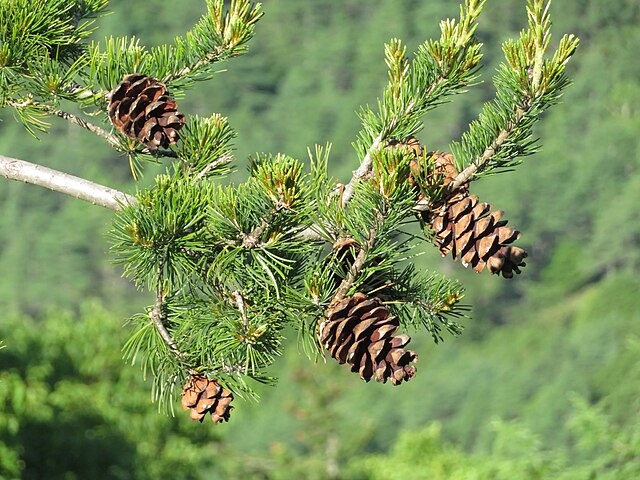
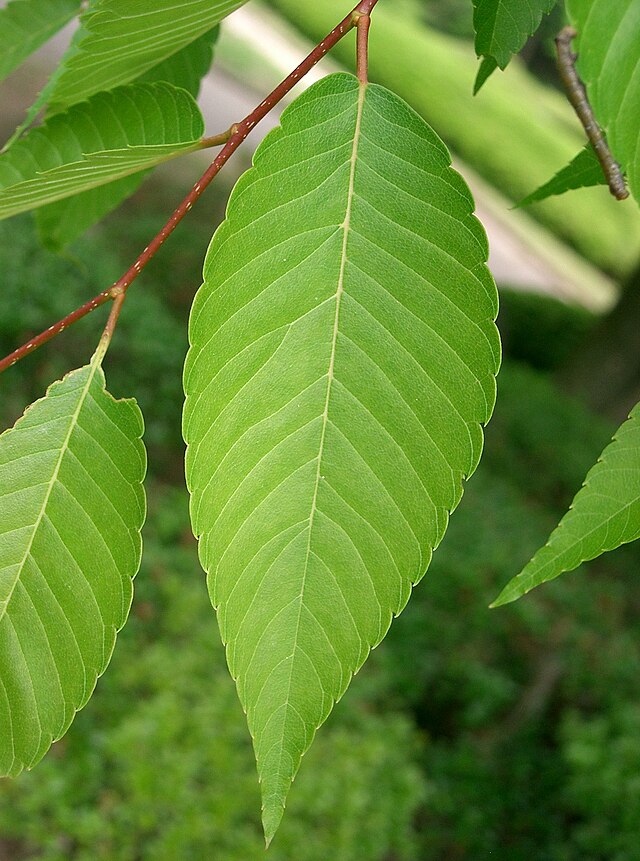
Leaf pruning (hagari) is a technique performed on deciduous tree bonsai such as Japanese maple and zelkova, in which leaves are cut during the growing season to promote secondary buds. This is not merely a task of tidying up leaves, but rather an important management technique unique to deciduous trees—one that reduces leaf size and promotes fine branching at branch tips to achieve the delicate form characteristic of bonsai.
What is Leaf Pruning?
Leaf pruning is a technique in which healthy leaves that have fully developed are intentionally removed, and the secondary buds (called nibanme or summer buds) that subsequently emerge are utilized to produce smaller leaves and finer branching. Deciduous trees have the property of producing new buds from dormant or latent buds even after losing their leaves, and this property is exploited to refine the tree's shape. Leaves produced by the first flush tend to elongate and become large, but secondary buds that emerge after leaf pruning tend to produce smaller leaves and more compact internodes, resulting in a more delicate, finely branched appearance.
This technique is widely practiced on representative deciduous tree species with vigorous secondary bud break, such as Japanese maple (Acer palmatum), zelkova (Zelkova serrata), and beech. Japanese maple and zelkova in particular are known to respond well to leaf pruning, and the technique is favored as standard maintenance for shaping trees ranging from small specimens to larger specimens.
Distinguishing Between Leaf Pruning, Leaf Thinning, Leaf Cutting, and Bud Pinching
Leaf-related maintenance work on bonsai is often confused because the terms sound similar, but the purposes and target tree species differ. Before beginning work, confirm which technique you intend to use.
| Technique | Target | What you do | Purpose |
|---|---|---|---|
| Leaf pruning (hagari) | Deciduous trees | Remove fully developed leaves with their petioles | Promote secondary buds to produce smaller leaves and finer branch ramification |
| Leaf cutting (hagiri) | Deciduous trees | Remove only half to two-thirds of the leaf blade, leaving the petiole and leaf base | Maintain vigor while improving light penetration and air circulation |
| Leaf thinning (hasuguri) | Deciduous trees and ornamental trees | Selectively remove crowded or oversized old leaves | Admit light to interior buds; places the least stress on the tree |
| Bud pinching (metsumi) | Deciduous trees and conifers | Pinch off the tip of emerging new buds | Compact internodes and prevent excessive extension |
| Candle pruning (midori tsumi) | Conifers (black pine, five-needle pine) | Pinch or break off new buds (candles) that grew in spring | Equivalent to leaf pruning in pines; reduces leaf size and adjusts bud count |
Complete defoliation places the most stress on the tree, while leaf thinning is the gentlest. If you are uncertain about a tree's vigor, choose leaf cutting or leaf thinning instead of full leaf pruning to achieve similar results without weakening the tree. As mentioned above, conifers should not undergo leaf pruning; for pines, bud cutting (candle pruning) for pine bonsai is the corresponding technique.
Timing
The optimal time for leaf pruning is from early summer to the rainy season, approximately late May through June, when new leaves have hardened and fully developed. This period still allows sufficient growing season for temperature and light to support secondary bud development, and regeneration and maturation after cutting proceed without undue stress. Performing leaf pruning in the height of summer or near autumn should be avoided, as new leaves that emerge will not develop fully before the growing season ends, weakening the tree.
Complete Defoliation versus Partial Defoliation
There are two forms of leaf pruning: complete defoliation, in which all leaves on the entire tree are removed, and partial defoliation (or light defoliation), in which only vigorous or crowded areas are selectively pruned. Complete defoliation is used when you want to synchronize bud break across the entire tree and create uniform fine branching throughout the crown, but because it places significant stress on the tree, it should only be performed on trees with fully established vigor.
Partial defoliation, by contrast, is chosen when only part of the tree is growing vigorously and balance with other branches is lost, or when the tree's overall vigor is still limited. It is a way to refine the form while minimizing stress. If you are attempting leaf pruning for the first time or have concerns about vigor, it is prudent to begin with partial defoliation.
Assessing Feasibility
Leaf pruning is not a technique that can be applied to every deciduous tree indiscriminately. The most important consideration is whether the target tree has sufficient vigor. Avoid trees that are recently repotted with roots not yet established, trees showing weak vigor (small leaves, yellowing foliage), or trees that have undergone major pruning or heavy wiring that year, as defoliation will further exhaust their reserves and risk dieback.
Furthermore, leaf pruning is a technique exclusively for deciduous trees and should not be performed on conifers such as black pine, five-needle pine, or false cypress. Management of conifers that serves a similar purpose to defoliation is accomplished through other techniques such as bud pinching (candle pruning) or leaf thinning, which differ in both purpose and procedure from deciduous tree defoliation. Selection of techniques appropriate to tree species characteristics is essential.
Post-Pruning Care
Immediately after leaf pruning, the tree has lost its foliage, so keep it out of intense direct sunlight and place it in a well-ventilated, somewhat shaded location while secondary buds break. Once bud break is confirmed, gradually return to normal light levels. Water normally according to soil moisture, but because transpiration is reduced with fewer leaves, monitor soil conditions carefully to avoid overwatering. Prioritize vigor recovery with fertilizer; use restraint until secondary buds are reasonably well-developed.
Position Within the Annual Care Cycle
Leaf pruning is most effective when considered as part of the bonsai annual care cycle rather than as an isolated task. The basic flow is: after budbreak in early spring, lightly thin vigorous new shoots; then, when the first flush leaves have hardened and stabilized in early summer, perform leaf pruning; and finally, develop the tree's form with the secondary buds that follow, through fall. If leaf pruning is delayed and the secondary bud maturation period is shortened, it can affect autumn color development; thus, adhering to the optimal timing has significance for both form-building and fall foliage. Use sharp pruning shears, and when working on multiple trees in succession, maintain clean blades to prevent disease transmission.
Response Differences by Tree Species
Even with the same leaf pruning technique, response varies by tree species in terms of bud break vigor and degree of leaf reduction. Japanese maple is known for relatively consistent bud break and readily responds to both complete and partial defoliation. Zelkova has a tendency toward fine branching at the terminals and easily builds branch density through repeated defoliation, but requires more careful assessment of vigor. Beech tends toward more gradual bud break compared to other species, so rather than attempting complete defoliation immediately, it is wise to begin with partial defoliation and gradually incorporate the technique while observing results.
Optimal Timing and Implementation Interval by Tree Species
Because secondary bud break timing differs by tree species, optimal timing and implementation intervals vary accordingly. Repeating defoliation multiple times in the same year will exhaust the tree, so the basic guideline is once per year.
| Tree Species | Optimal Timing | Complete Defoliation Possible? | Implementation Interval |
|---|---|---|---|
| Japanese maple (Acer palmatum) | Late May to mid-June | Possible if vigor is established | Once per year; alternate years for greater stability |
| Zelkova (Zelkova serrata) | Late May to mid-June | Possible (assess vigor carefully) | Once per year |
| Beech (Fagus) | Early to mid-June | Begin with partial defoliation | Approximately once every two years |
| Trident maple (Acer buergerianum) | Late May to mid-June | Possible | Once per year |
| Fruiting varieties (crabapple, quince, etc.) | After fruiting (late June onward) | Partial defoliation only | Once per year; do not perform in years bearing fruit |
| Conifers (black pine, five-needle pine, false cypress) | — | Do not perform | Use bud cutting or candle pruning instead |
The key point in the work is to leave 1–2 mm of the petiole (the thin stem connecting leaf to branch). If you cut flush with the branch, you risk damaging dormant buds and preventing secondary bud emergence. The remaining petiole will naturally shed once secondary buds begin to break. Use sharp shears and disinfect the blades between trees to prevent disease transmission.
For Japanese maple grown for autumn color, delayed defoliation shortens the secondary bud maturation period, dulling fall color development. In years when autumn color is the priority, forgoing leaf pruning is a valid choice. Management of fall color itself can be reviewed at beautiful fall color management for Japanese maple bonsai, and the annual work schedule is available at bonsai annual care calendar.
Summary
Leaf pruning is a representative summer technique for advancing smaller leaves and finer branching on deciduous tree bonsai with vigorous secondary bud break, such as Japanese maple, zelkova, and beech. It can only be performed on trees with well-established vigor, and whether to use complete or partial defoliation must be determined based on the tree's condition. Performed at the correct timing and with attention to tree vigor, it is a technique that significantly benefits form development in subsequent years.