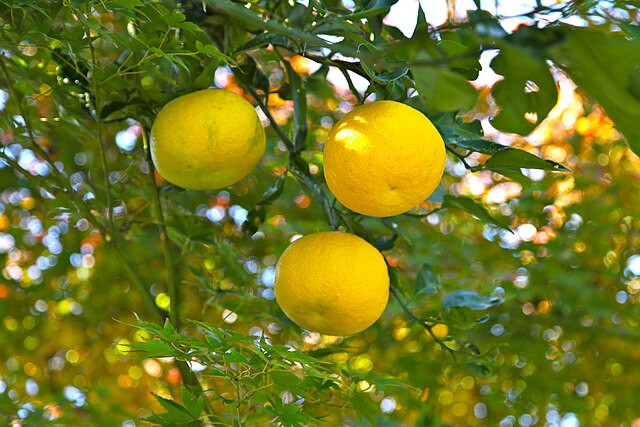
Source: Wikimedia Commons
Yuzu Bonsai
IntermediateCitrus junos
Indispensable citrus in Japanese cuisine. Takes long from seed but grafted stock fruits in a few years. Fragrant flowers and yellow fruits are enjoyable.
About
Citrus junos, the yuzu (Yuzu in Japanese), is an evergreen citrus tree thought to originate in the upper Yangtze River region of China and widely cultivated in Japan and Korea for over a millennium. Its intensely aromatic rind and sour juice are indispensable in Japanese cuisine, used in dressings, sauces, sweets, and the midwinter ritual of the 'yuzu bath' (yuzu-yu) on the winter solstice. The proverb 'yuzu blooms in nine years from seed' reflects its long juvenile period, though grafted specimens fruit within a few years. White flowers in early summer and large yellow fruits in autumn provide both fragrance and visual interest in bonsai. The branches bear sharp thorns requiring careful handling.
Lifespan of the Yuzu Bonsai
The Yuzu Bonsai lives 30+ years (as bonsai).
Size of the Yuzu Bonsai
The Yuzu Bonsai grows to 20-60cm (bonsai size).
Basic Info
Origin
China (upper Yangtze River region)
Lifespan
30+ years (as bonsai)
Size
20-60cm (bonsai size)
Temperature
-5〜35℃
Watering & Fertilizer
Fertilizer (regular)
Growing Tips
Placement
Full sun outdoors. Protect from frost in winter
Watering
Water thoroughly when topsoil dries. Don't let dry during fruiting
Styling
Cut back leggy shoots. Thin fruits if too many
Notes
Sharp thorns. Susceptible to swallowtail butterfly caterpillar damage
Yuzu Bonsai FAQ
QWhat is the growing difficulty level for Yuzu Bonsai?
Intermediate. A variety suitable for intermediate growers. Requires some cultivation experience and knowledge of environment management. Pay careful attention to temperature and humidity control.
QWhat is the lifespan of Yuzu Bonsai?
The average lifespan of Yuzu Bonsai is 30+ years (as bonsai). With proper cultivation environment and nutrient management, you can keep it healthy for a long time.
QHow large does Yuzu Bonsai get?
The mature size of Yuzu Bonsai is 20-60cm (bonsai size). This may vary slightly depending on cultivation environment and individual differences.
QHow should I water and fertilize Yuzu Bonsai?
Yuzu Bonsai: watering & fertilizer — Fertilizer (regular). Aim for appropriate frequency and amount.
QWhat is the typical price for Yuzu Bonsai?
The price of Yuzu Bonsai varies significantly by variety, characteristics, size, and lineage. Please check GrowerDirect's price guide for the latest market information.
Last updated: June 24, 2026
Growing Specifications
- USDA Zone
- 7–10
Sources: Gardenia.net: Citrus x junos (Yuzu)
References & Sources
Edited & verified by: GrowerDirect Editorial Team
The classifications, regulations, and growing data on this page are created and verified based on the primary information database below.
Taxonomy & Authority
Accepted name: Citrus junos Siebold ex Tanaka
Synonyms: Citrus × sphaerocarpa Y.Nakaj. ex H.Ohba, Citrus × tamurana Takahashi, Citrus × sudachi Shirai, Citrus × yuko Tanaka, Citrus × hsiangyuan Tanaka, Citrus × sechen Kokaya
Authority databases: GBIF · POWO
Nomenclature follows global taxonomic authority databases.
Regulations & Conservation Status
Sources: CITES Checklist of CITES Species
Regulations may change. Always verify the latest information with the relevant authorities.
Related Species
Find listings for this species
Related Articles
Complete Bonsai Tree Selection & Development Roadmap for Beginners | Phase-by-Phase Management Strategy from Year 1 to Year 5
Bonsai success for beginners depends on choosing the right tree species. This guide details the process of selecting beginner-friendly species like five-needle pine and common juniper, and developing them into refined bonsai through phased management over five years. We provide a five-year roadmap that advances through tree form foundation building, adjustment, and completion.
Bonsai Aged Wood Techniques | Creating Branch Aging Expression and Tree Age Aesthetics
Explains techniques for creating bonsai that appear aged from young stock. Introduces practical methods for expressing tree age aesthetics, from bark texture and branch structure to root development expression and changes over time.
How to Prevent Fertilizer Burn in Bonsai | Determining the Right Fertilizer Amount and Concentration
Why does fertilizer burn occur in bonsai? This explains the mechanism of osmotic pressure, how to identify early symptoms such as browning of leaf tips, why it occurs easily in midsummer and right after repotting, and emergency measures and preventive strategies.
A Guide to Giving Bonsai as Gifts | Appropriate Species and Etiquette for Longevity Celebrations and Business Opening Celebrations
This guide explains how to choose bonsai species and proper etiquette when giving bonsai as gifts for celebrations. It introduces recommended species for different occasions such as longevity celebrations and business opening celebrations, as well as how to choose species while considering management requirements.
🩺 Common diseases
Can't find the plant you're looking for?
Post your wishes for free and growers with matching plants will contact you with introductions.