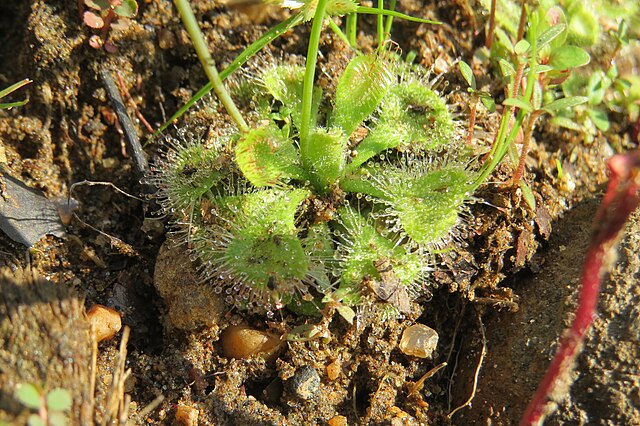
Source: Wikimedia Commons
Drosera Burmannii
BeginnerDrosera burmannii
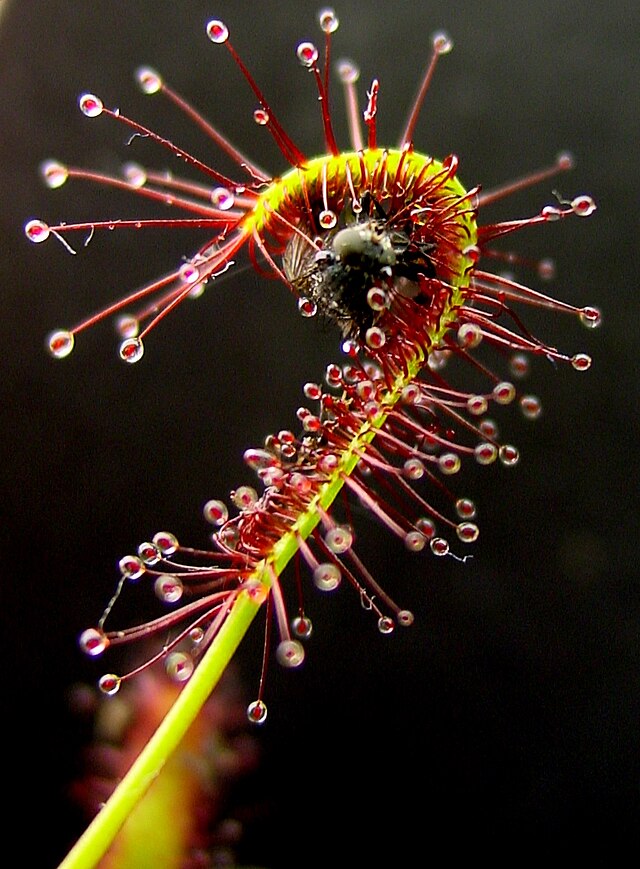
A sundew that captures insects very quickly, curling leaves in seconds. Sometimes annual.
About
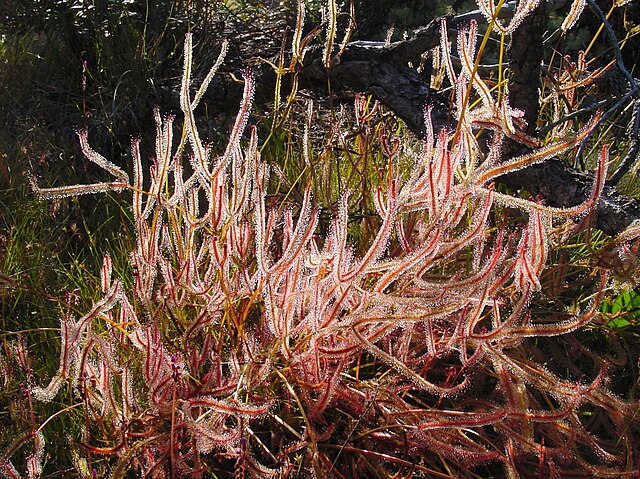
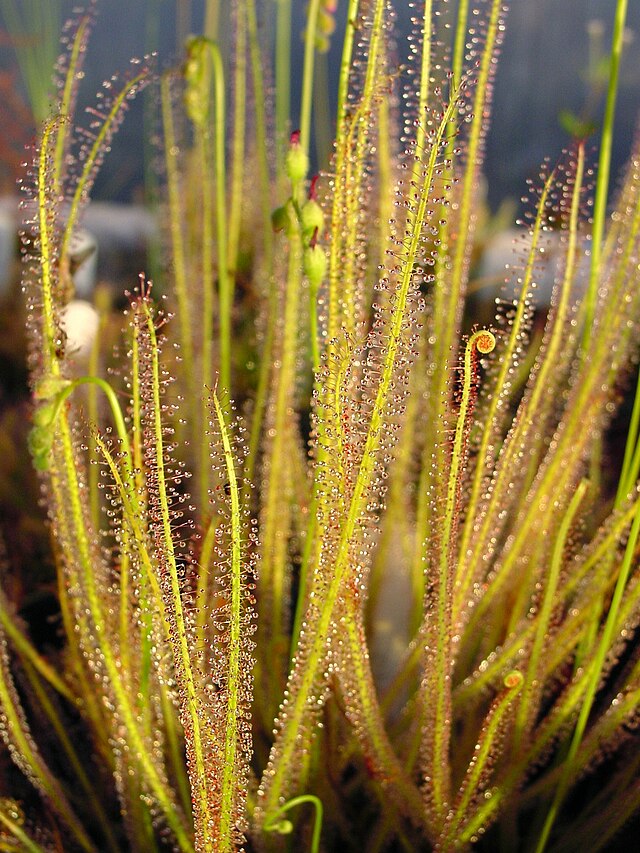
Drosera burmanni is a small, widespread sundew distributed from India across Southeast Asia to northern Australia, with records also from the Ryukyu Islands of Japan. It is notable for the remarkable speed of its tentacle response: unlike most sundews, which take hours to curl their tentacles around prey, D. burmanni can fold its leaf margin inward within seconds of insect contact—one of the fastest trap responses among sticky-trap carnivorous plants. The plant is commonly treated as an annual, completing its life cycle in a single season and relying on abundant seed production for persistence. It forms small rosettes with orange to red tentacles and thrives in nutrient-poor sphagnum or peat-perlite media with tray watering, full sun, and warm temperatures (20–35°C). Cold tolerance is minimal.
Basic Info
Origin
India, Southeast Asia, and northern Australia, moist grasslands and wetlands (also recorded in the Ryukyu Islands, Japan)
Lifespan
1-3 years
Size
2-5cm
Temperature
10〜30℃
Humidity
60〜90%
Watering & Fertilizer
Insects (auto-capture)
Growing Tips
Speed
Captures in seconds
Lifespan
May be annual
Seeds
Continue from seed
Watering
Tray watering
Drosera Burmannii FAQ
QWhat is the growing difficulty level for Drosera Burmannii?
Beginner. A variety suitable for beginners. No special equipment or experience is required—you can grow it without problems by setting up a basic cultivation environment.
QWhat is the ideal temperature for Drosera Burmannii?
The ideal temperature for Drosera Burmannii is 10〜30℃. Recommended humidity is 60〜90%. Avoid sudden temperature changes and maintain a stable environment.
QWhat is the lifespan of Drosera Burmannii?
The average lifespan of Drosera Burmannii is 1-3 years. With proper cultivation environment and nutrient management, you can keep it healthy for a long time.
QHow large does Drosera Burmannii get?
The mature size of Drosera Burmannii is 2-5cm. This may vary slightly depending on cultivation environment and individual differences.
QHow should I water and fertilize Drosera Burmannii?
Drosera Burmannii: watering & fertilizer — Insects (auto-capture). Aim for appropriate frequency and amount.
QWhat is the typical price for Drosera Burmannii?
The price of Drosera Burmannii varies significantly by variety, characteristics, size, and lineage. Please check ボタちょく's price guide for the latest market information.
Last updated: July 8, 2026
References & Sources
Edited & verified by: BoTachoku Editorial Team
The classifications, regulations, and growing data on this page are created and verified based on the primary information database below.
Taxonomy & Authority
Accepted name: Drosera burmannii Vahl
Synonyms: Drosera dietrichiana Rchb.f., Drosera indica var. dietrichiana (Rchb.f.) Diels, Drosera burmanni var. dietrichiana (Rchb.f.) Diels
Authority databases: GBIF · POWO · ICPS 栽培品種登録(国際食虫植物協会)
Nomenclature follows global taxonomic authority databases.
Regulations & Conservation Status
本属はCITES附属書に非掲載(食虫植物でCITES対象はNepenthes/Sarracenia/Dionaeaのみ)。
Sources: CITES Appendices (carnivorous plants) - ICPS/Barry Rice / CITES & Carnivorous Plant Checklist (RBG Kew)
Regulations may change. Always verify the latest information with the relevant authorities.
Related Species
Find listings for this species
Related Articles
Drosera (Sundew) Care Guide | Diverse Carnivorous Plants That Trap Insects with Sticky Droplets
A guide to caring for Drosera (sundew) carnivorous plants. Learn the characteristics of beginner-friendly varieties like spatulata, capensis, and adelae, as well as methods for tray watering, light conditions, overwintering, and leaf propagation.
Drosera Propagation Guide — Leaf Cuttings, Division & Seeds
Propagating sundews: leaf cutting technique, division method, seed sowing, and species-specific propagation recommendations.
Complete Sundew Growing Guide — Bringing Out Dewy Beauty
Sundew guide: popular species, tray watering, light requirements, and differences between temperate and tropical varieties.
Types of Sundews and Cultivation Techniques | Bringing Out the Beauty of the Mucilage
This guide explains the characteristics of major sundew species and cultivation techniques (lighting, humidity, and substrate) for bringing out the beautiful shine of their mucilage.