Source: Wikimedia Commons
Nepenthes eymae
AdvancedNepenthes eymae
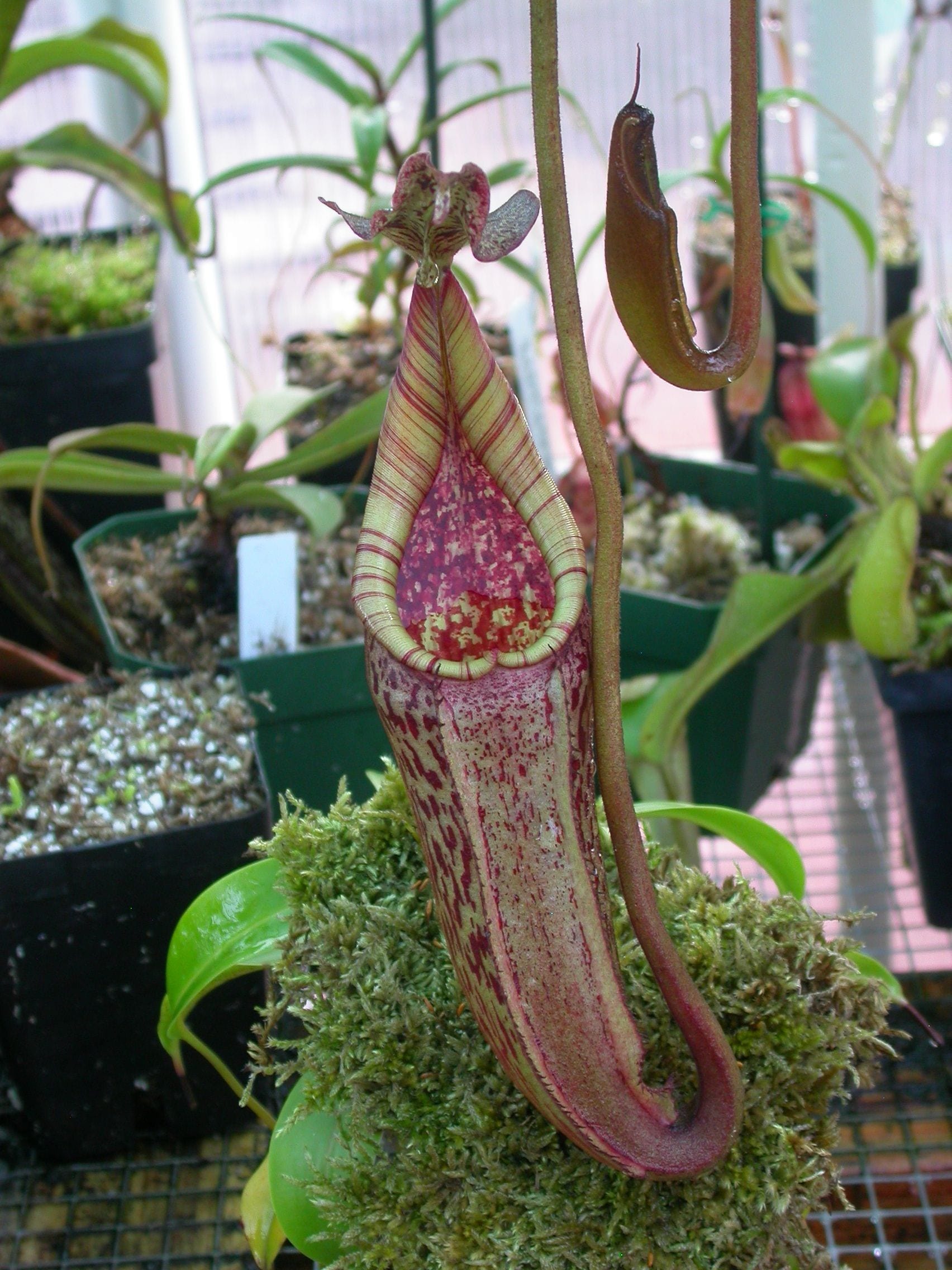
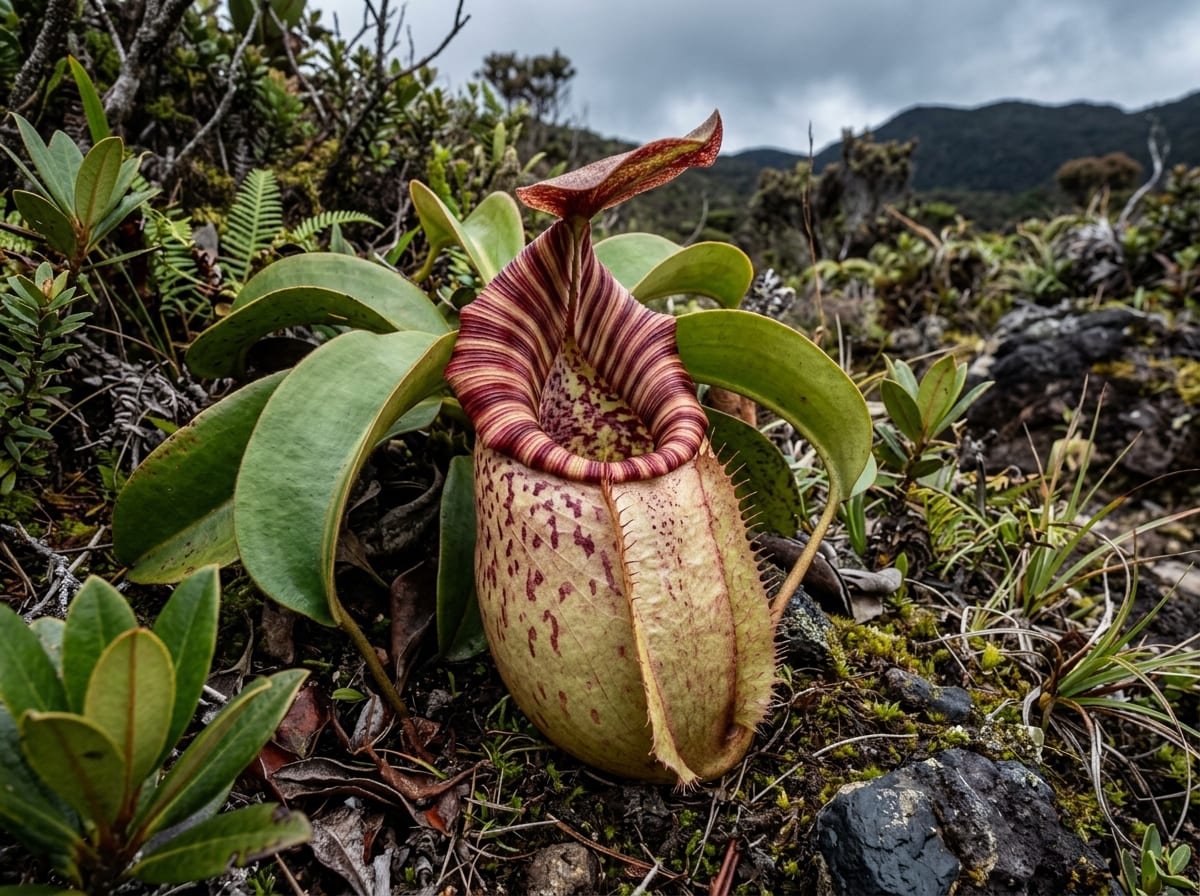
A highland pitcher plant endemic to Sulawesi, Indonesia. Its upper pitchers are narrow below and flare abruptly above like a wine glass, the feature that separates it from its close relative N. maxima.
About
Nepenthes eymae is a pitcher plant species endemic to Sulawesi, Indonesia, where it grows at 1,000-2,000 m. It was discovered in 1938 by the Dutch botanist P. J. Eyma and described by Shigeo Kurata in 1984 (originally spelled eymai). The same plant was published a few days later as N. infundibuliformis, which is now a synonym. It differs from its close relative N. maxima in the shape of its upper pitchers: the lower half to three-quarters stays narrowly funnel-shaped and then expands abruptly near the mouth into a wine-glass shape. The stem climbs to about 8 m. Lower pitchers are ovate and reach 24 cm tall and 16 cm wide, with a peristome that widens to more than 5 cm at the back. The lid margin is often finely crenellated. Upper pitchers are smaller, about 15 cm tall and 8 cm wide. Some authors doubt that it deserves species rank apart from N. maxima. Most plants cultivated as N. eymae reportedly do not produce the typical wine-glass upper pitchers, so do not expect the shape from the name alone. It is listed as Least Concern by the IUCN. In Japan, seed-grown plants from specialist nurseries appear at online auctions.
Source: Wikipedia (CC BY-SA 4.0)
Size of the Nepenthes eymae
The Nepenthes eymae grows to Lower pitchers up to 24 cm tall and 16 cm wide; stems to about 8 m.
Basic Info
Origin
Indonesia (Sulawesi, about 1,000-2,000 m)
Lifespan
Perennial (climbing)
Size
Lower pitchers up to 24 cm tall and 16 cm wide; stems to about 8 m
Temperature
10〜30℃
Humidity
60〜90%
Watering & Fertilizer
Very dilute fertilizer at most (catches insects)
Growing Tips
Temperature & Overwintering
A highland species that needs cool nights to thrive long term; warm Japanese summer nights are the main challenge.
Light & Placement
Likes bright light, but harsh midsummer sun can scorch it. Keep it in bright part shade where humidity can be kept up.
Watering
Use rain water or water low in dissolved minerals and water before the mix dries out. Do not leave the pot standing in water.
Soil & Repotting
Plant in a free-draining, airy mix; pure sphagnum or orchid mix with sphagnum or perlite are common choices.
Fertilizer
If using chemical fertilizer, use it at very low strength; an occasional insect dropped into a pitcher is enough.
Pests & Cautions
Most cultivated plants reportedly do not form the typical wine-glass upper pitchers; if the shape matters to you, choose a plant sold with photos of its upper pitchers.
Nepenthes eymae FAQ
QWhat is the growing difficulty level for Nepenthes eymae?
Advanced. A variety suitable for advanced growers. Requires advanced cultivation techniques and specialized equipment, with careful environmental adjustments needed.
QHow large does Nepenthes eymae get?
The mature size of Nepenthes eymae is Lower pitchers up to 24 cm tall and 16 cm wide; stems to about 8 m. This may vary slightly depending on cultivation environment and individual differences.
QHow should I water and fertilize Nepenthes eymae?
Nepenthes eymae: watering & fertilizer — Very dilute fertilizer at most (catches insects). Aim for appropriate frequency and amount.
QWhat is the typical price for Nepenthes eymae?
The price of Nepenthes eymae varies significantly by variety, characteristics, size, and lineage. Please check GrowerDirect's price guide for the latest market information.
Last updated: September 23, 2026
References & Sources
Edited & verified by: GrowerDirect Editorial Team
The classifications, regulations, and growing data on this page are created and verified based on the primary information database below.
Taxonomy & Authority
Accepted name: Nepenthes eymae Sh.Kurata
Synonyms: Nepenthes infundibuliformis J.R.Turnbull & A.T.Middleton
Authority databases: GBIF · GBIF Nepenthes eymae Sh.Kurata
Nomenclature follows global taxonomic authority databases.
Regulations & Conservation Status
The whole genus Nepenthes is listed in CITES Appendix II (apart from a few Appendix I species). Import and export across borders require CITES permits, but no registration is needed to buy, sell or give plants within Japan.
Sources: Species+ (CITES) Nepenthes eymae
Regulations may change. Always verify the latest information with the relevant authorities.
Related Species
Find listings for this species
Related Articles
Developing Nepenthes Pitcher Traps Completely: Cultivation Secrets Through Environmental Management and Physiological Approaches
The carnivorous leaves of Nepenthes represent the masterpiece of an insect-trapping mechanism evolved over 200 million years. This article explains how to mature the carnivorous leaves completely and develop healthy plants with actual predatory function through humidity, light, and nutrient management.
Growing Pitcher Plants Without a Greenhouse: How to Get Pitchers to Form Indoors
Explains how to grow carnivorous pitcher plants (Nepenthes) indoors without a greenhouse. Covers reasons why pitchers fail to form and solutions, methods for maintaining humidity, variety selection, and tips for winter care.
Highland Nepenthes Growing Guide | Cool Management for High-Altitude Pitcher Plants
Explains the characteristics of high-altitude nepenthes (highland nepenthes), summer air conditioning management, and methods for controlling humidity and temperature.
How to Grow Nepenthes | Cultivation Techniques to Grow Larger Pitchers
We explain the basic cultivation methods for Nepenthes and the humidity, temperature, and light management techniques to grow beautiful pitchers large.
Can't find the plant you're looking for?
Post your wishes for free and growers with matching plants will contact you with introductions.