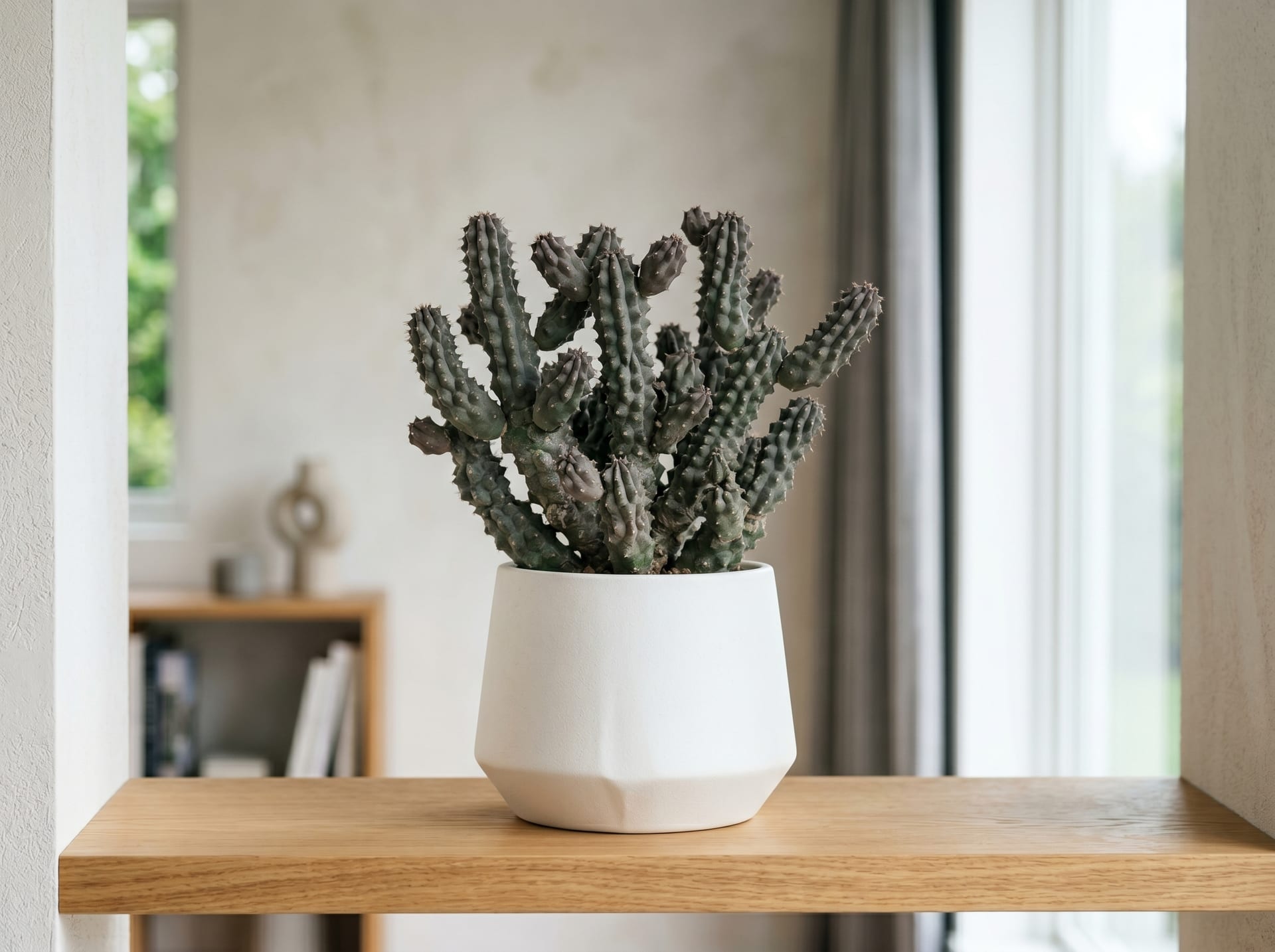
AI-generated image
Hoodia
AdvancedHoodia gordonii
A rare South African succulent with striking, fragrant flowers and slow growth habit. Extremely drought-resistant and long-lived, ideal for patient collectors. Unique flowering structure and hardy disposition make it a prized addition.
About
Hoodia is a leafless, spiny succulent of the stapeliad group within the family Apocynaceae (subfamily Asclepiadoideae), native to the arid regions of South Africa and Namibia; the best-known species is Hoodia gordonii. It forms clumps of thick, fleshy, columnar stems lined with hard spine-like tubercles, giving it a cactus-like appearance. Because it stores water in its stems to withstand extreme drought, it is treated alongside caudex plants and prized by collectors. During the growing season it bears large, saucer-shaped flowers that emit a strong carrion-like odor to attract pollinating flies. Cultivation requires strong sunlight, excellent drainage, and sparing watering, as excess moisture readily causes rot. Cold tolerance is low and it prefers a dry, warm environment, so overwinter it in a bright, warm room and keep it nearly dry. Some species are protected in their native range, and permits may be required for cultivation or trade. Although slow-growing, it is hardy and, with proper care, a distinctive plant that can be enjoyed for many years.
Source: Wikipedia (CC BY-SA 4.0)
Basic Info
Origin
South Africa and Namibia
Temperature
5〜38℃
Growing Tips
Light & Placement
Strong sun is the rule. Keep it in a sunny, airy spot year-round so the columnar stems grow firm and compact.
Watering
Water sparingly as a rule, only after the soil is completely dry. Wet soil causes rot, so wait for the pot to dry out fully before watering again.
Temperature & Overwintering
Cold tolerance is low and it prefers warm, dry conditions. Bring it into a bright, warm room for winter and keep watering to a minimum.
Soil & Repotting
Well-draining soil is the rule. Growth is slow, so repot only when root-bound, in the growing season, handling the spiny stems with care.
Pests & Cautions
Wet soil leads to stem rot, so avoid overwatering and poor airflow. The flowers give off a strong odor, so choose the location accordingly.
Hoodia FAQ
QWhat is the growing difficulty level for Hoodia?
Advanced. A variety suitable for advanced growers. Requires advanced cultivation techniques and specialized equipment, with careful environmental adjustments needed.
QWhat is the typical price for Hoodia?
The price of Hoodia varies significantly by variety, characteristics, size, and lineage. Please check GrowerDirect's price guide for the latest market information.
Last updated: June 24, 2026
References & Sources
Edited & verified by: GrowerDirect Editorial Team
The classifications, regulations, and growing data on this page are created and verified based on the primary information database below.
Taxonomy & Authority
Accepted name: Hoodia gordonii (Masson) Sweet ex Decne.
Synonyms: Hoodia longispina Plowes, Hoodia husabensis Nel, Hoodia whitesloaneana Dinter ex A.C.White & B.Sloane, Scytanthus gordonii (Masson) Hook., Hoodia albispina N.E.Br., Hoodia bainii Dyer, Hoodia langii Oberm. & Letty, Hoodia barklyi Dyer, Hoodia burkei N.E.Br., Ceropegia gordonii (Masson) Bruyns, Monothylaceum gordonii (Masson) G.Don, Stapelia gordonii Masson, Hoodia pillansii N.E.Br., Hoodia rosea Oberm. & Letty
Authority databases: GBIF · POWO
Nomenclature follows global taxonomic authority databases.
Regulations & Conservation Status
Hoodia spp. (at genus level) listed in CITES Appendix II.
Sources: CITES Appendix II species list / CITES Appendices (valid from 2023)
Regulations may change. Always verify the latest information with the relevant authorities.
Related Species
Find listings for this species
Related Articles
Hoodia Care Guide: Cultivation, Flowering, and Winter Management of Drought-Tolerant Succulents
A comprehensive guide to Hoodia (*Hoodia*) care. This practical guide covers light and temperature management for this columnar succulent from Namibia, watering adjustments for active growth and dormancy periods, preparing well-draining sandy soil, preventing stem elongation, and reproduction through division.
How to Grow Uncarina | Differences Between the Madagascar Endemic Species Grandidieri and Roeoesliana
An explanation of the appeal and cultivation methods of the Madagascar endemic caudex plant Uncarina genus. We introduce the differences between Uncarina grandidieri and roeoesliana, seedling cultivation, and repotting timing.
Complete Guide to Choosing Caudex Plants as Gifts | Recommended Varieties by Occasion and How to Include Care Notes
A guide to choosing caudex plants as gifts organized by occasion. We introduce how to select varieties based on the recipient's cultivation experience and how to include care notes for long-term enjoyment.
Diagnosing and Treating Poor Root Development in Caudex Plants | Causes and Solutions for Roots That Won't Emerge or Won't Grow
A detailed guide to root emergence problems in caudex plants. From diagnosis methods to solutions, practical techniques for promoting healthy root development are introduced.
🩺 Common diseases
Can't find the plant you're looking for?
Post your wishes for free and growers with matching plants will contact you with introductions.