Hoodia Care Guide: Cultivation, Flowering, and Winter Management of Drought-Tolerant Succulents
A comprehensive guide to Hoodia (*Hoodia*) care. This practical guide covers light and temperature management for this columnar succulent from Namibia, watering adjustments for active growth and dormancy periods, preparing well-draining sandy soil, preventing stem elongation, and reproduction through division.
Key Takeaways
A comprehensive guide to Hoodia (*Hoodia*) care. This practical guide covers light and temperature management for this columnar succulent from Namibia, watering adjustments for active growth and dormancy periods, preparing well-draining sandy soil, preventing stem elongation, and reproduction through division.
Related Species
About Hoodia
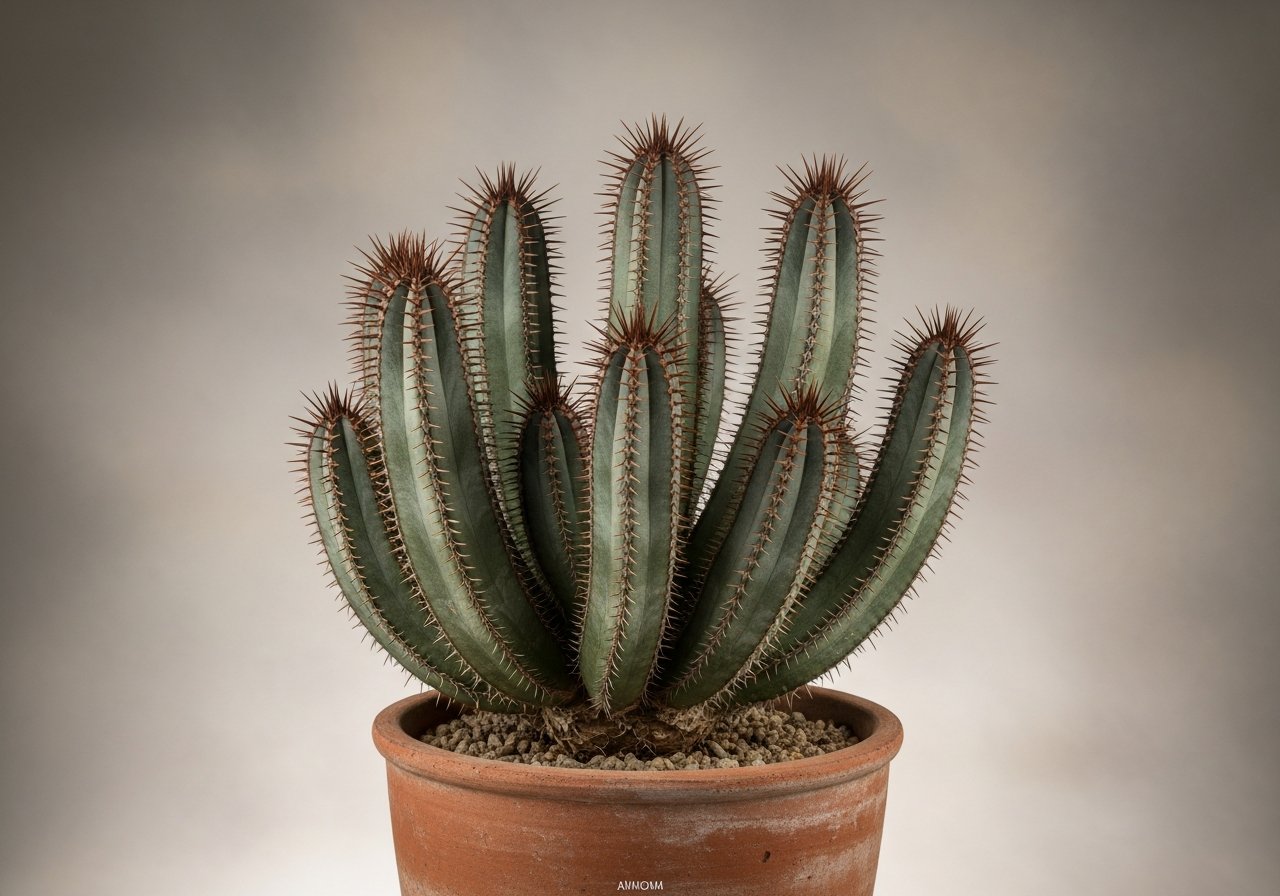
Hoodia (Hoodia) is a succulent plant of the Asclepiadaceae family (now classified as Apocynaceae) native to semi-arid regions of South Africa, Namibia, Botswana, and similar areas. It has columnar, clustering stems similar to cacti, but it is not a cactus—it is a true succulent plant. The most well-known species is Hoodia gordonii, and approximately 13 species are recognized in total.
The erect stems with distinctive spiny ribs and unusual large star-shaped flowers are its most ornamental features. Sharp spines (protrusions) are arranged regularly across the stem surface, and its overall dramatic, cactus-like appearance is popular with succulent collectors.
It is listed in CITES (Convention on International Trade in Endangered Species) Appendix II, and collection and export of wild individuals are regulated. Specimens in domestic circulation are domestically propagated plants (from seed or division) or legally imported plants. When purchasing, choose individuals with clear provenance.
Location and Temperature Management
Hoodia thrives in bright light, high temperature, and dry environments.
Spring to Autumn (Active Growth Period)
- Ideally in a location with direct sunlight outdoors
- A well-ventilated eave or along a fence is suitable
- Rain exposure is acceptable, but avoid prolonged humidity during the rainy season
- It tolerates high summer temperatures (35–40°C), but be cautious of excessive heat and humidity
Winter (Dormancy to Semi-Dormancy)
- Maintain a minimum temperature above 5°C (protect from frost)
- Place indoors near a bright window or protect with a cold frame
- If above 10°C, continued slow growth is possible
- Avoid areas where temperature changes abruptly (such as windowsills at night)
Insufficient light causes the stem to become thin and elongated, diminishing the overall appearance. To maintain the natural beauty of thick spines and well-defined ribs, manage in as bright a light environment as possible. If indoor management is extended, use supplemental lighting.
Watering Approach
Hoodia has high drought tolerance, and the risk of root rot from overwatering is its greatest enemy. Water management should be based on the natural rainfall patterns of its native habitat (around the Namib Desert).
| Season | Watering Guidelines |
|---|---|
| Spring (March–May) | Water thoroughly 2–3 days after soil completely dries |
| Summer (June–September) | About once every 2 weeks (adjust according to soil moisture) |
| Fall (October–November) | Gradually reduce to 1–2 times per month |
| Winter (December–February) | Almost no water (monthly light watering to prevent shriveling) |
Follow basic succulent watering rules: do not leave water in the saucer, avoid managing in poorly ventilated areas, and so on. After watering, always lift the pot and check its weight; when it becomes light, that signals it is time for the next watering—this makes management easier.
Selecting Potting Soil
Sandy and gritty, well-draining soil is ideal.
Recommended Soil Mix Example
- Red lava soil (small grain) 30%
- Hyuuga soil 30%
- River sand or coarse sand 25%
- Charcoal 5–10% (zeolite can be substituted)
- Leaf mold (small amount, optional) 5–10%
Avoid potting soil high in organic matter. It retains too much moisture and increases the risk of root rot. A simple method of adding Hyuuga soil to a commercial "succulent and cactus soil" mix is also acceptable. Always choose a pot with drainage holes; terracotta pots are superior in terms of air circulation.
Fertilizing and Repotting
Fertilizing Hoodia requires fertilizer infrequently, and a restrained approach is the basic principle.
- Apply slow-release fertilizer 2–3 times per year during the active growth period (spring to summer)
- If using liquid fertilizer once per month, dilute it to about half the recommended strength
- Excessive nitrogen promotes stem elongation and weakness, so fertilizers high in phosphorus and potassium are preferable
Repotting Repotting once every 2–3 years before spring growth (March–April) is ideal. Trim old roots and replant in fresh soil. The new pot should be only slightly larger than the current one. Begin watering 1–2 weeks after repotting to avoid damaging the roots.
Flowering and Propagation
Flowering Hoodia gordonii and similar species produce large flowers 5–10 cm in diameter at the stem apex when mature. The flowers range from pale pink to cream, with distinctive patterns (concentric circles) and a carrion-like scent. The scent attracts flies for pollination, and outdoor plants can pollinate naturally. Flowering typically occurs around April to June, and small specimens take several years to flower.
Propagation (Division and Cuttings) Remove offsets (side shoots) from the parent plant, dry the cut for 3–7 days, then insert into propagation soil. Water very sparingly until roots form.
Troubleshooting
Stem Soft Rot or Blackening Excessive moisture and low temperature are the main causes. Early detection is key to recovery; remove the decayed portion with a clean knife, dry it, then replant in clean soil.
Sparse Spines or Thin Stem This is caused by insufficient light leading to elongation. Move the plant to a location with more direct sunlight.
Wilted Stem This can be caused by severe underwatering or root rot. First check the soil condition, then take appropriate action based on the cause.
Hoodia Distribution and Acquisition
Because Hoodia is a CITES Appendix II-listed plant, it must be obtained through legal channels. Plants available domestically are primarily domestically propagated individuals (from seed or division) or legally imported plants under the Washington Convention.
Purchase Checklist
- For imported plants: Does it have CITES export permits from the country of origin and import inspection by the plant quarantine authority?
- Base condition: Is it soft?
- Are the stem spines evenly developed? (Insufficient light results in short, weak spines)
- Is it a clustering or single-stem form? (Choose based on use or preference)
Because Hoodia grows slowly, growing a large specimen requires many years. By obtaining a well-established specimen that a grower has carefully cultivated, you can avoid the difficulty of management from the start. Purchasing directly from a specialist cactus and succulent grower provides peace of mind and advice on cultivation.
Since it is a CITES Appendix II-listed plant, it is important when purchasing to verify that the seller has appropriate documentation. Starting with specimens obtained through legal channels is the foundation for enjoying your collection with confidence over the long term. The moment when Hoodia's distinctive large star-shaped flowers bloom is the greatest reward for collectors who have nurtured it for many years. Given its rarity, the joy of obtaining it from a grower becomes especially meaningful.
Hoodia Cultivation Summary: Key Points for Managing Dry-Climate Succulents
Hoodia is a hardy, long-lived plant in the right conditions, but success depends on understanding that "drought-tolerant" does not mean "no watering required"—rather, it thrives in dry conditions but needs moisture during the active growing season.
Management Checklist
- Spring–fall outdoor management: 5+ hours of direct sunlight
- Winter minimum temperature: Maintain 5°C or above (protect from frost)
- Soil drainage: Minimize organic matter, prioritize mineral-based soil
- Watering: Water a few days after the soil completely dries (same for summer)
- Dormancy: Water lightly about once a month, with minimal watering
- Fertilizing: Slow-release fertilizer 2–3 times yearly (minimal amount)
Given its distinctive form and rarity, Hoodia becomes a standout addition to any succulent collection. A well-developed specimen cultivated with patience is one of those plants that brings collectors a sense of accomplishment.