[In-Depth Comparison] Pachypodium vs Adenium | Differences from Gracilius, Growing Guide, and Price
Comparing Pachypodium and Adenium by stem shape, spines, winter appearance, and price. Includes a species-level comparison table of Gracilius and Adenium, differences between Obesum and Arabicum, difficulty level, and how to distinguish them from Ficus.
![[In-Depth Comparison] Pachypodium vs Adenium | Differences from Gracilius, Growing Guide, and Price](https://img.botachoku.com/encyclopedia/bce68acbb402.png)
Key Takeaways
Comparing Pachypodium and Adenium by stem shape, spines, winter appearance, and price. Includes a species-level comparison table of Gracilius and Adenium, differences between Obesum and Arabicum, difficulty level, and how to distinguish them from Ficus.
Related Species
How Do Pachypodium and Adenium Differ? A Comprehensive Comparison of the Two Most Popular Caudex Genera
In the midst of the caudex boom, Pachypodium and Adenium stand out as particularly beloved by devoted enthusiasts. While both attract admiration for their unique forms and strong character, their growing methods and ways of enjoying them differ considerably. For those wondering which to choose first, we will compare the characteristics of both from multiple angles. Both are perennial top-ranking members of popular caudex rankings, and together they lead the caudex boom as two major genera.
What Is Pachypodium? A Sculptural Plant Born in Madagascar
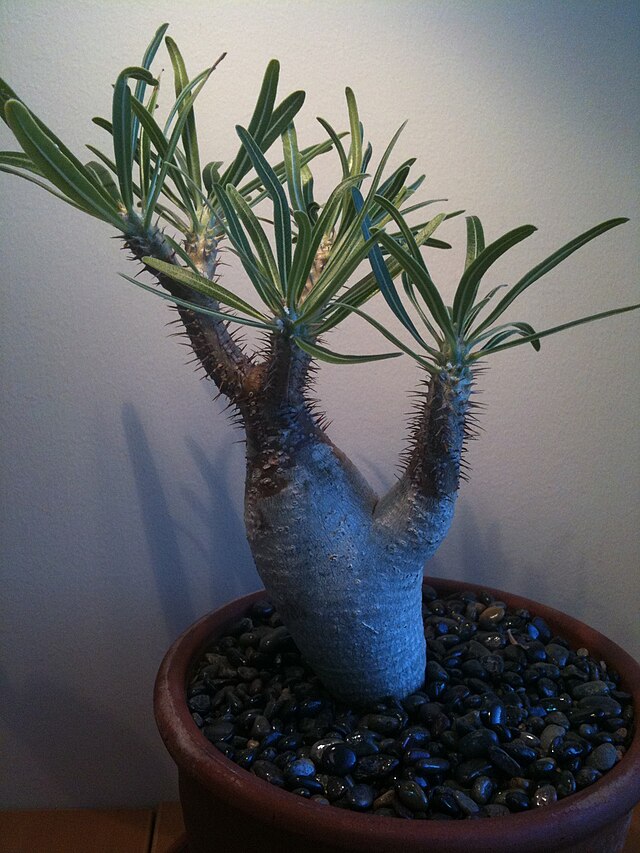
Pachypodium is a caudex plant in the Apocynaceae family native to Madagascar and southern Africa. Its name means "thick foot" in Greek, and true to this meaning, its greatest appeal lies in the unique silhouette of a swollen base.
Representative species include Gracilius (Pachypodium rosulatum var. gracilius), prized for its stocky, bottle-shaped stem; Brevicaule, beloved for its charming, tiny, rounded form; and Lamerei, notable for its slender, stylish silhouette.
Main Characteristics of Pachypodium
- Stem shape: Varies by species—bottle-shaped, spherical, and more—each with its own distinctive character and exceptionally high ornamental value
- Deciduous: Enters dormancy by dropping all leaves in winter. This bare state possesses its own unique beauty.
- Growth rate: Extremely slow. Growing from seed takes years for the stem to gradually thicken.
- Price range: From seedlings at around 1,000 yen to rare mature specimens exceeding hundreds of thousands of yen.
- Flowers: Somewhat difficult to achieve bloom, but when small yellow or white flowers do appear, the reward is special.
There is deep satisfaction in nurturing from seed with devoted care, and it is an engrossing world sometimes called "bonsai to cultivate."
What Is Adenium? A Stunning Species Known by the Name Desert Rose
Adenium is a caudex plant in the Apocynaceae family distributed from East Africa to the Middle East, cherished worldwide under the beautiful alternative name "Desert Rose." The contrast between its swollen caudex base and vivid flowers is striking, and it is a plant of exceptionally high ornamental completeness.
The most commonly available species is Adenium obesum, with active breeding creating diverse flower colors and forms. Pink, red, white, bicolor—you can enjoy the lush appearance of a tropical garden indoors.
Main Characteristics of Adenium
- Abundant flowering: With proper care, it blooms multiple times per year and provides long-lasting floral display.
- Caudex form: Roots spread and undulate, offering individual variation in form to appreciate.
- Growth rate: Relatively fast compared to Pachypodium; becomes a full, mature plant sooner.
- Price range: Seedlings are available for around 1,000 yen, making it ideal as an entry point to caudex cultivation.
- Evergreen: Retains leaves year-round if provided sufficient warmth and light.
Growing Methods Compared: Sunlight, Watering, and Winter Care
Both share a preference for "high temperatures, dryness, and strong light," but their specific care differs in several ways.
| Item | Pachypodium | Adenium |
|---|---|---|
| Cold hardiness | 10℃ or higher (species-dependent) | 10℃ or higher |
| Watering frequency (summer) | Once to twice weekly | Once to twice weekly |
| Winter management | Minimal to no water | Minimal to no water |
| Ease of flowering | Difficult to bloom | Easy to bloom |
| Growth rate | Slow | Moderately fast |
| Difficulty level | Moderately challenging | Relatively easy |
Winter care: For both, indoor management is essential. In temperatures below 10℃, root rot and decline are likely, so move plants to a bright windowsill indoors. Pachypodium should be kept quite dry after leaf drop, and Adenium similarly requires minimal water—this is key.
Price Range and Availability
Pachypodium
While availability is increasing, rare varieties and large specimens remain expensive. Gracilius seedlings can be obtained starting around 3,000–10,000 yen, but impressive specimens over 10 years old frequently exceed 100,000 yen. Additionally, wild-collected specimens require careful consideration from an import-regulation perspective.
Adenium
It is so widely available that you can find it at home centers and 100-yen shops, making it affordable to start. Improved cultivars with showy flowers are priced higher, but quality specimens are still obtainable in the 5,000–15,000 yen range. In terms of value for money, it ranks among the best of the caudex plants.
Which Should You Choose? A Guide by Type
Recommended for Adenium
- Beginners growing caudex for the first time
- Those who want to enjoy flowers alongside the plant
- Those who want to start on a budget
- Those who want to quickly feel a sense of growth and progress
Adenium has a low care threshold and shows visible growth, making it ideal as an entry point to the world of caudex plants.
Recommended for Pachypodium
- Passionate collectors and enthusiasts of seed propagation
- Those who find beauty and romance in stem form and individual character
- Those who enjoy patient, long-term cultivation
- Those who aspire to build a collection of rare specimens
Each Pachypodium specimen is unique in form, and attachment deepens as you cultivate it over time. While investment and patience are required, the reward is correspondingly profound.
How Do Gracilius and Adenium Differ? A Species-Level Comparison
While often lumped together as "Pachypodium," the comparison that appears most frequently in searches is not at the genus level but between two specific species: Gracilius (Pachypodium rosulatum var. gracilius) and Adenium obesum. Comparing these two species more closely mirrors actual purchasing decisions.
| Item | Gracilius | Adenium obesum |
|---|---|---|
| Native range | Madagascar (high-altitude rocky areas) | Arabian Peninsula to East Africa |
| Stem form | Spherical to bottle-shaped; the stem itself thickens | Base swells, roots spread octopus-leg fashion |
| Spines | Sharp spines on stem and branches | No spines; smooth stem surface |
| Leaves | Slender, glossy, clustered at branch tips | Rounded, thick leaves in rosette formation |
| Winter | Completely deciduous and dormant. Winter over with no water | Often retains leaves if kept above 10℃ |
| Growth rate | Extremely slow (years for stem thickening from seed) | Fast. Visible change in appearance within 1–2 years |
| Flowers | Yellow. Difficult to achieve bloom | Large pink to red blooms. Flowers multiple times per year |
| Price | Seedlings 3,000–10,000 yen / wild-collected 10,000s to 100,000s of yen | Seedlings around 1,000 yen and up |
The deciding factors are spines and winter appearance. If the stem has spines and drops all leaves to become stick-like in winter, it is Gracilius. If there are no spines and it retains leaves through winter given adequate warmth, you can safely assume it is Adenium. Detailed care instructions for Gracilius alone are summarized at Pachypodium Gracilius Growing Guide.
Types of Adenium—Differences Between Obesum and Arabicum
Among Adenium, the choice between Obesum and Arabicum is one where buyers often hesitate. Though both bear the name "Adenium," their mature forms differ entirely.
- Obesum (Adenium obesum): Tends to grow as a single upright stem and is a type to appreciate for flowers. Extensively bred in Thailand, with an overwhelming diversity of flower colors and forms. Most widely available; what garden centers sell as "Adenium" is typically this species.
- Arabicum (Adenium arabicum): Multiple branches rise from the base, and the stem grows low and thick—a type to appreciate for its caudex. Leaves are broad and thick; flowers are pale pink and small, blooming less frequently than Obesum. Offers the pleasure of thickening from seed and is favored by caudex enthusiasts.
- Socotranum (Adenium socotranum): A large species endemic to Yemen's Socotra Island, with extremely slow growth and limited availability, making it expensive. Consider it an option for advanced growers.
When in doubt, choose Obesum for flowers or Arabicum for caudex thickness—you won't go wrong. Detailed guidance on thickening a caudex from seed and grafting to add your preferred flowers is covered at Adenium Grafting Techniques.
Frequently Asked Questions
How difficult is it to grow Adenium? Among caudex plants, it ranks among the easier varieties. It prefers strong light and dryness and grows well if watered adequately during the growing season. Most failures stem from "watering in winter when temperatures drop below 10℃," so keeping to winter drying and warmth alone is sufficient even for beginners. Pachypodium is more challenging—dormancy assessment is trickier and root management more involved.
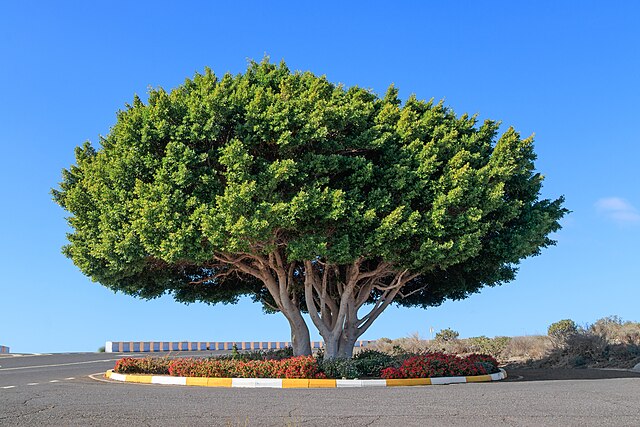
How does Adenium differ from Ficus? Though both have swollen bases, they are entirely different plants. Ficus (Ficus microcarpa) is a tree in the Moraceae family—shade-tolerant, thriving indoors even in weak light, and prefers moisture. Adenium, by contrast, is a succulent in the Apocynaceae family—preferring strong light and dryness, suffering root rot in excess moisture. Using the same care for both will kill one or the other, so always check the label at purchase. Note that the white sap of Adenium and Pachypodium, both Apocynaceae, is toxic; during pruning, keep it away from eyes, mouth, and open wounds.
How GrowerDirect Ensures Safety and Trust
With rare plants like Pachypodium and Adenium, purchasing directly from individual growers often leads to healthier specimens with better provenance. Yet many worry about buying from an individual for the first time.
GrowerDirect is a grower-direct marketplace designed to ease these concerns.
- Sellers are vetted growers and experts only: Only trusted sellers are registered, significantly reducing the risk of acquiring specimens from unknown sources.
- Transactions are contained within the platform: All communication and payment is centrally managed, keeping your personal information secure.
- Post-purchase support: Should issues arise after delivery, you can contact GrowerDirect's support team.
- Diverse caudex selection: From Pachypodium and Adenium to many other rare plants, all offered directly by growers.
Whether choosing your first caudex or hunting your next rare specimen as a long-time collector, start with confidence on GrowerDirect.
How to Tell Pachypodium and Adenium Apart
If a label is lost and you're unsure which is which, use these distinguishing features.
As a baseline, both belong to the Apocynaceae family. While different genera, they share the family and both produce toxic white sap when cut. When handling either, keep the sap away from eyes, mouth, and open wounds.
Four key points help distinguish them:
- Spines: Most Pachypodium species have sharp spines on the stem and branches (particularly prominent in Lamerei, also called Madagascar palm). Adenium has no spines and smooth stem skin. Spine presence is the most obvious difference.
- Base and caudex form: Adenium typically has a plump, rounded base with roots spreading octopus-leg fashion. Pachypodium tends to show thickening in the upright stem itself, whether bottle-shaped or spherical.
- Leaf shape: Pachypodium has slender, glossy leaves clustered at branch tips. Adenium has rounded, thick leaves in rosette formation at branch tips.
- Flower color: Adenium bears large pink to red blooms, earning it the lush epithet "Desert Rose." Pachypodium's flowers center on white and yellow, offering a more subdued impression.
When in doubt, first assume "spines mean Pachypodium, no spines mean Adenium," then confirm by flower color.