Adenium Grafting Guide — Rootstock Selection to Successful Union
Grafting Adenium: rootstock and scion selection, timing, step-by-step technique, improving success rates, and troubleshooting.
Key Takeaways
Grafting Adenium: rootstock and scion selection, timing, step-by-step technique, improving success rates, and troubleshooting.
Grafting Adenium is a technique for efficiently propagating slow-growing rare varieties and helping weaker specimens thrive by leveraging robust rootstocks. This method is widely used in Thailand and Vietnam, and attention among Japanese enthusiasts is growing.
Benefits of Grafting
Adenium grafting offers several advantages.
- Accelerated growth: Using vigorous rootstock root systems dramatically speeds up scion growth
- Propagating rare varieties: Species difficult to propagate by cuttings can be multiplied by grafting
- Improved cold hardiness: Using cold-resistant rootstock allows easier management of cold-sensitive varieties
- Accelerated flowering: Varieties taking years to flower from seed bloom quickly when grafted
- Unique appearance: Different varieties can be grafted to create distinctive forms
Selecting Rootstock and Scion
Rootstock requirements
- Select healthy, vigorous specimens
- Adenium obesum seedlings are the most common and accessible rootstock
- Rootstock diameter should equal or exceed scion diameter
- Diameter of 2cm or more facilitates the work
Scion requirements
- Use healthy branches of the variety you wish to multiply
- Semi-dormant branches without active growth are preferred
- Fresh cut surfaces are necessary (graft immediately after cutting)
- 5-10cm length is most manageable
Optimal Timing for Grafting
Adenium grafting succeeds best during the active growing season.
- Optimal period: May-July (when temperature consistently exceeds 25°C)
- Possible period: April-September
- Avoid: October-March dormancy period shows extremely low grafting success rates
Higher temperatures promote active cell division and accelerate union at the graft site.
Grafting Methods
Cleft grafting (most popular method)
- Prepare rootstock: Cut rootstock at desired height horizontally. Make a 2-3cm deep vertical cut in the center
- Prepare scion: Cut scion base into V-shape (wedge). Shape both sides evenly, exposing the cambium layer
- Union: Insert scion wedge into rootstock cut. Align cambium layers for proper contact
- Fixation: Wrap firmly with grafting tape or parafilm. Ensure no gaps
- Aftercare: Place in bright shade avoiding direct sun. Cover with plastic bag to maintain humidity
Side grafting (rootstock-sparing method)
Make an angled cut on the side of the rootstock trunk and insert the scion there. This method preserves the rootstock top, reducing failure risk.
- Make angled downward cut in rootstock (1.5-2cm deep)
- Cut scion base at single angle cut
- Insert scion into cut, aligning cambium layers
- Secure with tape
Tips for Higher Success Rates
- Use clean, sharp tools: Sterilize cutting blades beforehand. Sharp tools make quick, clean cuts
- Handle plant sap: Adenium releases white sap when cut. Wipe excess with tissue before grafting, as it prevents proper union
- Align cambium precisely: The cambium (thin layer inside bark) contact between rootstock and scion is essential for success
- Secure fixation: Scion movement from wind or vibration prevents grafting success. Tape firmly
- Maintain high temperature and humidity: Keep 25-30°C and high humidity for 2-3 weeks after grafting
Post-Grafting Care
First 1-2 weeks
- Manage in bright shade avoiding direct sun
- Water sparingly to prevent rootstock rot
- If covered with plastic, exchange air daily
Weeks 2-4
- When scion shows new growth, grafting is succeeding—but don't remove tape yet
- Gradually acclimate to sunlight
After 1-2 months
- Once union is firmly established, remove tape
- Transition to normal care
- Remove all rootstock shoots (suckers). Left unchecked, they divert nutrition from the scion
Common Failure Points and Countermeasures
- Scion wilts: Likely misaligned cambium layers. Unfortunately, regrafting is necessary
- Mold at union: Caused by excess moisture. Improve ventilation and apply fungicide
- Rootstock rots: Usually from overwatering. Minimize watering immediately after grafting
- Scion doesn't grow: Even after successful grafting, weak rootstock produces slow growth. Develop rootstock root systems
Advanced Grafting Techniques
Once proficient with basic grafting, try more advanced methods.
Multiple-variety grafting Graft multiple varieties onto a single rootstock. Create showy specimens with different flower colors blooming simultaneously. However, account for growth rate differences between varieties.
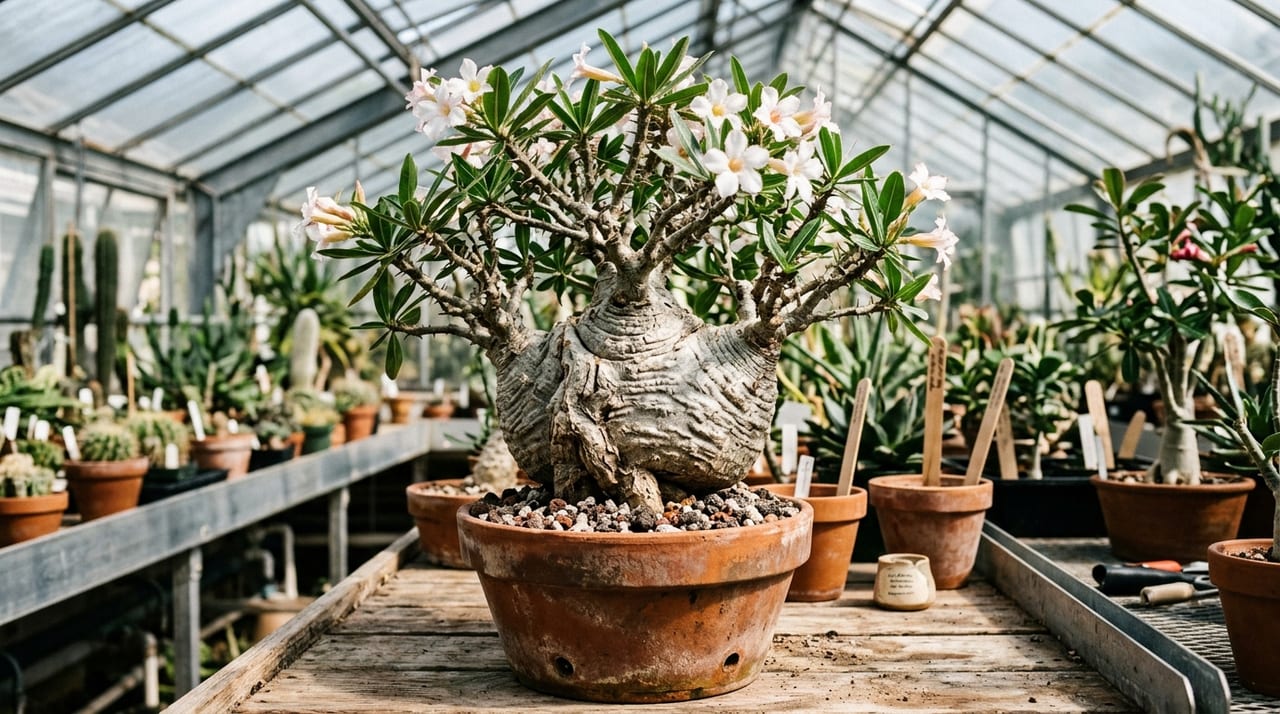
High grafting Graft at higher positions on the rootstock to create standard form shapes. Create elegant specimens combining the thick caudex with preferred flower colors at the top.
Keep grafting records Document grafting dates, rootstock and scion varieties, and methods in a notebook. Analyzing success and failure patterns accelerates skill development.
Finding Grafted Seedlings on GrowerDirect
GrowerDirect offers high-quality Adenium grafts directly from skilled propagators. Consulting with experienced growers about grafting techniques and variety characteristics provides significant peace of mind. Whether attempting grafting yourself or learning from finished specimens first, explore GrowerDirect.