Adenium Flower Color Genetics and Breeding | Crossing and Selection Techniques for Enhancing Pink Intensity
Adenium flower color is genetically determined and can be shifted toward deep pink through crossing and selection. This article explains the mechanisms of flower color inheritance, how to choose crossing parents and breeding strategy, the process of seed development and selection, and points to note when stabilizing selected lines.
Key Takeaways
Adenium flower color is genetically determined and can be shifted toward deep pink through crossing and selection. This article explains the mechanisms of flower color inheritance, how to choose crossing parents and breeding strategy, the process of seed development and selection, and points to note when stabilizing selected lines.
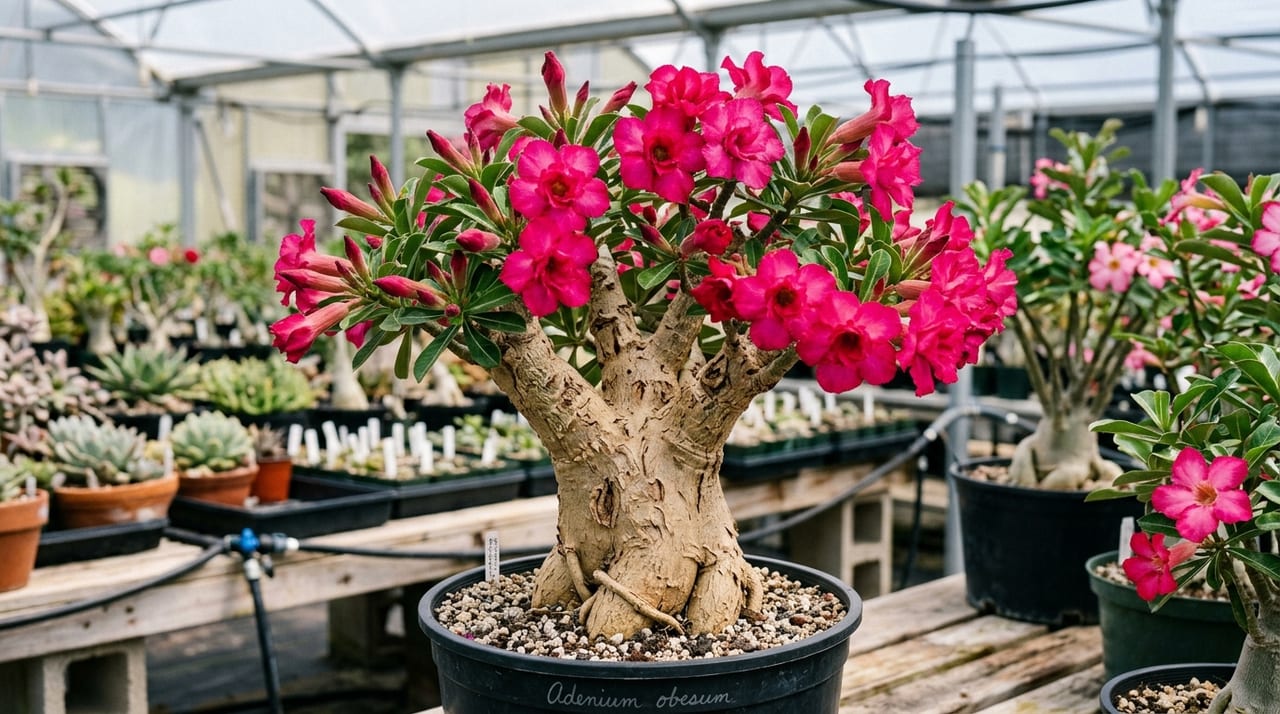
Adenium obesum flowers are known as desert roses, and their beauty is a major attraction. However, many growers find the flower color of specimens they purchase lighter than expected, or desire deeper pink colors. In reality, most Adeniums in circulation are imported stock or first-generation seedlings, and flower color is often unstable. In fact, Adenium flower color is genetically fixed, and through deliberate crossing and selection, it is entirely possible to cultivate individuals with your ideal color. This article explains the basics of Adenium flower color inheritance through to practical breeding strategies.
Adenium Flower Color Inheritance Mechanism
The flower color of Adenium obesum is primarily determined by the expression level of anthocyanin-based pigments. The depth of pink is directly linked to the accumulation of these pigments, and it is a quantitative trait involving multiple loci. That is, rather than a single gene, the interaction of multiple genetic factors determines the final flower color. The higher the production of anthocyanin-based major pigments such as pelargonidin and cyanidin, the deeper the flower color becomes.
Adeniums close to wild species generally produce pale pink to white flowers. Conversely, among horticultural varieties, some possess deep, rich colors approaching magenta or crimson red. These deep-colored lines are the result of past selective breeding, chosen from individuals with high anthocyanin synthesis capability in their genetic background. Deep-colored varieties developed in Thailand and elsewhere were created as the result of many years of selection.
Environmental factors also have a significant impact on flower color. In particular, light intensity and temperature during the flowering bud differentiation period play important roles in pigment expression. Adeniums whose flower buds form under the following conditions tend to produce deeper colored flowers.
- Light: at least 8 hours or more of direct sunlight daily
- Nighttime temperature: around 20°C
- Daytime temperature: around 28°C
Conversely, in low-light or high-temperature environments, pigment synthesis is suppressed, and flower color tends to be paler.
Selection of Crossing Parents and Practical Breeding Strategy
To cultivate deep-colored Adeniums, the first step is to select appropriate individuals as parents. Ideally, use an individual with deep pink flowers as the pollen parent (pollen source), and similarly a deep-colored individual as the seed parent. The deeper the color of both parents, the higher the proportion of deep-colored individuals in the resulting seedlings.
Deep-color crossing is performed through the processes of pollen collection, storage, and pollination.
- Pollen Collection: Two to three days after the flower opens is optimal. During this period, the tip of the stamen becomes yellow, and a light touch will cause pollen to adhere to your finger.
- Pollen Storage: Pollen collected and placed in a small container can be dried and stored in a refrigerator, but it becomes less likely to pollinate successfully as days pass, so use it early.
- Pollination: Pollination is best done when the stigma (tip of the pistil) of the seed parent flower has become somewhat sticky. Typically, the third to fourth day after flowering is the appropriate time. Using a small brush or cotton swab, carefully apply the pollen to the stigma. Pollinating the same flower 2 to 3 times on successive days makes seed set more likely.
Seed Development and Selection Process
After successful pollination, the slender pod swells, and once it ripens, seeds with fluffy hairs become available for collection. Dry the seeds and store them in a paper bag with good air circulation. Sow in spring (February to March) of the following year, and after germination it is important to maintain sufficient light (if using LED grow lights, 14 to 16 hours daily) and appropriate temperature (28 to 30°C).
Seedlings typically require 3 to 5 years to grow to flowering. During this time, observe growth each year and mark individuals that produced darker flowers. Evaluating superior individuals requires composite assessment of the following points:
- Flower color
- Flower size
- Flower petal texture
- Caudex development speed
From the first generation, select the individuals that produce the deepest colored flowers.
By resowing seeds obtained from the first selected generation, the deep-color trait becomes more firmly fixed. Continuing this process through 3 to 4 generations allows you to establish a line in which deep pink color is nearly stable.
Ensuring Stability of Selected Lines and Practical Considerations
To stabilize deep-colored lines, it is important to apply increasingly stringent selection criteria with each generation. The selection criteria for each generation are as follows, and through this approach the fixation degree of the deep-color trait improves dramatically.
| Generation | Selection Criteria |
|---|---|
| Second Generation | Select only the top 20% of deep-colored individuals |
| Third Generation | Narrow down to the top 10% |
At the same time, to minimize variation in pigment expression due to environmental factors, the cultivation environment must also be standardized.
In crossing and breeding, the rigor of record-keeping is also a critical element for success. Recording which parents were used, in which year seeds were collected, and under what conditions seedlings were developed enables cause analysis if failures occur. Additionally, when you succeed in developing a deep-colored line, selling it as seeds or seedlings can give your hobby breeding activities economic value.