Caudex Plant Purchasing Guide | How to Identify Imported vs. Seed-Grown Stock
Key points for purchasing caudex plants. This guide explains the differences between imported and seed-grown stock, how to identify rooted specimens, price ranges, and how to select by species including Pachypodium and Adenium.
Key Takeaways
Key points for purchasing caudex plants. This guide explains the differences between imported and seed-grown stock, how to identify rooted specimens, price ranges, and how to select by species including Pachypodium and Adenium.
Related Species
Caudex plants captivate many enthusiasts due to their unique forms and rarity. However, precisely because these plants are expensive, careful evaluation at the time of purchase is crucial. This article provides detailed guidance on key points for confidently purchasing caudex plants.
Differences Between Imported and Seed-Grown Stock
The first thing to understand when purchasing caudex plants is the difference between imported and seed-grown stock.
Imported Stock (Bare Root)
- Stock imported from native regions such as Madagascar and Africa
- Has a wild character, with uniquely shaped and impressive trunks
- Arrives with roots cut, requiring rooting management
- Larger specimens are easier to obtain
- Risk: Possibility of failure to root
Seed-Grown Stock
- Stock grown from seed domestically in Japan
- Has well-established roots and can be cultivated immediately
- Adapted to Japan's climate, making care easier
- Smaller in size but allows you to enjoy growth
- Benefit: No rooting risk and recommended for beginners
For beginners, we strongly recommend seed-grown stock or rooted imported specimens.
How to Identify Rooted Specimens
When purchasing imported stock, it is safest to select specimens labeled as "rooted" or "rooting managed."
Checklist for Rooted Specimens
- Sold planted in a pot
- Does not wobble when gently shaken (indicating established roots)
- New leaves are emerging
- Seller has posted photos confirming rooting
Cases Requiring Caution
- "Rooting in progress" may indicate the specimen is not yet rooted
- May be recently planted with shallow roots
- If no rooting confirmation photo is provided, contact the seller to verify
When Purchasing Unrooted Specimens
- Press the trunk to confirm it is not soft (softness indicates possible rot)
- The cut surface should be dry and free of mold
- The trunk should have substantial weight (excessive lightness indicates water loss)
Selecting Pachypodium and Adenium
Here we explain how to select two of the most popular caudex species.
Pachypodium
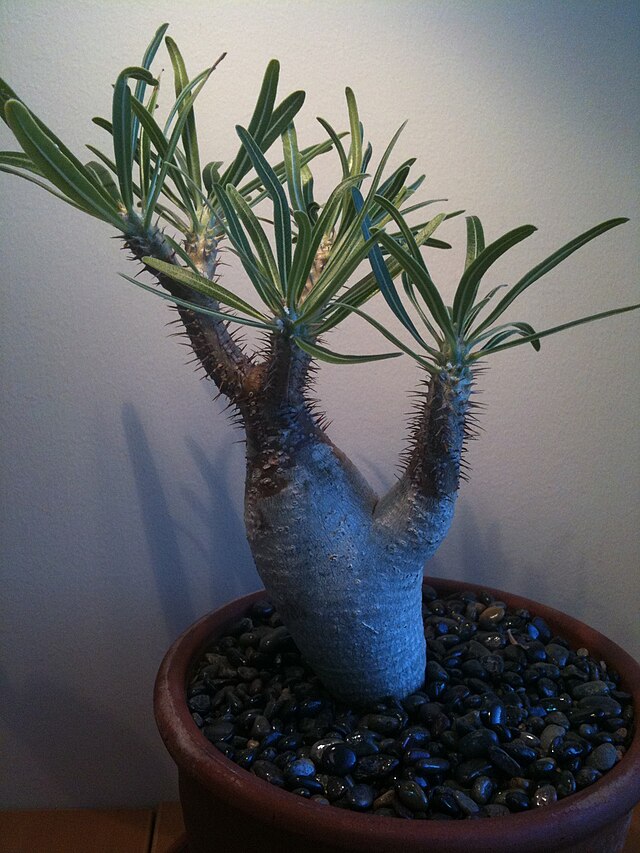
- Gracilius: Spherical forms are popular. Plants with round, hefty trunks are ideal.
- Brevicaule (Ebisu Warai): Characterized by flat caudex. Check that it spreads evenly when viewed from above.
- Horombense: Valued for its tall form. Select vigorous specimens with minimal trunk wrinkling.
Characteristics of Quality Pachypodium
- The caudex is plump
- Well-balanced with not too many branches
- Spines are firm
- Free of blackening or soft spots
Adenium
- Obesum (Desert Rose): Appealing for thick trunk and beautiful flowers
- Exposed root formations (roots projecting above soil) with beautiful shapes are highly valued
- Confirm whether the specimen is grafted or seed-grown
- Offers a wide range of flower colors and forms
Price Range Guide
Caudex plant prices vary significantly by species, size, and rarity.
Pachypodium Gracilius
- Seed-grown, 1–2 years old (3–5 cm diameter): ¥3,000–¥8,000
- Seed-grown, 3–5 years old (8–12 cm diameter): ¥10,000–¥30,000
- Imported specimen (rooted): ¥20,000–¥100,000+
- Premium large specimens: ¥100,000+
Adenium
- Seed-grown seedlings (under 1 year): ¥1,000–¥3,000
- Medium specimens (approx. 10 cm diameter): ¥5,000–¥15,000
- Large specimens, flowering: ¥10,000–¥50,000
Factors Increasing Price
- Beautiful caudex shape (roundness, balance)
- Rare species or origin
- Large yet well-proportioned
- Rooted with excellent health
Caution When Price Seems Too Low
- Possible poor condition (early rot, etc.)
- Species name may be inaccurate
- Risk of discrepancy between photos and actual specimen
Common Beginner Mistakes and How to Avoid Them
Mistake 1: Purchasing Without Confirming Rooting Status Unrooted specimens require the challenging process of rooting management after arrival. For your first plant, select specimens clearly marked as "rooted" or "established in Japan for at least one season." While the price is higher, the risk of losing the plant decreases significantly.
Mistake 2: Judging Only by Caudex Thickness A robust caudex is insufficient if branch tips are blackened or the base has soft spots. Always confirm the firmness of the caudex when gently pressed and verify that the growth point (branch tips) is alive.
Mistake 3: Repotting Immediately Upon Arrival Repotting a specimen exhausted by transport prevents roots from recovering from damage. First, rest the plant in bright indirect light for a few days until it stabilizes, then proceed with repotting. The best time to repot is at the beginning of the growing season.
Finding Caudex Plants on GrowerDirect
GrowerDirect features caudex specimens carefully grown from seed by specialist growers, as well as properly rooted imported stock. All listings include photos of the actual plants, allowing you to confirm caudex form and condition before purchasing. If a particular specimen interests you, use the messaging feature to consult directly with the grower about rooting status and care methods.