Complete Pachypodium Species Comparison Guide | Characteristics and Care for Gracilius, Rosulatum, Densiflorum, Brevicaule, and Baronii
Comprehensive comparison of all major Pachypodium species (Gracilius, Rosulatum, Densiflorum, Brevicaule, Baronii, Lamerei, etc.). Detailed overview of stem form, flower color, growth rate, cold tolerance, difficulty level, and price range for each species. Use this as a guide for choosing your ideal variety.
Key Takeaways
Comprehensive comparison of all major Pachypodium species (Gracilius, Rosulatum, Densiflorum, Brevicaule, Baronii, Lamerei, etc.). Detailed overview of stem form, flower color, growth rate, cold tolerance, difficulty level, and price range for each species. Use this as a guide for choosing your ideal variety.
Related Species
What is Pachypodium
Pachypodium (Pachypodium) is a caudex plant in the Apocynaceae family, native to Madagascar and southern Africa. As its genus name suggests (pachy = thick, podium = foot, meaning "thick foot"), its greatest appeal is the contrast between its swollen caudex and delicate flowers.
In Japan, Pachypodium has become an established favorite as a leading species in the caudex plant boom, with Pachypodium gracilius in particular widely known as the quintessential caudex plant. As of 2026, domestic seedlings are more widely available than before, making them easier to obtain; however, imported specimens like Brevicaule, which is listed in CITES Appendix II, remain rare and expensive. In this article, we systematically compare the characteristics of major species to help guide your variety selection.
Major Species Overview
| Species | Origin | Stem Form | Flower Color | Cold Tolerance | Difficulty | Price Range |
|---|---|---|---|---|---|---|
| Gracilius | Madagascar | Spherical~pear-shaped | Yellow | ★★☆ | ★★★ | High |
| Rosulatum | Madagascar | Cylindrical~club-shaped | Yellow | ★★☆ | ★★☆ | Moderate |
| Densiflorum | Madagascar | Thick cylindrical | Yellow | ★★☆ | ★★☆ | Moderate |
| Brevicaule | Madagascar | Flattened caudex | Yellow | ★★★ | ★★★ | High~Rare |
| Baronii | Madagascar | Slender cylindrical | Red | ★☆☆ | ★★★ | High |
| Lamerei | Madagascar | Slender stem (tree-like) | White | ★★☆ | ★☆☆ | Low |
| Ebreneum | Madagascar | Spherical | White~pale yellow | ★★☆ | ★★☆ | Moderate |
| Saundersii | South Africa | Bottle-shaped | White | ★★★ | ★★☆ | Moderate |
Gracilius (P. gracilius)
Characteristics
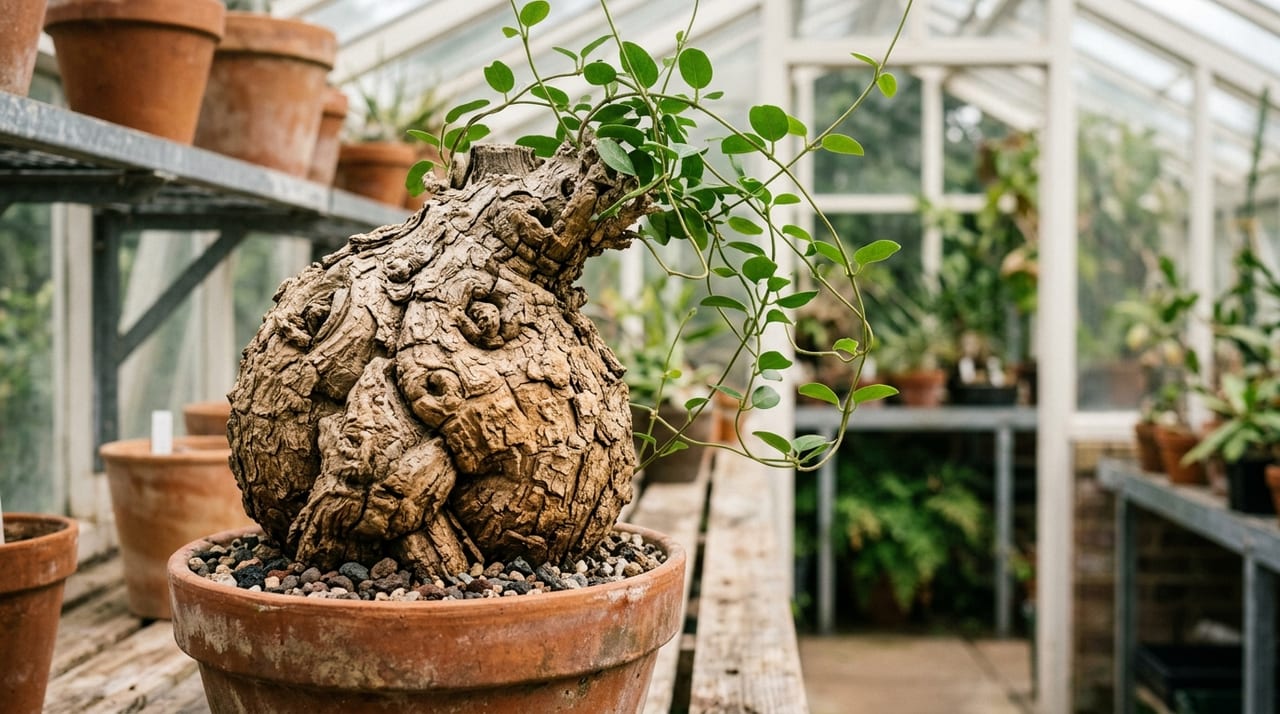
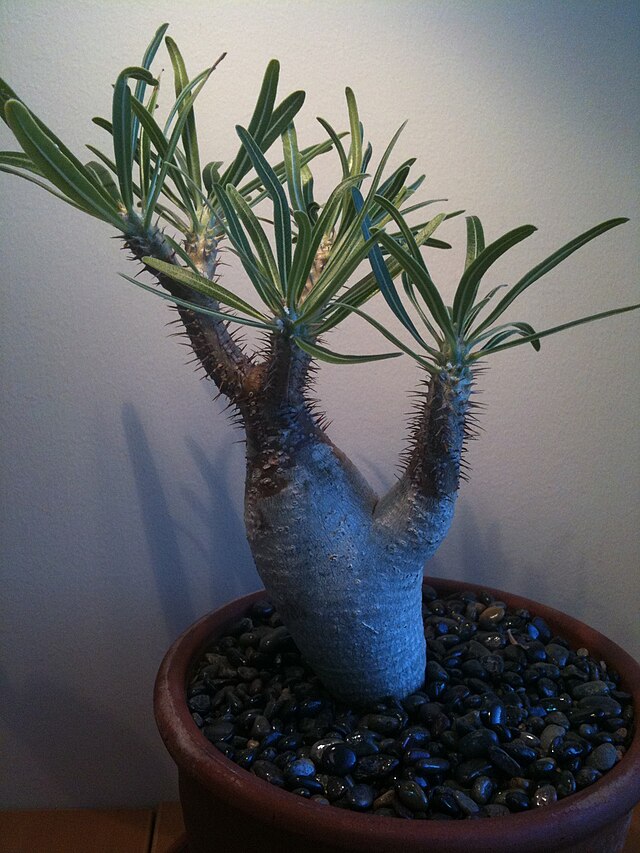
Pachypodium gracilius is the most popular species, hailed as the "king of Pachypodium." Its plump, spherical to pear-shaped caudex topped with delicate foliage creates an unmistakable presence.
Stem form: Spherical to pear-shaped, round and swollen (with significant individual variation)
Flowers: Yellow five-petaled flowers, blooming spring to early summer
Growth rate: Extremely slow (takes several years to over a decade for seedlings to develop a spherical caudex)
Native habitat elevation: Rocky areas and dry forests at 600–1,200 meters above sea level
Care Tips
- Root establishment is the biggest challenge (bare-root specimens require skill)
- Light is critical. Full outdoor sun exposure is ideal
- Growth is vigorous in summer, but excessive shading is unnecessary even at temperatures above 30°C
- Winter requires near-complete watering cessation. Move indoors when temperatures drop below 5°C
Recommended For
Those who want to grow the quintessential caudex plant and appreciate caudex proportions. While advanced, domestic seedlings are approachable even for beginners.
Rosulatum (P. rosulatum)
Characteristics
Pachypodium rosulatum is widely distributed across central to southern Madagascar and offers features similar to Gracilius while being more affordably priced.
Stem form: Somewhat elongated cylindrical to club-shaped
Flowers: Yellow flowers, spring to early summer
Growth rate: Slightly faster than Gracilius
Variations: Rosulatum var. gracilius (Gracilius-like subspecies), etc.
Care Tips
- Care is essentially the same as Gracilius
- More robust than Gracilius with higher success rates for root establishment
- The caudex is less dramatically swollen than Gracilius, but flowers are equally beautiful
Densiflorum (P. densiflorum)
Characteristics
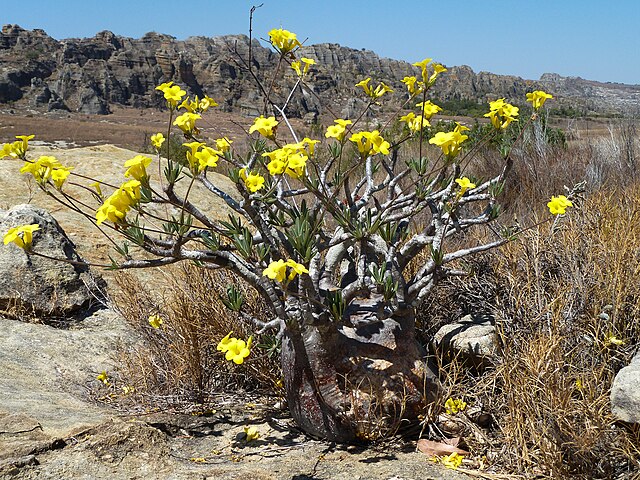
True to its name meaning "densely flowered," this luxurious variety produces masses of yellow flowers that cover the plant when blooming. Pachypodium densiflorum stems grow thick and cylindrical, and it's prized by collectors for its distinctive form.
Stem form: Thick cylindrical with multiple branches developing
Flowers: Vibrant yellow with abundant blooms
Growth rate: Moderate
Special traits: Branches easily, developing complex branching patterns
Care Tips
- Water tends to collect at branch junctions—watch for rot
- Excellent flowering makes this ideal for those who enjoy blooms
- Its stem form differs from Rosulatum, adding diversity to a collection
Brevicaule (P. brevicaule)
Characteristics
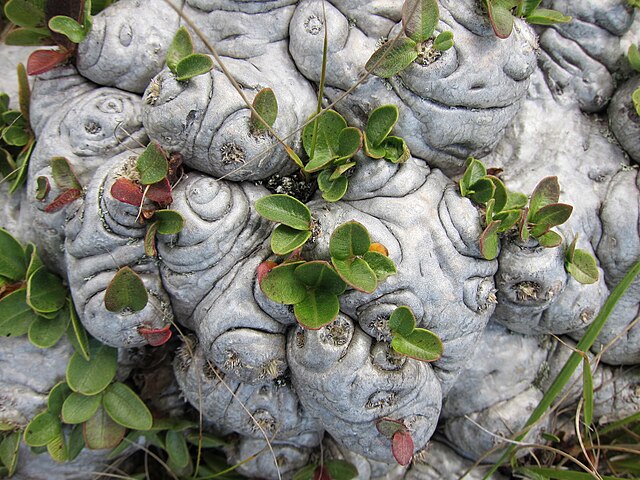
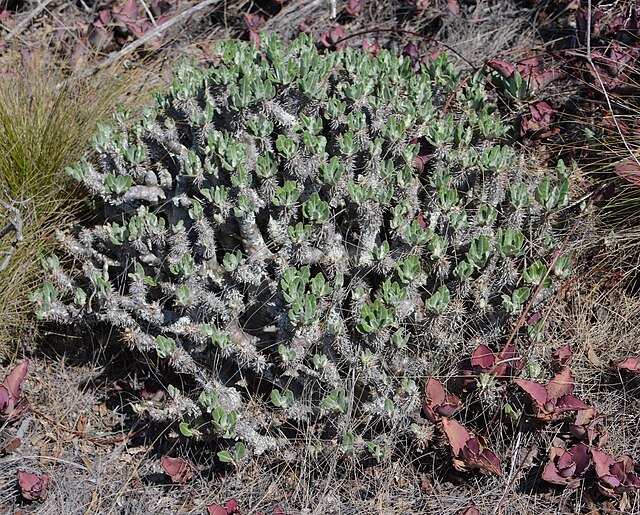
Pachypodium brevicaule, as its name "short stem" implies, is distinguished by its flattened, stone-like caudex. Affectionately called "chibi-pachi" (tiny Pachi), it enjoys devoted collector enthusiasm.
Stem form: Flattened to stone-like caudex (3–10 cm in height)
Flowers: Pale to bright yellow small flowers
Growth rate: Extremely slow
Rarity: High (CITES Appendix II)
Care Tips
- Alpine species (1,500–2,000 m elevation) sensitive to high summer heat
- Above 30°C, half-shade with excellent ventilation is recommended
- Water minimally. Overwatering immediately causes root rot
- Seedlings are the most practical option (imported bare-root specimens are difficult to establish)
Recommended For
For enthusiasts seeking rare flattened caudex forms. The most challenging to grow, recommended for advanced growers.
Baronii (P. baronii)
Characteristics
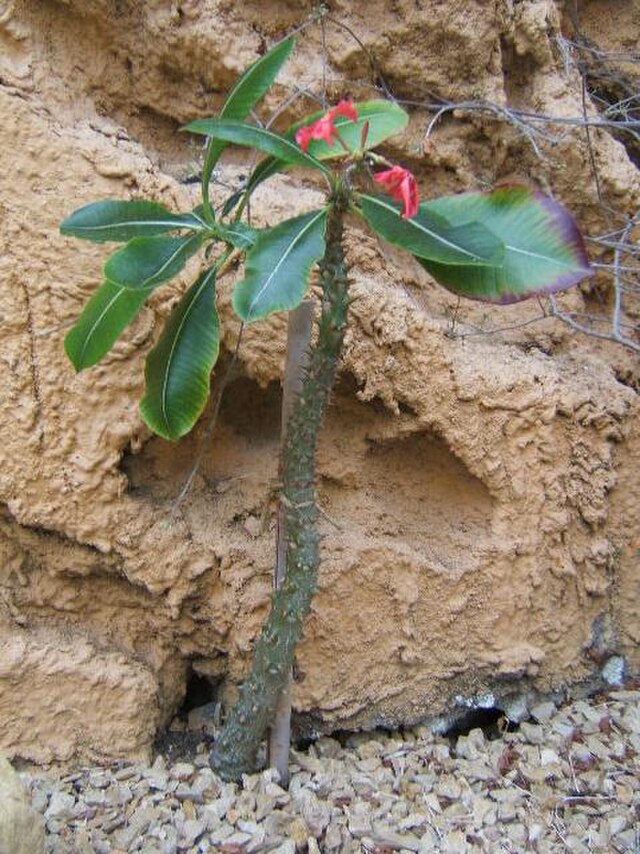
Pachypodium baronii is the only Pachypodium species to produce red flowers. Its slender cylindrical stem offers a form distinctly different from Gracilius.
Stem form: Slender cylinder with branching
Flowers: Vibrant red (the only red-flowered Pachypodium)
Growth rate: Slow
Rarity: Relatively high
Care Tips
- One of the least cold-hardy Pachypodium species (minimum 10°C recommended)
- Full sun from spring through summer
- Must be moved indoors in winter. Deteriorates rapidly below 10°C
- Blooming requires ample light and watering cessation during dormancy
Lamerei (P. lamerei)
Characteristics
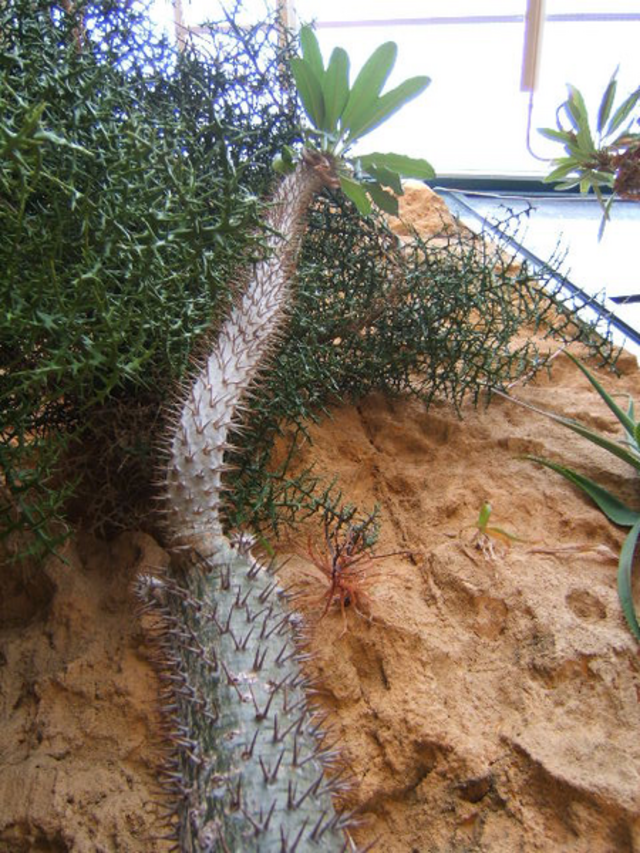
Lamerei is the most tree-like Pachypodium species. Its stems are slender and can reach 3–6 meters in the wild. Most commercial "Madagascar palm" plants are this species.
Stem form: Thick cylinder, branching at the top (tree-like)
Flowers: White flowers
Growth rate: Relatively fast among Pachypodium
Availability: High (widely available)
Care Tips
- The easiest Pachypodium to grow; beginner-friendly
- Robust with reasonable cold tolerance (hardy to around 5°C)
- Eventually requires a larger pot due to its size
Species Comparison Summary & Selection Guide
For Beginners
Lamerei or Rosulatum seedlings are recommended. Affordable, widely available, and relatively easy to grow.
For Those Who Appreciate Caudex Form
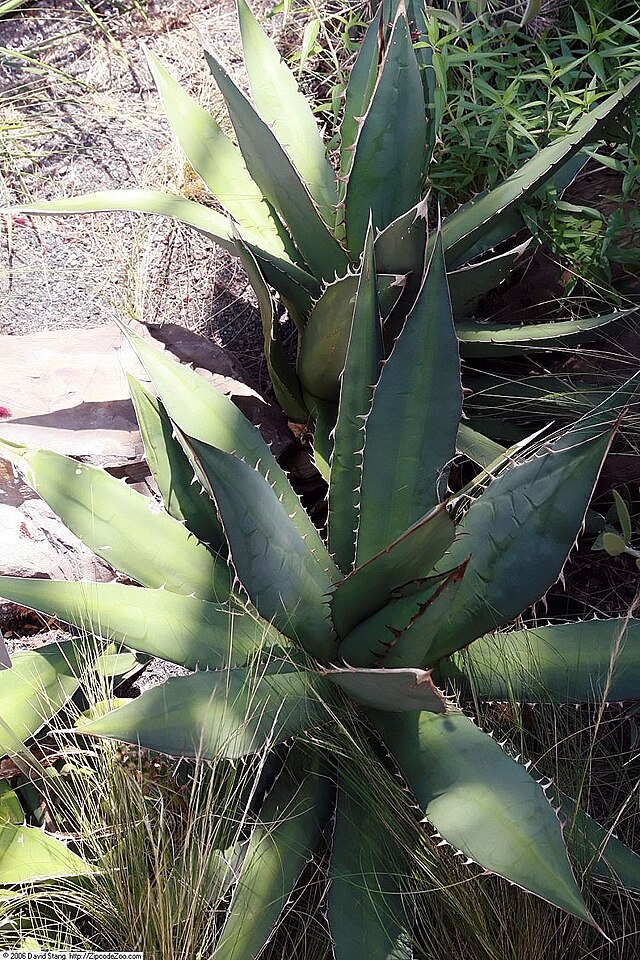
Gracilius (spherical stem) or Brevicaule (flattened stone-like stem). Their distinctive caudex forms are the main attraction. When creating a collection display, placing Pachypodium gracilius as the focal point alongside fleshy rosettes like Agave titanota creates appealing textural contrast.
For Those Who Love Flowers
Baronii (red flowers) or Densiflorum (profuse yellow blooms) are ideal.
For Budget-Conscious Collectors
Rosulatum or Densiflorum seedlings offer excellent value and grow with care similar to Gracilius.
Regardless of species, three fundamentals apply: "well-draining soil, ample light, and winter drying." Understand each variety's character and find the specimen that suits your collection. When buying directly from growers, always confirm whether it's a seedling or import, and whether it's already rooted—this minimizes failures.