Source: Wikimedia Commons
Stephania suberosa
AdvancedStephania suberosa
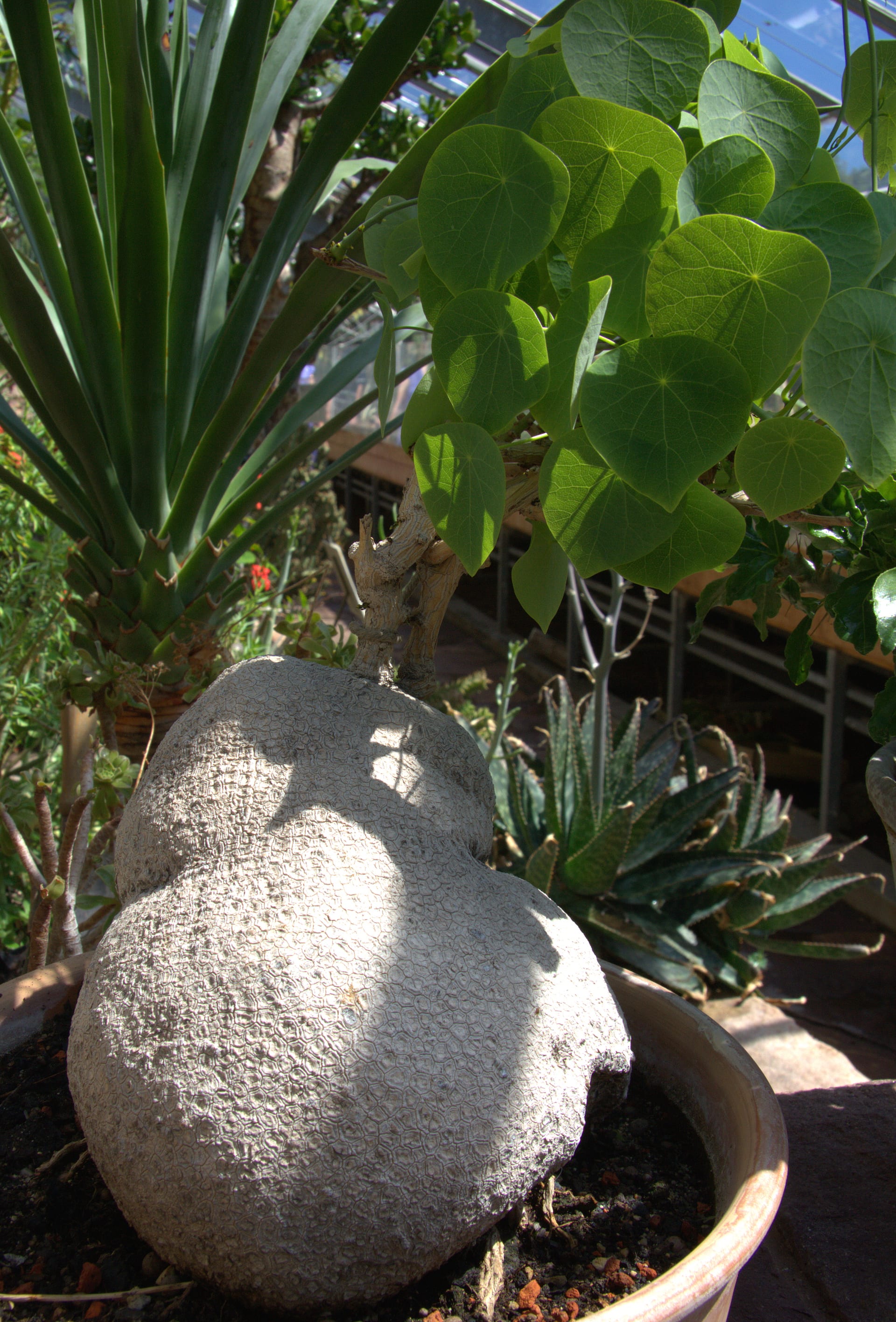
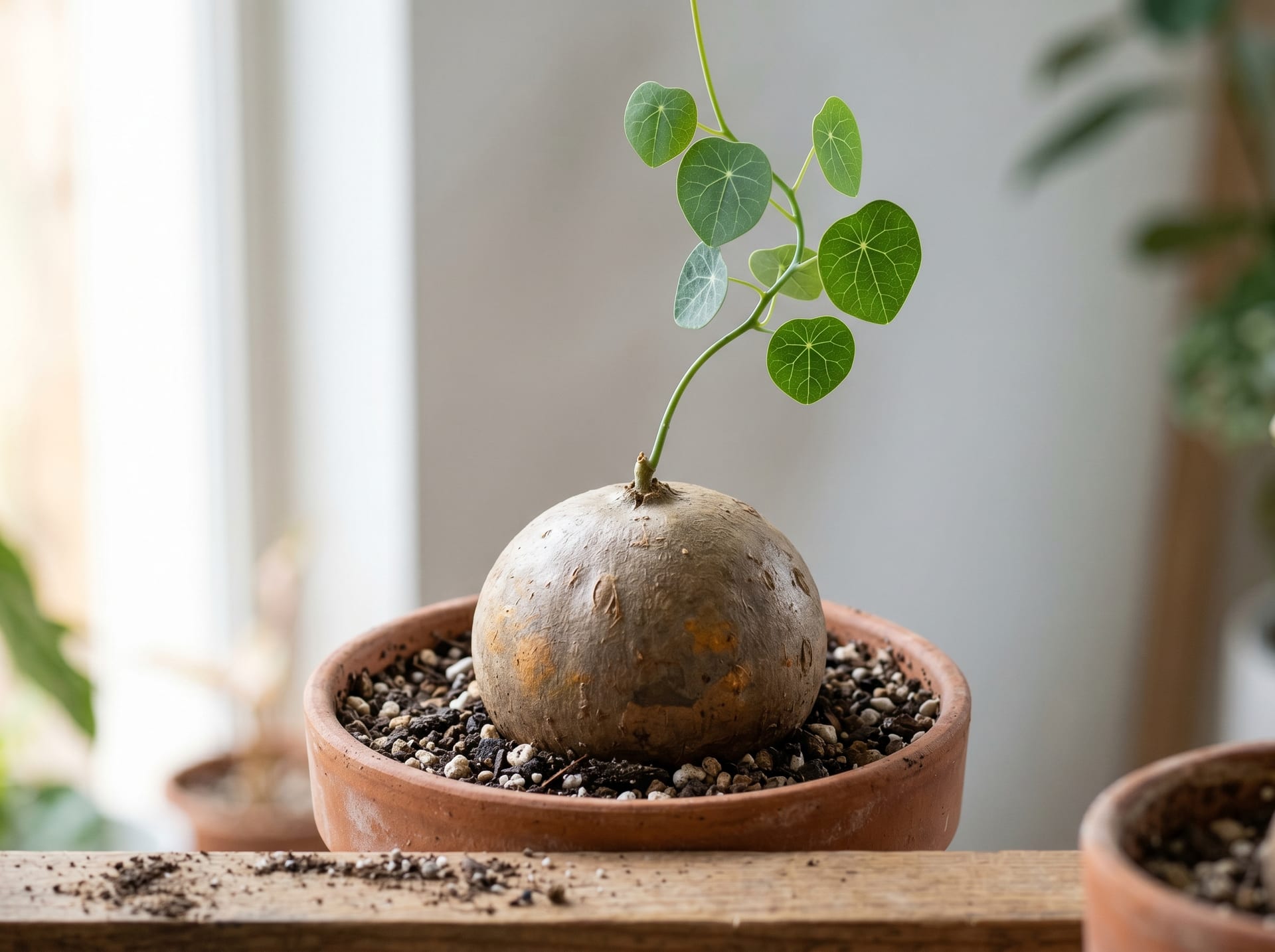
A caudiciform member of the moonseed family from Thailand and Cambodia. A large above-ground tuber with deeply fissured, corky bark sends out seasonal vines with round, lotus-like leaves.
About
Stephania suberosa is a climbing member of the moonseed family (Menispermaceae) described by the British botanist Forman in 1980. It occurs in Thailand and Cambodia, growing in evergreen scrub and bamboo forest on limestone hills at Phra Phutthabat in Saraburi province, central Thailand; it also grows clinging to rock in the limestone mountains of western Thailand, such as in Kanchanaburi. Vines grow from the tuber each year and reach 4 m or more. Leaves are broadly ovate, 8-14 cm long and 9-15 cm wide, on petioles 5-17 cm long attached to the underside of the blade, and die back in the dry season. The small yellow-green flowers open in July and August. In Thailand it is also known as a traditional medicinal plant. In Japan it is the most widely traded Stephania, with potted tubers sold through online shops and auction sites.
Lifespan of the Stephania suberosa
The Stephania suberosa lives Tubers may live for more than 100 years.
Size of the Stephania suberosa
The Stephania suberosa grows to Vines 4 m or more; tubers can exceed 50 kg.
It is dioecious, with a large above-ground tuber covered in deeply fissured corky bark that can weigh over 50 kg and be more than a century old.
Basic Info
Origin
Thailand (limestone in the centre and west) and Cambodia
Lifespan
Tubers may live for more than 100 years
Size
Vines 4 m or more; tubers can exceed 50 kg
Temperature
10〜35℃
Watering & Fertilizer
Sparingly in the growing season
Growing Tips
Light & Placement
Grow in a bright, warm place out of direct sun; it does best at 25°C or more.
Watering
Start watering only after leaves appear, and even in the spring-to-summer growing season water only about once a month. Do not water while it is leafless.
Dormancy Care
The vines die back and it rests in winter, its dry season. Remove dead vines and keep the tuber dry and warm.
Temperature & Overwintering
It is cold-sensitive; bring it into a warm room for winter.
Soil & Repotting
As a limestone plant, give it a free-draining mix, with the tuber set above the soil.
Pests & Cautions
It is difficult in cultivation, and most large tubers on the market were dug from the wild. Check that it has rooted and is producing leaves, and choose plants with active vines.
Stephania suberosa FAQ
QWhat is the growing difficulty level for Stephania suberosa?
Advanced. A variety suitable for advanced growers. Requires advanced cultivation techniques and specialized equipment, with careful environmental adjustments needed.
QWhat is the lifespan of Stephania suberosa?
The average lifespan of Stephania suberosa is Tubers may live for more than 100 years. With proper cultivation environment and nutrient management, you can keep it healthy for a long time.
QHow large does Stephania suberosa get?
The mature size of Stephania suberosa is Vines 4 m or more; tubers can exceed 50 kg. This may vary slightly depending on cultivation environment and individual differences.
QHow should I water and fertilize Stephania suberosa?
Stephania suberosa: watering & fertilizer — Sparingly in the growing season. Aim for appropriate frequency and amount.
QWhat is the typical price for Stephania suberosa?
The price of Stephania suberosa varies significantly by variety, characteristics, size, and lineage. Please check GrowerDirect's price guide for the latest market information.
Last updated: September 23, 2026
References & Sources
Edited & verified by: GrowerDirect Editorial Team
The classifications, regulations, and growing data on this page are created and verified based on the primary information database below.
Taxonomy & Authority
Regulations & Conservation Status
Not listed in CITES (checked on Species+). No special procedure is needed for transfers within Japan.
Sources: Species+ (CITES): Stephania suberosa
Regulations may change. Always verify the latest information with the relevant authorities.
Related Species
Find listings for this species
Related Articles
How to Grow Stephania electer | Rooting Management, Watering, and Budding Tips After Dormancy
For rooted plants, it's a beginner-friendly caudex plant. The challenge lies in bare caudex without roots—rooting management requires April–July and a bottom temperature of 25–28°C. We explain the monthly budding steps, watering decisions based on pot weight, and the critical 10°C winter threshold.
How to Grow Uncarina | Differences Between the Madagascar Endemic Species Grandidieri and Roeoesliana
An explanation of the appeal and cultivation methods of the Madagascar endemic caudex plant Uncarina genus. We introduce the differences between Uncarina grandidieri and roeoesliana, seedling cultivation, and repotting timing.
Complete Guide to Choosing Caudex Plants as Gifts | Recommended Varieties by Occasion and How to Include Care Notes
A guide to choosing caudex plants as gifts organized by occasion. We introduce how to select varieties based on the recipient's cultivation experience and how to include care notes for long-term enjoyment.
Diagnosing and Treating Poor Root Development in Caudex Plants | Causes and Solutions for Roots That Won't Emerge or Won't Grow
A detailed guide to root emergence problems in caudex plants. From diagnosis methods to solutions, practical techniques for promoting healthy root development are introduced.
🩺 Common diseases
Can't find the plant you're looking for?
Post your wishes for free and growers with matching plants will contact you with introductions.