How to Grow Stephania erecta | Rooting Management, Watering, and Budding Tips After Dormancy
For rooted plants, it's a beginner-friendly caudex plant. The challenge lies in bare caudex without roots—rooting management requires April–July and a bottom temperature of 25–28°C. We explain the monthly budding steps, watering decisions based on pot weight, and the critical 10°C winter threshold.
Key Takeaways
For rooted plants, it's a beginner-friendly caudex plant. The challenge lies in bare caudex without roots—rooting management requires April–July and a bottom temperature of 25–28°C. We explain the monthly budding steps, watering decisions based on pot weight, and the critical 10°C winter threshold.
Related Species
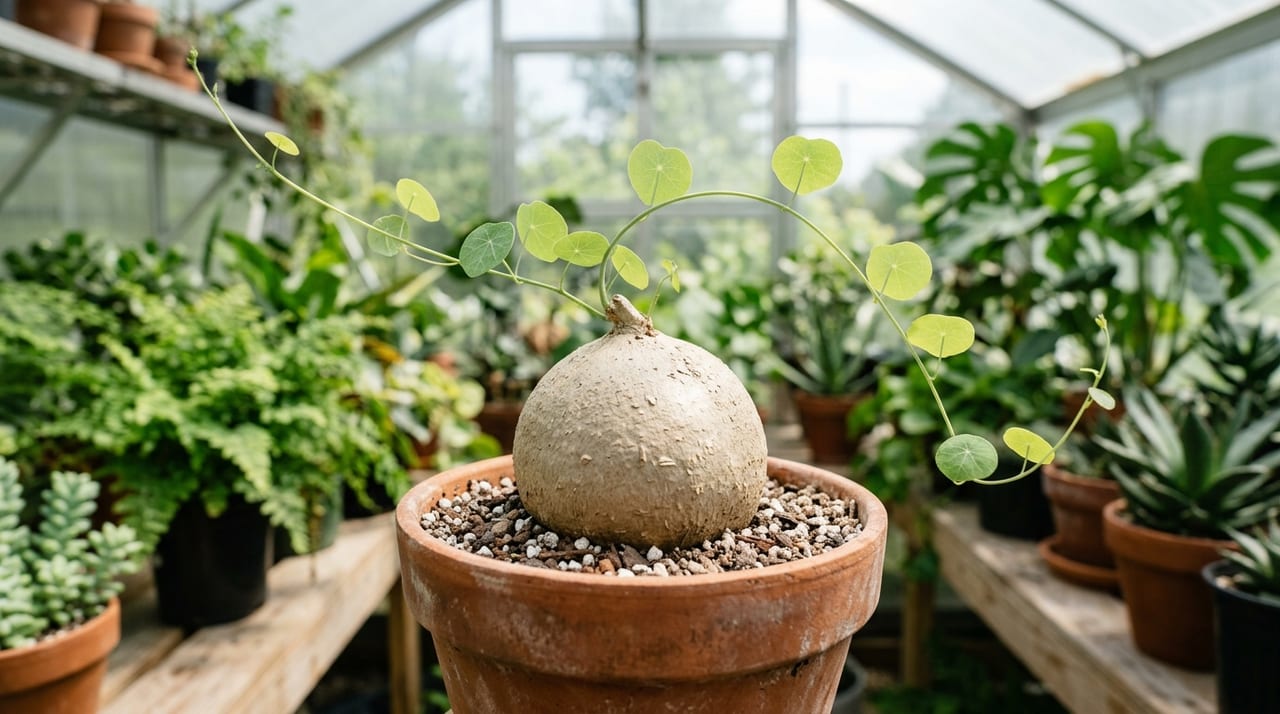
Stephania is a caudex plant that grows slender vines from a round, potato-like caudex and unfolds charming round leaves. Unlike the rugged appearance of Pachypodium and Adenium, it is popular for its soft and adorable atmosphere and is attracting attention as an interior plant. Management is relatively easy, making it a recommended introductory caudex plant. This article focuses on Stephania erecta, the primary species in circulation, and explains cultivation methods including S. pierrei and S. venosa, with monthly steps covering budding, watering, rooting management, and winter dormancy.
Popular Stephania Varieties and Their Characteristic Differences
Here is an overview of three representative varieties. Since many varieties look similar, refer to this when making your purchase.
Stephania erecta (S. erecta)
The most widely available variety. It is characterized by a round, smooth caudex, with large specimens exceeding 10 cm in diameter. The leaves are round like lotus leaves and unfold at the tips of slender stems. During the growing season, it continuously extends vines and spreads like a green curtain. The caudex color ranges from gray to beige with an almost plain surface. Budding typically begins relatively early, often starting in early May.
Stephania pierrei (S. pierrei)
Similar to electer, but the caudex surface has slight ridges and a corky texture. The leaves are also somewhat smaller than electer, giving an overall compact impression. Many specimens are difficult to distinguish from electer, and trade names are sometimes inaccurate. Budding time is roughly the same as electer or slightly later. Cold tolerance is comparable to electer.
Stephania venosa (S. venosa)
A variety with pronounced corky patterning on the caudex surface, offering the richest texture of the three species. The leaf shape is also somewhat narrower, giving a unique character. It is slightly less cold-hardy than electer; a minimum winter temperature of 12°C or above is recommended. Additionally, budding tends to occur 1–2 weeks later than electer, so avoid rushing or becoming anxious from waiting.
Temperature Management Boundaries and Plant Response
Temperature is extremely important in Stephania care. Understand how the plant responds at each temperature range.
| Temperature Range | Plant Response | Action |
|---|---|---|
| Below 5°C | Caudex suffers cold damage. Venosa risks cell death | Move indoors immediately. Continue withholding water |
| 5–10°C | Electer and pierrei endure dormancy, but venosa has damage risk | Move to an indoor location with a minimum of 10°C |
| 10–15°C | Dormancy continues. No vine sprouting, but caudex survives | Monthly misting to prevent drying |
| 15–20°C | Budding begins in this transition period. Small green protrusions appear at vine tips | Gradually resume watering |
| 20°C and above | Active growth period. Vines grow vigorously and leaves unfold successively | Transition to normal management |
Many people who have experienced frozen caudex left the plant on a windowsill below 5°C. Window glass can be 3–5°C cooler than room temperature in winter, so management on a shelf away from the window, where the minimum temperature is stable, is safer.
Budding Management After Dormancy (Monthly Steps)
Since Stephania sheds its leaves in winter and goes dormant, spring budding management is critical. The following explains the process in monthly detail.
March: Preparation Phase
Continue indoor management. Mist once a month to prevent the caudex surface from drying. Watering is not yet necessary, but begin observing the caudex condition. If it has appropriate firmness when pressed with a finger, there is no problem.
April: Budding Promotion Phase
When daytime temperatures regularly exceed 15°C, mist the entire caudex 1–2 times per week to thoroughly moisten it. Move the location to a bright windowsill to capture the timing of rising temperatures. Observe the apex of the caudex (where buds may emerge), and small green protrusions are the sign that budding has begun.
May: Full Watering Resumption Phase
Once temperatures stabilize above 20°C, begin watering the substrate directly. For the first 1–2 waterings, keep to about half the normal amount, then gradually increase. When vines begin to extend, prepare supports and get ready for training.
June Onward: Transition to Growth-Phase Management
Once nighttime temperatures stabilize above 20°C, fully transition to normal growth-phase management. While electer may begin budding in early May, venosa sometimes does not move until June. Understanding the timing differences between varieties prevents unnecessary worry.
Watering Decision Flow (By Season × Pot Weight Check)
To address the question "When should I water?", use this decision flow combining season and pot weight assessment.
Growth Phase (May–October) Decision Flow
- Pick up the pot → if it is light, watering is OK
- If it still feels heavy → bamboo skewer check: Insert into the substrate 3–5 cm and withdraw; if the tip is not moist, watering is OK
- If the bamboo skewer is still moist → recheck in 2–3 days
During growth, "water thoroughly once the surface is dry" is the basic rule. However, during the rainy season (June–July), overwatering is common, so selecting days with clear weather reduces risk.
Dormancy Phase (November–March) Decision Flow
- When wrinkles begin to appear on the caudex surface → lightly mist the surface with water
- If no wrinkles are visible and the pot is still heavy → no watering needed
- Even at a monthly interval, if the plant looks plump → OK to skip
The plant can overwinter with complete water withholding, but if the caudex becomes very shriveled, light watering is necessary. Conversely, plants that successfully dry out tend to have more robust caudex and stronger budding the following year.
Common Troubles and Diagnostic Flow
Trouble 1: Budding Does Not Occur (Even by Late June)
Diagnostic Checklist
- Can room temperature be maintained at 20°C or above? → Review room temperature management
- Does the caudex feel firm when pressed? → Firmness indicates survival; softness suggests rot
- Have you withheld water completely? → Resume misting around April
- Is there sufficient light? → Dim locations delay budding
If the caudex is alive, bottom heating with a heat mat (25–28°C) promotes budding. If there is no movement by July, carefully scrape off a thin section of the caudex; if the cut surface is white to green, the plant is alive.
Trouble 2: Vines Suddenly Wither and Die Back
When lush green vines suddenly wilt and die back during growth, consider these causes:
- Leaf scorch from strong light or overwatering: Check if the plant has been exposed to direct sunlight for too long. Move to partial shade and increase watering
- Root rot: Remove the plant from the pot and inspect the roots. Remove blackened, decayed roots, dry the plant, and repot
- Sudden drop in temperature: Cold damage from nighttime chill. Observe if recovery occurs during the following daytime
Even if some vines die, if the caudex survives, it will sprout again next year. Prune dead vines from the base for tidiness.
Trouble 3: Caudex Shrivels (Becomes Very Wrinkled)
If the caudex shrivels during the growth phase, it is a sign of insufficient water. Thorough watering often results in recovery within a few days. Conversely, shriveling during dormancy is normal, but if it shrivels excessively, lightly mist it with water.
If shriveling does not improve, check the roots. If roots are absent or mostly dead, root rot or root exhaustion is the cause. Attempt recovery using rooting-management procedures (dry it, then manage temperature and humidity).
Growth-Phase Management
Location
Bright indirect light is optimal. Direct sunlight causes leaf scorch, so place it behind sheer curtains or in a spot with morning sun only. Stephania grows in forest understories and rock shadows in its native habitat, so strong light is not necessary.
Fertilization
Apply dilute liquid fertilizer about twice per month. A dilution of 3–4 times the recommended strength is sufficient. Excessive fertilizer causes vines to become leggy and diminishes appearance.
Vine Training
Stephania vines grow vigorously; training them on stakes or a trellis keeps them beautiful. Spiraling around a circular stake keeps growth compact. Cutting overgrown vines is not a problem.
Stephania Annual Management Quick Reference
| Period | Status | Watering | Location |
|---|---|---|---|
| March | Dormancy continues | Monthly misting | Indoors, 10–15°C |
| April | Budding preparation | Weekly to biweekly misting | Bright windowsill (15°C+) |
| May–June | Budding to growth start | Substrate watering (gradually increase) | Bright indirect light, 20°C+ |
| July–October | Vigorous growth phase | Thorough watering when surface is dry | Bright indirect light (avoid direct sun for leaf scorch) |
| November | Leaf drop and dormancy transition | Gradually reduce | Move indoors |
| December–February | Dormancy phase | Monthly misting (light watering if shriveled) | Indoors, 10°C+ |
Substrate and Repotting Tips
Stephania substrate, like other caudex plants, prioritizes drainage. A mix based on small-grain akadama, pumice, and scoria works well. Alternatively, commercial succulent soil mixed with 2–3 times the amount of additional pumice is sufficient. For detailed substrate-blending principles, see Caudex Plant Soil Mix Guide.
The ideal repotting window is just before budding or early budding (April–May). During dormancy, the caudex roots are inactive, so removing old soil and repotting at this time allows new roots to quickly establish in the fresh substrate. Conversely, repotting mid-growth with vines attached risks vine damage and is not recommended. For detailed procedures, see Complete Repotting Guide.
When planting, expose the upper half to one-third of the caudex above the substrate. Burying the caudex deeply increases rot risk from overwatering and hides the round caudex—Stephania's greatest charm.
Display and Enjoyment
Showing the caudex: Plant with the upper half exposed above the substrate to showcase the round shape. In an attractive pot, it alone becomes art-like.
Moss pole management: The caudex can be grown simply resting on sphagnum moss. Mist the moss when dry in a simple care style, a look often seen in interior shop displays.
Stephania is especially easy to manage among caudex plants and offers an adorable appearance. On GrowerDirect, you can purchase carefully selected Stephania from specialist growers, prioritizing size and form. Because individual caudex shapes vary greatly, GrowerDirect's advantage is the ability to select your preferred form with photographic confirmation.
Growing Bare Caudex (Unrooted Plants)
Stephania sometimes sells as "caudex only" without roots (especially fresh imports or recently excavated plants). If you have purchased a bare caudex and worry "roots aren't emerging" or "it has no roots," follow this rooting management:
- Choose the right timing: The ideal rooting window is the warm season before and around budding (April–July). Rooting is easier when temperatures are stable at 20–28°C. For plants received during cool months, it is safer to wait for warming without forcing watering.
- Set the caudex base lightly on substrate: Place it on high-drainage substrate (small-grain akadama + pumice, etc.) so the caudex base (where roots emerge) lightly touches the soil. Do not bury deeply; expose the upper half.
- Use bottom heat: A heat mat warming the pot bottom to 25–28°C accelerates rooting. In rooting management, "warm from below more than above."
- Maintain humidity while avoiding waterlogging: Keep the substrate moist without drying completely, but do not use water-sitting methods. When the surface dries, mist. Before rooting, the plant cannot absorb water, so overwatering causes rot.
- Manage in bright shade: Avoid direct sunlight and place in bright indirect light.
If all goes well, white roots emerge within weeks to two months. The caudex apex may sprout vines (buds) before roots, but if buds emerge without roots, keep watering minimal. If the caudex feels firm when pressed, it is alive. If it becomes soft and spongy, rot is advancing—carefully scrape the affected area with a clean blade, let the cut dry, and retry management.
Frequently Asked Questions (Stephania Care)
What is the key to growing Stephania erecta?
The three pillars are bright indirect light, high-drainage substrate, and "water thoroughly after it dries." Plant with the upper half of the caudex exposed and avoid direct sun for leaf scorch. In winter, it sheds leaves and goes dormant, so water sparingly and maintain room temperature at 10°C or above. For detailed monthly management, refer to the annual management quick reference in the main text.
How do I care for Stephania in winter?
In winter, it sheds leaves and goes dormant. Reduce watering to monthly misting (light supplemental watering if shriveled), and ensure indoor minimum temperature of 10°C or above (12°C or above for venosa). Below 5°C causes cold damage, so avoid cold windowsills.
Vines or leaves never appeared, and now it's summer. Is it dead?
If the caudex feels firm when pressed, it is alive. Keep temperature at 20°C or above, use bottom heating (25–28°C), and promote budding with misting from around April. Venosa tends to bud 1–2 weeks later than electer and may not move until July.
Is Stephania erecta difficult to grow?
Rooted plants are not difficult. Adhering to three points—bright indirect light, high-drainage substrate, and "water thoroughly after drying"—makes it among the least failure-prone caudex plants. The reputation for difficulty stems from two causes:
- Purchasing bare caudex (unrooted plants): Rooting management requires April–July and bottom temperature of 25–28°C. Watering plants received in cool months without absorption capacity causes rot. Waiting for warming is correct
- Misinterpreting dormant plants as dead: Leaf drop in November–March, leaving only the caudex, is normal. If the caudex feels firm when pressed, it is alive
Never compromise on winter placement. Room temperature must stay at 10°C or above (12°C or above for venosa); windowsills are 3–5°C cooler than room temperature, so a shelf away from the window is safer. With this condition met, it is an ample recommendation as a first caudex plant.