Soil Mix Guide for Caudex Plants | Optimal Soil Preparation Prioritizing Drainage
A comprehensive guide to optimal soil mixes for caudex plants (caudiciform succulents), explained by application. Includes 3 recipes—seedling mix (mold-prevention focus), repotting mix (general-purpose), and bare-root establishment mix (ultra-high drainage)—with seasonal adjustment tips, diagnosis and correction methods for common failures (overwatering/drying out), and sourcing guides with price estimates for soil materials.
Key Takeaways
A comprehensive guide to optimal soil mixes for caudex plants (caudiciform succulents), explained by application. Includes 3 recipes—seedling mix (mold-prevention focus), repotting mix (general-purpose), and bare-root establishment mix (ultra-high drainage)—with seasonal adjustment tips, diagnosis and correction methods for common failures (overwatering/drying out), and sourcing guides with price estimates for soil materials.
Related Species
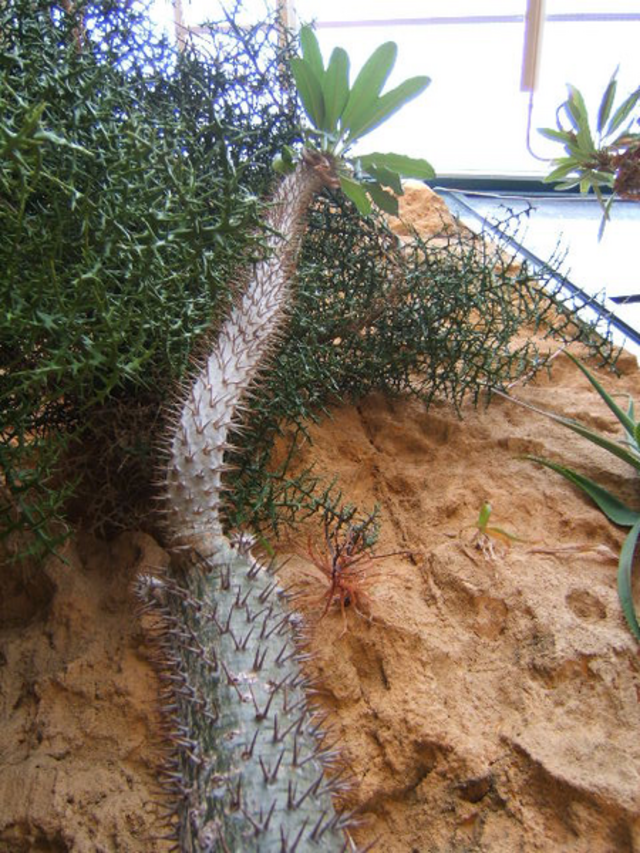
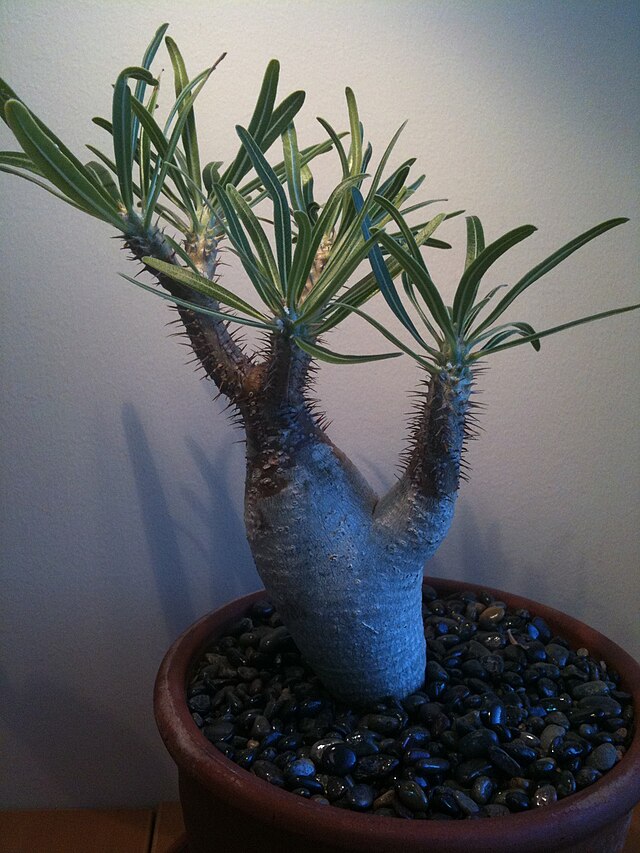
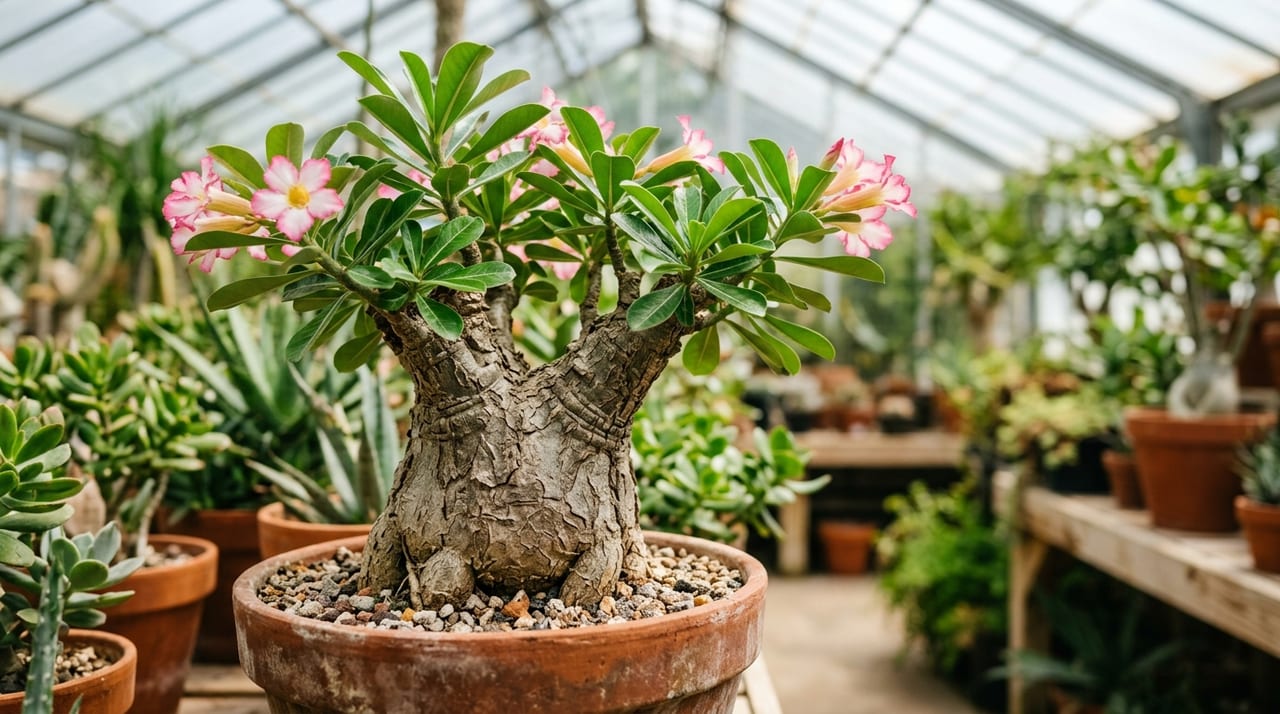
In cultivating caudex plants (caudiciform succulents), soil selection is one of the most critical factors determining success or failure. Many popular species such as Pachypodium lamerei and Adenium obesum originate from arid wastelands in Africa and Madagascar, and it is well-known that using standard Japanese commercial potting soil as-is often results in root rot. How do you achieve the seemingly contradictory balance of "good drainage while maintaining some water retention"? This article systematically explains the fundamentals of soil selection through application-specific recipes and seasonal adjustments.
Conclusion (Basic Mix): When in doubt, use "akadama (small grain) 3 : hyuga soil 3 : pumice 3 : leaf mold 1" as the universal balanced mix. For varieties prone to root rot or seedlings in early stages, use "hyuga soil 4 : pumice 4 : perlite 2" as the high-drainage mix (details below).
Basic Principles for Soil Selection
Suitable soil for caudex plants must meet four major conditions:
- Drainage: Excess moisture drains quickly after watering
- Moderate water retention: Soil maintains some moisture immediately after watering, then dries within a few days—ideally this balance is key
- Aeration: Roots require oxygen. When soil becomes too compacted, roots become oxygen-starved and growth slows
- Micronutrient supply: While excessive organic matter is unnecessary, completely nutrient-free soil can also cause poor growth
Commercial potting soil for ornamental plants prioritizes water retention and lacks sufficient drainage for caudex plants. Custom mixing or amendment with drainage materials is essential.
Role of Each Soil Component, Sourcing, and Price Guide
Akadama (Small Grain)
The most popular volcanic ash soil in Japanese gardening. Small grain sizes achieve strong contact with roots and balance stable water retention with aeration. However, particles degrade over time, and repotting every 2–3 years is advisable.
Sourcing and Price: Available at garden centers for approximately ¥400–700 per 14L bag. Larger sizes offer better value, but be careful to distinguish between fine and small grain (fine grain is for seedlings, small grain for established plants).
Hyuga Soil (Hyuga-tsuchi)
Lightweight volcanic rock from the Hyuga region of Miyagi Prefecture. Among caudex enthusiasts, it has become established as an "essential material." It offers excellent drainage and resists particle degradation, maintaining soil structure over long periods.
Sourcing and Price: Available at specialty garden shops and online retailers for approximately ¥800–1,200 per 14L bag. Many garden centers do not stock it, so online purchase is most reliable.
Pumice
A porous volcanic rock that serves as a versatile material for enhancing drainage and aeration. Inexpensive and readily available, it can also be used as filler in mixes. Used alone, it offers almost zero water retention, so it must be combined with other materials.
Sourcing and Price: Available at garden centers for approximately ¥400–600 per 14L bag. Often confused with perlite, but they differ in density (pumice > perlite).
Perlite
A white, glass-like material expanded by high heat. Excellent drainage and aeration, and its lightweight nature also reduces overall pot weight.
Sourcing and Price: Available at garden centers for approximately ¥300–500 per 6L bag. Do not confuse with vermiculite, which has high water retention and different applications.
Leaf Mold and Compost
Added in small amounts to supplement water retention and organic nutrients. The key rule is to keep these to 10–15% of the total mix.
Sourcing and Price: Available at garden centers for approximately ¥400–800 per 14L bag. Quality varies significantly, so choose products without strong odors and with uniform particle size for peace of mind.
Application-Specific Mix Recipes (3 Cases)
Case 1: Universal Mix (for established plant repotting)
| Material | Ratio |
|---|---|
| Akadama (small grain) | 30% |
| Hyuga soil | 30% |
| Pumice | 30% |
| Leaf mold or compost | 10% |
This balanced formula works for many caudex plants including Pachypodium lamerei, Adenium obesum, and Operculicarya. It is beginner-friendly for those attempting custom mixing for the first time, with minimal risk of failure.
Case 2: Seedling Mix (mold-prevention focus)
| Material | Ratio |
|---|---|
| Akadama (fine grain) | 40% |
| Hyuga soil (fine grain) | 30% |
| Perlite | 20% |
| Vermiculite | 10% |
From sowing through the post-germination phase, a high-humidity environment is needed, so a completely dry formula will cause drying out. Conversely, mold develops easily in this phase, so the key is to eliminate organic matter (leaf mold and compost). Adding a small amount of vermiculite maintains water retention while preserving a clean environment. Sterilizing the soil mix before sowing by microwave heating (600W, 2–3 minutes) or hot water treatment further boosts mold prevention.
Case 3: Bare-Root Establishment Mix (ultra-high drainage)
| Material | Ratio |
|---|---|
| Hyuga soil | 40% |
| Pumice | 40% |
| Perlite | 20% |
For managing bare-root imported caudex plants that arrive without roots, an organic-free ultra-high drainage formula is ideal. This minimizes root rot risk while promoting new root formation from the caudex. Nutrients are provided separately via liquid fertilizer after rooting. Use this mix only during establishment; once roots form, repot into the universal mix for normal care.
Seasonal Soil Adjustments
Summer Moisture Period (June–August)
From the rainy season through high summer, temperatures are high and conditions become overly moist. If soil remains wet for extended periods after watering, increase pumice and perlite by 5–10% at the next repotting to improve drainage. Placing a generous layer of large pumice chips at the pot base also effectively creates a drainage layer.
Winter Dormancy Period (November–March)
Many caudex plants enter dormancy and water-restricted management in winter, when soil overwatering risk peaks. When moving plants indoors, maintain pot warmth while reducing watering to once monthly or less. At the next seasonal repotting, inspect the soil condition—if particles are crushed and the mix has become muddy, it is time to replace it.
Common Failures and Diagnosis/Correction Methods
Failure 1: Overwatering (Causes Root Rot)
Symptoms: Soil remains wet for extended periods after watering (3–5+ days), root base becomes soggy, growth stalls
Causes: Excessive organic matter, oversized pot, use of low-aeration containers
Correction: At next repotting, increase pumice and perlite while reducing organic matter. Switch to a smaller pot size. Adopt slit pots to improve aeration.
Failure 2: Drying Out (Root Depletion)
Symptoms: Soil becomes bone-dry by the day after watering, caudex becomes wrinkled
Causes: Zero organic matter (too low water retention), terracotta pot (water loss through evaporation), summer heat raising internal pot temperature excessively
Correction: At next repotting, increase akadama or leaf mold by 10–15%. Switch from terracotta to plastic or slit pots. In summer locations with direct sun, use shade cloth to reduce pot temperature.
Repotting Frequency and Identifying Degraded Akadama
The standard repotting schedule for caudex plants is every 1–2 years, but judgment should be based on soil condition.
Identifying degraded akadama: When removing the plant from the pot, squeeze a handful of soil. If it crumbles to powder with light finger pressure, particles have degraded sufficiently, and drainage and aeration have declined significantly. If the drying time after watering is more than double the initial repotting period, it is almost certainly time to replace the mix.
Hyuga soil and pumice resist degradation, so mixes based on these materials last longer than akadama-based ones. However, organic matter (leaf mold, etc.) decomposition is unavoidable, so updating the entire mix every 2–3 years is recommended for peace of mind.
Comparison with Commercial Potting Soil and Selection Tips
| Item | Custom Mix | Commercial Caudex Soil |
|---|---|---|
| Cost | Higher initial investment but economical long-term | Convenient but often expensive |
| Drainage | Fully adjustable | Often too water-retentive |
| Customization | Fine adjustments possible by species, season, and pot type | Largely fixed |
| Labor | Requires personal measuring and mixing | Ready to use immediately |
When using commercial "caudex soil," we recommend adding hyuga soil or pumice to supplement drainage (20–30% addition). Understanding material properties and skillfully adapting commercial products is a practical approach with good cost-to-labor balance.
Summary
For caudex plants, soil is the "living environment for roots." Adjusting the mix according to application (seedlings, established plant repotting, bare-root establishment) and season (wet periods, dry periods) prevents root rot and supports healthy growth simultaneously. Starting with the universal mix and gradually fine-tuning the ratio based on how your plants respond is the fastest path to mastery.
On GrowerDirect, you can purchase caudex plants directly from domestic growers who actually cultivate them, so you can also ask about cultivation conditions and soil techniques at the time of purchase. Dialogue with growers who possess practical knowledge is a living source of information that books and the internet cannot provide.