Source: Wikimedia Commons
Stephania venosa
IntermediateStephania venosa
A Southeast Asian Stephania that sends vines with round leaves from a large, round brown tuber each year. Cut stems and tubers ooze red sap, which gives it a Thai name containing the word for blood.
About
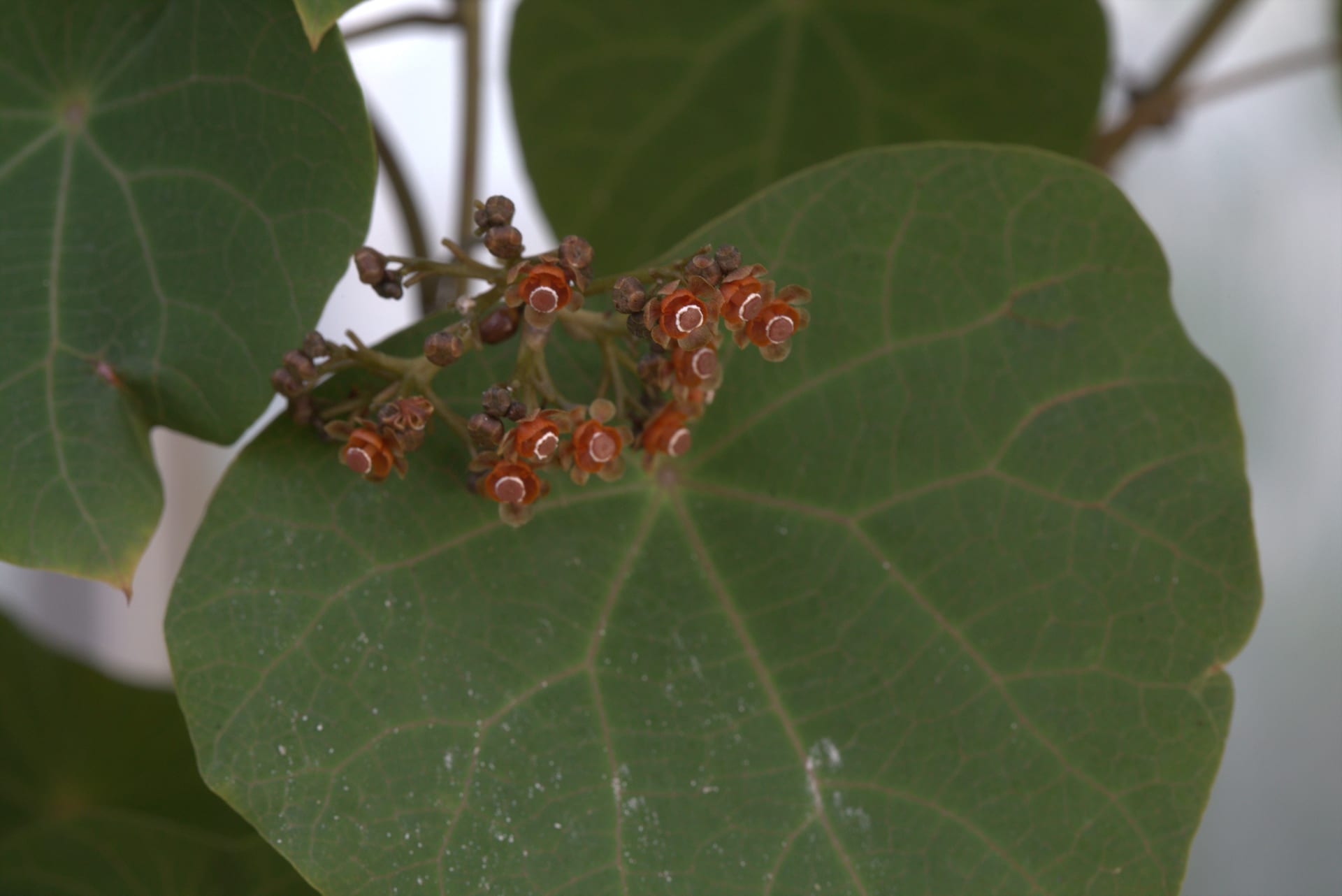
Stephania venosa is a climbing member of the moonseed family (Menispermaceae) that ranges widely from the Andaman Islands, Bangladesh and Myanmar through Thailand, Vietnam, Cambodia, Laos and the Malay Peninsula to Sumatra, Java, Borneo, Sulawesi and the Philippines. In Thailand it occurs in natural forest almost throughout the country and is called sabu lueat, lueat meaning blood, because of its red sap. It forms a round brown tuber at or below ground level, which can become very large, and each year sends up annual vines that climb into other trees. Leaves are round, about 7-10 cm across with a pointed tip, and peltate, with the petiole attached to the underside of the blade as in other Stephania. It is dioecious; male inflorescences are 4-6 cm long with orange petals. The fruit is obovoid, and in Thailand the seeds ripen in April and May. It can be propagated from seed and pieces of the tuber. In Thailand it is also known as a traditional medicinal plant. In Japan individual potted plants are sold through online shops and auction sites.
Size of the Stephania venosa
The Stephania venosa grows to Leaves about 7-10 cm across; tubers can grow large.
Basic Info
Origin
South-east Asia (Andaman Islands, Indochina to Malesia and the Philippines)
Lifespan
Perennial (little published data)
Size
Leaves about 7-10 cm across; tubers can grow large
Temperature
10〜35℃
Watering & Fertilizer
Sparingly in the growing season
Growing Tips
Light & Placement
As a forest climber, grow it in bright light out of harsh direct sun, and give the vines a support to climb.
Watering
Water when the soil dries while it is in leaf, and reduce water while the vines are dormant.
Dormancy Care
The above-ground vines are annual and die back in dormancy. Keep the tuber on the dry side and wait for new shoots.
Temperature & Overwintering
A tropical Asian plant, it is cold-sensitive; keep it in a warm room for winter.
Soil & Repotting
Plant in a free-draining mix with the top of the tuber above the soil to keep it from staying damp.
Pests & Cautions
Red sap from wounds is normal. Most large tubers on the market were dug from the wild, so choose plants that are rooted and producing vines.
Stephania venosa FAQ
QWhat is the growing difficulty level for Stephania venosa?
Intermediate. A variety suitable for intermediate growers. Requires some cultivation experience and knowledge of environment management. Pay careful attention to temperature and humidity control.
QHow large does Stephania venosa get?
The mature size of Stephania venosa is Leaves about 7-10 cm across; tubers can grow large. This may vary slightly depending on cultivation environment and individual differences.
QHow should I water and fertilize Stephania venosa?
Stephania venosa: watering & fertilizer — Sparingly in the growing season. Aim for appropriate frequency and amount.
QWhat is the typical price for Stephania venosa?
The price of Stephania venosa varies significantly by variety, characteristics, size, and lineage. Please check GrowerDirect's price guide for the latest market information.
Last updated: September 23, 2026
References & Sources
Edited & verified by: GrowerDirect Editorial Team
The classifications, regulations, and growing data on this page are created and verified based on the primary information database below.
Taxonomy & Authority
Regulations & Conservation Status
Not listed in CITES (checked on Species+). No special procedure is needed for transfers within Japan.
Sources: Species+ (CITES): Stephania venosa
Regulations may change. Always verify the latest information with the relevant authorities.
Related Species
Find listings for this species
Related Articles
How to Grow Stephania electer | Rooting Management, Watering, and Budding Tips After Dormancy
For rooted plants, it's a beginner-friendly caudex plant. The challenge lies in bare caudex without roots—rooting management requires April–July and a bottom temperature of 25–28°C. We explain the monthly budding steps, watering decisions based on pot weight, and the critical 10°C winter threshold.
How to Grow Uncarina | Differences Between the Madagascar Endemic Species Grandidieri and Roeoesliana
An explanation of the appeal and cultivation methods of the Madagascar endemic caudex plant Uncarina genus. We introduce the differences between Uncarina grandidieri and roeoesliana, seedling cultivation, and repotting timing.
Complete Guide to Choosing Caudex Plants as Gifts | Recommended Varieties by Occasion and How to Include Care Notes
A guide to choosing caudex plants as gifts organized by occasion. We introduce how to select varieties based on the recipient's cultivation experience and how to include care notes for long-term enjoyment.
Diagnosing and Treating Poor Root Development in Caudex Plants | Causes and Solutions for Roots That Won't Emerge or Won't Grow
A detailed guide to root emergence problems in caudex plants. From diagnosis methods to solutions, practical techniques for promoting healthy root development are introduced.
🩺 Common diseases
Can't find the plant you're looking for?
Post your wishes for free and growers with matching plants will contact you with introductions.